Monday, May 08, 2006

Murderball & Buzz Marketing

I got an email from an interesting company last week called Buzztone letting me know that Participant Productions is launching a social action campaign called Get Into the Game that uses the documentary, Murderball, to raise funds for the U.S. Paralympics ( Olympics for people with disabilities). If you haven't seen it, the film is about some seriously hard-core quadriplegic rugby players who go to the Paralympics. I highly recommend it.

Campaign participants are encouraged to host a screening of the film, and they can order a Murderball Screening Kit from the web site which includes a free DVD of the movie along with screening tips and discussion points. It's a similar campaign model to the New Heroes House Party that I wrote about last August.

You can see a trailer for the movie here:


You can also donate money directly to the campaign by clicking here. $215 will buy one aspiring quadrapalegic rugby player the wheelchair they need to compete.

What I find particularly interesting about Buzztone is how they get people to "buzz". For example, on their web site you can sign up for:

Murmurz "Thoughts, ideas and rants about marketing, branding, popular culture and everything in between."

The Buzz if you are, "always trying to be the first to find out about the latest and greatest movies, music and entertainment."

Buzzstreet if you have, "the chops and want to be a member of our web or street teams."

And The Hookup if you want your web site to be a part of the Buzz network. You can be,"the first to get at new promotions, contests and content from Buzztone."

I'll admit, I signed up for Murmurz and The Buzz 'cause I like to know about campaigns like this one, which I suppose is why they sent me a press release. They knew I would like it because, "the essence of marketing well . . . is less about pursuing a sale than about creating a customer." By offering content that interests me and that relates to Have Fun * Do Good, Buzztone has made me a customer of their press releases which in turn will help them to do their work. Is there anyone else out there who finds that equation interesting, or am I just a marketing geek?

The quote above is from a review copy of a book I was sent recently, Robin Hood Marketing: Stealing Corporate Savvy to Sell Just Causes. I just started it this morning and will let you know more about it when I finish, but I gotta tell you, I am just happy to see someone writing an accessible book about marketing for nonprofits. In a time where people are being bombarded with organizations to contribute to, nonprofits need more than grantwriting skills to raise money and a good cause to attract volunteers.

Images via Participant Productions and ADVANCE for Occupational Therapy Practitioners.


Sunday, May 07, 2006

Big Vision Podcast 5: Interview with Abby Rosenheck

The fifth Big Vision podcast is an interview with my friend Abby Rosenheck, the co-founder and Executive Director of Urban Sprouts, an urban school gardening program. You can listen to the podcast by clicking on the "Big Vision podcast" link above, or by listening on the Gcast player in the right-hand column of this blog, or on iTunes. Just search for "big vision" in the podcast section of the iTunes Music Store.

You can also see a video interview with Abby on the NetSquared vlog.

Enjoy!


Friday, May 05, 2006

Nobelity: A Look at the Future Through the Eyes of Nobel Laureates

I was reading Treehugger this morning, and their post about the film, Nobelity, caught my eye.

Similar to the movies Outfoxed and Walmart: The High Cost of Low Price, Nobelity is also encouraging communities to host screenings.

The film interviews nine Nobel Laureates about their ideas for how to face some of the world's greatest problems. Here are the people they interview:

Steven Weinberg, Theoretical Physicist. Nobel Prize in Physics, 1979.

Jody Williams
, International Campaign to Ban Landmines. Nobel Peace Prize, 1997.

Ahmed Zewail, Femtochemistry Pioneer. Nobel Prize in Chemistry, 1999.

Rick Smalley, Nanotechnology Pioneer. Nobel Prize in Chemistry, 1996.

Wangari Maathai, The Green Belt Movement. Nobel Peace Prize, 2004.

Sir Joseph Rotblat
, Nuclear Physicist/Disarmament Activist. Nobel Peace Prize, 1995.

Dr. Harold Varmus, Director, Sloan Kettering Cancer Center. Nobel Prize in Physiology or Medicine, 1989.

Archbishop Desmond Tutu, Head of South African Reconciliation. Nobel Peace Prize, 1984.

Amartya Sen, Professor, Harvard University/Author, Development as Freedom. Nobel Prize in Economics, 1998.

The trailer gave me shivers. A physical reaction to hearing people speak the truth.

image via Treehugger


Wednesday, May 03, 2006

Solutionary Women: DeeAnn Resk

Shortly after I posted my first Solutionary Women profile, I got an email from a young woman named Tiara who was a student with Up with People last year. She sent me the names of four women from Up with People with descriptions of their work and why she thought they were Solutionary Women.

One of the women, DeeAnn Resk, is originally from California and used to work at an international development office in Washington D.C. before coming to Up with People. While in D.C., she worked on a program called the “African Peace and Development Initiative” at the NGO, World Learning for International Development, doing project backstopping for peacebuilding initiatives in East Africa. She is an alumna of Up With People and traveled as an Applied Education facilitator with Up with People last fall.

DeeAnn was kind enough to do an e-interview with me:

Describe what Up with People does and a little about the work you do with them.

Up with People is a global education program whose mission is to train young people in global leadership and to spark them to action in meeting the needs of their communities, countries, and the world while building bridges of understanding as a foundation for world peace. For over forty years, international young people ages 18-29 have traveled with the UWP program, living with host families in each community visited, volunteering for various community service projects, connecting with each community through performing arts, and engaging in various internships while developing skills in cross-cultural communication, leadership, and global perspective. We currently travel throughout North America, Asia, and Europe, and some college credit is available. Up with People is apolitical and nonsectarian with no ties to any government, religious or political organization.

I’ve currently been working on developing the Stand for Peace project and collaborating with the Programs Manager on the program’s education curriculum. The Stand for Peace project teaches elementary school kids about diversity, respect, and peace. Beginning in July, I will be traveling as part of the Up with People road-staff again as the Applied Education Department Manager.

What do you enjoy the most about your work with Up with People?

The biggest thing I enjoy about working for UWP is the people I work with and the people I meet through the organization. I work with a talented and diverse team of good-hearted, hard-working, dedicated people who are passionate about making a difference in their communities and the world. I also get to meet many amazing individuals from the communities we work with around the world and the participants who travel in our program.

What are the biggest challenges in your work with UWP?

I’d say the biggest challenge, like many non-profits, is limited time and resources.


What keeps you motivated and energized to do this work?

• To paraphrase Margaret Mead, it’s the belief that we really can make differences, no matter how big or small.

• My colleagues’ teamwork; there is sort of a “can-do” attitude here where people work hard to come up with creative solutions to inevitable challenges.

• Continual learning.

What tips, resource and advice would you give to someone who wanted to do the kind of work you are doing?

• Find what makes you passionate.

• Educate yourself on the world around you.

• Learn about what work is being done out there, explore your options and network.

• Don’t be afraid to try new things or to fail.

***

If you know a young person who might be interested in working with Up with People, they are accepting applications for their programs in July 2006, January 2007 and July 2007. You can get more info at www.upwithpeople.org.

And if you know a Solutionary Woman who works at a nonprofit or NGO who you think I should profile, please email me at britt at brittbravo dot com with their name, organization and contact info.


Tuesday, May 02, 2006

Who Will be the Next Secretary-General?


I am part of an online group called the Nonprofit Blog Exchange , a group of over 100 blogs written by nonprofits, or that are about nonprofit related projects.

Once in a while the Exchange asks its members to write about another blog in the Exchange to help expose it to new readers so . . . I was assigned the Who Will Be the Next Secretary General blog.

Here's a little background for folks like me who didn't realize that UN Secretary-General Kofi Annan's term expires on December 31, 2006. The Secretary-General is appointed to a five year term. Usually he or she serves two terms, but sometimes only one. Typically, the position rotates by geographic region and the next Secretary-General is supposed to come from Asia. Wikipedia (where I got the above info.) has a cool chart with info. about who the former UN Secretary-Generals have been.

In addition to its blog, the UNSG.com web site has lists and bios of official, and possible, candidates for the position, and explains the selection process.

Considering that the UN Secretary General is supposed to be:
Equal parts diplomat and advocate, civil servant and CEO, the Secretary-General is a symbol of United Nations ideals and a spokesman for the interests of the world's peoples, in particular the poor and vulnerable among them.

It seems important to keep an eye on the selection process and to learn more about the calls for reform of that process.


image via un.org


Monday, May 01, 2006

Big Vision Podcast 4: An Interview with Brahm Ahmadi

I've posted my fourth Big Vision podcast. It's an interview with Brahm Ahmadi, the Executive Director of People's Grocery, a West Oakland, community-based food justice organization.

I've posted about them before because I think they are a great organization that is tackling an issue in an intergrated way that can be a model for other nonprofits.

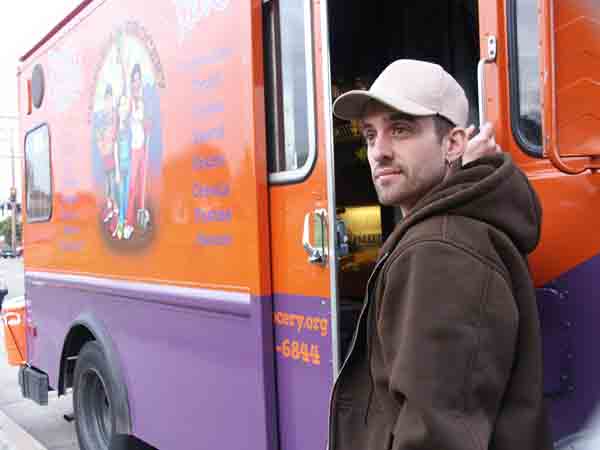
You can also check out Brahm's blog at http://www.peoplesgrocery.org/brahm.

Enjoy!


Wednesday, April 26, 2006

Solutionary Women: Mary Brune

As I mentioned in a post a couple weeks ago, I've started writing a weekly feature over at Blogher called Solutionary Women. I thought I'd share this week's interview with Mary Brune, co-founder of MOMS (Making Our Milk Safe). Mary is a professional writer and mom to her daughter, Olivia.

"MOMS was founded by four nursing mothers to address the threat of toxic chemicals in human breast milk. MOMS is a grassroots movement of pregnant women, nursing mothers, and other caregivers who are concerned about the threat that environmental contaminants pose to our unborn and nursing children. Our goal is to identify and eliminate sources of toxic chemicals that make their way into our bodies and into our breast milk."

Mary was kind enough to let me e-interview her for this post. You can check out Mary's new blog at Conscious Mama.

***

Describe the work you do for MOMS.

Basically, everything: researching and writing grants, planning campaigns,
tracking relevant legislation, designing materials and writing web content.
MOMS has a very limited budget, so it's more cost-effective to do what we
can internally (among the founders or with volunteers), rather than hire
outside contractors. I get to design campaign postcards and then lick the
stamps, too.

What do you enjoy the most about your work with MOMS?

I really enjoy making connections with other activists and moms in the
community. I've been moved by the response we've gotten for our work so far.
Even though mothers are a pretty busy group of folks, they still make the
time to get involved in advocacy work and I find that really inspiring.

What are the biggest challenges in your work with MOMS?

All of the exciting elements in building an organization from the ground up
can also make it a terrifying experience. The uncertainty of whether we'll
get a grant we've applied for, or if we'll be able to get 25 moms out in
support of a piece of important legislation can be nerve-wracking.

There are inherent difficulties in mobilizing a constituency of mothers:
there are nap times to work around, colossal diaper changes, and tantrums to
avoid. Since the founders of MOMS are all mothers too, we understand the
need to make it as easy as possible for interested moms to get involved. We
try to make our events and rallies very baby-friendly with spots for nursing
& changing, snacks for babies, and places to play. I'm sure our first direct
action will involve chalk for drawing on the sidewalk and animal crackers.
Organic ones, of course.

What keeps you motivated and energized to do this work?

My daughter, Olivia. Honestly, it's an outrage to read stories in the paper
about lead-tainted lunchboxes, rocket fuel in lettuce, or arsenic in our
playgrounds. I'm so inspired by the fantastic work being done by groups like
the Center for Environmental Health, Environmental Working Group, and others.

As a nursing mother, I find it unbelievable that there are toxic chemicals
in my breast milk. Even so, I know that breast milk is superior to any other
choice. But will that always be true, if chemicals are allowed to remain
unchecked and unregulated in our marketplace? I'm motivated to make sure
that Olivia and all children of the next generation continue to enjoy the
benefits provided by mother's milk.

What tips, resource and advice would you give to someone who wanted to do the kind of work you are doing, or just wanted to make a difference in women and children's health issues?

When MOMS was just getting started, I spent a lot of time looking around to
find out what efforts were already underway to see if there were
opportunities for collaboration with groups already working on environmental
health issues. I came across the Collaborative on Health and Environment
(CHE)
and Partnership for Children's Health and Environment (PCHE), both of which offer searchable databases on their websites so folks can look up the issues they care about, like pesticide use in schools; for example, and connect with groups or individuals organizing efforts in their areas.

***

If you know a Solutionary Woman who works at a nonprofit or NGO, please email me at britt at brittbravo dot com with their name, organization and contact info.


Tuesday, April 25, 2006

Mom Knows Best: Network Neutrality


When your mother leaves you a message, in the same tone that she leaves you a message to remember to buy sunscreen with UVA and UVB protection, that you might want to keep your eye on legislation challenging network neutrality and to go to savetheinternet.com and publicknowledge.com, you know it's serious.

So for those of you whose mother did not call you this morning, here's the scoop. As Alexandra Samuels wrote today:

Network neutrality means that no matter who you pay for Internet service -- whether it's a phone, cable, or other telco -- no matter which web sites you access, and no matter what content you're looking for, your Internet service provider (ISP) will treat that content the same.

and as Talking Points Memo wrote yesterday:

the change could make it much harder to access TPM or any source of news or entertainment that isn't owned by some big corporation or, more likely, have the inside track with one of the phone companies. If you're cool with AT&T deciding the sources of use you can access then you probably won't mind. But if you like making those decisions yourself, you may want to speak up.

And what could that mean on a day-to-day level? Freepress.net's email campaign suggests:

Google users -- Another search engine could pay AT&T to guarantee that it opens faster than Google on your computer.

iPod listeners -- Comcast could slow access to iTunes, steering you to a higher-priced music service that paid for the privilege.

Work-at-home parents -- Connecting to your office could take longer if you don't purchase your carrier's preferred applications. Sending family photos and videos could slow to a crawl.

Retirees -- Web pages you always use for online banking, access to health care information, planning a trip or communicating with friends and family could fall victim to Verizon's pay-for-speed schemes.

Bloggers -- Costs will skyrocket to post and share video and audio clips -- silencing citizen journalists and amplifying the mainstream media.

Online activists -- Political organizing could be slowed by the handful of dominant Internet providers who ask advocacy groups to pay a fee to join the "fast lane."

Small businesses -- When AT&T favors their own services, you won't be able to choose more affordable providers for online video, teleconferencing, and Internet phone calls.

Innovators with the "next big idea" -- Startups and entrepreneurs will be muscled out of the marketplace by big corporations that pay for a top spot on the Web.

So what should you do? Well, MoveOn.org and Save the Internet have petitions going, and you should give your Congressperson a ring, especially if they are a member of the House Commerce Committee. Save the Internet has a nifty map up that tracks votes on network neutrality by House Energy & Commerce Committee members and provides a phone number for each Commerce Committee Representative.

You know I'm signing a petition and calling my Congressperson; otherwise, what am I going to tell my mother?

Monday, April 24, 2006

Stanford Social Entrepreneurship Challenge


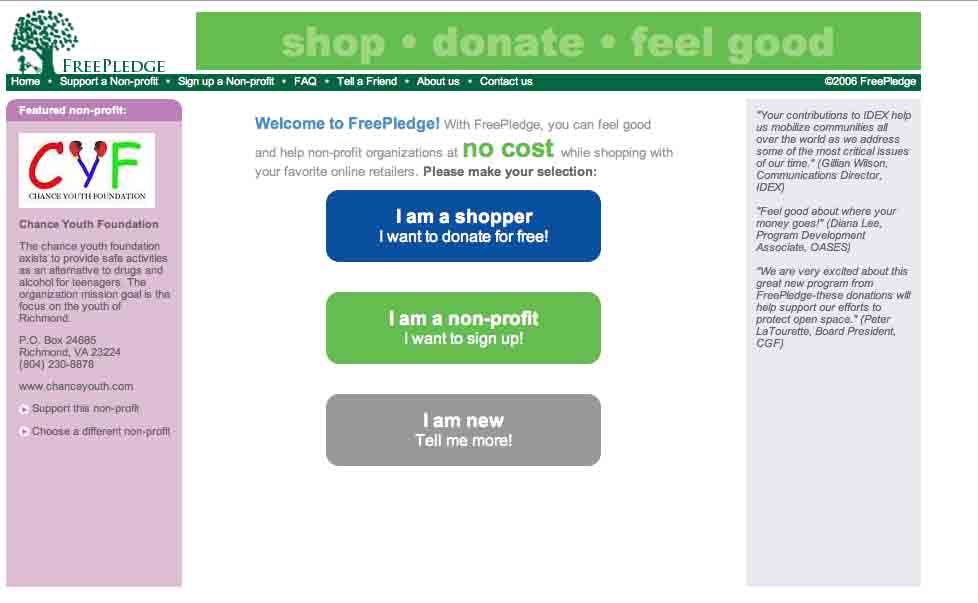
I had coffee last week with Caroline Bernadi, one of the co-founders of an interesting site called Freepledge.com. Here's how it works. Online shoppers click on a nonprofit registered with Freepledge that they want to support, they shop at their fav online store (i.e. Amazon, eBay, Orbitz), Freepledge gets a referral fee from the online store (i.e. Amazon's referral fee is 4% of the sale), Freepledge gives the nonprofit the referral fee. Pretty cool, huh?

Freepledge is a finalist in the Stanford Social Entrepreneurship Challenge.

Here are some of the winners from last year's competition and their descriptions of their projects.

1st place: Coal Cleaners
CoalCleaners is developing a process to remove sulfur oxide, nitrogen oxide, and mercury pollutants from coal-fired power plant exhaust by turning these pollutant liabilities into marketable by-products of hydrogen, sulfuric acid and nitric acid. Our technology sets the precedent for "greening" coal, and accelerates a more efficient and environmentally responsible coal future. Our technology makes coal plants the front line of hydrogen production for the evolving hydrogen economy.

2nd place: UV AquaStar
Worldwide, 1.6 billion people lack access to safe drinking water. Our for-profit social venture will bring breakthrough low-cost water purification technology to the developing world, starting in India. We plan to introduce the UV AquaStar--the world's lowest cost UV water filter­to the 30 million lower middle-class Indian households in urban slums and village.

3rd place: FluencyLab, Inc
FluencyLab, Inc is a social venture that has the potential to become the world's leading provider of stuttering treatment solutions. FluencyLab's proprietary technologies allow clinicians to effectively treat and evaluate stuttering. Our principle product is a computer-based system that uses biofeedback principles to train patients who stutter to achieve speech fluency. There is no commercial product on the market or treatment report in stuttering literature that has comparable results.
It's too bad that ABC's American Inventor isn't America's Social Entrepreneur. Interestingly though, one of the finalists (yes, I did watch the last two episodes) was a man named Mark Martinez who invented a one-man, one-scoop sandbag shovel to be used in disaster relief and the winner was Erik Thompson, who designed a "Receiver's Training Pole" that he uses to train young football players in low income neighborhoods to improve their skills and get athletic scholarships to college.


Saturday, April 22, 2006

Paul Rusesabagina & Bloggers for Darfur


Yesterday I went to see Paul Rusesabagina speak, the man who inspired the movie, Hotel Rwanda. He was promoting his memoir, An Ordinary Man.

The most touching part of the program was when some students from a local middle school came up and presented him with a check for $1,325 for the Hotel Rwanda Rusesabagina Foundation that they raised by selling sweatshirts with their school name on the front, Piedmont Middle School, and "Be an Upstander. It's the Key" on the back. It was great to see young people idolizing a human rights hero.

Then they gave him a sweatshirt, which cracked me up.

The event was hosted by the World Affairs Council. It isn't up yet at this writing, but you should be able to hear an audio recording of the session once it is posted, here.

The talk was also sponsored by Facing History, Facing Ourselves, Human Rights Watch, the Museum of African Diaspora, Marines' Memorial Association, Bay Area Darfur Coalition, Amnesty International and Stacey's Independent Bookstore.

People from the Bay Area Darfur Coalition were handing out info. about events happening on April 30th to raise awareness about the genocide in Darfur. Where I wish I could be is at the Rally to Stop Genocide in Washington DC.

For people who aren't near a city where there is an event, two bloggers, Jill and Marilyn, have started Bloggers for Darfur: A Global Online Community Calling for Action to Stop the Genocide in Darfur .

Here are some of the things they suggest that you can do to get involved virtually:

• Email networks to ask why genocide doesn't get the news coverage it deserves.
• Send a Million Voices for Darfur e-card to Bush.
• Watch this movie from Physicians for Human Rights.
• Post a photo of a candle on your blog or web site with a link to Bloggers for Darfur, and to their Flickr Group.
• Post a Bloggers for Darfur badge on your blog.
• Add yourself to the Bloggers for Darfur Frappr map.
• Join the Bloggers for Darfur Yahoo Group.

Obviously, putting a badge on your site is not going to end genocide in Darfur, or anywhere else, but I think it can raise awareness, which may motivate people to contact their government leaders and ask them to take action.

Here is a link to 10 actions that the Genocide Intervention Network suggests you can take to stop the genocide in Darfur, and links to some other sites listed on the Bloggers for Darfur site:

Hope for Darfur
Save Darfur
A Million Voices for Darfur
Be a Witness


image via Amazon.


Wednesday, April 19, 2006

Free Student Activism Training


Oh to be 18-24 again! Got an email today advertising a free one-week training for student activists put on by Greenpeace and Seventh Generation called Change It 2006.

The Program includes:
Speakers: A range of inspiring keynotes and panelists speaking about their experiences on the front lines of global change
Strategy: An intensive campaign simulation program that will train you in campus organizing, campaign strategy, and corporate campaigning
Media: Learn how to use media to amplify your impact: Press conferences, Writing News Releases, Pitching Reporters
Skills: Get the best trainings out there in basic organizing techniques: Running Meetings, Developing Leaders, Running a Successful Group, Recruiting
Action: Winning bold victories requires bold action: Direct Action, Lobbying, Event Planning
Anti-oppression: In any great struggle, it is essential to know the underlying conditions: Overcoming Class and Racial Barriers in Organizing
Hands-on Experience: No activist gathering is complete without action: An Actual Press Event


And they pay for travel, room and board, in addition to the training.

If you know any young people who might benefit from this program, tell them to get on it, the deadline is April 30th.


Tuesday, April 18, 2006

Raising Money and Having Fun


Corey Pudhorodsky from the 501c3cast sent me a great New York Times article called Having a Blast for a Good Cause. The article profiles groups who are appealing to donors, particularly young ones, with events that are fun AND raise money such as the Society for Mature Adults Seeking to Help Entertain and Donate who raise money with social events like Amazing Race Scavenger Hunts, Rec Room Olympics and the Idiotarod (pictured above).

The Iditarod is a famous long-distance race in which big burly yapping dogs tow a sled and driver across Alaska. The Idiotarod is kind of the same thing, but no sled and no dogs. Instead of a sled, teams pull a shopping cart (or carriage for you Southerners). And instead of dogs, it’s people pulling the cart.
The article also mentions Mustaches for Kids (where men get donations from friends for growing mustaches between Thanksgiving and Christmas), and Dodge for a Cause (a dodgeball tournament to raise money for the Juvenile Diabetes Research Foundation and the Union Broadcasting Foundation).

I'm still trying to figure out the best way to raise money with cupcakes!

Image via drierp


Thursday, April 13, 2006

Big Vision Podcast 3: An Interview with Back to Earth


I've got some fun interviews lined up this month and should have a podcast up every other week for the foreseeable future.

This week's podcast is an interview with the founders of Back to Earth, Eric Fenster and Ari Derfel. Back to Earth is an organic catering and outdoor adventure company, and yes, they did cater our wedding.

You can learn about Back to Earth, and hear their advice about how to start your own socially responsible business by either clicking here, or hitting the play button on the Gcast player in the sidebar of this blog.

Big thanks to my hubs for editing it for me!


Wednesday, April 12, 2006

Solutionary Women


I've started a new weekly feature on Blogher this week called Solutionary Women where I write short profiles of women leaders and visionaries who work for nonprofits and NGOs. If you have women you would like to suggest that I profile/interview, please email me at britt at brittbravo dot com with their name, organization and contact info. Thanks!


Monday, April 10, 2006

My New Favorite Song: Dear Mr. President


I'd never listened to a Pink song before until fellow Blogher editor, Miriam Verburg, posted about her hilarious video, "Stupid Girls" where she parodies young celebrities like Paris Hilton, Lindsay Lohan and the Olsen Twins.

Very funny.

But today I downloaded a song from the iTunes Music Store from Pink's new album, I'm Not Dead, called "Dear Mr. President", that she sings with the Indigo Girls.

I can't stop listening to it.

Here are the lyrics from azlyrics.com

Dear Mr. President
Come take a walk with me.
Let's pretend we're just two people and
You're not better than me.
I'd like to ask you some questions if we can speak honestly.

What do you feel when you see all the homeless on the street?
Who do you pray for at night before you go to sleep?
What do you feel when you look in the mirror?
Are you proud?

How do you sleep while the rest of us cry?
How do you dream when a mother has no chance to say goodbye?
How do you walk with your head held high?
Can you even look me in the eye
And tell me why?

Dear Mr. President
Were you a lonely boy?
Are you a lonely boy?
How can you say
No child is left behind?
We're not dumb and we're not blind.
They're all sitting in your cells
While you pay the road to hell.

What kind of father would take his own daughter's rights away?
And what kind of father might hate his own daughter if she were gay?
I can only imagine what the first lady has to say.
You've come a long way from whiskey and cocaine.

How do you sleep while the rest of us cry?
How do you dream when a mother has no chance to say goodbye?
How do you walk with your head held high?
Can you even look me in the eye?

Let me tell you 'bout hard work
Minimum wage with a baby on the way.
Let me tell you 'bout hard work
Rebuilding your house after the bombs took them away.
Let me tell you 'bout hard work
Building a bed out of a cardboard box.
Let me tell you 'bout hard work
Hard work
Hard work.
You don't know nothing 'bout hard work
Hard work
Hard work
Oh

How do you sleep at night?
How do you walk with your head held high?
Dear Mr. President
You'd never take a walk with me
Would you?


Photo from iment.com


Sunday, April 09, 2006

7 Ways Nonprofits Can Use Podcasts

My March post, 10 Ways Nonprofits Can Use Blogs, seems to have been helpful to folks (it even got translated into spanish by a blogger in Spain, so I thought I'd share my list, originally posted on NetSquared, of 7 Ways Nonprofits Can Use Podcasts.

1. A leader at your nonprofit or NGO talks about what is going on in the organization and in your field. This is great if your founder, or director, is a strong and inspiring speaker. Example: Senator Barack Obama's podcast.

2. Short, informational pieces about one issue combining voiceover by a narrator/host and interviews with the people you serve. Example: UNICEF's podcast, "Pakistan's Earthquake: A fifteen-year-old tells her story." UNICEF Radio correspondent, Blue Chevigny, provides narration and information about the earthquake in Pakistan combined with on the ground testimony by a young woman who lived through it.

3. Weekly updates about what is going on in your organization followed by interviews with experts in your field. Example: This Week in NetSquared News. Each week we give brief updates about what's new at NetSquared followed by interviews with nonprofit and social web innovators.

4. Have your constituents create the podcast. Example: UNICEF Digital Diaries: Berenice's Story from Ghana, Part I. A young woman in Ghana was giving recording equipment to document her daily life in this 6-part series.

5. Be creative! Example: the Nature Conservancy produces a podcast called Nature Stories, that is all about people's connection to nature. Check out the one called "Just Another Fish Story" about a whale that washes up on the beach of a small town in Maine.

6. Use recordings from presentations. Example: the Bioneers have turned the presentations and speeches from their conference into a podcast.

7. Turn your radio show into a podcast. Example: Mother Jones Radio. If your organization already produces a radio show, make sure listeners can also subscribe to it as a podcast.


Thursday, April 06, 2006

The Meatrix II


Big thanks to Joan Braun from PolicyLink for sending me info. on the second Meatrix movie, Meatrix II: Revolting. I'd heard about it when the first Meatrix movie came out, but had never watched it.

It's great. Moopheus, Chickity and Leo. Hee Hee

It would be a bit scary for little kids. Yes, I know they watch much scarier movies these days, but this is coming from someone who had to walk out of Watership Down when I was 7 or 8 'cause I was freaked out by the bloody bunnies (now, that was a great birthday, party!). I do think that both movies would be great to show pre-teens/adolescents, and of course, adults.

Image of Moopheus, Chickity and Leo from the Meatrix's Cafe Press Store.

Sunday, April 02, 2006

Do * Good Blankets


I had a blanket when I was little, did you? Mine was soft and yellow with a yellow satin edging, and I believed that whenever I sat under it, I was invisible.

In the past month or so I've heard about two lovely projects, Project Linus and Project Sweet Dreams.

I heard about Project Linus through an episode of the 501(c)3cast. Project Linus coordinates volunteers to sew, knit and quilt handmade blankets for seriously ill and traumatized children. You can find a chapter near you here.

Project Sweet Dreams is a community based Roots and Shoots campaign organized by a friend of mine, Debra Rosenman, to raise awareness about biomedical lab chimps. The campaign is organizing schools in the Santa Fe area to donate 600 blankets to the Save the Chimps (STC) sanctuary in Alamogordo, New Mexico. In the wild, chimps make a new bed each night, so the sanctuary needs lots of clean blankets to make the chimps feel at home. You can get more information about Project Sweet Dreams by calling (505) 466-0007.


image via www.petroglyphsnm.org

Tuesday, March 28, 2006

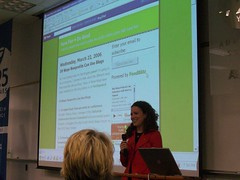
Pix from Blogging Panel


Sooo, you know that blogging panel I've posted about a couple times. Well, A Fool's Wisdom has created a fun summary of the night in photos in a post called, "Tara Walks the Talk". Tara Hunt of HorsePigCow was one of the presenters.

Yup, that is a little pic of me up there.


Monday, March 27, 2006

How to Look Fabu at Any Age: A Little Tribute to My Grandma


Just got back from a weekend away celebrating my grandma's birthday. Doesn't she look great? I would tell you how old she is, but we're not allowed. I can tell you that her oldest daughter, my mom, is going to be 64 this year, so you can take it from there . . .

How does my Gram stay looking so fabu?
  • Positive attitude! Nothing gets this lady down.
  • Help out/focus on other people. She's always making someone dinner, or driving a friend to a doctor's appointment.
  • Be social. Don't isolate. Even though a lot of her friends have passed away, or are sick, my Gram is always joining new clubs and classes, and getting together with people.
  • Lotion, lotion, lotion!
  • Suntan lotion, suntan lotion, suntan lotion!
  • Exercise. She still lifts weights and walks on the treadmill.
  • Learn/try new things. We got her a computer several years ago, and she emails and instant messages with the family like a pro, even though she's never used a computer before. This weekend we got her hooked up on Netflix.
  • Don't tell anyone your age. If they want to think you are ten years younger than you are, so be it.
  • Refer to other people as "old people" (e.g. you have to watch out for "old people" when you drive).
  • Keep the romance alive. You're never too old for love. While we were at a restaurant for her birthday brunch, another man eating at the restaurant came over to check out the birthday cake we'd ordered for her. When she told him that she was going to take home the leftovers he said, "You can take me with you"!

Happy Birthday, Gram!

Bookmark and Share

Friday, March 24, 2006

Solution Salon


The Ella Baker Center for Human Rights' Reclaim the Future program is hosting a Solution Salon Thursday, May 18th from 6-8 PM at the James Irvine Conference Center (353 Frank Ogawa Plaza, near 14th and Broadway in Oakland).

Even though this is a Bay Area event, I wanted to post about it here because it seems like a great model for other organizations and cities to follow. Plus, it is far enough away that if you want to come check it out, you can still book a plane ticket!

The Solution Salons will bring together top thinkers and doers in the country to talk about the keys to making Oakland a national leader economically, ecologically and socially.

Check out who is speaking at this salon:

Majora Carter
MacArthur "Genius" Fellow
Founder and Executive Director
Sustainable South Bronx

Paul Hawken
Author, The Ecology of Commerce

Geralina Fortier
Community Education Coordinator
People's Grocery

Van Jones
Executive Director
Ella Baker Center for Human Rights

Bruce Cox
Board President
Alliance for West Oakland Development

Come on over to Oaktown and check it out!


Wednesday, March 22, 2006

10 Ways Nonprofits Can Use Blogs

As I was getting ready for this blogging panel I'm going to be on tomorrow, I started to think about the different ways that nonprofits can use blogs. Many of these blogs have been mentioned on this blog before or on NetSquared.

10 Ways Nonprofits Can Use Blogs

1. To report back from an event or conference
Example: Patricia Jones, manager of the Unitarian Universalist Service Committee's Environmental Justice Program, is blogging from the Fourth World Water Forum on the UUSC blog, Hotwire

2. To involve staff and take advantage of their knowledge
Example: The Walker Art Center's blog contains postings from art center staff and others describing recent and future community programs and educational information about exhibits at The Walker.

3. To involve volunteers and document their work
Example: The surgical volunteer staff who do reconstructive surgery all over the world for Interplast, upload posts to the blog from their worksite.

Example: The Urban Sprouts blog is written by one staff member and one volunteer.

4. To provide resources and information to constituents
Example: AARP's blog is an online resource for a variety of aging issues such as retirement security, health and volunteering.

5. To provide resources and information from constituents
Example: The Best Friend Network allows its supporters to create blogs around animal and animal adoption issues that they care about.

Example: NetSquared's blog is a community blog that anyone can post to about resources, events and information related to how nonprofits and NGOs can use the social web for social change.

6. To give constituents a place to voice their opinion
Example: Ann Arbor District Library System Uses a blog for the front page of their site. Library users can ask questions and make suggestions about library news, announcements and events in the comments of each post.

7. To give constituents support
Example: March of Dimes' Share Your Story blog allows families with children in NICU (Neonatal Intensive Care Unit) to share their experiences with one another.

8. To create the media coverage constituents want

Example: When the men accused of murdering Gwen Araujo, a woman they beat, bound and strangled after they discovered that she was biologically male, went to trial, the Community United Against Violence decided to use a blog to document the trial.

Because many of CUAV's volunteer bloggers were more knowledgeable about issues such as the trans-phobic tactics that were being used by the lawyers, they were able to address many issues that the mainstream media missed. The blog also kept people informed during the second trial, when media coverage had diminished, and eventually drew attention to the trial when the blog got news coverage.

9. To give constituents the power and tools to create change
Example: Human Rights Watch doesn’t have a blog, but specifically offers RSS feeds of human rights news to supporters so that they will blog about human rights issues.

10. To reach potential donors
Blogs are not replacements for paper newsletters or e-newsletters, they are an additional way to reach a certain audience. Check out these stats from an article entitled, "Blog Readers Spend More Time and Money Online." I added the bold.

Fifty million Americans, or 30 percent of all American Internet users, visited a blog in the first quarter of 2005, according to a new report from Comscore, and sponsored in part by SixApart and Gawker Media. Traffic increased by 45 percent from the first quarter of 2004.

The average blog reader viewed 77 percent more pages than the average Internet user who doesn't read blogs (16,000 versus 9,000 for the quarter), the report found. Blog readers average 23 hours online per week, compared with the overall Web user's average of 13 hours.

Blog readers are 11 percent more likely than the average Internet user to have incomes of or greater than $75,000
. Similarly, blog readers are 11 percent more likely to visit the Web over broadband either at home or the office.

Blog readers tend to make more online purchases. In the first quarter of 2005, less than 40 percent of the total Internet population made online purchases. By contrast, 51 percent of blog readers shopped online. Blog readers also spent six percent more than the average Internet user.

According to an NTEN survey of nonprofit techies, 20% said that they published a blog and 20% said that they didn't (but they want to). Don't you want to get yours up, before they get around to it?


Monday, March 20, 2006

Do * Good Magazines


I have a new favorite magazine, Ode: For Intelligent Optimists. It has been around since 1995, but I'd never read it before. It has a couple downer pieces, but overall it is filled with great articles about serious problems with hopeful solutions like EcoLeo, a Brazillian company that buys sustainably harvested wood and raw materials certified by the Forest Stewardship Council and sells them to "green" architects and designers, or the Memstill which desalinzes water using residual heat from industrial plants, or MobileActive, a network of activists and campaigners using mobile phones for civic engagement, or the European Court of Human Rights.

I like Mother Jones, I even worked there for a couple years, but geesh it's depressing. I used to read UTNE reader, but then they had too many Psychology Today type cover stories like, "Your Secret Self," and "Embrace Your Feminine." Another magazine I like, but that does have a lot of "mushy" articles, is Imagine: Creating a Meaningful Life. It sorta mixes articles about self-help with articles about social change. They had a good one recently about a company called Global Girlfriend, an online fair trade store that sells products that benefit women's human rights, and that are made by women's non-profit programs and cooperatives.

Yes!: A Journal of Postive Futures, can be a little less positive than its title proclaims, but it has some good stuff too. Their last issue was all about the 10 most hopeful trends of the last 10 years.

I'm also waiting for my sample copy of a new magazine that I heard about on Treehugger called Shift, "a lifestyle magazine that focuses on the exploding environmental movement through a pop culture lens." Sounds like it'll have lots of pics of celebs arriving to the Oscars in their hybrids. Fun!


Friday, March 17, 2006

Be a Blogger for Human Rights


I came across a Joi Ito post today about how he's joined the board of WITNESS, an incredible nonprofit that helps other nonprofits and NGOs to use video to document, create educational materials about and advocate against human rights abuses. You can read case studies of how their videos have made a difference here.

Anyway, he mentioned that he set up a Typepad blog for Witness' Director, Gillian Caldwell to document her trip to Sierra Leone with Angelina Jolie to deliver recommendations of the Truth and Reconciliation Commission (TRC) to the government.

While searching for examples of other women using blogs to document human rights abuses, I found Human Rights Watch, an NGO that investigates and exposes human rights violations and hold abusers accountable.

One of their calls to action, is to be a "Blogger for Human Rights":

If you are a blogger, you can use your bully pulpit to stand with the victims and activists to prevent discrimination, uphold political freedom, protect people from inhumane treatment in wartime, and campaign to bring offenders to justice. You can expose human rights violations and hold abusers accountable. You can challenge governments and those who hold power to end abusive practices and respect international human rights law.
They provide RSS feeds about human rights issues classified by region, country and theme, and e-mail newsletters in several languages. They also ask people to tag post about human rights with the tag " human rights." Finally, the site directs bloggers to the Electric Frontier Foundation site for tips on how to blog anonymously, if necessary.

So sign up for those feeds, and start blogging for human rights!


Tuesday, March 14, 2006

Petfinder


Lately I've been thinking about getting a dog or cat and have been spending too many hours surfing Petfinder , a database of homeless pets. As part of my surfing, I came across the Best Friends Network, a nonprofit network that allows animal lovers to become members, join and create online communities around animal-related topics (i.e pet rescue and reunion of animals from Katrina), participate in discussion forums and create blogs.

Blog topics can range from Adoption Ads that Really Work II by Elizabeth Doyle, to Cathy's Journal: Post-Katrina thoughts, to a blog where members can post questions in the comments for animal communicator, Lauren McCall.

The site also has two campaigns going on: one to find dog trainers to work with Katrina animals with serious behavioral problems, and the other to raise money, recruit volunteers and find homes for 1,000 bunnies in Reno, NV as part of The Great Bunny Rescue!

Don't you have room for just one little bunny?


Sunday, March 12, 2006

Women Helping Women: My First Giving Circle


Last night I went to my first giving circle using the Dining for Women model, and it was pretty inspiring. What I didn't realize about Dining for Women, is that they research and choose the organization that will be receiving the funds from that month's gatherings so that all of the Dining for Women groups meeting across the country are donating to the same thing. This month's organization was the Village Enterprise Fund. Because the Village Enterprise Fund's administrative office is in San Carlos, CA, about 25 miles from San Francisco, we were lucky enough to have VEF's Development Director, Barbara Lamb Hall, there to chat with us and to show us a quick PowerPoint presentation.

Here's how VEF works. They offer $100-$150 start-up grants to businesses in Kenya, Uganda and Tanzania. For example, VEF gave a $100 grant to Flora Khaombi who was struggling to provide food, clothing, healthcare and education for her two grown daughters and her grandchildren. All Flora said she needed was enough money to buy a 50 kg. bag of maize for resale. Flora got four other women to create a business group and with that grant they were able to start a business that sells vegetables, maize and tomatoes. In addition to the start-up funds, grant recipients also receive business training and long-term mentoring.

75% of VEF's businesses last 4 years or longer.

VEF also offers $300 follow-up grants to recipients of start-up grants to help them grow and expand their businesses, and loans of $5,000-$20,000 for community-based businesses such as a truck for famers to be able to drive to key markets, or a bakery at a secondary school.

61% of the business owners are women.

Each business that VEF funds directly improves the lives of at least 15 people.

Barbara also told us about two other related projects.

Project Baobob, an organization that provides free education in business skills for Kenyan youth, and Kiva, a web-based organization that allows individuals, like you and me, to make microloans (rather than a donation) to individuals via the Internet. The thing that is so intriguing about Kiva is that the people featured on their website are real people who need a microloan and because Kiva has low overhead and does fundraising offline, every dollar you loan to that person goes to their business, and you get your money back.

I am looking forward to our next giving circle and learning about more ways that women can help women.

Big thanks to Kris Wolcott and Kristen Byrne for organizing the event!


Friday, March 10, 2006

Going to Be on a Blogging for Business and Nonprofit Panel March 23rd

If you live near Silicon Valley, come check out a panel I'm on: Blogging for Business: An Insider's Look at How to Use Blogs at Your Company, Business or Nonprofit produced by the Alliance of Technology and Women.

Here are the other panelists' blogs:

Robin D. Stavisky of New Venture Marketing (Moderator)

Paul Rosenfield General Manager for QuickBooks Online Edition. This is a link to the QuickBooks Online Edition Team Blog

Tara Hunt of Riya.com and the HorsePigCow blog.

John Earnhardt, Senior Manager of Policy Communications for Cisco Systems in the Office of Worldwide Government Affairs. He started Cisco's first company blog and is its main author.

I think I'm the nonprofit part of the title (:


Wednesday, March 08, 2006

Big Vision Podcast 2: Interview with Viet-Ly Nguyen


I put up my second Big Vision podcast on Sunday. It's an interview with a former co-worker of mine, Viet-Ly Nguyen, who is a teacher with Streetside Stories. She talks about her work at Streetside and as an arts educator.

A side note about using Gcast for podcasting. I still like it, but it was only when I loaded in my second podcast, that I realized that the cute little player that you see in the right hand column of my blog only shows whatever the newest podcast is, so to see older ones, you need to go to my Gcast page.
Enjoy!


Tuesday, March 07, 2006

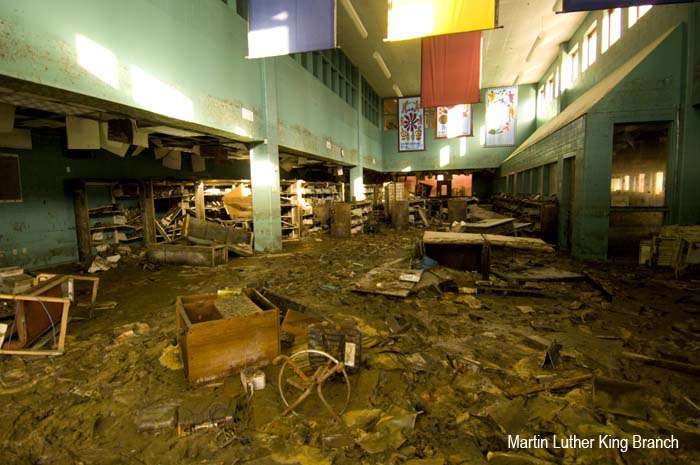
Donate Books: Help Rebuild New Orleans' Libraries


So You Wanna Be a Domestic Goddess passed on info. this week about the New Orleans' Public Library's call for for any and all hardcover and paperback books for people of all ages. The staff will assess which titles will be designated for its collections. The rest will be distributed to families or sold for library fundraising.

Books can be sent to:

Rica A. Trigs, Public Relations
New Orleans Public Library
219 Loyola Avenue
New Orleans, LA 70112

According to the NYFA (New York Foundation for the Arts) site,

If you tell the post office that they are for the library in New Orleans, they will give you the library rate which is slightly less than the book rate.


Saturday, March 04, 2006

Art, Social Change & Young Women Bloggers

This week Beth Kanter and I finished our week being mentors for the Young Caucasus Women Project. Last Sunday each of us wrote a post to answer the question, “Who is your favorite artist (visual, dancer, performer, writer or musician) and why?” Here is Beth's post and here is mine. During the week the young women in the program from Armenia, Azerbaijan and Georgia wrote their own posts answering the question, we commented on their posts and they commented on each other's posts. On Friday our mentor cycle ended and a new one will begin with a new mentor blogger tomorrow (Sunday). The project will continue through the spring and into early summer.

I am pretty sure all of the mentoring positions are taken for this project, but Ore, who was one of the mentors for this project, is going to be starting a similar project for young Nigerian women. If you are interested in getting involved you can email her at oreblogging@yahoo.com.

While writing my mentor post last Sunday I got to thinking about how artists use art for social change and accumulated a bunch of links for related projects, programs and organizations that I thought I'd share:

Change Me: The Power of Imagery to Create Change. This is a project of the Getty Museum. (I know I read about it in someone's blog this week, but now I've forgotten whose so my apologies for not giving a blogger out there credit for the find). Anyone can submit an image that inspires them and that they think will touch or affect the person viewing it. For every submission the Getty gets, they will donate $10 to Friends of the Global Fight Against AIDS, TB and Malaria.

California College of the Arts' Center for Art and Public Life "The Center for Art and Public Life creates community partnerships using the arts to address issues of social justice, diversity, community development, and education. Our programming is woven across disciplines at California College of the Arts and serves the diverse populations of the San Francisco Bay Area."

Institute for Social Ecology: "A ten-day program for artists, performers, activists, and media makers who wish to create and examine socially engaged art and media projects."

Film Your Issue This is a contest being sponsored by MSN Spaces, MSN Video, MSNC.com, USA Today, Entertainment Weekly and mtvU. They are looking for 30 to 60 second "issue films" (live action or animated) made by United States residents ages 18-26. I think we're going to see more and more corporations getting getting in on this action.

WITNESS: "WITNESS uses the power of video to open the eyes of the world to human rights abuses. By partnering with local organizations around the globe, WITNESS empowers human rights defenders to use video to shine a light on those most affected by human rights violations, and to transform personal stories of abuse into powerful tools of justice."

Fifty Crows Social Change Photography "FiftyCrows Foundation aims to bridge the gap between venues and distribution mediums for documentary photography, and encourage public dialogue on the issues raised through the photography."

Art Into Action: "Art Into Action is an international program of the Natural World Museum (NWM) designed to actualize sustainable culture using art as a catalyst to inspire, educate, and engage the public in environmental awareness and action."

If you know of more cool projects or individual artists using art for social change, I'd love to hear about them. You can put the info. in the comments or email me at britt AT brittbravo.com.

Thanks!