Friday, March 09, 2007

Interview with Jodie Van Horn of Freedom from Oil and Plug-in Bay Area

In September 2006, Marin County soft ordered 22 Plug-in Hybrids Electric Vehicles. In October the City of Berkeley soft ordered 40 plug-ins and in December the city of Alameda soft ordered 98. What's going on? The three Bay Area municipalities, along with Oakland and San Francisco (who haven't placed their orders yet) have all signed-on to be part of Plug-In Bay Area, an initiative to put more plug-in hybrid vehicles on the road.

I talked with Jodie Van Horn, a campaigner for Rainforest Action Network's Freedom From Oil campaign, and the coordinator for Plug-In Bay Area about the plug-in campaign in the Bay Area as well as the national Freedom from Oil Campaign. Below is a transcript from the interview, which you can also listen to on the Big Vision Podcast.

Jodie Van Horn: Plug-In Bay Area is a national grassroots effort to try to commercialize plug-in hybrid vehicles. We do that by pressuring automakers to start rolling these vehicles off of their assembly lines.

This was an initiative that began in the city of Austin, Texas with the municipally owned utility company, Austin Energy. They saw a need for a mode of ultra-efficient transportation that would plug in to a clean grid, and shift our fuel source off of gasoline, and provide us with an opportunity to find a cleaner, cheaper, domestic source of fuel and energy specifically for the transportation sector.

They began by setting a target of 50 U.S. cities. They were going to go out to those cities and try to form partnerships with the cities, to get the Mayors or the council members of those cities, at a policy level, to endorse the Plug-In Partner campaign, and then subsequently to get them to place a soft fleet order. A soft fleet order is an indication on the part of the municipality that were these vehicles to be commercially produced by the automakers, that municipality would buy "x" number of them the day they become available.

The desire of Austin Energy, and of this national initiative was to demonstrate that there is an existing market for a cleaner electric source of transportation, and that there is a recognition on the part of municipalities, businesses and consumers that technologies exist that will enable us to wean ourselves off of oil, and shift over to a new paradigm for our transportation needs.

From there, these efforts were springing up all over the country. They began with their approach of municipalities, mostly cities and counties. They were extremely successful in generating the support of politicians all over the country.

At a grassroots level, there had also been support for solution-based organizing around oil addiction, and around transportation, fermenting from some time. When this program sprang up, Rainforest Action Network, had been involved in campaigns surrounding the crushing of the EV1 a decade ago, which happened here in California -- with the car mandate -- many people have now seen Who Killed The Electric Car, and it goes into explaining that story quite well. So we had a history of organizing around transportation through our Jumpstart Ford campaign, which now has transitioned into our Freedom From Oil campaign.

With that history we recognized that plug-in hybrid vehicles are an immediate and viable solution to the issues that we have been trying to pressure automakers to acknowledge over the course of this campaign here at RAN. We picked this up and we dedicated a staff person to coordinate a local effort to get Bay Area cities and counties on board to support the national effort, and to contribute their soft fleet orders to the national demand for plug-in hybrids.

Britt Bravo: What are some things that are happening with plug-ins here in the Bay Area?

JVH: In the first six months we had five Bay Area partner municipalities; San Francisco, Berkeley, Oakland, Alameda and Marin County have all sign on. Out of those, Marin County, Alameda and Berkeley have all placed their soft fleet orders. We're also working with those cities on generating some demonstration projects.

It's a really exciting time. We've had announcements out of some of the automakers that there is a potential that they're building this platform for these plug-in hybrid vehicles to be produced. They haven't set any production dates, or indicated any numbers for their production. We don't want this to become a niche market. We see this as a potential future for transportation, or at least an immediate step to having ultra-efficient choices in vehicles for the public.

What we're trying to do is generate enough support to indicate that we need these announcements out of the auto industry to translate into something tangible. We're doing that by trying to bide our time until that promise comes, or until that commitment comes, by actually putting as many of these vehicles out on the road as possible and watching them operate in a real-world function; generating data on their emissions, reductions and fuel savings; educating the public about their potential to help us solve our oil addiction, and really getting them out into the hands of fleet operators; holding educational conferences and demo projects where people can rally behind this technology and continue to build that pressure on automakers so that they actually come through with some commitments on when and how many they're going to build.

BB: What is a plug-in hybrid?

JVN: A plug-in hybrid is essentially a conventional hybrid vehicle, like a Toyota Prius, with an additional battery pack that extends the range of the vehicle in all electric mode, and then adds a plug for overnight charging. It's a little bit like having an electric vehicle with a back-up gas tank. You can drive all electric for the extended range of your battery charge, and then when you reach the end of your battery capacity you have a backup engine in case you need to do long-distance driving. You always have the support of a back-up engine that ideally is a flexible fuel engine, which could be powered with bio-fuels or domestically grown cellulosic ethanol or some other more sustainable fuels than gasoline. It makes a much more sustainable vehicle and it doubles your fuel efficiency.

Additionally it decreases your carbon footprint and your tailpipe emissions significantly. Especially if you are plugging your vehicle into a clean grid, you're powering your car literally with renewable energy like wind or solar, that's coming directly from the grid and into your car, as opposed to filling your car with dirty gasoline, that's a foreign source of oil, and that has all of the implications of the chain of production of oil. It's much cheaper for the consumer; it's under a dollar a gallon to fuel your vehicle with electricity as opposed to gasoline, so there's a real consumer incentive to support this technology. Environment aside, from a consumers standpoint it makes a tremendous amount of sense.

BB: What's preventing this from happening? What is the argument against plug-in hybrids?

JVH: The primary argument coming out of the automakers at this time is I believe a bit of a cover-up for a larger problem, which is simply the inertia on the part of companies to change their model of business; to change their way of doing things. It would not require a huge investment on the part of automakers and what investment it incurs will be paid back over time in the savings from switching over to more highly efficient vehicles. This has been proven through studies that have been done of the current vehicles on the market and that demonstrate that even with existing technologies, we could improve the overall fuel efficiency of vehicle fleets to 40 miles per gallon without even implementing new technologies.

Plug-in hybrids fit into that, and the one piece that automakers are claiming is an impediment to putting these cars on the road is the battery technology. So we are looking at finding batteries that hold a charge for a long period of time, that give people the extended range that they need to do their commuting, and new technology such as the lithium ion battery have the potential to do that, but right now they are very expensive because automakers haven't invested the R&D money into those battery technologies to really stimulate the change that is needed for them to be able to use those batteries in the application of the plug-in hybrid. So it is sort of a chicken and the egg. They need to put the money into making the battery technology available, but they are claiming that they can't do that. They can't produce the vehicles because the battery technology isn't there.

We are seeing some breakthroughs on this. They have applied for federal money for battery research and development, which is promising, it indicates that they are serious about looking into electric transportation and they are exploring the battery question, but I think that the other issue is simply just the larger issue that it is hard to get corporations to change their behavior, and as we saw with Who Killed the Electric Car, there is a strong relationship between the oil industry and the transportation industry, and until we are able to shift transportation away from the oil companies, it's going to be difficult for us to make major headway in defeating oil as our primary source of fuel and so the more that we can pressure automakers into believing that there is a public perception that oil is a fuel of the past, and that there is an urgency with climate change, with national security, and with the price of oil to get ourselves off of it, I don't think the automakers are going to change out of the goodness of their hearts.

BB: Can you talk a little bit about the other aspects of the Freedom from Oil campaign?

JVH: So Freedom from Oil is a campaign that looks at the behaviors of automakers and tries to pressure them and negotiate with them in order to have them change their behavior and really be the leaders in weaning America off of oil.

Transportation in this country represents 70% of American oil consumption and so it is a major piece of the pie if we are talking about switching over to renewable energies and getting off of this very dirty fuel source. This is why we have chosen the transportation sector as the area where we really feel we need to focus our efforts if we are going to have an impact on climate change, and on national security, and so what we have done is taken an approach to try to convince automakers that they need to do a variety of things in order to maintain their positions as leaders of an industry, so looking especially at the behaviors of Ford, GM, DaimlerChrysler and Toyota, which are the major players, the four out of the big six in our country that are producing vehicles, and asking one of them to step out in front of the industry and really make commitments to fuel economy, make commitments to greenhouse gas reductions across their fleet, make commitments to producing ultra fuel efficient vehicles, and harnessing the technologies that exist today that would enable them to do so.

Additionally, there has been a lot of rhetoric on the part of the automakers regarding the greenness of their operations, when in fact what we are seeing is a lot of green-washing. They recognize that green is very vogue right now. They recognize that citizens are extremely concerned about global warming. They recognize that consumers have made the connection between climate change and transportation, and so they are trying to portray their vehicles as green choices.

And we have seen, in the case of Toyota, we've seen them come out with a hold on the hybrid market, and look like a very green company, but at last month's Detroit auto show the premier vehicle that they displayed was one of the largest trucks in the industry, and so until we see actual production matching the PR that is coming out of these companies, we don't feel that we can afford to take the pressure off of them to create commitments instead of faulty promises, or to create commitments instead of PR, and we do that in a number of ways. We do that by showing up at auto shows and giving voice to the public, and you know just the old fashioned stand out there with your banners and get heard, and get heard by the media and be the dissenting voice that calls out their green-washing and that makes it clear that there's a lot more that these companies could be doing.

Additionally, many of the large automakers are involved in the State of California in a lawsuit to sue the State of California for trying to impose regulations on tailpipe emissions, and for companies that are trying to portray themselves as green companies, it is unacceptable that they are trying to impede progress in the State of California for us to have healthier air for California consumers and California citizens and to try to regulate our state greenhouse gas impacts.

So it is highlighting those hypocrisies and working to spread the word and generate more support amongst the public, and to put more consumer and reputational pressure on automakers for them to clean up their act and match their words to their deeds.

BB: How can people who are listening get involved?

JVH: To get involved in the Freedom from Oil campaign, there are a variety of ways that we hope to work with communities, work with labor, work with effected oil communities and work with grassroots activists to try to mobilize a movement to pressure automakers and on our Freedom Fom Oil website which is just freedomfromoil.org, there is a list of tactics that we use that we hope to engage people in, and it ranges from fun and creative actions like the Oil Enforcement Agency, which is going out and starting to take the specs on big SUVs and writing them tickets for their gas guzzling and for their emissions, to holding an Oil Addicts Anonymous meeting in your town to bring community members together to talk about oil addiction, and to figure out how you can organize to get involved in the campaign, and in the movement. That would look like a meeting to first admit our addiction to oil, and then to talk about some of the ways in your community that you can either pass a resolution; for example, through the City Council to wean your city or county off of oil, and to adopt more fuel efficient purchasing for city fleets, which brings in the plug-in hybrid work. So in many cases we have worked with Council members to try to draw up a resolution to pass through City Council that mandates a city to place fleet orders for the most fuel efficient vehicles available, and to place soft fleet orders for those that aren't yet there, but are on their way, like the plug-in hybrid vehicle.

If there is interest in starting a local campaign to promote plug-in hybrids, this can be done in a variety of ways either through working with a municipality, or initially getting businesses to sign on. Businesses often have fleet vehicles, or at least have ideal lobbying power for creating rebate programs or incentives for employees to purchase fuel efficient vehicles, and there is kind of a campaign-plan menu of options available through the Plug-in Partners web site, or by contacting me at jodie@ran.org to discuss the plug-in work or the Freedom from Oil work.

BB: How did you get involved in this kind of work?

JVH: Well, I really started out as kind of a college activist who felt that things weren't right in the world. I wanted to see them improve and I was looking for ways to get involved. I came about it by way of fair trade and economic justice issues and got very concerned with the growing climate justice movement and how that not only affects generations to come, but it affects people, communities living on the ground today, and became increasingly concerned about resource extraction and its impact on those communities, and how that ties in so strongly to these climate issues and to resource extraction.

I was very fortunate to come across the Rainforest Action Network, which has been working on these issues for decades, and to find a niche within this organization to be able to carry out the work that I felt passionate about. I applied for this job with the Freedom from Oil campaign because I see climate change, in particular, as one of the most pressing issues of our time. I see that there is a major tipping point happening in the global climate change movement and consciousness of global warming, thanks in part to Al Gore's film, An Inconvenient Truth, and simply the manifestations that we have seen from hurricanes to melting icecaps, and that it's a time that I could not be working on anything else but this.

I am so pleased that an organization like Rainforest Action Network exists that is working on these issues with a variety of other allies and key organizations that are really working with people on the ground to make a difference and to shift our economy off of destructive, extractive fuels and resources, and provide a more sustainable future.

BB: How do you keep inspired?

JVH: I think I am most consistently inspired by the people that I meet when I am traveling around this country who are working in their own capacity on various aspects of these issues. When I realize that I am this small person in the midst of a growing, global movement that is so massive and so important, and when I travel to college campuses and I see students who are putting school work aside to be engaged in campaigns to promote a healthier future for all of us, and when I go to affected communities, and I see the destruction on the ground translating into action and hope among the people most affected, and I hear them speak, I know that my place needs to be participating in that in some way.

I am most purely given hope by all those folks out there that I work with on a day-to-day basis, or that I interact with at some juncture in this movement, who make me feel not alone in the work that I do and help me know that there is an alternative that many people are working towards, and we are working against a difficult system, but we're in it together. Through that, I believe it is possible.

BB: Is there anything else you want people to know about the Freedom from Oil campaign or Plug-in Partners, or Plug-in Bay Area?

JVH: The bigger vision specifically for the plug-in work, but how it really ties into a lot of other work we do, ties into rainforests, which is clearly in our mission statement and in our name as the Rainforest Action Network, and ties into climate justice issues and economic justice issues, and that is with the plug-in work there is an opportunity to not only plug our vehicles in, and drive on electric power, but to stimulate a greening of the grid so that we can get off of fossil fuels. That is where we see the real momentum behind this particular technology being is that it has implications for our grid energy to be able to green the grid.

You can't green gasoline, you can't green fossil fuels, but you can make the grid greener over time, and if we create an economy that is poised to do so then we are actually able to see a chain effect, stimulate an economy for renewables and we eliminate a lot of the chain of production issues and we get oil companies off of indigenous lands, and we get pipelines out of rainforests. There is a bigger picture here that we have acknowledged, that we feel if executed properly, there are wide-ranging implications that can help us achieve our commitments to forests, to climate, and to the people that live in those places that are most affected by these types of projects.

I guess the only other thing I would add is that we, as an organization, really hope to provide a grassroots network of activists with the tools or the training, or simply the support, to make change. We dedicate a lot of time intentionally to supporting other campaigns and supporting other efforts, and working in solidarity with groups who have a similar mission in mind, and a similar vision for this planet.

As a Freedom from Oil campaign, we really hope to work with more activists and provide what we can to support efforts that are happening on the ground to solve some of these issues. By contacting Rainforest Action Network, or by contacting the campaign, or by contacting our coalition partner, Global Exchange, activists out there working on these issues, should feel empowered to tap into a network, and should help empower us to tap into their network so that we can all work together to solve some of these problems. We have mandated ourselves to do what we can to support those groups because that's really where change is happening, is from the ground up.

For more information about Rainforest Action Network's Freedom from Oil campaign, go to freedomfromoil.com. For more information about a plug-in campaign in your area, go to pluginpartners.org.


Thursday, March 08, 2007

Women Rise Up Against War: Rae Abileah of CODEPINK

According to UNIFEM's, "Gender Profile-Iraq-Women, War & Peace,":

"[M]ore than 90 women become widows each day due to continuing violence countrywide. The Ministry of Women's Affairs estimates that there are at least 300,000 widows in Baghdad alone, with another eight million throughout the country."

Today, March 8th, is International Women's Day. March 20th is the 4th anniversary of the Iraq War.

To celebrate the first day, and hopefully prevent the recurrence of the second, here is an e-interview with Rae Abileah, the Local Groups Coordinator of CODEPINK.

1. What is CODEPINK?

CODEPINK is a women-initiated grassroots peace and social justice movement working to end the war in Iraq, stop new wars, and redirect our resources into healthcare, education and other life-affirming activities. CODEPINK rejects the Bush administration's fear-based politics that justify violence, and instead calls for policies based on compassion, kindness and a commitment to international law. With an emphasis on joy and humor, CODEPINK women and men seek to activate, amplify and inspire a community of peacemakers through creative campaigns and a commitment to non-violence. Check us out at www.codepinkalert.org!

2. What do you do as the Local Groups Coordinator?

As local groups coordinator, I connect CODEPINK's national campaigns with the grassroots women's movement for peace, and brings organizing resources to local coordinators. In a practical sense, that means that I: answer dozens of emails, write action alerts, facilitate training conference calls, paint on giant pink slip banners, coordinate activist trainings and national events in DC, empower women to take a risk and speak up for peace, think of creative ideas to get our message out, counsel women on how to effectively and peacefully work together (and avoid needless infighting), and help get new local groups started.

A lot of my organizing is done over the Internet, though I am most nourished by my direct face-to-face experiences working with women around the country. It’s so inspiring to see people I’ve spoken with on the phone and chatted with over email in action marching around the Capitol, speaking up in hearings in Congress, making lasting sisterly bonds at a national organizing retreat, and to virtually take part in grassroots actions around the country by posting action report backs and photos to our website. Check out our local spotlight with great action photos on our site.

3. How did you get involved with CODEPINK?

This an exciting story. I graduated college in New York City the summer of 2004 and went to the Republican National Convention (RNC) protest at the end of that August. I looked on Craigslist to find a ride back home to California, where I grew up, and found a post for a woman with a CODEPINK truck who was offering her truck as a moving service to help fund her trip from California, and her activist work. I emailed her and asked if she’d take a person in addition to my stuff, and we met up at one of the RNC protests outside a courthouse. We knew instantly that it would work well to travel together.

The phenomenal woman with the giant CODEPINK truck, Sam Zanne Joi, and I traveled through the deep South and Southwest, weaving our way through little towns in the Appalachian mountains with names like War, West Virginia, and Truth and Consequences, Texas. Everywhere we stopped (and I mean everywhere, from coffee shops to gas stations to parks) we talked with women about the importance of voting and firing Bush. I learned the CODEPINK rap—about how we must stand up for peace in the face of the color-coded terror alerts and other government scare tactics, and how as women we can empower ourselves to be strong leaders for justice in our communities—from Sam as we traveled. We blogged every step of the way, uploading our travel stories at libraries and free Internet cafes. You can read about the trip on our blogs listed below.

When we reached California, Sam was adamant that we needed to go to Ohio to continue registering voters, so I joined her for the northern trip on I-80 and we spent two weeks in Ohio going to concerts and riding the subways, registering voters all the while. From there I went up to Wisconsin to continue voter outreach efforts, this time targeted at getting out the youth vote. The day after the election (my birthday, actually), I flew home to California, feeling defeated, and met with CODEPINK co-founder Medea Benjamin, who inspired me to stay active and continue the struggle. I traveled to DC for the second inauguration of Bush, protested with CODEPINK, and got inside the inauguration ceremony and Bush’s Black Tie and Boots Ball for some powerful disruptions.

I have worked with CODEPINK’s counter-recruitment campaign, coordinated our book tour, assisted with every national campaign over the past two years, and now serve as the local groups coordinator. My work is deeply fulfilling and is the best medicine for hopelessness—I am daily inspired to truly believe that another world is possible.

4. What is the biggest challenge of your work?

The biggest challenge we face is achieving our goal—stopping the war in Iraq, bringing home our troops, and supporting Iraqis to build peace—in the face of US apathy, misguided belief, and a wealthy ruling class that is addicted to oil interests and power. We face the challenge of learning how to build a diverse movement that is inviting, warm, serious, and also playful and compassionate.

Currently we are facing the challenge of pushing the newly elected Congress to stop buying Bush’s war by voting against the supplemental spending bill. Unfortunately, our representatives easily speak out against Bush and his troop escalation, but get tripped up about the funding because they fear that they will not be supporting our troops. Our task is to help them, and the American people, see that supporting the troops is cutting funding for the continuation of the war, and caring for our troops with adequate healthcare services when they get home. If Congress buys the war again, we must make them aware that now they own it, and all the responsibility that comes with being at the helm of an occupation—the blood will be on their hands.

5. What is Code Pink's biggest success story?

Our biggest success is that a group of visionary women came together with the intention of preventing an attack on Iraq, sat outside the White House every day and reclaimed the color pink as a powerful color for peace, in the face of a government based on fear and lies... And their actions caught like wildfire and have spread throughout the country (and world!) to create the foundations of a women’s movement for peace and justice. That movement has achieved wonders in the past four years: a pink slip campaign to fire the president that included dropping giant pink slips (large banners shaped like ladies’ lingerie), speaking out inside the Republican National Convention and inside of numerous speaking events with Bush and Co., hosting a tour of Iraqi women who visited over 100 US cities speaking about the need for the US to leave their country,

The real success is the mom with a son in Iraq who emails me and says, “I want to do something. Please let me know how I can help.” The tenth grader who wants to show a film about Iraq in school and calls us for support. The security guards in Congress who whisper that they feel blessed when they see us entering the building day after day.

6. How can readers get involved with CODEPINK?

Visit our website, www.codepinkalert.org, to sign up for our weekly action alerts and find out how to get involved with CODEPINK. You can find a local pink group in your area, see our current campaigns and photos from actions, and sign onto the Give Peace a Vote pledge. You can also start by being CODEPINK—speak with people you meet everyday about the important and urgent need to bring our troops home from Iraq; join local peace rallies and marches; use creativity and feminine energy to bring truth to power. Most importantly, your Congressperson NEEDS to hear from YOU! Call, email, and visit your rep’s office and urge them to vote to stop funding the US occupation of Iraq. Find contact info for your elected leaders at www.house.gov and www.senate.gov. Join us in DC in the months ahead to pressure Congress to defund the war in Iraq! CODEPINK will have a house and will be taking action daily in the halls of Congress and around town.

7. What are some of your favorite blogs written by women?

Sam Zanne Joi’s blog about her travels around the country spreading the CODEPINK peace message.

CODEPINK’s Iraqi Women’s Tour in the US

Posts by Linda Milazzo, especially this one.

Faiza, an Iraqi writer, has a blog, A Family in Baghdad.

Divine Caroline, a new site dedicated to publishing writing by women, has a great Changemakers category in their Neighborhood and World section.

My CODEPINK blog.

Check out CODEPINK’s favorite pink blogs (and advice for how to start your own).

My newest favorite thing to peruse is this site called www.wefeelfine.org—it’s a program that searches blogs, myspace, etc. by characteristics (gender, age, country, weather) for emotions. Check it out.

Rae can be reached at rae@codepinkalert.org.

Cross-posted from BlogHer.


Wednesday, March 07, 2007

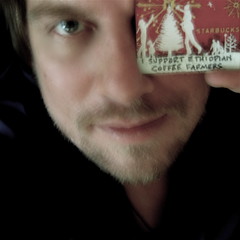
Oxfam Uses Flickr To Advocate for Ethiopian Coffee Famers

Through just one cup of coffee, we are inextricably connected to the livelihoods of millions of people around the world who are struggling to survive.--from the Director's Statement, Black Gold

Oxfam America has joined the movement to give Ethiopian coffee growers a greater percentage of coffee profits:

"Oxfam is calling on coffee industry leaders to sign agreements that recognize Ethiopia’s right to control the use of its coffee ’brand names.’ With these agreements in place, Ethiopians could occupy a stronger negotiating position with foreign buyers, capture a larger share of the value associated with their names, and better protect their brands – regardless of whether the trademarks were granted."

One aspect of the campaign is a Starbucks Flickr petition. Supporters have uploaded photos of themselves with a sign that says, "I support Ethiopian farmers." So far, 186 photos have been posted. My only criticism of the campaign is that very few of the photos have a Creative Commons license that allows bloggers and other supporters to share the photos and spread the word.

For more information about Oxfam's Starbuck's campaign click here.

For more information about Ethiopia's efforts to trademark its coffee names, check out Green LA Girl's posts about Ethiopia vs. Starbucks.

To find out when the documentary Black Gold is playing at a theater near you, click here. It will also have its broadcast premiere on PBS April 10th on Independent Lens.

Cross-posted from the NetSquared blog.
Hat tip to the NTEN Flickr Affinity Group for the story.

Photo Credit: "www.oxfamamerica.org/starbucks" by David Poe.


flickr petition coffee fair trade oxfam

Sunday, March 04, 2007

10 Ways Nonprofits Can Use Blogs and Bloggers to Support Their Cause

Last March I was on a blogging panel for an event put on by the Alliance of Technology and Women. To prepare for the panel, I wrote up 10 Ways Nonprofit Can Use Blogs.

Next week, I will be participating in a session entitled, "Reach Out and Blog Someone" along with Steve Swenson of the Bakersfield Californian at the United Way of Kern County's Professional Development Conference for Nonprofits. You can read Steve's blog at the Eye of Bakersfield.

A lot of nonprofit blogs have come on the scene in the year between these events and I feel like it is time to revise and update my "10 Ways" post to include not only ways that nonprofits can use blogs, but also engage bloggers to support their cause. Blogs fall under the category of "social media" because they are, well, social. They are a tool that allows for a conversation between the reader and the writer, and for information to reach people quickly all over the world. It only makes sense that if your nonprofit is going to include a blog in its communications strategy that it includes other bloggers too.

So here it goes . . .10 Ways Nonprofit Can Use Blogs and Bloggers to Support Their Cause

1. Include bloggers on your press list.

There are a lot of people out there reading and writing blogs.

According to the blog search engine, Technorati's, "State of the Blogosphere" in October 2006:
Technorati is tracking more than 57 Million blogs.
Today, the blogosphere is doubling in size approximately every 230 days.
About 100,000 new weblogs were created each day
According to the Pew Internet & American Life Project report, "Bloggers: A Portrait of the Internet’s New Storytellers" from July 2006:
8% of Internet users, or about 12 million American adults, keep a blog.
39% of Internet users, or about 57 million American adults, read blogs.
90% of bloggers say they have read someone else’s blog
That's a lot of folks who are including blogs in their media consumption list. When you are creating your press list, be sure to search on Technorati and Google Blog Search to find bloggers who are writing about your organization's issues and send them your press release as well.

2. Use Your Nonprofit Blog to Create Your Own Media Coverage

When the men accused of murdering Gwen Araujo, a woman they beat, bound and strangled after they discovered that she was biologically male, went to trial, the Community United Against Violence decided to use a blog to document the trial.

Because many of CUAV's volunteer bloggers were more knowledgeable about issues such as the trans-phobic tactics that were being used by the lawyers, they were able to address many issues that the mainstream media missed. The blog also kept people informed during the second trial, when media coverage had diminished, and eventually drew attention to the trial when the blog got news coverage.


3. Provide bloggers, and your supporters, with an RSS feed of news related to your organization so that they can spread the word for you.

Don't be afraid of RSS feeds. First of all, what are they? From Yahoo! News:
RSS stands for "Really Simple Syndication" -- it's a format for distributing and gathering content from sources across the Web, including newspapers, magazines, and blogs.

Web publishers use RSS to easily create and distribute news feeds that include links, headlines, and summaries. The Christian Science Monitor, CNN, and CNET News are among the many sites that now deliver updated online content via RSS.

Human Rights Watch doesn’t have a blog, but they offer RSS feeds of human rights news to supporters so that they can blog about, and share information with others, about human rights issues.

For more information, check out the Tech Soup article, "Easy Ways to Publish Your Own RSS: Use RSS to Help Your Constituents Stay On Top of News and Announcements," and the Social Signal article, "Make Your Nonprofit More Effective with RSS Aggregation."

4. Include outreach to bloggers as part of your online fundraising campaigns.

As I mentioned in my post about "extra-organizational activists", there are bloggers out there who would love to raise money for your cause:
Beth Kanter raised $800 for the Sharing Foundation using the ChipIn widget plus her blog, social networks, Flickr and video in 26 days.

Darren Rowse celebrated ProBlogger's two year anniversary by using his blog to raise $830 US ($100 AU) for Oxfam Australia with his Blogging for Chickens campaign.

Beth Kanter raised $50,000 for the Sharing Foundation using a Network for Good Badge and similar tools to the ChipIn campaign, in three weeks.

Chez Pim raised almost $62,000 with her Menu for Hope Campaign in 2.5 weeks using her food blog and an online auction.
Why not ask your supporters how many of them have a blog or web site where they would be willing to promote your fundraising campaign? Widgets like ChipIn and Network for Good Badges, and services like Firstgiving make it easy for them to support your cause. (Full disclosure: I am on ChipIn's nonprofit advisory board).

5. Use Your Nonprofit Blog to Raise Money

Many blog readers have money to give. Why not ask them?

According to BlogAds 2005 Blog Reader Survey, 43% of blog readers had incomes greater than $90,000. In 2006, BlogAds broke down the reader demographics even more:
The median political blog reader is a 43 year old man with an annual family income of $80,000. He reads 6 blogs a day for 10 hours a week. 70% have contributed to a campaign.

The median gossip reader is a 27 year old woman with annual family income $60,000. She reads 4 blogs a day, five hours a week.

The median mom blog reader is a 29 year old woman with an annual family income of $70,000, reading 5 blogs a day for 4 hours a week.

The median music blog reader is a 26 year old man with an annual family income of $60,000 reading 5 blogs a day four hours a week.
According to the 2005 article, "Blog Readers Spend More Time and Money Online,” by Sean Michael Kerner:
Blog readers tend to make more online purchases. In the first quarter of 2005, less than 40 percent of the total Internet population made online purchases. By contrast, 51 percent of blog readers shopped online. Blog readers also spent six percent more than the average Internet user.
6. Use Your Nonprofit Blog to Involve Volunteers and Supporters

Nonprofit workers often tell me that they don't have time to write a blog. Depending on your organization's work and audience, you may not have to. I write for the NetSquared blog each day (it takes me anywhere from 15 minutes to an hour depending on the topic), but it is also designed to be a community blog, so any registered user can post on it about how nonprofits are using the social web for social change.

Interplast, an international humanitarian organization that provides free reconstructive surgery in developing countries asks their surgical volunteer staff to upload posts to the blog from their worksite.

Urban Sprouts
, a school gardening program, allows volunteers, as well as staff, to post on their blog.

The Best Friends Animal Society
allows its supporters to create blogs on their Best Friends Network around animal, and animal adoption issues that they care about.

March of Dimes' Share Your Story blog allows families with children in NICU (Neonatal Intensive Care Unit) to share their experiences with one another.

7. Use Your Nonprofit Blog to Report Back From an Event, Trip or Disaster

Do you have staff or constituents going to a conference that your supporters would be interested in hearing about? Ask them to blog during conference sessions and post photos. For example, here is a post that I wrote from Aspiration Tech's Nonprofit Developer's Summit for NetSquared blog readers.

Perhaps your staff makes a lot of international trips. Witness for Peace has a blog for their team in Mexico and for their team in Nicaragua to report back on their work there.

Blogs can also provide ways for people to find out information about loved ones if your organization works in disaster relief situations. Gregg Swanson, the Executive Director of HumaniNet, blogged and uploaded photos to HumaniNet's Flickr account using a satellite connection as part of a disaster response simulation exercise in Asia.

8. Use Your Nonprofit Blog to Work Smarter

Would you like to avoid the crunch when it comes time to write the annual report or quarterly newsletter? If you post organizational news on your blog regularly, when it comes time to pull stories together for other publications, you will already have a lot of the material written.

For example, for this post, and to prepare for this session, I am drawing from other posts that I've already written. When we publish the NetSquared e-newsletter, we often draw from the NetSquared blog for material.

You can also use reader comments, or posts by volunteers or constituents in grant applications. Urban Sprouts Executive Director, Abby Jaramillo, brought her laptop to one meeting with a funder and showed them the positive comments written on a post by teachers and students who were being served by the program.

9. Use Your Nonprofit Blog to Build Trust with Supporters

In a time when donors are being asked for money from more organizations than ever, when nonprofit scandals are in the news, and when funders want more accountability for where their money is going, it is important that they trust your organization and see that there are real people, like them, working there. A blog can give them a glimpse behind the scenes, and provide a transparency and authenticity that an annual report or brochure may not.

Dave Rochlin, the COO of TransFair USA, the only third-party certifier of Fair Trade products in the United States, recently started a blog for their organization. In his first post entitled, "A Fair Trade blog . . .so why now? Rochlin writes, "So why start blogging? We decided that since we're more than just a label, it would make sense to let you see what's behind it."

If your organization decides to start a blog, I highly recommend that you allow readers to see who the individual or individuals are who write each post, rather than saying, "posted by organization x."

Blogs also build trust because readers can write comments and correspond with the writer(s). In a world where web sites offer only an anonymous contact@organizationx.org address, or make you go through a maze of automated messages and "press 2 now" in their phone system, the value of human connection can't be underestimated.

The Ann Arbor District Library System uses a blog for the front page of their site. Library users can ask questions and make suggestions about library news, announcements and events in the comments of each post.

10. Use Your Nonprofit Blog to Build a Broad-Based Movement

There is a lot of talk these days about nonprofit "silos." There are groups that are working on environmental issues, groups that are working on women's issues, groups that are working on disability issues and groups that are working on poverty issues, but really, aren't all the issues connected? Aren't we all trying to create positive change?


Part of a blog's structure is something called a blog roll, a list of blogs in the sidebar that the blogger reads, or feels is related to the topic of their blog. Something I don't see enough of is nonprofit bloggers listing other nonprofit blogs in their blog roll, referencing other nonprofit bloggers posts in their posts, and commenting on each other's blogs. Cross-referencing between organizations' blogs can add supporters to both organization's lists and paves the way for future collaborations.

Take a look below at this quick round-up of nonprofits blogs. Are there any you could add to your blogroll? (Big thanks to the Have Fun * Do Good and NetSquared readers who sent me some of these links).

AARP Issues Blog
Amnesty International Death Penalty Blog
Ann Arbor District Library System
ASPCA
Brown Bagging for Calgary’s Kids
Center for Global Development
Ella Baker Center for Human Rights
Environmental Defense
First Book Blog
Foothills United Way Blog
Generation Why/Oxfam Blog
Greenpeace
HumaniNet
iAbolish-American Anti-Slavery Group
Interplast
Jane Goodall Institute’s Gombe Chimpanzee Blog
Jubilee USA

NetSquared
NTEN
Mile High United Way Blog
ONE Campaign Blog
People’s Grocery
Poverty Initiative at Union Theological Seminary
Rainforest Action Network
Streetside Stories
SOS Community Services
Sustainable TableTransFair USA
Urban Sprouts
Unitarian Universalist Service Committee
United Way of Central Florida
Walker Art Center
Witness for Peace Mexico Blog
Witness for Peace Nicaragua Blog
WITNESS Video Hub Blog

What are some other ways that you have seen nonprofits use blogs?

If you are excited to start a blog for your nonprofit, check out 5 Tips to Start a Nonprofit Blog.


Friday, March 02, 2007

Creating Markets for Fair Trade Gifts: An Interview with Priya Haji of World of Good

If you are going to buy something anyway, as a gift, or for yourself as a decorative item, or for your home, then why not buy something that has the hope or a dream of another person embedded into it, and by purchasing that thing, you are joining with them to pull that forward.--Priya Haji

This Christmas I bought a lot of my gifts from World of Good, a Bay Area company that creates opportunities for hundreds of artisan cooperatives around the world to share their work by serving as a bridge to the U.S. retail market. Recently, I got to talk with Priya Haji, the CEO and co-founder of World of Good about their work and her advice for aspiring social entrepreneurs.

You can hear the interview on the Big Vision Podcast, or read the transcript below.

Priya Haji: My name is Priya Haji. I am the CEO and co-founder of World of Good, and also World of Good Development Organization, which is our non-profit sister organization. The mission of World of Good, as a company, is to create the largest distribution system for fair trade, handmade items from artists' and women's cooperatives around the world. What we really believe is that there is a kind of new consciousness to consumerism in the United States, and as consumerism is sort of evolving, people are really thinking about how to purchase or consume, but at the same time make a constructive impact on the world and express their social or other kinds of values into the world.

We are seeing this in the food industry, with things like the growth of the organic movement. We have seen it in energy, and increasingly now with energy technologies. And we think that one of the forward movements in this space is really going to be around conscious consumption in terms of ethical sourcing and really thinking about the impact that the products we buy have on the countries and the communities where they are made, and really thinking about social justice and environmental justice in relationship to those products.

So, that is the big market trend that we see, but really World of Good was started, as a company, to figure out how to harness that trend to do the most good for women around the world. In particular, what we have seen over the last 15, 20 years is that there has been this tremendous investment in using crafts and handmade items as a form of economic development for women around the world. We have seen investments from microfinance organizations as well as the UNDP, Peace Corps, Ashoka, and this incredible supply-side stimulation, but not enough demand.

You have thousands of women working in the informal sector, making handmade items and oftentimes under exploitative conditions, and we really believe that there is a big opportunity to create a distribution system for ethically-sourced, fair trade, handmade items, and therefore help create sustainable economic development in thousands of communities around the world, increasing their livelihoods, improving the opportunity for their children, and ultimately bringing beautiful, amazing products to the consumers in the United States.

The way that World of Good has really gone about this is, we have done it in a two-part model. We believe that, like every consumer movement, it is going to be the first-mover companies and the early brands that build a distribution system. With that in mind, World of Good has really launched a kind of retail strategy, looking a lot like Hallmark. So what you find is, for conscious retailers we offer a plug 'n play gift offering. So you, as a consumer, can walk into a store like Whole Foods, or walk into a Barnes & Noble College Bookstore, and find a whole section of these fair trade handmade gift items. It ranges from jewelry, and accessories, and bags, and scarves, and schoolbags and journals to, we also do a whole line of housewares like bamboo bowls and placemats.

Each one is made in a community where it is actually creating a sustainable economic development opportunity in that community. They are all made from natural materials, sustainably harvested, and every product has not only a beautiful quality, and you can really see the handmade aspect of the product and at the same time it is stylish and fashionable, and it has a great little story on it that tells you where it comes from, how it was made, how it benefits that community. So it really helps connect you, as the person purchasing this product, to the sense of impact that you are making not only through your purchase but also on that community through its sustained work.

So anyway, it is really exciting. We started about two years ago with that commercial mission in mind, and we now have 1,000 stores across the United States that have a small section, a World of Good "footprint" in their store. And we invite you, if you know a store in your neighborhood that you think should definitely have a World of Good section, please email us or tell them to contact us. But we have had amazing response from consumers all across the United States, really buying the product and writing us emails, and sort of getting involved, and also referring artists and groups to us. We now work with 140 artists and cooperatives in 34 countries around the world, and it is starting to make a really sustainable impact in those communities as year after year we are able to order, and order larger numbers. This year we will grow to 1500 of these stores around the United States. So it is a really exciting time for us as a company, and a lot of exciting growth.

So as we have launched this business initiative, we have done it in partnership with some amazing retailers like Whole Foods, like Barnes & Noble College Bookstores, as well as with many independent retailers, also, Wild Oats and Wegmans. So we have kind of had a whole lot of stores say, "Hey, this is the wave of the future. We believe. We want to support it." For them it is a viable business which is part of our goal, is that we want them to see this like any other business decision, but at the same time that they make a business decision they can do a good thing with it.

What we also believe will start to happen is that you create an environment of sort of inspired competition. The more retailers that participate in this way, the more consumers that buy this way, the more that there is a real market demand for it, the more that other retailers will start to say, "Hey, we should be offering things like this. We should have fair trade. We should have ethically-sourced product in our stores. We should be able to tell the story and communicate the mission."

What we believe is going to happen at World of Good is that over the next five to ten years, this movement is going to grow a lot, and in that process World of Good will certainly be one of the businesses that will benefit, but we actually think many more will enter, and many more will benefit as a result. So in that vein, what we think is really important is that you have to have very good, clear standards, and you have to have really replicable ethics, essentially, so that anyone can join this movement and say they are doing it, and we can trust what they are doing.

With that in mind from the very beginning, we started our non-profit sister arm, which is World of Good Development Organization. You can find it on the web at worldofgood.org. What we really started out with there is that in this movement around ethical sourcing and fair trade, these are all products that are made in the informal sector. So they are not made in big factories where there are ILO regulations like there would be for a Nike factory.

These are really products that are made in people's homes and villages, mostly by women, in countries--well, you know, women's work is never captured in GDP, and we all know this. So women cook, clean and take care of their children, and these are all uncompensated activities. So oftentimes if a woman is doing something that has economic value, it often gets undervalued in society, and in particular in these kinds of countries and communities, where she may be uneducated, have very limited access to the market. The likelihood of exploitation is much higher. We entered into this thinking about, "How do we really help create stronger wage standards in informal markets?"

We are not thinking about this alone. We partnered with all of the large fair trade organizations in the United States and in Europe, and around the world in Asia, Africa, and Latin America, through IFAT and through the Fair Trade Organization and through the Fair Labeling Organization, to think about, how do we really create wage standards in informal markets, and then how do we implement that in a consistent basis?

One of the biggest challenges has been, when you think about fair trade coffee or fair trade tea, those are items that are commodity pricing; so when you buy or sell a pound of fair trade coffee, you are really buying it or selling it based on a market price, and then the fair trade price is X percent above that and a social premium. So the pricing models are all based on commodity pricing. In handmade items, you don't have that same kind of model; you don't buy and sell a bushel of embroidered skirts. It doesn't work that way. So the problem that happened was that a lot of organizations were saying, "Well we don't have a standard way of pricing. We don't know how to think about the pricing so that you could actually compare a basket in Cambodia to a basket in Africa and make sure both artisans had been paid fairly."

The logic that we really proposed is that, well, what really matters, the one common input, is the time of the artisan who made it; and if the artisan took two hours to make it and you paid that person a dollar, that could be a very good price. If it took the artisan two days to make it and you paid them a dollar, that could be a very bad price.

So with that concept in mind, we developed a technology called the Fair Trade Wage Guide, which helps groups in 178 countries, actually--you can go in real-time on the Internet and say, "OK, this is how long it took me to produce this product. This is the country I am in, " whether it is a rural or urban environment, "and now I want to calculate, how does the amount I was paid for this article compare to the minimum wage, the average wage, a non-poverty wage in my country?"

We built this technology--Holly Harbour is the Executive Director of the non-profit side--and we built it in partnership with all these other fair trade organizations and governing bodies, and it has been a really amazing and sort of transformative tool, because what it has done is help people create a measurable standard for purchasing in informal markets. Holly has now been out meeting with the International Labor Organization and thinking about different ways that you really help create empowerment for women who work in informal markets.

In most developing countries, 75 to 80 percent of the informal workforce are women, whether they are cleaning homes, whether they are milking cows, or whether they are making a bracelet or weaving cloth in their home. So finding how to develop standards to support that sector of the economy is extremely important to the long-term life and health outcomes of not only these women but also their families.

So that has been this huge, exciting progress. And as the Fair Trade Wage Guide is growing, what we are seeing is there is kind of a strengthening of the standards in the space around fair trade. There are a lot of other principles that compose fair trade besides just the pricing. It is also committing to pre-financing, which is like microfinance for the artisan groups, it is long-term relationships, it is really providing technical assistance and design, and getting engaged with that community and participating in the sustainable economic development. So all of those things are critical to fair trade, and adding a very clear wage standard is extremely important. So, that is a very important accomplishment that we had over the last year-and-a-half.

Now, this year actually, it is moving forward to a process through IFAT to hopefully become adopted as an international standard around fair trade pricing. It is a free web tool that any trading organization or artisan group can use. I think one of the most amazing things has been some of the letters we have gotten from artisan groups. For them, they have never thought about their craft in a very, you know, thinking always around the economic strategies.

For example, we have had women's groups write us from Thailand and say, "You know, that's so funny. We make these beautiful weavings that take us days, and we earned a really high price for them, and we thought, 'Wow, this is what is really making us money.' But when we put it through the calculator and we realized, for how long it takes us, the amount of money, even though it is our higher-ticket item, it isn't really making us that much money. Meanwhile, we also use the same traditional technique and we weave something that goes on the back of a barrette. The barrette only sells for much less, but it takes us such a short time; so if we could actually market more of our barrettes, we are earning more per day or more per week than when we market these weavings that are essentially getting underpaid in the market."

That is a big realization, and a big way to gain control of your economic earning and your future, if you start to really understand how the payback on your products works for you. That may seem very intuitive to many of us, but it is actually, for the person who is the producer group or for the buyer, it can be a fairly game-changing interaction.

The other thing we do through World of Good Development Organization, is we make grants back to the communities for economic development projects. That really is money what comes from our business side, and comes into supporting things like building wells, and building schools, and making small improvements to help support this livelihood and the improved community opportunities in the artisan communities that we work in.

Britt Bravo: Can you share an individual success story of a woman artisan that World of Good has worked with?

PH: Well, I think for me it is really about, World of Good is really about, thousands of stories. We are very lucky that we get letters, and we have partners around the world that are benefiting from the work that we are doing. For me, personally, what is so inspiring is that World of Good is a company that is all about bringing women entrepreneurs together, and that means literally from the artisan level--a woman who takes the risk to earn money, to change her outcome in her own life and change the path of her family--to, many of the organizations we work with are these really powerful women entrepreneurs and leaders in their communities, who have come together and created a cooperative, or organized hundreds or sometimes thousands of women.

There are so many examples of them, women who I have met that I feel just inspired to have the chance to represent their work to the market. One of them is a woman named Zoe who runs an organization in Swaziland, where there is a really devastating rate of HIV among, particularly, the men but also the women. It is a community where there are almost 75 percent HIV positive rates. So there is also a very high rate of orphans, and most of the women are supporting anywhere from five to eight children, most of whom are not their own.

Zoe is a local entrepreneur, and this really amazing woman, who had a vision for how to create beautiful handmade items using just, literally, the grass around the houses where the women live. And she has found a way to bring in international dyes, so that they can dye the colors of the grass to be really beautiful colors, and then they weave everything from coasters, and placemats, and baskets, and bowls, and keychains and all kinds of stuff. And World of Good is one of the go-to-market partners. They also have other go-to-market partners, they also sell in the local region in Swaziland; but as they look for market expansion, World of Good is a partner to help them to do that.

And World of Good, if you look all around the world in the 34 countries we work, it is really hundreds of stories like that, of Zoe, and of communities composed of women, each courageous enough to do something in their own lives and to change their own circumstances. I think that is really inspiring, and that is really powerful, and I feel like that is something that women here can relate to, and can appreciate. And I think all of us, if we are going to buy something anyway--and for me this isn't about encouraging more consumption, but it is about saying, "Consume differently."

So it is really saying that if you are going to buy something anyway, as a gift, or for yourself as a decorative item, or for your home, then why not buy something that has the hope or a dream of another person embedded into it, and by purchasing that thing, you are joining with them to pull that forward. I think that is a kind of transformative market opportunity that is really exciting, and I think it is really the future of kind of a new wave of making things, and a new wave of consuming them.

BB: What is the biggest challenge of your work?

PH: The biggest challenge of my work is building, quickly enough, a demand structure, and really connecting with the people who want these products quickly and conveniently enough so that we can really help build against the supply. I mean there are so many more of these projects and so many more women like these in the world, who would love to find a way to sell their products to a bigger market. In reality, in the United States, the gift market was $55 billion. I mean, that is a phenomenal number; but all the fair trade product in the United States was only $250 million, I believe.

So that is like a rounding error. It is not a meaningful number, and we have to create a way to really say, "OK, how do we change it so that of $55 billion, at least $1 billion was made in this kind of a way, brought to the shelf in a way that the consumer can realize it?" So that even one out of every 50 choices that we make are things that we buy in this kind of way. I mean, eventually I would love to see it be one out of ten, or maybe even become 50 percent, but at least really moving the needle.

So for me, that is really what I see, is that we have to get hundreds and thousands more stores, we have to get bigger sections, we have to build--we're working on a great strategy on the Internet and a great partnership on the Internet to build a much bigger opportunity. So for me, the challenge is really in seeing that vision of how to create the biggest possible opportunity, so that we can forward this into a bigger space.

BB: What is the path that brought you to this work?

PH: My own journey to this has been... Well, I have always been, I guess, an entrepreneur as they say, a social entrepreneur. My first kind of startup was with my Dad, starting a free health clinic when I was in high school. My parents are definitely part of my inspiration, my Dad especially. He is just a really, really amazing person in his sort of walk in the world, both his joy and his balance, and also his generosity and kindness and social justice work.

Then I went to school at Stanford, did my undergrad. And then, at that time, got engaged in a lot of work in East Palo Alto, which is a low-income African-American and Latino community here in the Bay Area, that was addressing a lot of issues around substance abuse at that time, and there were really no alternative solutions. Like many communities in the United States, the primary solution that was being applied was a criminal justice one. I was lucky enough to meet several community leaders--David Lewis and Vicki Smothers--who had a vision for really how to change the community, because they had changed their own lives in that community, and I was able to join step with them.

I became the Executive Director and co-founder of an organization there called Free At Last, which serves people that have substance abuse issues. We built a whole continuum of care, everything from mobile health clinics and street outreach programs, jail and prison intervention programs, residential facilities for women--women with children, affordable housing. I had the chance to lead that for six years--it was an incredible experience--and really helped build it up. The vision of that organization is really for it to be led by the community and run by the community, and that has really been, as I transitioned out, the leadership that took over are all people from the community of East Palo Alto taking it over and really running it. It still serves about 3, 000 people a year and it is an amazing organization.

Then I went back to school and did my MBA, and this time I really wanted to focus on--I'm from an international family, my mom is from India, my dad is from East Africa--and I really wanted to think, after my MBA, about how do you create market-driven social solutions, so the market itself pulls the product or pulls the company forward through its revenue structure, and through that it generates inherently a social good; and that cycle then is eternally renewing and growing and helping more people just by accomplishing what the market wants it to do.

So that is the promise, I think, of World of Good. There are a lot of young companies in this space that are thinking about using market models to create change. So I feel really excited to be one of them, and I have had great mentors from Haas, and also from Stanford, who have really helped me. So I think that is how my path came to this. Then I started this with a few of my best friends, Siddharth, who is the co-founder of the business with me, was one of my classmates from business school. He is an awesome guy and has the creative vision of the brand and sort of the marketing strategy of World of Good, and Holly, who is the Executive Director and co-founder of the non-profit and the Calculator with me, also one of my very good friends. And then David. So there are, like, four of us who kind of came together to make this thing happen, so I feel really excited to do it.

BB: What advice do you have for aspiring social entrepreneurs, or anyone else who has an idea for how to make the world a better place?

PH: For a person who has a dream to do something in the world, I think the most important thing is to follow that. It is not always easy, and it is not always clear, and it is not always balanced, but I think sometimes when you feel something deep inside of you, it is sort of beyond your control and you have to pursue that passion and you have to work it out and see what is going to come of it. I mean I feel like World of Good has the seed of something great in it, and yet there are so many unknowns, and so many ways that we could still make mistakes, or that the company might not make it. Those are all very real vulnerabilities, and part of my role is to champion that and steward that through to becoming what it can be.

And now, you know, we started it, but now we serve it, in a lot of ways. I think that is what is so interesting. So I think for the person who has a vision to do something in the world--and it doesn't always mean you are the actual entrepreneur; sometimes you are the person joining someone's idea, sometimes you are the person volunteering or supporting what someone else does--but it is that collective action that shifts everything.


Thursday, March 01, 2007

One Year of Big Visionaries on the Big Vision Podcast

February 18th was the Big Vision Podcast's One Year Anniversary. Wahoo!

I have just loved talking with all 19 of these amazing people about their activism, what path brought them to their work, and their advice for others. If you haven't already, I encourage you to listen to, or read their stories, and contact them if you want to get involved.

Here they are, in the order I interviewed them:

Alli Chagi-Starr, Co-Founder, Art in Action / Art & Media Director, Ella Baker Center for Human Rights’ Reclaim the Future Program
Listen
Read

Eric Fenster & Ari Derfel, Co-owners, Back to Earth
Listen
Read


Brahm Ahmadi, Executive Director, People's Grocery
Listen
Read


Mei-ying Ho, Co-Director of SOUL (School of Unity and Liberation)
Listen
Read

Abby Jaramillo (formerly Rosenheck), Executive Director of Urban Sprouts
Listen
Read


Ilyse Hogue when she was the Global Finance Campaign Director for Rainforest Action Network. Now she is the Campaign Director for MoveOn.org
Listen
Read


Steve Williams, Co-founder and Executive Director of POWER (People Organized to Win Employment Rights)
Listen
Read

Anna Lappe, co-author of Grub: Ideas for an Urban Organic Kitchen and co-founder of the Small Planet Fund.
Listen
Read


Nola Brantley, Parenting and Youth Enrichment Director, and the Coordinator of the Sexually Abused and Commercially Exploited Youth Program at the George P. Scotlan Youth Program in West Oakland.
Listen
Read

Lisa Russ, Associate Director of the Movement Strategy Center
Listen
Read


Jonah Sachs, Principal of Free Range Studios
Listen
Read


Jessica Jackley Flannery, Co-Founder and Board Member of Kiva.org
Listen
Read


Ingrid Severson, Lead Organizer of the Rooftop Resources Project, a project of Bay Localize
Listen
Read


Melinda Kramer, Founder & Director, Women’s Earth Alliance (formerly Women's Global Green Action Network)
Listen
Read

Kevin Danaher, Co-founder of Global Exchange and Executive Director of the Global Citizen Center
Listen
Read

Reem Rahim, Co-founder and Vice President of Marketing of Numi Tea
Listen
Read

Jodie van Horn Freedom, Campaigner for Rainforest Action Network's Freedom From Oil campaign, and the Coordinator for Plug-In Bay Area
Listen
Read

Priya Haji, CEO and Co-founder of World of Good.
Listen
Read