Tuesday, January 31, 2006

Empowering Women Bloggers

Two projects supporting women bloggers launched yesterday, the new Blogher network and the Young Caucasus Women Project.

The new Blogher site features summaries of posts by bloghers in the following categories (click on them and check them out):

Blogging & Social Media
Business & Careers
Entertainment & Arts
Fashion & Shopping
Feminism & Gender
Food & Drink
Health & Wellness
Hobbies
Law
Media & Journalism
Mommy & Family
Non-Profits & NGOs (I'm one of the contributing editors for this one).
Personal
Politics & News
Race & Ethnicity
Religion & Spirituality
Research & Academia
Sex & Relationships
Technology & Web
Travel & Recreation
World

In addition, they have blogrolls of women bloghers in each category.

The Young Caucasus Women Project works with young women ages 15-19 from Armenia, Azerbaijan and Georgia who are participating in the Future Leaders Exchange Program.

This week the adult mentor blogger, Joitske Hulsebosch posted her answer to the question, "Who in the World Would you Really Like to Send an Email/Letter to, or to Read Your Blog Posts and Why?" Joitske wrote her answer to the question and now this week the young women are writing their posts. During the process the women, including Joitske, will read and comment on each other's posts.

Here are a few excerpts to tempt you over to the site:

A young woman from Armenia:
I would like to write to Charles Aznavour. He is an Armenian-French singer-composer, who was born in Paris and he is often called “the international ambassador of French chanson”. I do love his songs and his amazing voice, but that is not the reason I would like to write to him. It took Charles Aznavour 20 long years to climb his way to the international mega-star, that he is now. I would write to him that I really admire his willpower and I am totally amazed. It is incredible. I think that willpower is one of the most important thinks, especially for youth, since we are the ones who carry that huge responsibility of making the future and the way we’ll handle it somehow depends on how much willpower we have and how willing we are to make changes in the world in order to make it a better place to live for all of us!


A young woman from Azerbaijan:
I would like to write a letter or an e-mail to the famous Brazilian writer – Paolo Koelyo. I have heard a lot about his tough life. . . .The most important thing I understood, reading Alchemist was that everyone should follow his or her dream. You should never quit following your dream. You should always believe in yourself. Whatever happens in your life, whichever obstacles you face in following your dream, never think that it all works against you. Always be positive and remember that what you thought were obstacles appeared to be just signs, which make you stronger and help you to achieve your dream.


A young woman from Georgia:
I want to write an e-mail/letter/blog to the officials in Belarus, who are responsible for not letting exchange students come to the United States. I remember being very upset when my local representative told me that these kids were denied this great opportunity. I asked if there was anything we could do about it, the answer was NO. If I could really e-mail the officials in Belarus, I would try to explain how beneficial this program is for their own country, how much knowledge, experience and opportunities it gives the exchange students. I’d try to describe every aspect of it and how it helped me. During my stay here I changed a lot, I became a more responsible person and started to actually care about people around me. I started to think of myself, as a part of a community, who can make changes for the better


I will be posting and mentoring along with Beth Kanter during the last week of February.

I am so thrilled to be a part of these projects, of these models of collaboration and of the power of circles of women.


Sunday, January 29, 2006

Feel Good Dance Fun


I read this article about gospel aerobics in the Oakland Tribune after Christmas and thought it was great. During a gospel aerobics class, the instructor plays gospel music (which I love), and makes connections for the women between their spiritual and physical health. As one student says,
"It's a whole approach that the body is your temple as opposed to 'Thin is in,'" John says. "It's not about being thin so you can fit into the latest fashions."

This is similar to the body-accepting philosophy I observed at a local belly dancing class last week at the Suhaila Salimpour School of Dance. The women taking the class were all shapes and sizes with varying abilities, but it was clear that the environment in the class made all of them feel positively about their bodies.

I really think exercise classes that reinforce positive body image should be a requirement for girls in school. Think about all the good that could be done if women took all the energy they spend worrying about how their bodies look and put it into making the world a better place.

* If you want to hear more about the belly dancing class check out Margaret Cho's blog. She was in the class (it was being filmed for a reality show pilot) so I bet she'll write about it, and of course, it'll be hilarious.


Friday, January 27, 2006

The Blogging Blahs

Do any of you blog readers or blog writers out there ever get the blogging blahs? Maybe its because its winter or because I'm busy or because I'm hormonally challenged (you know what I am talking about ladies), but I have been having the blogging blahs.

Maybe its because I am reading too many blogs (I have 92 feeds in my Bloglines account, eek) and am experiencing what sometimes happens to me when I go to a big bookstore and I think, is there really that much to say? Shouldn't people be spending a little more time outside?

Maybe its because I chose to write about Have Fun * Do Good and sometimes I feel like writing about Be Grumpy * Be Selfish.

The irony, is I have all these great projects coming up that I want to tell you about. Things are rolling along nicely at NetSquared and I'll have some new ways for folks to get involved with that to share soon. I am going to start blogging as a volunteer editor of nonprofit women bloggers at Blogher starting Monday along with Beth Kanter and Nancy White, which I am really excited about. If you are nonprofit woman blogger, please send us your URL so we can include you in our blogroll. Later next month I'll be mentoring some young bloggers along with Beth Kanter, as part of the Young Caucasus Women Project. Having worked with young people in a writing program for such a long time at Streetside, I am hankering to be doing that kind of work again. And I'll also be participating in a link exchange as part of the Nonprofit Blog Exchange next month as well. Lots of great stuff.

Now that I've told you about my blahs, I feel a little better and maybe I'll just have to mix it up with some Be Grumpy * Be Selfish posts to keep it interesting.


Saturday, January 21, 2006

On Being Alone


We are cat-sitting a friend's cat, Laika, this week. She often stays at our house while he is out of town. We LOVE her. She is more like a dog than a cat in that she is super affectionate, wants to be with us all the time and follows us around the house. And she is an eater. She loves to eat. None of this, "cat's know when to stop eating" business.

There is only one thing that drives me a little crazy about her. She scratches on our bedroom door periodically during the night. I'm not a big fan of pets sleeping with you or animal hair in your sheets, so she isn't allowed in our bedroom.

Today, Saturday, was particularly bad. She started at 4 AM. So I got up, used the bathroom, gave her a pat and went back to bed. 6 AM. More scratching and mewing. I got up and decided that it was late enough for breakfast and filled her bowl. 8 AM. I got up and changed her litter hoping that was what all the mewing was about. I was awake at this point and my husband had left for work so I started reading Dreams From My Father by Barack Obama. I'd been waiting to have time to read it all week. More scratching at 8:15, 8:30, 9:00. I just want to read in bed (my favorite luxury), but she kept scratching and crying. I got up and showed her the pink spray bottle I use for such occasions and she ran away before I could use it. 9:30. I sprayed and she ran. 10 AM she started again. I called my husband.

"I think she is lonely," he said. Of course, her scratching never wakes him up.

I felt terrible. Mean old human being keeping love from a 13-year old kitty.

I got up and used the bathroom. She pushed open the bathroom door I'd left ajar and sat in front of the toilet with her back to me. Always polite.

I'd only finished the first hundred plus pages of Obama's book where he talks about his struggle during his youth to discover his identity as a person with a White American mother and a Black African father. Many times he felt very alone.

Feeling alone can bring the most excruciating pain. Even to an old cat.

I went in the linen closet, pulled out an old sheet and put it at the end of our bed. I picked up Laika and put her in the middle of the sheet. She promptly fell asleep.

Sometimes it takes so little to bring peace to another being.


Tuesday, January 17, 2006

Cause-related Marketing is on the Rise


While I was watching the Golden Globes last night, L'Oréal showed a series of commercials advertising their Women of Worth campaign, "a grassroots program and award that celebrates, recognizes and supports women who actively help others in their communities". You can nominate a "woman of worth" on their site between now and May 19th. One woman will be chosen from 7 US regions: New England, Mid-Atlantic, Southeast, Midwest, Southwest, Rocky Mountains and Pacific. The winner will receive a $5,000 donation to the cause of their choice in their name, and a matching grant of $5,000 to the Ovarian Cancer Research Fund in their name.

The site also includes a "get involved" page with a list of links to, "Ten Tips for Getting Involved in Your Community:

1. Research the causes or issues important to you.
2. Consider the skills you have to offer
3. Would you like to learn something new?
4. Combine your goals
5. Don't over-commit your schedule
6. Nonprofits may have questions, too.
7. Consider volunteering as a family.
8. Virtual volunteering?
9. I never thought of that!
10. Give voice to your heart through volunteering!

It occurred to me as they repeated this commercial during the night, and apparently it'll be shown again during the Academy Awards, that cause-related marketing is growing.

The Swedish clothing company, H&M, recently opened two stores in downtown San Francisco. I was looking on their web site for their addresses and was struck that one of the top menu options was, "H&M and UNICEF visit Cambodia." Apparently, H&M and UNICEF signed a three-year deal that includes, "an education project for girls in developing countries and a project to prevent the spread of HIV among young people in Cambodia."

This fall, St. John's Knits signed a deal with Angelina Jolie to be, "both the face of St. John the brand, as well as the voice behind a newly-formed charity created in support of children's causes."

I'm wondering if the big budget ad campaign and successful use of high profile celebrities by the ONE campaign, and the success of Live 8 has caused the growth or if it is still a reaction to the nation's conscious or unconscious post-September 11th reflection, "What really matters?" What I do find interesting is the investment in these causes by the corporations, rather than just the placement of their logo on a nonprofits' web site as a sponsor.

Obviously, the bottom line for corporations is to make a profit, but at least some good may come of this trend while it lasts.


Sunday, January 15, 2006

Three Do * Good Blogs


I came across two interesting blogs over the holidays:

World Changing: Another World is Here and Treehugger: The Future is Green. Find it Here.

World Changing is like the NewsHour with Jim Lehrer version of Treehugger. 21 contributing editors from all over the world post extensive articles about tools, models and ideas for building a better future. Jamais Cascio posted two posts recently that caught my eye.

One post was about an Islamic group that is proposing a sustainable mosque to be built for the 2012 Olympics in London. It would have wind turbines built into the minarets, a closed system for recycling the water used for ritual washing, a tidal power plant and solar panels. Pretty cool, huh? In the other post, Cascio posted info. taken from a Salon.com article, that you've probably already heard about, but I hadn't, that Sweden has created a commission to find ways to end the country's use of oil by 2020. Gotta love those Swedes!

Treehugger is chuck full of fun ideas, again from contributing bloggers all over the world: a lifestyle magazine for folks concerned about the environment, a Take Your (shopping) Bag for a Walk campaign and a cool looking bicycle parking unit made from recycled aluminum (pictured above). Treehugger readers can send in tips for posts.

Also, this morning, Pam McAllister was nice enough to send my a note to say she reads this blog (thanks, Pam!) and directed me to her blog, Tailwinds: Energy Sources for People Making a Difference. I haven't had a chance to read through many posts, but it seems like stuff that Have Fun * Do Good readers might want to check out.


Wednesday, January 11, 2006

Do Good Fraternity


I listen to a few podcasts, UNICEF, Barack Obama, Ebert and Roeper, the ONE Campaign and the 501c3Cast.

I missed the 501c3cast when they took a break over the holidays, but they are back full force with two great shows to start the new year. Their January 3rd show has an interview with Chad Coltrane of Push America. Push America provides ways for members of the fraternity, Pi Kappa Phi to work with and improve the lives of people with disabilities. Having particularly chosen a school with more women than men, and no Greek system, I have to admit that I have certain prejudices against fraternities. I was super impressed by this organization and the work that they do.

They have construction programs that help to build things like ramps and accessible fishing piers, boardwalks, pavilions and playgrounds for families, individuals, organizations and camps, and cycling programs that raise money, promote awareness and do accessible construction.

For every interview that Corey at the 501c3cast does, he ask his interviewee for a quote that keeps them going while they are doing their do*good work. During his January 9th interview with Stefan Ledinger of Kinderjugendkreis, Ledinger read an allegory that I liked a lot:

If you had a bank that would transfer $86,400 dollars to your bank account every morning and would cancel whatever amount was left at the end of the day, what would you do? Of course you would go the bank every day, withdraw all the money and spend it on something useful. Well, you have such a bank, its name is time. Every morning it grants you 86,400 seconds. Every evening, everything you have used for a good cause is cancelled. Nothing is left for the next day. If you do not spend your days' deposit, it is lost and can not be got back. It is up to every one of us to use this treasure of hours, minutes and seconds as good as possible for a high return of health, happiness and success.


Tuesday, January 10, 2006

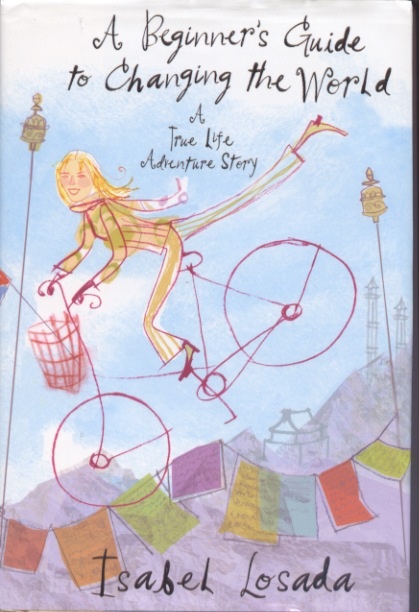
A Beginner's Guide to Changing the World


I just finished a really great book called, A Beginner's Guide to Changing the World by Isabel Losada. If you live outside of the United States, you can probably find it under the title, For Tibet, With Love. It's a great book to start the year off with. Thanks to my friend Danny who gave it to me for Christmas.

A Beginner's Guide to Changing the World describes Losada's journey from navel gazer to activist. What starts as an Ask Jeeves query, "What can I do about Tibet?" leads her to demonstrating outside the Chinese embassy in London, traveling to Tibet, jumping out of a plane to raise money, organizing a 50-foot banner of the Dalai Lama to be unfurled from Nelson's column and meeting the Dalai Lama.

What I liked most about the book was that she doesn't make it seem easy, in a normal way. So many autobiographies of activists either make the story of their life seem filled with such tragic and extreme obstacles that you think, "I could never be as strong as them," or seem so easy and flowing you think, "I could never be as intelligent/talented/lucky as them." But Losada's book describes the kind of obstacles to changing the world that everyone faces--lack of funds, apathy, bureaucracy, stressed out co-workers and bad weather.

At first when I was reading it, I was sort of frustrated by reading about all of the small challenges, but then I realized that this is how it is when you want to create social change. Yes, there are big dramatic obstacles, but a lot of it is day to day difficulties.

And how does Losada move through it? She gets frustrated and annoyed like a normal person, and she focuses on her goal, gets support from friends, perseveres and repeats her mantra (the Serenity Prayer):
Grant me the serenity to know the things I cannot change, the courage to change the things I can and the wisdom to know the difference.
At her interview with the Dalai Lama, she asks him how a person can know the difference between what he or she can change, and what they can't. He answered:
Through experiment. Research. Calculate whether you can achieve on mental level, then experiment. . . .from the Buddhist viewpoint the action, whether right or wrong, ultimately much depends on motivation. Result not very sure. Your intention, something good. Good purpose, good goal. But some other factors, conditions, results may not go that way. So it doesn't matter. Your motivation is very sincere. The result is not predictable. Difficult.

I wonder if as many activists, nonprofit workers, social workers and the like would get as burned out if they knew that their positive intentions and motivations, the fact that they tried to make a difference, is what really matters.


Monday, January 09, 2006

Bloggies

So . . . . the 2006 Bloggies has an award for best new blog (that was started during 2005) and um, this blog is new. . . . the nomination deadline is Tuesday, January 10th at 10 PM EST.

As their web site says:

Millions of blogs.
Thousands of nominees.
151 finalists.

But it can't hurt to try. Hee hee.


Friday, January 06, 2006

Have Fun * Do Good iMix


I was searching through the iTunes Music Store's iMix section for new running music and thought I'd add my own iMix, so here is my 30 minute Have Fun * Do Good mix. If you go to the iTunes Music Store's iMix section and search by "iMix name" for "Have Fun * Do Good Mix" it should come up and you can hear bits of the songs.

Have Fun * Do Good Mix

1. Proud by Heather Small & Various Artists (from the Queer as Folk soundtrack).
I think this song is meant to be about living with gay pride, but for me the lyric, "What have you done today to make you feel proud?" is about living with integrity in all aspects of your life.

2. Where Is the Love? by the Black Eyed Peas & Justin Timberlake
Wow. I never realized Justin Timberlake was on that song. Scary. But it is still a great song:
Yo', whatever happened to the values of humanity
Whatever happened to the fairness in equality


3. Everyone Deserves Music by Michael Franti & Spearhead
Yay for Oakland native Michael Franti!
Everyone deserves music, sweet music
Even our worst enemies Lord, they deserves music, music


4. We Don't Stop by Michael Franti & Spearhead
Yes, I love Michael Franti:

They gotta war for oil, a war for gold
A war for money and a war for souls
A war on terror, a war on drugs
A war on kindness and a war on hugs
A war on birds and a war on bees
They gotta a war on hippies tryin' save the trees
A war with jets and a war with missiles
A war with high seated, government officials
Wall street war, on high finance
A war on people who just love to dance
A war on music, a war on speech
A war on teachers and the things they teach
A war for the last 500 years
War's just messin' up the atmosphere
A war on Muslims, a war on Jews
A war on Christians and Hindus
A whole lotta people just sayin' kill them all
They gotta a war on Mumia Abu Jamal
The war on pot, is a war that's failed
A war that's fillin' up the nation's jails
World war one, two, three and four
Chemical weapons, biological war
Bush war 1, Bush war 2
They gotta war for me, they gotta war for you!


5. Don't Give Up (Africa) by Alicia Keys & Bono
This is a remake of Peter Gabriel and Kate Bush's,"Don't Give Up." It was released in honor of World AIDS day this year. 100 percent of the proceeds from iTunes' download sales of this song go to Keep a Child a Alive.

6. Wake Up Everybody, Pt. 1 by Harold Melvin & The Blue Notes
The chorus says it all:
The world won't get no better if we just let it be
The world won't get no better we gotta change it yeah, just you and me.


7. The New Heroes, Pt. 2 by Christopher Hedges from the soundtrack of the PBS series about social entrepreneurs, The New Heroes

Please let me know if you have more songs to add!


Wednesday, January 04, 2006

Doing is Faster than Dreading

When my husband and I bought our house around this time last year, it was staged, and the room that we wanted to use as a guest room/office for me was set up as a children's room with yellow walls (fine), dark royal blue trim on the windows, ceiling and floor (not fine), and a wallpaper border of bunnies, moons and stars (very not fine).

The first week we moved into the house we put white primer on the blue trim and then both preceded to get long, nasty winter flus and by the time we recovered, the holidays were over and we were back in the work grind with less time to spend on the house.

About once a month or so we would say, we really need to finish that room, but how are we going to deal with the wallpaper? We were both sure that peeling off the wallpaper would require us to repaint the yellow walls, so we put it off and moved very little furniture into the room because we knew we would be painting it "soon."

As the months passed, we asked friends about how to remove the wallpaper, apologized to guests staying in the room about the bunnnies, bought a special scraper and goo to take it off, shared an office because I didn't want to move my stuff in to move it out to paint, and generally avoided the prospect of taking down the wallpaper.

Yesterday, my husband announced that today was the day to take down the wallpaper, and guess what, when he started scoring the wallpaper with the special scraper to put on the special goo to use another special scraper, he realized that the paper was so thick and loosely adhered, he could just peel it off the wall.

It took 10 minutes, and it was down. Well, it took us one year and 10 minutes.

Why am I telling you about our wallpaper? Because as we stood there laughing at how long it had taken us to do this little thing, I thought about the career counseling clients I work with, and how I always tell them that if you are trying to figure out what you want to do with your life, or you want to reach a specific goal, talking about it is helpful, but taking action is the best.

So, when you begin working on your New Year's resolutions, whether they are to change careers, to have fun * do good or to lose five pounds, don't wait to take action 'cause it may be easier than you think.


Monday, January 02, 2006

Something is on the Rise in 2006

Yesterday my husband and I had a little New Year's Day get together with some friends and the night before I went to a New Year's dinner at my neighbors' house (my husband had to work). It was the first year that I felt like celebrating the New Year. I've always thought New Year's was an arbritrary, rather boring holiday--woo hoo it's January-- but for some reason this year I wanted to celebrate and interestingly I have talked to a number of people who feel the same way--something is on the rise in 2006.

I don't know if it is that we're halfway through the 00's, or that it is over 4 years since 9/11, or that Hurricane Katrina put extreme poverty on the evening news, but it feels like America is waking up from a long sleep and somehow becoming more conscious of the country that it needs to become . . .

Perhaps it is the Have Fun * Do Good lense that I filter the world through, but I think that part of the benefit of the many tragedies of the 00's is that many of them have been the kind of moments, for at least the American collective conscious, that life is short, it can change forever in one moment and that what we do in this moment does have a "butterfly effect" and can can change not only our individual futures, but our collective futures as well.

It feels like we are at that on the edge moment when either all of the predictions of global disaster will start to become true, or our world will take a different direction.

The blog HorsePigCow had an interesting post yesterday about how this has been a year of great change because of emerging technology:

We came together to create, break down, build up, and cause trouble. We saw the amateur rise and get redefined - not as the lesser opposite of the professional, but as the celebrated antithesis to the stuffy, top-down controlled corporate world. We started to see power structures crumbling, former 'respected institutions' baring cracks and the general shaking up of 'conventional wisdoms' and hegemonies. People as individuals are no longer powerless, mostly due to our ability to connect to others to form strong collaborative efforts against injustice.Yadda yadda yadda.

But I'm starting to see what could really throw a wrench into the growth of this hopeful revolution. It's the ugly head of co-optation. The corporate engine seems to be more well-oiled than ever.


I guess I feel hopeful from the co-optation of positive things. If we are what we eat, at least we're feeding the corporate beast that we've created good food.

My friend, Alli Chagi-Starr, reminded me of Margaret Mead's famous quote yesterday:

Never doubt that a small group of thoughtful, committed citizens can change the world. Indeed, it is the only thing that ever has.


Perhaps if small groups continue to make choices to have fun and do good, larger groups will eat them up and the world will be transformed.

Jory Des Jardins writes in her New Year's Day post about 2006 being a year for her to sort through all of the ideas and opportunities that 2005 brought her way and to focus on the few that are the most important in 2006.

As Americans, we are so good at creating--products, ideas, work--but I think no one can argue that we have too much of everything. Perhaps 2006 is the year to focus on what matters the most.


Thursday, December 29, 2005

What Do You Want to Change?


I'm double blogging these days, here and on the NetSquared blog.

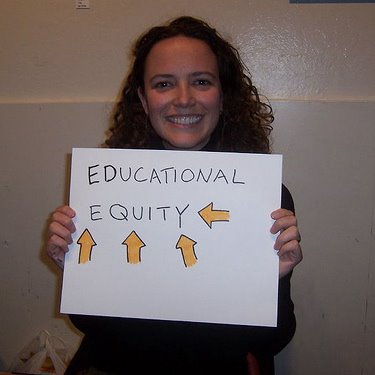
That's a photo of me above at NetSquared's last Net Tuesday. A gathering for folks to socialize and chat about how nonprofits can use web-based technology like blogs, podcasts and social bookmarking for change. Here's info. for the next Net Tuesday happening in the Bay Area.

The photo is from NetSquared's "I Want Change" Flickr group where folks are posting photos with signs that say what they want to change in the world.

If you are feeling inspired, here's how you can post your photo:

1. Log in to your Flickr account at www.flickr.com. If you don't have one already, it's free to set one up.
2. Upload your photo and tag it with “net2”.
3. On the top of the page, click on, "Groups".
4. In the, "Search for Groups" box write, "I Want Change!"
5. Click on the "I Want Change!" group with the Net2 icon.
6. Click on, "Join this group". Now you are part of the, "I Want Change" group.
7. To add a photo to the group, go to your photos (on the top of the page click, "Yours")
8. Click on the photo you want to add.
9. Click on the "Send to Group" button on the top of the photo (light grey icon).
10. Click that, then choose the group you want to send it to, and you're done!


Wednesday, December 28, 2005

Giving Circles

Good Morning America did a story this morning on something I have been wanting to write about for a while, giving circles.

They profiled a giving circle called, Dining for Women, a group of women who get together once a month for dinner and to learn about and financially support grassroots organizations that serve women and children.

Giving circles are basically groups of people who support a cause by joining their resources together. They are sometimes referred to as, "social investment clubs.”

The Giving Circle Knowledge Center has tons of information about how to start a giving circle.

Which brings me back to the idea of combining my love of cupcakes with my desire to make the world a better place. Cupcakes for a Cause already exists. Perhaps a monthly cupcake tasting/giving circle . . .

Monday, December 26, 2005

Mentoring Young Women Bloggers

Beth Kanter posted information about an interesting youth mentoring opportunity on the www.netsquared.org blog recently. They are looking for bloggers from around the world to be blogging mentors for 1 week as part of the Young Caucasus Women project, a group blog for young women from the Caucasus region (Armenia, Azerbaijan and Georgia). If you are interested, here is the original post from www.registan.net.

Last night we watched Mad Hot Ballroom, one of the best movies I've seen in a long time. Its all about a ballroom dancing program in the New York City public schools and it makes a terrific case for the importance of arts education. Having worked at Streetside Stories for such a long time and seen how powerful it is for young people to write, tell and create autobiographical stories, it was interesting to see how a different medium has the same effect on young people: increased confidence, engagement in school and joy.

Many of the young people who participate in the dance classes in Mad Hot Ballroom, and in Streetside Stories' workshops, are young people of color from low-income families who may not have an opportunity to go to any arts programing outside of school, and definitely not during school, where most arts programming has been cut.

It is so important that all young people have an equal opportunity for a good education, but equal doesn't mean the SAME, which is what California is trying to do now with its public schools, at least in the Bay Area, make all of the curriculum the same, which doesn't make any sense. All people don't grow the same way.

Think about those little plastic sticks that come with plants when you buy them that say that the plant needs sun, shade or half sun/half shade. It also tells you how much water they need, what time of year to plant them, how deep to plant them, what their flowers will look like, how long they will live, if they will re-seed, etc. Do the people making decisions about education at the state and national level really believe that all young people need the same things?

It makes me think of how small farms that used to rotate their crops and let parts of their fields lie fallow for a season have been taken over by big ole corporations that plant one crop over and over again and spray it with lots of pesticides till the soil is dead.

With public schools' large class size and recommended rote teaching standards, are we nurturing our young people in the same way?

I guess that is what interests me about the Young Caucasus Women project, the opportunity for equal access and training to what I consider to be an artistic opportunity.


Thursday, December 22, 2005

Cleaning Off My Desk for the New Year


With just a couple weeks before the New Year starts, I wanted to pass along some bits and pieces of Have Fun * Do Good stuff that has come across my desk, but that I haven't found a way to incorporate into a longer post:

Geekers and Gamers Give Toys to Tots
My friend Jonathan Stein sent me this:
A few years ago, the two guys who created the online comic strip, Penny Arcade decided to fight the stereotype of video gamers as violent, nihilistic ne'er-do-wells. They launched an annual fundraiser and gift-collecting drive for the children's hospital in their community (in WA). It was a huge success and it's now become an international drive, with toys and books going to children's hospitals all over. They've got it expertly set up so that you can purchase exactly the toys/books that the hospitals want through Amazon.com and have them shipped directly to the hospital.

Teens as Good Samaritans
The November/December issue of Psychology Today has a brief article called, "The Making of a Good Samaritan", about the benefits of community service requirements in schools. According to a study by the journal, Political Psychology, students who were already "community-minded" were not affected by community service requirements at their school, but students who were more "self-interested" developed a, "willingnes to donate their time to charity as well as a greater political awareness."

Wyclef Jean Brings Aid to Haiti with His Music
Alfred de Montesquiou of the Associated Press wrote an article recently
about how the hip-hop musician, Wyclef Jean, uses his music and his new aid organization, Yéle Haiti, to help deliver aid and food into some of the most dangerous areas of Haiti. Because many of the armed gangs are into his music, they will allow him to enter territory where other aid organizations are not allowed.

Rockin' CD to Benefit Hurricane Katrina Survivors
The Ella Baker Center for Human Rights has produced a CD called,
"Eye of the Storm: Love and Rage from the Bay to the Gulf", to benefit survivors of Hurricane Katrina. CD's are $15 and all of the proceeds will directly aid families and grassroots organization's efforts to help Katrina survivors rebuild their communities. The CD features music and spoken word by Bay Area artists such as Aya de Leon and Michael Franti.

Barack Obama Nominated for a Grammy
If you've been reading my blog for a little bit, you know that Barack Obama's podcasts are one of my favs and that he gives me hope for American politics and government. I was happy to hear that he was nominated for a Grammy for his narration of his book, Dreams from My Father: A Story of Race and Inheritance.

Free Books for Kids!
First Book is a national nonprofit organization whose mission is to give children from low-income families the opportunity to read and own their first new books. Their Book Relief program provides books specifically for children displaced by Hurricanes Katrina and Rita

Save the Chimps
You can "adopt" a chimp that has been rescued from a testing lab through Save the Chimps.
Look how cute these chimps are.

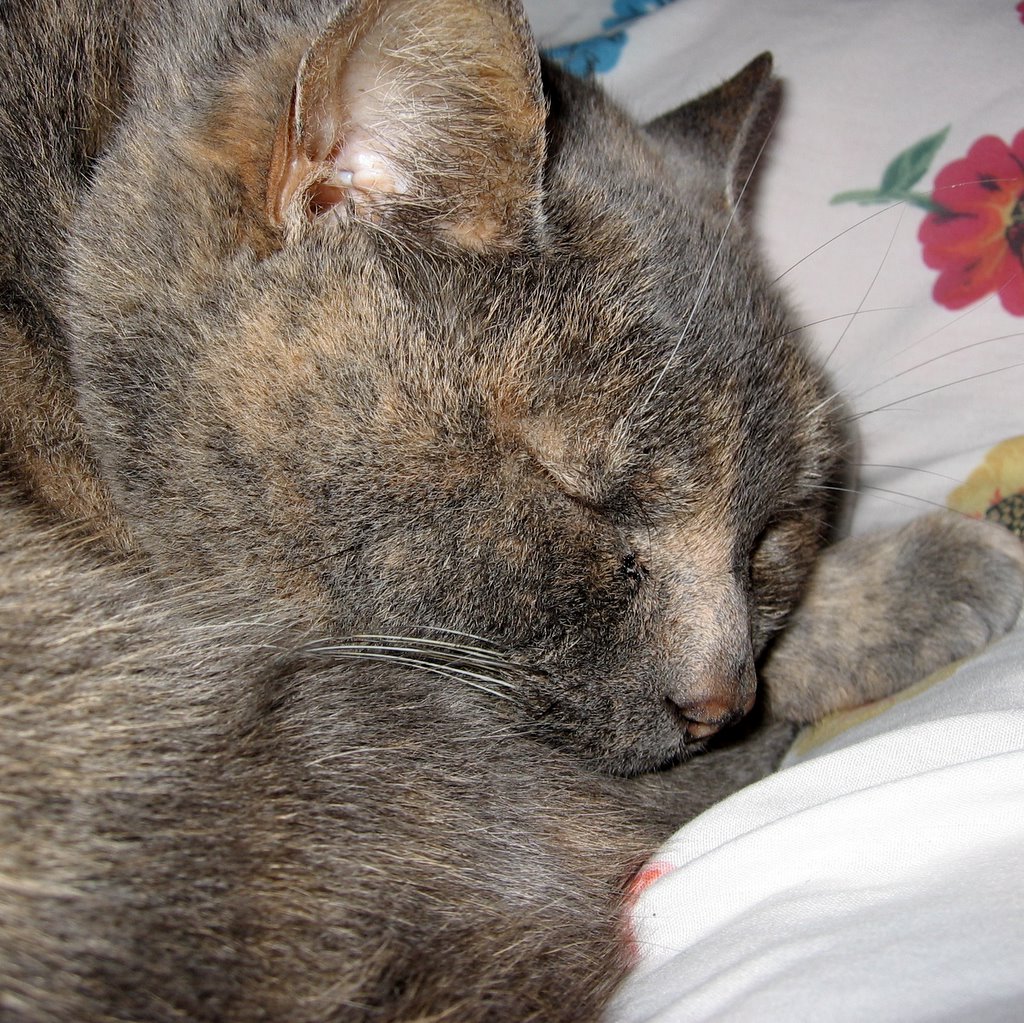
Speaking of Cute
Check out this site, Cute Overload, when you're feeling down (that's where the photo at the top came from). Thanks to Musings of a Social Architect for this link.

A Quote for the New Year
Finally, I would like to close with a quote that I saw in the most recent edition of "Simply Celebrate", an e-newsletter published by Mad Moon Creations.

Tell me, what is it you plan to do with your one wild and precious life?
-Mary Oliver, poet

Saturday, December 17, 2005

How to Start Your Basic Blog


My friend Abby, the Executive Director of the school gardening nonprofit, Urban Sprouts, has taken the plunge and started an Urban Sprouts blog. Hooray!

If there are any readers out there who want to start a blog for themselves, here are my basic, "accidental techie" guidelines.

1. Decide what you want to write about. The best blogs are ones with a particular focus. Obviously, you can stray from that focus once in a while, but your readers want to know what kind of stuff they can expect when they take the time to read your posts. There are so many kinds of blogs out there. Here are some examples:

food http://chockylit.blogspot.com/
gossip http://socialitelife.com/
how to make stuff http://www.notmartha.org/
intriguing projects http://postsecret.blogspot.com/
journalism http://www.motherjones.com/mojoblog/
marketing http://www.buzzmarketingwithblogs.com/
nonprofit http://urbansprouts.blogspot.com
parenting http://www.themommyblog.com/
political http://www.ericumansky.com/
shared interests http://cupcakestakethecake.blogspot.com
social justice http://www.pambazuka.org/
technology http://marshallk.com/
travel http://www.vagabonding.com/
and just plain old great writing http://www.jorydesjardins.com/

2. Commit to writing in your blog once a week, minimum. The more you post, the more often people will read your blog.

3. Set up a blog hosting account. I use Blogger, because it is free! If I had known I would like blogging so much, I would have set up a Typepad account, because it has more features, but Blogger is just fine and it's a bargain!

4. Allow comments and make your pages findable by search engines. If you use Blogger, there are a couple settings you'll want use:

In Archive Settings: click "Yes" in answer to "Enable Page Posts?" That will allow each of your posts to be archived as a separate page making it easier for people to find your posts when they search for information on a particular topic.

In the Comments Settings: click "Anyone" in answer to "Who Can Comment?". You want to encourage people to comment on your posts. To prevent spammers or other non-humans from posting a comment click, "Yes" in answer to "Show Word Verification in Comments." That's those weird wavy letters you have to type in sometimes when you are submitting a form to make sure that you are a person and not a computer spammer.

In Site Feed: click "Yes" in answer to "Publish Site Feed" so that other people can publish your posts elsewhere.

5. Allow people to subscribe to your blog (see the box in the right hand corner of my blog that says "Enter your email to subscribe"? Feel free to enter your email by the way). I use Feedblitz (it's free), but there are a lot of other services out there you can use as well. You set up an account (are you keeping an Excel sheet of all of these passwords?) and I think it will give you a piece of code (don't get scared) to put in your blog (its been a while since I set this up). Do not be afraid of working with HTML code for something like this. Just think of it as a fancy cut and paste job.

If Feedblitz gives you a piece of code to put in your blog, don't panic, copy it and click on the "Template" tab in your Blogger account. You will see a page with lots of scary words and symbols on it. Scroll down until you see where it says:

End main column

Sidebar

Paste you Feedblitz code below this.

Now click on Preview to make sure nothing is totally out of whack. If it is, you can hit "clear edits" and start again. If it looks normal hit, "save template changes." As long as you always preview and clear edits if things look funky, you can't really hurt your blog. You don't have to put your Feedblitz box there, I just like it there because it easy to see.

6. List other blogs that you like (like my list in the right hand column). Part of writing a blog is connecting your readers with other blogs that might interest them and hoping that other bloggers connect their readers to your blog.

Click on the Template tab in your Blogger account again. Now you're not afraid of all of those symbols 'cause you already put your Feedblitz code in there. Scroll down to where Blogger has already inserted some URL's for sites. I can't remember if they call it Sites or Blogs on the template. Just replace the URL of the site's they have started with the URL of the sites you like. If you want more sites, just copy and paste the code they've already created as a new line and change the URL to your favorite site's address.

7. Set up a statcounter. You'll want to see how many folks read your blog and where they are referred from so that you can thank the site that is referring them. There are a lot of free counter sites:

http://www.statcounter.com/
http://www.sitemeter.com
http://www.google.com/analytics/


Similar to the Feedblitz, you'll set up an account. It will give you a piece of code which you'll copy and paste into your site. Click on the Template tab in your Blogger account again. Scroll down the page until you see the phrases:

End sidebar
End content

Paste the code here. Again, you can put it in other places in the sidebar, just make sure you Preview where you have pasted it to make sure the page isn't all messed up.

7. Start posting! When you write a post, make sure to include links to other sites that people can click on. To create a link in Blogger, highlight the word that you want the link underneath with your cursor, click on the icon at the top of the page that looks like a globe and a chainlink. Write in the URL of the site you want to link to and hit OK.

If you want to add a picture, hit the icon at the top of the page that looks like a blue photograph. Hit Browse to find the image you want in your computer, select it, decide what size you want the image to be and where you want it placed on the page and upload it.

8. Tag your posts. At the end of you your post, you want to add some tags to make it easier for people to find your posts and for blog search engines like, Technorati, to find your posts. See all of the little words at the end of this post? They are tags and if you click on them, you'll see other posts in Technorati with the same tag. Technorati has a good guide for how to add tags to your post here.

9. Let blog search engines know when you update your blog. Again, there are a lot of services that do this. One of the ones I use is Ping-O-Matic, although although, as I am writing this, this the site didn't seem to be up and running. Again, you register your blog with the site and then after you write a post you go to the Ping-O-Matic site and tell it to "ping" blog search engines (i.e. tell them that you've written a new post). For good measure, I also set up an account on Technorati, "claimed" my blog and ping them separately when I write a new post. I have used Pingoat as well.

10. Read other blogs. Set up a Bloglines account so that you can see what other folks are talking about in the "blogosphere."

11. Have Fun! I hope that this guide is helpful and not confusing.

If you are feeling overwhelmed here is the short short guide:

1. set up your blog hosting account
2. write posts
3. tell your friends!


Monday, December 12, 2005

Cupcakes for Hope!


The amazing food blog, Chocolate and Zucchini, advertised my kind of yummy online fundraiser today--Menu for Hope. Readers choose an item that they are interested in off of the "menu" (which includes everything from french pasteries to Napa wine tours to food photography lessons--all donated by other food bloggers) and donate a minimum of $5. Each $5 donation gives you one chance at winning the prize(s) of your choice. The donations are being collected by UNICEF through the First Giving web site to raise money for earthquake survivors from Northern India and Pakistan.

The First Giving site is totally cool. It allows individuals to create fundraising pages to raise money for causes they care about. Nonprofits can use it too. There is so much that I like about this project:

1. Blogs are being used for a do good purpose
2. It's a community do good project
3. It's an individual do good project.
3. It's accessible to anyone who wants to give (not a $100 a plate dinner)
4. It's fun!

It would be a great holiday season gift idea too if you wanted your family and friends to donate to the cause of your choice rather than to give you stuff.

Side note: The cupcake photo is from a batch I made this weekend, Chocolate Cupcakes with Peppermint Icing from Elinor Klivans' Cupcakes!


Sunday, December 11, 2005

Seven Favorite Books of 2005


Whenever someone asks me if I've read a good book lately, I can never remember what I've read, so this year, I wrote down titles as I read them. Of the 31 books I read this year, here were my 7 favorites:

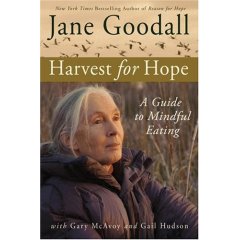
#1 Harvest for Hope by Jane Goodall

My Dad brought this book for me when he and my mom came to visit in November and I just finished it today. I have always felt ambivalent about buying organic produce, free-range meat, etc. not because I don't think it is better for you, but because it has always felt so elitist to buy it, and when I do buy it, I feel guilty that I can afford to buy it and other people can't. But I can tell you that after reading this book, there is no way I will ever buy non-organic produce again, if I have the choice. In fact, it inspired me to do something I have thought about for a long time. I signed up for a box of organic produce to be delivered to our house every other week from Farm Fresh to You. By buying produce from the California farmers who run Farm Fresh to You, not only will be be eating organic produce, but we'll be supporting local farmers. If you want to find a CSA (Community Supported Agriculture) subscription service near you, just go to the Local Harvest web site

#2 Notes From My Travels by Angelina Jolie

I wrote about this book back in September in this post and this post . Since then, Jolie's philanthropic work has become even higher profile and UNHCR has given Jolie her own page where you can download more of her journals and learn more about her work.

#3 Bono on Bono: Conversations With Michka Assayas by Bono and Michka Assayas
I wrote about this book in a September post as well. You can hear Bono speak about his work with the ONE campaign on the ONE campaign's podcast.

#4 Soul of a Citzen: Living with Conviction in a Cynical Time by Paul Loeb

#5 The Impossible Will Take a Little While: A Citizen's Guide to Hope in a Time of Fear by Paul Loeb

It is interesting to read Soul of a Citizen, which was written in 1999, and The Impossible Will Take a Little While, which was written in 2004, to see how liberal idealism has transformed since September 11th. You can receive more articles written by Paul Loeb by email through his web site http://soulofacitizen.org

#6 Catfish and Mandala: A Two-Wheeled Voyage through the Landscape and Memory of Vietnam by Andrew Pham.

This was the first book I read in 2005. It tells the story of Pham, a Vietnamese-American who intertwines his memories of growing up in Vietnam and the United States while telling the story of bicycling through Vietnam on his first return visit as an adult. The whole staff at Streetside Stories loved his book, and thought he was a great role model for the young people writing autobiographical stories in Streetside's workshops, so we asked him to write the foreword for Streetside's 2005 student anthology, Writing Outside the Lines: Stories of Change by San Francisco Youth, and he was nice enough to say yes!

#7 Wind-Up Bird Chronicle by Haruki Murakami
This is the only fiction book on my list this year and is one of the most amazing pieces of writing I have ever read. It is more of an experience than a story and very difficult to explain. All I can say is that I am sure he will go down as one of the great writers of our time. The New York Times named his newest book, Kafka on the Shore, which I have not read, as one of their 10 Best Books of 2005.

It, along with Barak Obama's Dreams of My Father and Joan Didion's Year of Magical Thinking are on my "to read" list for 2006.

I hope folks will share their favorite books from 2005 in the comments section below.


Tuesday, December 06, 2005

Be a Net2Builder!


As I mentioned in my November 3rd post, I am working as a Community Builder with NetSquared, a project of Tech Soup.

One of the things NetSquared is looking for is folks to research and write up profiles of nonprofits who are successfully using emerging technology like:

blogging
podcasting
social bookmarking
social networking
tagging
wikis
RSS feeds
SMS/cellphones
aggregation

to further their missions (if you are unfamiliar with any of the above categories, you can click on them and see their definitions in Wikipedia).

Writing up a nonprofit profile only takes 15-20 minutes. If you know of some fabu nonprofits that are using these tools and want them to be highlighted, just register (if you haven't already), login, go to the "Put Your Voice in the Mix" page: click on "submit your case study" and fill out the form.

Our goal is to create a gallery of case studies that will provide inspiration and information for other nonprofits. You can check out the ones we've profiled so far here.

Also, we are hosting gatherings for Bay Area nonprofit and web innovators interested in connecting communities for social change the second Tuesday of every month. The next Net Tuesday will be held on December 13th at the Balazo Gallery (2183 Mission St.@ 18th Street) at 6 PM. Ed Batista, Executive Director of Attention Trust and Seth Sternberg from Meebo will be presenting. You can RSVP on Upcoming, or just show up!

You can hear last month's speakers, Chris Messina from Flock, CompuMentor's Marnie Webb and yours truly, on the NetSquared Channel on Odeo.

If writing up a case study or going to a Net Tuesday feels too time consuming, you can also help by tagging web sites in del.icio.us, photos in Flickr and personal blog entries that relate to NetSquared with the tag "net2" and they will feed into the NetSquared news aggregator.

Finally, anyone who is registered on NetSquared can blog on the NetSquared blog about Net2 related things. I'm double blogging right now, here and on the NetSquared blog.

I really believe that many of these technologies can help nonprofits get the word out and build community around their work so if any of the above interests you, and you'd like to get involved, let me know.


Monday, December 05, 2005

Online Advent Calendar


For those of you who used to love to open the little door on the Advent calendar each year, check out this web-based Advent Calendar by Leslie Harpold.

I found it through a fun, crafty blog called, Not Martha.

I guess this is Leslie's 4th year of producing the calendar and this year she is asking her readers to send in Christmas memories. She will include the best of them behind the remaining days on the calendar.


Another Do Good Gift


I saw an article about textile designer, Hiroko Kurihara's Blanket Shares Project in the December issue of Sunset magazine.

For each item she sells, she donates a scarf or blanket made of recycled polar fleece to an organization that serves people who are homeless or in transition.

She is based in Oakland and gives blankets to the following Bay Area orgs:

Oakland Elizabeth House

Asian Women’s Shelter

Larkin Street Youth Services

Building Opportunities for Self Sufficiency in Berkeley


Saturday, December 03, 2005

Must Hear Speech from Barack Obama and the Power of Podcasting


I love listening to Barack Obama's podcasts because he gives me hope that there is at least one person in the US government who is reasonable, sane, intelligent and truly cares about people as humans, not just as voters who can keep him in or out of office.

Most weeks his podcast is a direct chat with his listeners, but this week he posted a recent speech, "Moving Forward in Iraq" that he gave at the Chicago Council on Foreign Relations. I've posted the transcript of the speech below and here is the link to listen to it online.

One of the reasons I am so excited about the work I am doing with NetSquared is because I think that these new web-based tools, especially podcasts, are an incredible way for nonprofits to get the word out about their causes, especially when they are listened to through headphones. There is something powerful about hearing Barack Obama's voice or the children's voices from the UNICEF podcasts or Nelson Mandela's voice from the recent ONE campaign podcast, inside your head. You feel close to them and their cause. I suppose it is how people felt when they first started listening to radio, like the announcer was in the room with them.

As the technology for making podcasts becomes increasingly user friendly with Web sites like Odeo and Gcast, they are a tool not only to reach adults, but young people too. In doing a little research for this post, I came across the East Side Bloggers 2008, a blog by 10th graders at East Side Community High School. Now obviously, they were made to listen to Barack Obama's podcast about Rosa Parks by a teacher (there were about 10 entries about listening to this podcast), but I still found it heartening to find posts like this on the site:

i did enjoy this episode of "Memories of Rosa Park" because this podcast showed how skin color doesnt mean that your a bad or good person.


What a great tool for young people (and adults!) who learn my listening.

I've posted the text for Obama's speech below, but if you've never listened to a podcast before, be brave. Click on one of the podcast links above and try listening to it on your computer. Its a whole new world.

Moving Forward in Iraq
Tuesday, November 22, 2005
Senator Barack Obama
Chicago Council on Foreign Relations
Chicago, IL


Good afternoon.

It is a privilege to give this speech at the Council on Foreign Relations here in Chicago.

A few months ago, I had the opportunity to visit Walter Reed Army Medical Center. While I was there, I met a young man whose legs had been blown off from mortar fire and who had sustained severe nerve damage in his arms and hands. He was sewing as a means of regaining his small motor skills, and as his wife looked on, they talked about their efforts to piece their lives back together. They talked about the wonderful way their young daughter had embraced her father and told him she loved him despite his disfigurement.

I also met a young man who had lost a leg and an arm and who now had a breathing tube in his throat. He was working with two of the therapists in a mock-up kitchen to cook hamburgers on his own.

We went down to the physical therapy area where I talked to a 19-year-old former track star who had lost both his legs and was working out on one of the weight machines. And I spoke to a sergeant from Iowa who had lost one of his legs but was working vigorously to get accustomed to his prosthetic leg so he could return to Iraq as soon as he could. I then went up to the wards to visit with other injured veterans - to take pictures, talk about basketball, and to say thank you.

Listening to the stories of these young men and women, most of them in their early twenties, I had to ask myself how I would be feeling if it were my son, my nephew, or my sister lying there. I asked myself how I would be feeling if it were me struggling to learn how to walk again? Would I feel bitter? Would I feel hopeless?

I don't know. None of us can answer that question fully until we find ourselves in that situation. What I do know is that the extraordinary men and women that I met seemed uninterested in rage or self-pity. They were proud of their service. They were hopeful for their future. They displayed the kind of grit and optimism and resourcefulness that represents the very best of America.

They remind us, in case we need reminding, that there is no more profound decision that we can make than the decision to send this nation's youth to war, and that we have a moral obligation not only to send them for good reasons, but to constantly examine, based on the best information and judgment available, in what manner, and for what purpose, and for how long we keep them in harm's way.

Today, nearly 160,000 American soldiers, sailors, airmen, and marines are risking their lives in the Middle East. They are operating in some of the most dangerous and difficult circumstances imaginable. Well over 2,000 men and women have made the ultimate sacrifice - given their full measure of devotion. Thousands more have returned with wounds like those that I saw at Walter Reed.

These men and women are willing to lay down their lives to protect us. When they were told there was danger that needed to be confronted they said, "I will go. I will leave my family and my friends and the life I knew and I will fight." And they went. And they're fighting still.

And so as the war rages on and the insurgency festers - as another father weeps over a flag-draped casket and another wife feeds her husband the dinner he can't fix for himself - it is our duty to ask ourselves hard questions. What do we want to accomplish now that we are in Iraq, and what is possible to accomplish? What kind of actions can we take to ensure not only a safe and stable Iraq, but that will also preserve our capacity to rebuild Afghanistan, isolate and apprehend terrorist cells, preserve our long-term military readiness, and devote the resources needed to shore up our homeland security? What are the costs and benefits of our actions moving forward? What urgency are we willing to show to bring our troops home safely? What kind of answers are we willing to demand from those in charge of the war?

In other words -- What kind of debate are we willing to have?

Last week, the White House showed exactly what kind of debate it wants on future of Iraq - none.

We watched the shameful attempt to paint John Murtha - a Marine Corp recipient of two-purple hearts and a Bronze Star - into a coward of questionable patriotism. We saw the Administration tell people of both parties - people who asked legitimate questions about the intelligence that led us to war and the Administration's plan for Iraq - that they should keep quiet, end the complaining, and stop rewriting history.

This political war - a war of talking points and Sunday news shows and spin - is not one I'm interested in joining. It's a divisive approach that only pushes us further from what the American people actually want - a pragmatic solution to the real war we're facing in Iraq.

I do want to make the following observations, though. First, I am part of that post Baby Boom generation that was too young to fight in Vietnam, not called to fight in Desert Storm, too old for the current conflict. For those like me who - for whatever reason - have never seen battle, whether they be in the Administration or in Congress, let me suggest that they put the words "coward" and "unpatriotic" out of their vocabulary - at least when it comes to veterans like John Murtha who have put their lives on the line for this country. I noticed that the President recognized this bit of wisdom yesterday. I hope others do to.

Second - the Administration is correct to say that we have real enemies, that our battle against radical Islamist terrorism will not be altered overnight, that stability in the Middle East must be part of our strategy to defeat terrorism, that military power is a key part of our national security, that our strategy cannot be poll driven. The Administration is also correct when it says that many overestimated Saddam's biological and chemical capacity, and that some of its decisions in going to war were prompted by real errors in the intelligence community's estimates.

However, I think what is also true is that the Administration launched the Iraq war without giving either Congress or the American people the full story. This is not a partisan claim - you don't have to take my word for it. All you need to do is to match up the Administration's statements during the run-up to the war with the now declassified intelligence estimates that they had in their possession at the time. Match them up and you will conclude that at the very least, the Administration shaded, exaggerated and selectively used the intelligence available in order to make the case for invasion.

The President told the American people about Iraqi attempts to acquire yellow cake during the State of the Union. The Vice-President made statements on national television expressing certainty about Iraq's nuclear weapons programs. Secretary Rice used the words "mushroom cloud" over and over again.

We know now that even at the time these unequivocal statements were made, intelligence assessments existed that contradicted these claims. Analysis from the CIA and State Department was summarily dismissed when it did not help the Administration make the case for war.

I say all this not to score cheap political points. I say this because war is a serious business. It requires enormous sacrifice, in blood and treasure, from the American people. The American people have already lost confidence in the credibility of our leadership, not just on the question of Iraq, but across the board. According to a recent Pew survey, 42% of Americans agree with the statement that the U.S. should "mind its own business internationally and let other countries get along the best they can on their own" - a significant increase since the immediate aftermath of 9/11. We risk a further increase in isolationist sentiment unless both the Administration and Congress can restore the American people's confidence that our foreign policy is driven by facts and reason, rather than hopes and ideology. And we cannot afford isolationism - not only because our work with respect to stabilizing Iraq is not complete, but because our missteps in Iraq have distracted us from the larger threat of terrorism that we face, a threat that we can only meet by working internationally, in cooperation with other countries.

Now, given the enormous stakes in Iraq, I believe that those of us who are involved in shaping our national security policies should do what we believe is right, not merely what is politically expedient. I strongly opposed this war before it began, though many disagreed with me at that time. Today, as Americans grow increasingly impatient with our presence in Iraq, voices I respect are calling for a rapid withdrawal of our troops, regardless of events on the ground.

But I believe that, having waged a war that has unleashed daily carnage and uncertainty in Iraq, we have to manage our exit in a responsible way - with the hope of leaving a stable foundation for the future, but at the very least taking care not to plunge the country into an even deeper and, perhaps, irreparable crisis. I say this not only because we owe it to the Iraqi people, but because the Administration's actions in Iraq have created a self-fulfilling prophecy - a volatile hotbed of terrorism that has already begun to spill over into countries like Jordan, and that could embroil the region, and this country, in even greater international conflict.

In sum, we have to focus, methodically and without partisanship, on those steps that will: one, stabilize Iraq, avoid all out civil war, and give the factions within Iraq the space they need to forge a political settlement; two, contain and ultimately extinquish the insurgency in Iraq; and three, bring our troops safely home.

Last week's re-politicization of the war makes this kind of focus extremely difficult. In true Washington fashion, the Administration has narrowed an entire debate about war into two camps: "cut-and-run" or "stay the course." If you offer any criticism or even mention that we should take a second look at our strategy and change our approach, you're branded cut-and-run. If you're ready to blindly trust the Administration no matter what they do, you're willing to stay the course.

A variation on this is the notion that anything short of an open-ended commitment to maintain our current troop strength in Iraq is the equivalent of issuing a "timetable" that will, according to the Administration, undermine our troops and strengthen the insurgency.
.
This simplistic framework not only misstates the position of thoughtful critics on both sides of the aisle - from Republican Senator Chuck Hagel to Democrat Russ Feingold. It completely misses where the American people are right now.

Every American wants to see a peaceful and stable Iraq. No American wants to leave behind a security vacuum filled with terrorism, chaos, ethnic cleansing and genocide. But no American wants a war without end - a war where our goals and strategies drift aimlessly regardless of the cost in lives or dollars spent, and where we end up with arbitrary, poll-driven troop reductions by the Administration - the worst of all possible outcomes.

It has been two years and seven months since the fall of Baghdad and any honest assessment would conclude that the Administration's strategy has not worked. The civilian efforts to rebuild Iraq, establish a secure environment, and broker a stable political framework have, thus far, come up short.

The Administration owes the American people a reality-based assessment of the situation in Iraq today. For the past two years, they've measured progress in the number of insurgents killed, roads built, or voters registered. But these benchmarks are not true measures of fundamental security and stability in Iraq.

When the Administration now talks about "condition-based" withdrawal, we need to know precisely what those conditions are.

This is why the amendment offered by Senator Levin and the one that passed from Senator Warner are so important. What the Administration and some in the press labeled as a "timetable" for withdrawal was in fact a commonsense statement that: one, 2006 should be the year that the Iraqi government decreases its dependency on the United States; two, that the various Iraqi factions must arrive at a fair political accommodation to defeat the insurgency; and three, the Administration must make available to Congress critical information on reality-based benchmarks that will help us succeed in Iraq.

We need to know whether the Iraqis are making the compromises necessary to achieve the broad-based and sustainable political settlement essential for defeating the insurgency.

We need to know how many Iraqi security forces and police and the level of skill they will require to permit them to take the lead in counter-insurgency operations, the defense of Iraq's territory, and maintaining law and order throughout the country.

We need to get accurate information regarding how many Iraqi troops are currently prepared for the transition of security responsibilities, and a realistic assessment of the U.S. resources and time it will take to make them more prepared.

And, we need to know the Administration's strategy to restore basic services, strengthen the capacities of ministries throughout the country, and enlist local, regional, and international actors in finding solutions to political, economic, and security problems.

Straight answers to critical questions - for the most part, that is what both the Levin Amendment and the Warner Amendment call for. Members of both parties and the American people have now made clear that it is not enough to for the President to simply say "we know best" and "stay the course."

As I have said before, there are no magic bullets for a good outcome in Iraq. I am not the Chairman of the Joint Chiefs of Staff, the Secretary of State, or the Director of National Intelligence. I have neither the expertise nor the inclination to micro-manage war from Washington.

Nevertheless, given the best information I have, and in an effort to offer constructive ideas, I would suggest several broad elements that should be included in any discussion of where we go from here. I should add that some of these ideas have been put forward in greater detail by other senators and foreign policy experts - I claim no pride of authorship, but rather offer my best assessment of the steps we need to take to maximize the prospects for success.

First and foremost, after the December 15 elections and during the course of next year, we need to focus our attention on how reduce the U.S. military footprint in Iraq. Notice that I say "reduce," and not "fully withdraw."

This course of action will help to focus our efforts on a more effective counter-insurgency strategy and take steam out of the insurgency.

On this point, I am in basic agreement with our top military commander in Iraq. In testimony before Congress earlier this year, General Casey stated that a key goal of the military was to "reduce our presence in Iraq, taking away one of the elements that fuels the insurgency: that of the coalition forces as an occupying force."

This is not and should not be a partisan issue. It is a view shared by Senator Chuck Hagel, a decorated Vietnam veteran, and someone with whom I am proud to serve on the Foreign Relations Committee.

I believe that U.S. forces are still a part of the solution in Iraq. The strategic goals should be to allow for a limited drawdown of U.S. troops, coupled with a shift to a more effective counter-insurgency strategy that puts the Iraqi security forces in the lead and intensifies our efforts to train Iraqi forces.

At the same time, sufficient numbers of U.S. troops should be left in place to prevent Iraq from exploding into civil war, ethnic cleansing, and a haven for terrorism.

We must find the right balance - offering enough security to serve as a buffer and carry out a targeted, effective counter-insurgency strategy, but not so much of a presence that we serve as an aggravation. It is this balance that will be critical to finding our way forward.

Second, we need not a time-table, in the sense of a precise date for U.S. troop pull-outs, but a time-frame for such a phased withdrawal. More specifically, we need to be very clear about key issues, such as bases and the level of troops in Iraq. We need to say that there will be no bases in Iraq a decade from now and the United States armed forces cannot stand-up and support an Iraqi government in perpetuity - pushing the Iraqis to take ownership over the situation and placing pressure on various factions to reach the broad based political settlement that is so essential to defeating the insurgency.

I agree with Senator Warner that the message should be "we really mean business, Iraqis, get on with it." Without a time-frame, this message will not be sent.

With the Shiites increasingly in control of the government, the U.S. is viewed as the military force that is keeping the Shiites in power, picking sides in the conflict, driving a wedge between the factions, and keeping the Sunnis out of the government.

Wrong as these perceptions may be, they are one of the key elements unifying the insurgency and serving as its best recruiting slogan.

We need to immediately recognize and address this problem.

On October 25, Ambassador Khailizad stated that he believes that the United States is on the right track to start significant reductions of U.S. military forces in the coming year. Earlier in the year, when I pressed Ambassador Khalizad on this during his confirmation hearing to be more specific about a time-frame for withdrawal, he said that there would not be a U.S. presence in Iraq a decade from now. That's at a start - but I think we need to be clearer than somewhere between one and ten years.

Third, we need to start thinking about what an Iraqi government will look like in the near term.

The post-election period will be critically important in working with the Shia and Kurdish leaders to help address Sunni concerns and to take steps to bring them into the government.

In testimony before Congress, Secretary Rice stated that while she believed it was possible to create a multi-ethnic, democratic Iraq under a unified national government, it was also possible that, in the near term, Iraq may look more like a loose federation and less like a tightly-knit, multi-ethnic society. According to the deal struck in the writing of the Constitution, the structure of the national government may still be altered by discussion among the three major factions. If it is the Administration's most realistic assessment that the Iraqi government will take the form of a loose confederation, then we need to be thinking about how we should calibrate our policies to reflect this reality. We cannot, and should not, foist our own vision of democracy on the Iraqis, and then expect our troops to hold together such a vision militarily.

Fourth, we have to do a much better job on reconstruction in Iraq.

The Iraqi people wonder why the United States has been unable to restore basic services - sewage, power, infrastructure - to significant portions of Iraq. This has caused a loss of faith among the Iraqi people in our efforts to rebuild that nation and help it recover from decades of brutal tyranny.

The Administration tells us there can not be reconstruction without security, but many Iraqis make the opposite argument. They say Iraq will never be secure until there is reconstruction and citizens see that a better future awaits them.

The Administration also tells us that they are making progress, but can not publicize the specific successes out of security concerns.

If we are unable to point out the progress, how are Iraqis - especially ones we are trying to persuade to claim a bigger stake in the future of their country - ever to know that the Americans efforts are helping to make their lives better? How does this approach help to quell the insurgency?

We need to break this cycle. We have to get more Iraqis involved with the reconstruction efforts. After all, it is the Iraqis who best know their country and have the greatest stake in restoring basic services.

We need to work with the best and brightest Iraqis, inside and outside of government to come up with a plan to get the power back on in Baghdad and help to restore the faith of the Iraqi people in our important mission in Iraq.

Fifth, we have to launch a major diplomatic effort to get the international community, especially key neighboring states and Arab nations, more involved in Iraq. If one looks at the Balkans - our most recent attempt to rebuild war torn nations - the international community, from the European Union to NATO to the United Nations, were all deeply involved. These organizations, driven largely by European countries in the region, provided legitimacy, helped with burden-sharing, and were an essential part of our exit strategy. Ten years later, conditions are not perfect, but the blood-shed has been stopped, and the region is no longer destabilizing the European Continent. And so a part of any strategy in Iraq must more deeply integrate Iraq's neighbors, international organizations, and regional powers around the world.

Finally, it is critical for this Administration, and Congress, to recognize that despite the enormous stakes the United States now has in seeing Iraq succeed, we cannot let this mission distract us from the larger front of international terrorism that remains to be addressed. Already we are getting reports that the situation in Afghanistan is deteriorating. Our progress in improving our intelligence capabilities - particularly human intelligence - has lagged. Iraq has absorbed resources that could have gone into critical homeland security measures, or in improved coordination with our global allies and partners. At the outset of this war, I challenged the Administration's assertion that deposing Saddam Hussein was the central measure in our war on terrorism. And although I believe we must stabilize Iraq, I continue to believe that the Administration's tendency to equate the military defeat of the Iraqi insurgency with the defeat of international terrorism is dangerously short-sighted.

Long the before the war in Iraq, international terrorism posed a grave security threat to the United States. Well over two years after the start of the Iraq war, these threats to our way of life remain every bit as serious. Some have argued that these threats have grown. The Administration has to be capable of finding a solution in Iraq and strengthening our efforts to combat international terrorism.

In the end, Iraq is not about one person's legacy, a political campaign, or rigid adherence to an ideology.

What is happening in Iraq is about the security of the United States. It is about our men and women in uniform. It is about the future of the Middle East. It is about the world in which our children will live.

Responsible voices from all parts of the political spectrum are coming forth to say this in increasing numbers.

Colin Powell had the courage to call his presentation to the United Nations on Iraq a "blot" on his distinguished record. And recently John Edwards said he made a mistake in voting to go to war in Iraq, and accepted responsibility for this decision.

It is no coincidence that both Mr. Edwards and Mr. Powell no longer serve the government in Washington. Those of us in Washington are falling behind the debate that is taking place across America on Iraq. We are failing to provide leadership on this issue.

Iraq was a major issue in last year's election.

But that election is now over.

We need to stop the campaign.

The President could take the politics out of Iraq once and for all if he would simply go on television and say to the American people "Yes, we made mistakes. Yes, there are things I would have done differently. But now that we're here, I am willing to work with both Republicans and Democrats to find the most responsible way out."

Nearly four decades ago, John F. Kennedy took responsibility for the Bay of Pigs Invasion. He admitted that mistakes had been made. He didn't spend a good deal of time publicly blaming the previous Administration, or the other party, or his critics. And through these decisive actions, he earned the respect of the American people and the world - respect that allowed his diplomacy to be trusted a few years later during the Cuban Missile Crisis.

Americans everywhere are crying out for this kind of leadership today. They want to find pragmatic solutions to the difficult and complicated situation in Iraq. They want to move forward on of the greatest foreign policy challenges that this nation has faced in a generation. And they want to get it right for every American son and daughter who's been willing to put their lives on the line to defend the country they love. It's time for us in Washington to offer the rest of the country this leadership. Thank you.