Sunday, April 09, 2006

7 Ways Nonprofits Can Use Podcasts

My March post, 10 Ways Nonprofits Can Use Blogs, seems to have been helpful to folks (it even got translated into spanish by a blogger in Spain, so I thought I'd share my list, originally posted on NetSquared, of 7 Ways Nonprofits Can Use Podcasts.

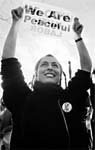
1. A leader at your nonprofit or NGO talks about what is going on in the organization and in your field. This is great if your founder, or director, is a strong and inspiring speaker. Example: Senator Barack Obama's podcast.

2. Short, informational pieces about one issue combining voiceover by a narrator/host and interviews with the people you serve. Example: UNICEF's podcast, "Pakistan's Earthquake: A fifteen-year-old tells her story." UNICEF Radio correspondent, Blue Chevigny, provides narration and information about the earthquake in Pakistan combined with on the ground testimony by a young woman who lived through it.

3. Weekly updates about what is going on in your organization followed by interviews with experts in your field. Example: This Week in NetSquared News. Each week we give brief updates about what's new at NetSquared followed by interviews with nonprofit and social web innovators.

4. Have your constituents create the podcast. Example: UNICEF Digital Diaries: Berenice's Story from Ghana, Part I. A young woman in Ghana was giving recording equipment to document her daily life in this 6-part series.

5. Be creative! Example: the Nature Conservancy produces a podcast called Nature Stories, that is all about people's connection to nature. Check out the one called "Just Another Fish Story" about a whale that washes up on the beach of a small town in Maine.

6. Use recordings from presentations. Example: the Bioneers have turned the presentations and speeches from their conference into a podcast.

7. Turn your radio show into a podcast. Example: Mother Jones Radio. If your organization already produces a radio show, make sure listeners can also subscribe to it as a podcast.


Thursday, April 06, 2006

The Meatrix II


Big thanks to Joan Braun from PolicyLink for sending me info. on the second Meatrix movie, Meatrix II: Revolting. I'd heard about it when the first Meatrix movie came out, but had never watched it.

It's great. Moopheus, Chickity and Leo. Hee Hee

It would be a bit scary for little kids. Yes, I know they watch much scarier movies these days, but this is coming from someone who had to walk out of Watership Down when I was 7 or 8 'cause I was freaked out by the bloody bunnies (now, that was a great birthday, party!). I do think that both movies would be great to show pre-teens/adolescents, and of course, adults.

Image of Moopheus, Chickity and Leo from the Meatrix's Cafe Press Store.

Sunday, April 02, 2006

Do * Good Blankets


I had a blanket when I was little, did you? Mine was soft and yellow with a yellow satin edging, and I believed that whenever I sat under it, I was invisible.

In the past month or so I've heard about two lovely projects, Project Linus and Project Sweet Dreams.

I heard about Project Linus through an episode of the 501(c)3cast. Project Linus coordinates volunteers to sew, knit and quilt handmade blankets for seriously ill and traumatized children. You can find a chapter near you here.

Project Sweet Dreams is a community based Roots and Shoots campaign organized by a friend of mine, Debra Rosenman, to raise awareness about biomedical lab chimps. The campaign is organizing schools in the Santa Fe area to donate 600 blankets to the Save the Chimps (STC) sanctuary in Alamogordo, New Mexico. In the wild, chimps make a new bed each night, so the sanctuary needs lots of clean blankets to make the chimps feel at home. You can get more information about Project Sweet Dreams by calling (505) 466-0007.


image via www.petroglyphsnm.org

Tuesday, March 28, 2006

Pix from Blogging Panel


Sooo, you know that blogging panel I've posted about a couple times. Well, A Fool's Wisdom has created a fun summary of the night in photos in a post called, "Tara Walks the Talk". Tara Hunt of HorsePigCow was one of the presenters.

Yup, that is a little pic of me up there.


Monday, March 27, 2006

How to Look Fabu at Any Age: A Little Tribute to My Grandma


Just got back from a weekend away celebrating my grandma's birthday. Doesn't she look great? I would tell you how old she is, but we're not allowed. I can tell you that her oldest daughter, my mom, is going to be 64 this year, so you can take it from there . . .

How does my Gram stay looking so fabu?
  • Positive attitude! Nothing gets this lady down.
  • Help out/focus on other people. She's always making someone dinner, or driving a friend to a doctor's appointment.
  • Be social. Don't isolate. Even though a lot of her friends have passed away, or are sick, my Gram is always joining new clubs and classes, and getting together with people.
  • Lotion, lotion, lotion!
  • Suntan lotion, suntan lotion, suntan lotion!
  • Exercise. She still lifts weights and walks on the treadmill.
  • Learn/try new things. We got her a computer several years ago, and she emails and instant messages with the family like a pro, even though she's never used a computer before. This weekend we got her hooked up on Netflix.
  • Don't tell anyone your age. If they want to think you are ten years younger than you are, so be it.
  • Refer to other people as "old people" (e.g. you have to watch out for "old people" when you drive).
  • Keep the romance alive. You're never too old for love. While we were at a restaurant for her birthday brunch, another man eating at the restaurant came over to check out the birthday cake we'd ordered for her. When she told him that she was going to take home the leftovers he said, "You can take me with you"!

Happy Birthday, Gram!

Bookmark and Share

Friday, March 24, 2006

Solution Salon


The Ella Baker Center for Human Rights' Reclaim the Future program is hosting a Solution Salon Thursday, May 18th from 6-8 PM at the James Irvine Conference Center (353 Frank Ogawa Plaza, near 14th and Broadway in Oakland).

Even though this is a Bay Area event, I wanted to post about it here because it seems like a great model for other organizations and cities to follow. Plus, it is far enough away that if you want to come check it out, you can still book a plane ticket!

The Solution Salons will bring together top thinkers and doers in the country to talk about the keys to making Oakland a national leader economically, ecologically and socially.

Check out who is speaking at this salon:

Majora Carter
MacArthur "Genius" Fellow
Founder and Executive Director
Sustainable South Bronx

Paul Hawken
Author, The Ecology of Commerce

Geralina Fortier
Community Education Coordinator
People's Grocery

Van Jones
Executive Director
Ella Baker Center for Human Rights

Bruce Cox
Board President
Alliance for West Oakland Development

Come on over to Oaktown and check it out!


Wednesday, March 22, 2006

10 Ways Nonprofits Can Use Blogs

As I was getting ready for this blogging panel I'm going to be on tomorrow, I started to think about the different ways that nonprofits can use blogs. Many of these blogs have been mentioned on this blog before or on NetSquared.

10 Ways Nonprofits Can Use Blogs

1. To report back from an event or conference
Example: Patricia Jones, manager of the Unitarian Universalist Service Committee's Environmental Justice Program, is blogging from the Fourth World Water Forum on the UUSC blog, Hotwire

2. To involve staff and take advantage of their knowledge
Example: The Walker Art Center's blog contains postings from art center staff and others describing recent and future community programs and educational information about exhibits at The Walker.

3. To involve volunteers and document their work
Example: The surgical volunteer staff who do reconstructive surgery all over the world for Interplast, upload posts to the blog from their worksite.

Example: The Urban Sprouts blog is written by one staff member and one volunteer.

4. To provide resources and information to constituents
Example: AARP's blog is an online resource for a variety of aging issues such as retirement security, health and volunteering.

5. To provide resources and information from constituents
Example: The Best Friend Network allows its supporters to create blogs around animal and animal adoption issues that they care about.

Example: NetSquared's blog is a community blog that anyone can post to about resources, events and information related to how nonprofits and NGOs can use the social web for social change.

6. To give constituents a place to voice their opinion
Example: Ann Arbor District Library System Uses a blog for the front page of their site. Library users can ask questions and make suggestions about library news, announcements and events in the comments of each post.

7. To give constituents support
Example: March of Dimes' Share Your Story blog allows families with children in NICU (Neonatal Intensive Care Unit) to share their experiences with one another.

8. To create the media coverage constituents want

Example: When the men accused of murdering Gwen Araujo, a woman they beat, bound and strangled after they discovered that she was biologically male, went to trial, the Community United Against Violence decided to use a blog to document the trial.

Because many of CUAV's volunteer bloggers were more knowledgeable about issues such as the trans-phobic tactics that were being used by the lawyers, they were able to address many issues that the mainstream media missed. The blog also kept people informed during the second trial, when media coverage had diminished, and eventually drew attention to the trial when the blog got news coverage.

9. To give constituents the power and tools to create change
Example: Human Rights Watch doesn’t have a blog, but specifically offers RSS feeds of human rights news to supporters so that they will blog about human rights issues.

10. To reach potential donors
Blogs are not replacements for paper newsletters or e-newsletters, they are an additional way to reach a certain audience. Check out these stats from an article entitled, "Blog Readers Spend More Time and Money Online." I added the bold.

Fifty million Americans, or 30 percent of all American Internet users, visited a blog in the first quarter of 2005, according to a new report from Comscore, and sponsored in part by SixApart and Gawker Media. Traffic increased by 45 percent from the first quarter of 2004.

The average blog reader viewed 77 percent more pages than the average Internet user who doesn't read blogs (16,000 versus 9,000 for the quarter), the report found. Blog readers average 23 hours online per week, compared with the overall Web user's average of 13 hours.

Blog readers are 11 percent more likely than the average Internet user to have incomes of or greater than $75,000
. Similarly, blog readers are 11 percent more likely to visit the Web over broadband either at home or the office.

Blog readers tend to make more online purchases. In the first quarter of 2005, less than 40 percent of the total Internet population made online purchases. By contrast, 51 percent of blog readers shopped online. Blog readers also spent six percent more than the average Internet user.

According to an NTEN survey of nonprofit techies, 20% said that they published a blog and 20% said that they didn't (but they want to). Don't you want to get yours up, before they get around to it?


Monday, March 20, 2006

Do * Good Magazines


I have a new favorite magazine, Ode: For Intelligent Optimists. It has been around since 1995, but I'd never read it before. It has a couple downer pieces, but overall it is filled with great articles about serious problems with hopeful solutions like EcoLeo, a Brazillian company that buys sustainably harvested wood and raw materials certified by the Forest Stewardship Council and sells them to "green" architects and designers, or the Memstill which desalinzes water using residual heat from industrial plants, or MobileActive, a network of activists and campaigners using mobile phones for civic engagement, or the European Court of Human Rights.

I like Mother Jones, I even worked there for a couple years, but geesh it's depressing. I used to read UTNE reader, but then they had too many Psychology Today type cover stories like, "Your Secret Self," and "Embrace Your Feminine." Another magazine I like, but that does have a lot of "mushy" articles, is Imagine: Creating a Meaningful Life. It sorta mixes articles about self-help with articles about social change. They had a good one recently about a company called Global Girlfriend, an online fair trade store that sells products that benefit women's human rights, and that are made by women's non-profit programs and cooperatives.

Yes!: A Journal of Postive Futures, can be a little less positive than its title proclaims, but it has some good stuff too. Their last issue was all about the 10 most hopeful trends of the last 10 years.

I'm also waiting for my sample copy of a new magazine that I heard about on Treehugger called Shift, "a lifestyle magazine that focuses on the exploding environmental movement through a pop culture lens." Sounds like it'll have lots of pics of celebs arriving to the Oscars in their hybrids. Fun!


Friday, March 17, 2006

Be a Blogger for Human Rights


I came across a Joi Ito post today about how he's joined the board of WITNESS, an incredible nonprofit that helps other nonprofits and NGOs to use video to document, create educational materials about and advocate against human rights abuses. You can read case studies of how their videos have made a difference here.

Anyway, he mentioned that he set up a Typepad blog for Witness' Director, Gillian Caldwell to document her trip to Sierra Leone with Angelina Jolie to deliver recommendations of the Truth and Reconciliation Commission (TRC) to the government.

While searching for examples of other women using blogs to document human rights abuses, I found Human Rights Watch, an NGO that investigates and exposes human rights violations and hold abusers accountable.

One of their calls to action, is to be a "Blogger for Human Rights":

If you are a blogger, you can use your bully pulpit to stand with the victims and activists to prevent discrimination, uphold political freedom, protect people from inhumane treatment in wartime, and campaign to bring offenders to justice. You can expose human rights violations and hold abusers accountable. You can challenge governments and those who hold power to end abusive practices and respect international human rights law.
They provide RSS feeds about human rights issues classified by region, country and theme, and e-mail newsletters in several languages. They also ask people to tag post about human rights with the tag " human rights." Finally, the site directs bloggers to the Electric Frontier Foundation site for tips on how to blog anonymously, if necessary.

So sign up for those feeds, and start blogging for human rights!


Tuesday, March 14, 2006

Petfinder


Lately I've been thinking about getting a dog or cat and have been spending too many hours surfing Petfinder , a database of homeless pets. As part of my surfing, I came across the Best Friends Network, a nonprofit network that allows animal lovers to become members, join and create online communities around animal-related topics (i.e pet rescue and reunion of animals from Katrina), participate in discussion forums and create blogs.

Blog topics can range from Adoption Ads that Really Work II by Elizabeth Doyle, to Cathy's Journal: Post-Katrina thoughts, to a blog where members can post questions in the comments for animal communicator, Lauren McCall.

The site also has two campaigns going on: one to find dog trainers to work with Katrina animals with serious behavioral problems, and the other to raise money, recruit volunteers and find homes for 1,000 bunnies in Reno, NV as part of The Great Bunny Rescue!

Don't you have room for just one little bunny?


Sunday, March 12, 2006

Women Helping Women: My First Giving Circle


Last night I went to my first giving circle using the Dining for Women model, and it was pretty inspiring. What I didn't realize about Dining for Women, is that they research and choose the organization that will be receiving the funds from that month's gatherings so that all of the Dining for Women groups meeting across the country are donating to the same thing. This month's organization was the Village Enterprise Fund. Because the Village Enterprise Fund's administrative office is in San Carlos, CA, about 25 miles from San Francisco, we were lucky enough to have VEF's Development Director, Barbara Lamb Hall, there to chat with us and to show us a quick PowerPoint presentation.

Here's how VEF works. They offer $100-$150 start-up grants to businesses in Kenya, Uganda and Tanzania. For example, VEF gave a $100 grant to Flora Khaombi who was struggling to provide food, clothing, healthcare and education for her two grown daughters and her grandchildren. All Flora said she needed was enough money to buy a 50 kg. bag of maize for resale. Flora got four other women to create a business group and with that grant they were able to start a business that sells vegetables, maize and tomatoes. In addition to the start-up funds, grant recipients also receive business training and long-term mentoring.

75% of VEF's businesses last 4 years or longer.

VEF also offers $300 follow-up grants to recipients of start-up grants to help them grow and expand their businesses, and loans of $5,000-$20,000 for community-based businesses such as a truck for famers to be able to drive to key markets, or a bakery at a secondary school.

61% of the business owners are women.

Each business that VEF funds directly improves the lives of at least 15 people.

Barbara also told us about two other related projects.

Project Baobob, an organization that provides free education in business skills for Kenyan youth, and Kiva, a web-based organization that allows individuals, like you and me, to make microloans (rather than a donation) to individuals via the Internet. The thing that is so intriguing about Kiva is that the people featured on their website are real people who need a microloan and because Kiva has low overhead and does fundraising offline, every dollar you loan to that person goes to their business, and you get your money back.

I am looking forward to our next giving circle and learning about more ways that women can help women.

Big thanks to Kris Wolcott and Kristen Byrne for organizing the event!


Friday, March 10, 2006

Going to Be on a Blogging for Business and Nonprofit Panel March 23rd

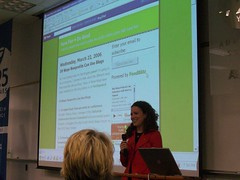
If you live near Silicon Valley, come check out a panel I'm on: Blogging for Business: An Insider's Look at How to Use Blogs at Your Company, Business or Nonprofit produced by the Alliance of Technology and Women.

Here are the other panelists' blogs:

Robin D. Stavisky of New Venture Marketing (Moderator)

Paul Rosenfield General Manager for QuickBooks Online Edition. This is a link to the QuickBooks Online Edition Team Blog

Tara Hunt of Riya.com and the HorsePigCow blog.

John Earnhardt, Senior Manager of Policy Communications for Cisco Systems in the Office of Worldwide Government Affairs. He started Cisco's first company blog and is its main author.

I think I'm the nonprofit part of the title (:


Wednesday, March 08, 2006

Big Vision Podcast 2: Interview with Viet-Ly Nguyen


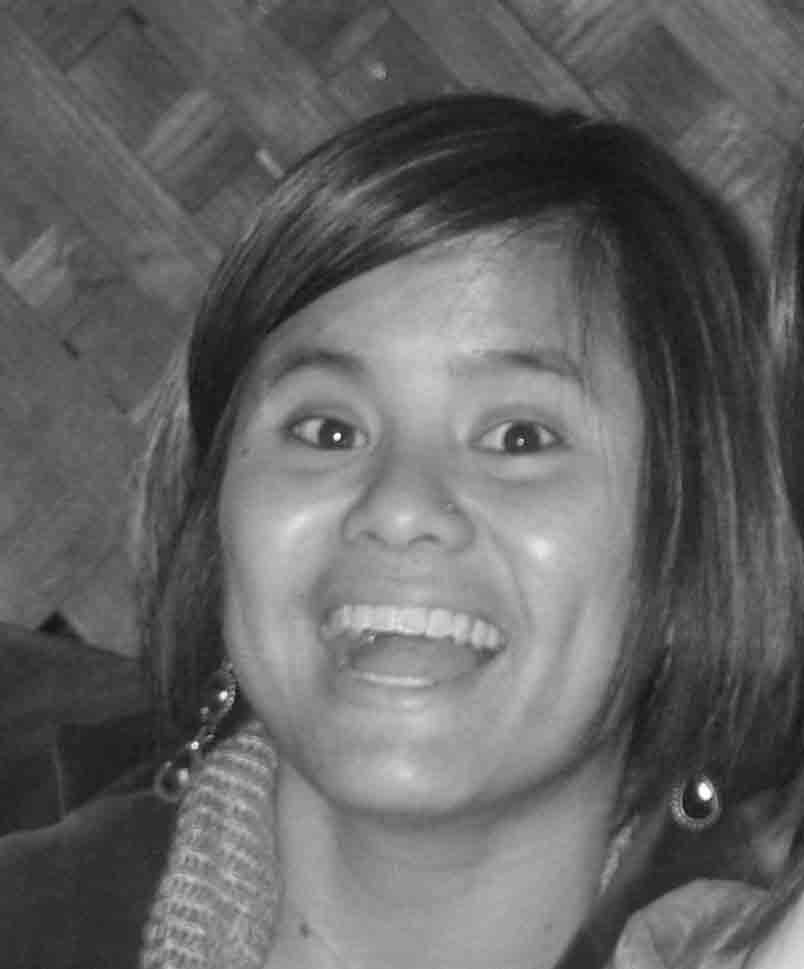
I put up my second Big Vision podcast on Sunday. It's an interview with a former co-worker of mine, Viet-Ly Nguyen, who is a teacher with Streetside Stories. She talks about her work at Streetside and as an arts educator.

A side note about using Gcast for podcasting. I still like it, but it was only when I loaded in my second podcast, that I realized that the cute little player that you see in the right hand column of my blog only shows whatever the newest podcast is, so to see older ones, you need to go to my Gcast page.
Enjoy!


Tuesday, March 07, 2006

Donate Books: Help Rebuild New Orleans' Libraries


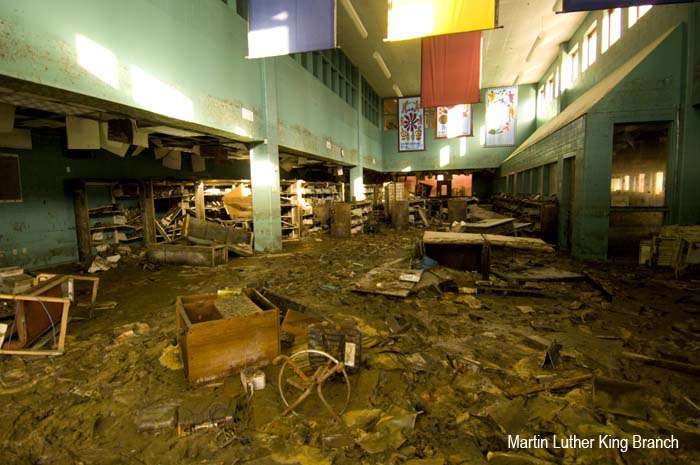
So You Wanna Be a Domestic Goddess passed on info. this week about the New Orleans' Public Library's call for for any and all hardcover and paperback books for people of all ages. The staff will assess which titles will be designated for its collections. The rest will be distributed to families or sold for library fundraising.

Books can be sent to:

Rica A. Trigs, Public Relations
New Orleans Public Library
219 Loyola Avenue
New Orleans, LA 70112

According to the NYFA (New York Foundation for the Arts) site,

If you tell the post office that they are for the library in New Orleans, they will give you the library rate which is slightly less than the book rate.


Saturday, March 04, 2006

Art, Social Change & Young Women Bloggers

This week Beth Kanter and I finished our week being mentors for the Young Caucasus Women Project. Last Sunday each of us wrote a post to answer the question, “Who is your favorite artist (visual, dancer, performer, writer or musician) and why?” Here is Beth's post and here is mine. During the week the young women in the program from Armenia, Azerbaijan and Georgia wrote their own posts answering the question, we commented on their posts and they commented on each other's posts. On Friday our mentor cycle ended and a new one will begin with a new mentor blogger tomorrow (Sunday). The project will continue through the spring and into early summer.

I am pretty sure all of the mentoring positions are taken for this project, but Ore, who was one of the mentors for this project, is going to be starting a similar project for young Nigerian women. If you are interested in getting involved you can email her at oreblogging@yahoo.com.

While writing my mentor post last Sunday I got to thinking about how artists use art for social change and accumulated a bunch of links for related projects, programs and organizations that I thought I'd share:

Change Me: The Power of Imagery to Create Change. This is a project of the Getty Museum. (I know I read about it in someone's blog this week, but now I've forgotten whose so my apologies for not giving a blogger out there credit for the find). Anyone can submit an image that inspires them and that they think will touch or affect the person viewing it. For every submission the Getty gets, they will donate $10 to Friends of the Global Fight Against AIDS, TB and Malaria.

California College of the Arts' Center for Art and Public Life "The Center for Art and Public Life creates community partnerships using the arts to address issues of social justice, diversity, community development, and education. Our programming is woven across disciplines at California College of the Arts and serves the diverse populations of the San Francisco Bay Area."

Institute for Social Ecology: "A ten-day program for artists, performers, activists, and media makers who wish to create and examine socially engaged art and media projects."

Film Your Issue This is a contest being sponsored by MSN Spaces, MSN Video, MSNC.com, USA Today, Entertainment Weekly and mtvU. They are looking for 30 to 60 second "issue films" (live action or animated) made by United States residents ages 18-26. I think we're going to see more and more corporations getting getting in on this action.

WITNESS: "WITNESS uses the power of video to open the eyes of the world to human rights abuses. By partnering with local organizations around the globe, WITNESS empowers human rights defenders to use video to shine a light on those most affected by human rights violations, and to transform personal stories of abuse into powerful tools of justice."

Fifty Crows Social Change Photography "FiftyCrows Foundation aims to bridge the gap between venues and distribution mediums for documentary photography, and encourage public dialogue on the issues raised through the photography."

Art Into Action: "Art Into Action is an international program of the Natural World Museum (NWM) designed to actualize sustainable culture using art as a catalyst to inspire, educate, and engage the public in environmental awareness and action."

If you know of more cool projects or individual artists using art for social change, I'd love to hear about them. You can put the info. in the comments or email me at britt AT brittbravo.com.

Thanks!


Tuesday, February 28, 2006

Five Resources for Nonprofit Volunteer Programs

Nancy White tagged me to participate in an interesting meme.

"What five resources - online or otherwise - would you point people to, if you wanted to give them an entry into your field of expertise?"

One of the aspects of the nonprofit consulting that I do is to help nonprofits to set up volunteer programs. Here are five resources I would recommend to someone who wanted to become a Manager Volunteers for a nonprofit:

Cypbervpm list serv An international discussion group for volunteer managers.

Jayne Cravens * Coyote Communications and Jayne's Blog. If you have a question about nonprofit volunteer management, Jayne has probably covered it on her site or blog. She helped to set up the United Nations Online Volunteering Program.


Service Leade
r ServiceLeader.org is a project of the RGK Center for Philanthropy and Community Service at the Lyndon B. Johnson School of Public Affairs of the University of Texas at Austin. It has tons of information about volunteering. I particularly like its virtual volunteering section.

VolunteerMatch If you only have time to list your volunteer opportunities in one place, list them here. I guarantee you will get takers.

Campus Compact Campus Compact is a national coalition of more than 950 college and university presidents - representing some 5 million students - dedicated to promoting community service, civic engagement, and service-learning in higher education. It is a great starting point for information about service learning and to find out what colleges and universities in your area have service learning programs. I love placing college students in service learning positions. It is a win-win situation all around.

Service learning is different than just volunteering (where the student is giving something to the client) or interning (where the organization is in many ways giving something (experience, resume item) to the student. Service learning is really a partnership between the student, the organization and the professor.

Here is a definition from the Campus Compact site:

Service-learning is a teaching method which combines community service with academic instruction as it focuses on critical, reflective thinking and civic responsibility. Service-learning programs involve students in organized community service that addresses local needs, while developing their academic skills, sense of civic responsibility, and commitment to the community


I hope that is helpful and now I would like to tag three women bloggers with three very different careers:

Abby to list 5 resources for becoming a school garden educator.

Jory to list 5 resources for being a freelance writer.

And Nedra Weinreich to list 5 resources for becoming a social marketer.


Sunday, February 26, 2006

REALLY Hot Women


While surfing for some more BlogHers to add to the Nonprofit and NGO BlogHer blogroll, I came across the REAL hot 100: See How Hot Smart Can Be.

The REAL hot 100 is a list featuring young women from around the country who are breaking barriers, fighting stereotypes, and making a difference in their communities or the nation.

The REAL hot 100 will compile a list of young women who are REALLY hot, and publish it, in magazine format, timed to coincide with Maxim’s release next year. Anyone can nominate a young woman who is REALLY hot, and The REAL hot 100 selection committee will choose 100 women that best represent the intelligence, drive and diversity of young women in the U.S.

Here are a few profiles of REALLY hot women :

Rachel Burton, 31, Pittsboro, NC:
What makes her REALLY hot? Rachel can teach you how to make biodiesel, how to convert your car to run on straight vegetable oil, and how to fix your car too. Rachel is a mechanic, former union organizer, belly dancer, and was one of the co-founders of the Chapel Hill chapter of Food Not Bombs. She has also taught automotive technology, and sustainable building and agriculture and has traveled to agricultural conferences and led workshops on cob/bale building.

Yas(min) Ahmed, 25, Chicago, IL
What makes her REALLY hot? Yas is the Director of Sisters Empowering Sisters (the girls program of Girl’s Best Friend Foundation). Yas defines her role in Sisters Empowering Sisters (SES) as adult ally to the dozen Sisters (ages 14-18) who’ve joined the program to make feminist social change, as grantmakers and as youth leaders. One of the projects she helped create was an investigation of the impact of images of women in popular music videos on young women and young men. Their findings are captured in a video they made last year with Beyondmedia Education, Respect Me, Don’t Media Me

Anne Elizabeth Moore, 35, Chicago, IL
What makes her REALLY hot? Anne publishes the independent magazine Punk Planet and also wrote a book called Hey Kidz, Buy This Book: A Radical Primer on Corporate and Governmental Propaganda and Artistic Activism for Short People (Soft Skull Press, 2004) and another called Stop Reading This: A Manifesto for Radical Literacy (Seattle Research Institute, 2004).

I think we all know a REALLY hot woman we can nominate


real hot 100

One Way to Create a Podcast

A while ago I posted an entry about how to Start Your Basic Blog. I don't have as much experience with podcasting considering I just put my first one up this week, but I thought I would share how I did it for anyone who was interested in producing their own.

Because of my husband's work, I had access to professional sound equipment: A Marantz PMD 660 Solid State Digital Recorder, (another professional option is an M-audio recorder), a dynamic microphone, Electro-Voice 635A, and a cable to connect the microphone to the computer.

One of the podcasters at NetSquared, where I work, uses the Olympus DM-20 digital recorder, which isn't cheap, but is more affordable than the options above, and I think it comes with a microphone.

After I did the interview, I was able to connect the recorder to the computer via USB and download the interview (which I recorded as an MP3 at 44.1K) into my iTunes. I edited the interview in GarageBand and exported it back into my iTunes. I converted the file back into an mp3 in iTunes (Garageband exports it as an AIFF file into iTunes) and uploaded it to Gcast. I chose Gcast because you can easily embed your podcast into your blog or webpage. This seemed like the most accessible option. I know that many people don't know how to subscribe using RSS feeds and/or don't have an mp3 player.

Audacity is another free software option you can use to edit podcasts.

When I wrote a similar post to this one on on Blogher, a reader wisely commented:
That's an awful lot of audio transcoding going on (at the very least, MP3 to uncompressed for editing, back to MP3) which will introduce a loss of quality. Since you're using the PMD 660, why not record uncompressed (as WAV, for example) and edit that? Then there's less transcoding going on.

Remember, MP3 is lost compression - when you uncompress (for editing) you lose stuff.

The final step that I need to do is to register it with podcast directories like Yahoo, Podcast Alley and Podcast.net. Gcast automatically submits it to the iTunes Music store.

I hope that helps aspiring podcasters. If I can do it, you can too!


Saturday, February 25, 2006

Green Emergency Shelter


My pops is on fire this week. Check out these cool emergency shelters being created by Cal-Earth. They're called Superadobes and they're made out of sandbags and barbed-wire, materials that would be available during a war.

Thanks for another great lead, Dad!


Social Capitalist Awards

Big thanks to my dad for sending me a New York Times article about social enterprise that mentions Fast Company's 2006 Social Capitalist Awards.

Here are the 25 winners (I was going to include links to all the orgs, but something is wonky with Blogger today and it was taking FOREVER to create the links. If you click on the Fast Company article, they have links to all the orgs.).

ACCION International
BELL (Building Educated Leaders for Life)
Citizen Schools
City Year
College Summit Inc.
First Book
Grameen Foundation USA
Heifer International
Housing Partnership Network
Jumpstart
Kickstart
New Community Corp.
New Leaders for New Schools
PATH
Pioneer Human Services
Raising a Reader
Rare
Room to Read
Rubicon Programs Inc.
Teach for America
Transfair USA
WITNESS
Working Today--Freelancers Union


Wednesday, February 22, 2006

Farm to School Programs


I was listening to the Bioneers podcast this weekend and particularly enjoyed a talk by Michael Shuman called Going Local: Creating Self-Reliant Communities. He wrote a book by the same title. It was super interesting and I would definitely like to read the book.

One of the ideas he mentioned was farm to school programs that connect local farms with schools so that the students can have healthier meals. I had heard about this idea, but never realized that there was a National Farm to School Network. The Community Food Security Coalition and Foodroots.org also have a lot of good information about farm to school programs.

Seems like a win-win social entrepreneurship situation. Better food for young people and more business for local farms.


Saturday, February 18, 2006

The First Big Vision Podcast


I am VERY excited to announce the launch of my new podcast, The Big Vision podcast.

My first interview is with an old friend, Alli Chagi-Starr. Alli is an arts activist who is presently the Cultural Arts Director for the Ella Baker Center for Human Rights’ Reclaim the Future Program. Alli is also the co-founder of Art and Revolution, and founder of Art in Action, Dancers without Borders and the Radical Performance Fest.

Alli talks about her work at the Ella Baker Center for Human Rights and Art in Action, the roads that have led her to being an arts activist, how to keep going when times are tough, and what everyone can do to be an activist.

Big thanks to Corey at the 501c3Cast for his inspiring programming, to Kenya Masala for letting me use his music at the beginning and end of the program, and of course, to my husband for showing me how to use all this crazy equipment and believing in my accidental techie skills.


Friday, February 17, 2006

What We Focus on Increases

I recently pulled out The Power of Appreciative Inquiry: A Practical Guide to Positive Change by Diana Whitney & Amanda Trosten-Bloom. I also came across this nice little piece about appreciative inquiry online.

The one anecdote that has stayed with me from when I first read the book, is how well appreciative inquiry works with young people who are failing school. In one study they sited, a three-week long summer camp was created at Shaw High School in Cleveland. 31 students attended. They all had to have failed the proficiency exam three times, have teachers who believed that they would never go to college and they had to choose to participate in the program.

During the camp, the students interviewed teachers, administrators, parents and other people who were academically successful. They asked them about how they studied and learned, what college was like and what jobs were open to them with a college education. After they completed their interviews, the students made presentations to the other people in the program and taught each other about what they had learned.

Of the 31 students who participated, 28 passed the proficiency exam at the end of the program.

It seems so obvious that people would be motivated by a positive goal (what life could be like with a college degree) rather than by a negative goal (if you study, you won't be punished and you won't fail).

We are always trying to convince someone to do something whether it is at work, at home, with family or friends, big things or small things, and most of all we are often trying to motivate ourselves. So I guess the trick when motivating yourself, or someone else, is to focus on the positive results of the change, like, if you stop smoking you'll be able to go hiking for longer without feeling tired, your skin will look better, your teeth will be whiter and you'll be able to see your grandchildren grow up, rather than, if you stop smoking, you won't get cancer.

We need to hold an image of what the best possible future looks like, and spend our time, like the young people in the study, learning everything about the circumstances that caused it, so that we are inspired by the possibility of joy, rather than the avoidance of sorrow.


Wednesday, February 15, 2006

Sharing Nonprofit & NGO Tech Stories

I heart Net2

As I've mentioned in previous posts, I'm the Community Builder for NetSquared, a project of Tech Soup that is helping to bring the social web to nonprofits & NGOs by sharing stories and building tools.

One of the things we're doing is asking nonprofits and NGOs to share their success stories and challenges about their use (or difficulty using) emerging technology like blogs, podcasts, wikis, RSS feeds, aggregation, social bookmarking, social networking, tagging, content management and cell phones/SMS.

If you know a nonprofit or NGO that is using any of these technologies, or is struggling to use them, encourage them to share their stories on our Community Blog, Net2 in Action success gallery or Net2 Ask challenges forum by sending them one of these pre-fab invitations to participate.

Also, if you live in the Bay Area, Mena Trott, co-founder of Six Apart, and nonprofit blogger, Seth Mazow, from Interplast will be speaking at NetSquared's monthly meetup, Net Tuesday tonight, February 15th. Last month 80+ folks showed up so come on over and join the fun. It's at Varnish Art and Wine Bar @ 77 Natoma in SF from 6-8 PM. I'm usually at the front desk when you come in so say hi!


Sunday, February 12, 2006

Photos for Social Change


Beth Kanter posted an incredible photo today on blogher and netsquared (click on one of them to see it) taken from the camera_rwanda blog. Camera_Rwanda is using photography to raise awareness and money to send Rwandan orphans to college. You must visit this blog and see the photos.

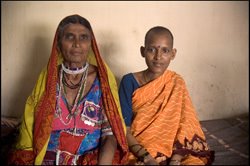
The photo above is from another beautiful photo blog called, Lives in Focus. They don't post often, but when they do, it is worth the wait. The photos are incredible. Right now they are documenting India's HIV positive population:


Using audio recorders, photographs and video, we plan to document the lives of families struggling to buy ARV drugs to keep a family member healthy; the challenges that stigmatized AIDS patients face in trying to earn enough money to buy the lifesaving treatment; activists desperately searching for new sources of inexpensive ARV drugs or lobbying the Indian government to grant compulsory licenses to continue producing cheap drugs.


Technorati tags:

Friday, February 10, 2006

St. Wanda’s Day is February 13th

I’ve never been a big fan of Valentine’s Day (yes, I know, I’m not a big fan of Christmas either). If you’re single and don’t have someone to celebrate with, you’re bummin’ and spending a fortune on the 6 season Sex in the City DVD. If you’re in a relationship, but not married, Valentine’s Day is like some kind of litmus test for how your relationship is going. How meaningful is the card? How romantic is the dinner? Will he/she say the L word, or M word? And if you’re married, it’s easy to say, “Oh, we don’t need to celebrate, every day is Valentine’s Day with you,” or “I’m busy that night, howabout we do Valentine’s next week?”

So, on February 13, 1995 I created St. Wanda’s Day. Basically, it’s a day to do a little something nice for yourself so that when Valentine’s rolls around, and its not the incredibly romantic, meaningful, love-filled day that we know it can’t be, but secretly hope it will be, we don’t feel so badly, ‘cause we had a kick-ass time the day before.

So do a little something special for yourself on the 13th, or send your pal who is having the pre-Valentine’s Day blues a St. Wanda’s Day card and have fun!

Technorati tags:


Wednesday, February 08, 2006

Do Good Film Company


While working on a post for blogher this morning, I came across information about a do good film company that I wanted to share. Nedra Kline Weinrich's social marketing blog, Spare Change, has all kinds of interesting links, including one to Participate.net, the complementary action campaign and community building site for the film company, Participant Productions. Participant Productions was started by former eBay President, Jeff Skoll, who also started the Skoll Foundation (The Skoll Foundation helped to produce that PBS series I love so much, The New Heroes). All of the films that Participant Productions produces have a social action campaign component. Check out some of the great films they've produced:

Syriana
Good Night, and Good Luck
North Country
Murderball

I have to admit that I'm a bit behind on my movies, but all of the above are on my "to see" list, and now that I know about the mission behind Participant Films I'm even more inclined to make sure I see as many as possible in the theater, rather than wait for DVD, to support them.

It looks like they've got some good ones coming down the pike, too. I'm particularly interested in seeing Fast Food Nation and Luna when they come out.


Saturday, February 04, 2006

Soup for the Super Bowl


My parents aren't exactly what I would call sport enthusiasts, which is why I was surprised when they said that they were going to a Superbowl party. Turns out it is a benefit for the Food Depot, Northern New Mexico's food bank, called Souper Bowl XII . Some of the best restaurants in Santa Fe cook up their tastiest soups for a soup cook-off and competition. All of the proceeds from the event go to the Food Depot.

Yum.

If you want to make soup on Super Bowl Sunday, here is one of my favorite soup recipes from a cookbook I use all the time, Vegetarian Soups for All Seasons by Nava Atlas.

Curried Red Lentil Soup with Sweet Potatoes and Greens
6 Servings

2 T canola oil or soy margarine
1 c chopped red onion
2 cloves garlic, minced
6 c water
1.5 c red lentils, rinsed (I use brown lentils)
2 large or 3 medium sweet potatoes, peeled and diced (I use yams)
1 t grated fresh ginger
2 t good quality curry powder or garam masala, more or less to taste
1/2 t ground coriander
1/4 t each cinnamon and nutmeg
1 6-oz. bunch Swiss chard, escarole or mustard greens
Juice of 1 lime
Salt to taste

Heat the oil or margarine in a soup pot. Add the onion and garlic and sauté over medium heat until golden brown, about 10 minutes. Add the water, lentils, sweet potatoes, and seasonings. Bring to a simmer, then simmer gently, covered, until the lentils are mushy and the potatoes are done, about 20 to 25 minutes.

In the meantime, wash the greens, remove their thick mid-ribs, then slice them into narrow shreds about 2 inches long. Stir into the soup along with the lime juice. If the soup is too thick, adjust the consistency with a small amount of water.

Continue to simmer gently until the greens are just done, about 10 to 15 minutes. Season to taste with salt. Serve at once, or let the soup stand for an hour or two, then heat through as needed.


Seeds


When I was teaching young people for Streetside Stories, I worked in the classroom of this incredible teacher, Ms. Williams. Many of the public schools Streetside works in serve young people who are struggling academically, financially and behaviorally. When visiting these schools I would often notice that many of the staff had low expectations of the students, but not Ms. Williams, she always kept her expectations high. If a student was late for class or forgot their pencil, they were not allowed into class. You could hear her firmly and quietly telling the student at the door,

"Do you think when you get a job that they're going to let you keep that job if you're late or forget the things you need to bring to work? Come back tomorrow when you are on time and prepared."


I think she had been teaching for about 30 years. When I asked her how she had been teaching for so long without getting burned out she said,

"If an adult does me wrong, it takes me a long time to forgive them, but if a child misbehaves in my class or doesn't do well academically one day, I give them a clean slate the next day.

Children are like seeds. Some of them you'll see come up in the fall, some in the spring and some you'll never get to see come up at all. Your fulfillment has to come from planting them."


We planted a Ribes sanguineum in our front yard last May. I had just finished a Gardening with Native Plants class and was excited to plant some native plants in our garden, especially a Ribes sanguineum. I love hummingbirds and hummingbirds love Ribes sanguineum.

I took the photo in this blog post of a hummingbird in a Ribes sanguineum. See the whirr of wings towards the top?

Anyhow, we planted the Ribes and waited (they don't bloom until February or March). It grew, a little, and then started to get this brown stuff all over its leaves


I tried picking them off, but they just kept coming back brown.

A couple of months ago it looked so bad I told my friend Abby from Urban Sprouts that I thought it was dying and was going to pull it out.

"You haven't even had it for a year," she said, "Give it some time."

So I left it and then this week the most amazing thing happened, it started to bloom!


I'm so excited.

You just never know when or how the seeds you plant will grow.


Thursday, February 02, 2006

Four Things

I've never played a blog game before, but Beth Kanter tagged me to play, so here it goes.

I don't know if I'm supposed to do this, but I changed the questions up for fun

4 Movies I Watch Over and Over
LA Story
Philadelphia Story
Raiders of the Lost Ark
Creature Comforts

4 TV Shows I Love
The Daily Show
Grey's Anatomy
Monk
Columbo reruns from the 70s (nothing later!)

4 Songs I Listen to Over and Over
An Ending by Brian Eno
Today Has Been Okay by Emiliana Torrini
La Cucaracha by Lila Downs
Contra la Corriente by Marc Anthony

4 Guilty Pleasure Blogs I Read
A Socialite's Life
Pink is the New Blog
Cupcakes Take the Cake
Cupcake Bakeshop by Chockylit

4 People Bloggers I'm Tagging
Pause
Vale of Evening Fog
The Giving Blog
E M P A T H Y