Thursday, June 22, 2006

World Cup: Who to Cheer For?


It is 7:49 AM in California right now, and there are 7 people in our living room watching the US v. Ghana game. We even made "bleachers"--a long cupboard that you can sit on behind the couch so more people could watch.

The World Development Movement has created an online tool called, Who Should
I Cheer For?
that evaluates all the World Cup teams by:

Life expectancy
National income per person
Military spending
Aid spending
Carbon emissions
Income inequality
Health spending
External debt
Perception of corruption
Companies among world's largest 500 multinational's

According to the site, "Ghana's average ranking across all the ten criteria make it the 1st most supportable team in the World Cup"

Shhh. Don't tell anyone, but I'm rooting for Ghana.

I found the site through the blog, It's Getting Hot In Here: Dispatches from the Global Youth Climate Movement

Photos via Aenneken's photo stream on Flickr.


Wednesday, June 21, 2006

Brahm Ahmadi, People's Grocery, Podcast Transcript

Today I am posting the transcript from my interview with Brahm Ahmadi, the Executive Director of People's Grocery.

You can hear the orginal podcast on Gcast, Odeo or iTunes.

If you are inspired by the interview and live in the Bay Area, People's Grocery is launching its 2-acre farm in Sunol this weekend and they are looking for volunteers. If you're interested contact Jason Uribe at 510-504-3664 or jason@peoplesgrocery.org.
Britt Bravo: Hi, welcome to the Big Vision Podcast, where we talk with individuals and organizations who are creating positive change. My name is Britt Bravo, and in today's show I will be talking with the co-founder and executive director of People's Grocery, Brahm Ahmadi. People's Grocery is a community-based, West Oakland non-profit, whose mission is to develop a self-reliant, socially just, and sustainable food system in West Oakland through community-based, youth-focused, and innovative social enterprises, urban agricultural projects, educational programs, and public policy initiatives that foster healthy, equitable, and ecological community development.
Brahm Ahmadi: People's Grocery is a community-based organization in West Oakland, California, which is a low-income inner city community of about 30, 000 residents, and People's Grocery was started by myself and two other residents in response to health, economic, and environmental challenges that we were seeing in the community, and that we wanted to do something about, or contribute solutions for. So, we created the organization, sort of, to really use food as a tool for social change that we could really leverage to address multiple issues. The primary need, obviously, in our community, West Oakland, is a lack of access to healthy and affordable foods. Out of 30,000 residents, we have one grocery store, and that's in contrast to over 40 liquor stores.
So the bulk of residents are relying on liquor stores for daily food purchases, and so this relates to what we consider to be an epidemic of diet-related, chronic diseases in the community: diabetes, heart disease, hypertension and obesity are rampant and growing, and having pretty devastating effects in a lot of different ways. Heart disease is the number one killer in the community, and diabetes is number two, and if you combine all of the diet-related chronic diseases that are in the community, it makes up over half of the mortality rate. And that is shocking, and really points to the urgency of the issue. At the same time, these diseases also, we believe, relate to the overall health and vitality and productivity of the community. If you're not well, then you're not really going to be at your optimal ability to perform and contribute in an economic function. And you're going to be more costs to the community, as well. These are a lot more of the sort of peripheral aspects of this problem.
So we wanted to primarily address that issue: how can we pursue creative, innovative ideas for getting food out there that's affordable, that's local, that's fresh, and health-supportive, and then provide under that a foundation of education. Because it's one thing to create a point of access where people can get this food affordably and that is convenient. It's another to have the education to support that desire, to support that change, and so we're looking at long-term, sort of systemic and generational change, not necessarily just short-term fixes, and that takes pretty profound work and education to do.
And then, of course, we have a strong commitment to economic development, as well. Really seeing that the community needs a lot in the way of economic development. It's had a very high unemployment rate, a very low business ownership rate, and a very low home ownership rate, and so we believe that the opportunity to develop a food system, you know, the way that food is produced, how it is brought to us as consumers, and all of the economic transactions that are taking place along that chain of events, is an opportunity for a community like West Oakland to participate, have greater self-sufficiency in their food system, more sustainability environmentally, and also, to benefit economically. If we can begin to build that at a local base, we can begin to create jobs that are associated with that new structure that we create. So, that's sort of the grand vision of the organization, is to build a local food system that's founded on economic development, that's founded on a perspective of health, community health and personal health, and education.
Britt Bravo: Can you talk a little bit more about the specific programs?
Brahm Ahmadi: Sure. So, currently, People's Grocery is organized sort of into three broad program areas. One is our urban agriculture program, and within our urban agriculture program, we are operating five community gardens, actually two community gardens, and a school garden, and a garden at the YMCA. And they all have different functions and different purposes, and some of those are the same and some are different. The core aspect of our work there is to try to build a local capacity to increase local food production. Being able to supplement our nutritional intake at a local basis, and to be able to contribute towards localizing the food system to reduce our impact on global ways that food is being produced and transported and fuels being wasted and what not. And also, again, to create jobs in the process.
We also do a backyard garden assistance program, where we help residents start gardens. For every 400 square feet of land that you put towards gardening, a low-income family can save about $100, or produce rather, about $100 in value of produce. And for a lot of low-income families who are eating very little to even no produce at all on a weekly basis, that's a huge supplement of fresh produce from their backyard. So, we're doing that in partnership with City Slicker Farms, and we now have a new opportunity through our urban agricultural program, to partner with an organization called Sustainable Agriculture Education Center, to open a small farm down in Sunol, which is kind of South Bay, Fremont, Union City area. The idea there is a partnership where we will cultivate up to five acres of land, and have a real, sort of larger farm, an extension of our urban activity on a peri-urban basis, on the periphery of the urban area. And of course, bring the community out, employing young people to work on it, and really begin to build a relationship in a more systemic kind of way.
Another program area we have is community education, and we've put a lot of time and resources into that, and so we have, for example, a peer education program, where our youth staff go out and do peer presentations to other young people in the community about healthy food, about nutrition, about food security or food justice, and really try to have a conversation, and to deliver the message that you know, many of us adults are familiar with and whatnot, that may not be as relevant or as desired by young people. Our youth are working creatively to create other ways of communicating those messages in terms of workshops and presentations that are fun, engaging, and cool, and that's a very important aspect. Their job is, in the organization, to reposition the message of being healthy as something that's cool, and they're having a lot of progress with that.
We do an adult cooking class, as well. It's free for adults. It's a six-week course, and there's a pretty extensive waiting list for that; it's very popular. We do a garden nutrition program at our two school sites and at the YMCA site, which is basically for children, at these sites, teaching them about gardening and about nutrition. So usually half the kids are in the cooking class while the other half are in the garden, doing an activity, and they rotate every other week. And so, they're able to make connections between food being grown, harvested, all the experiences of that and understanding that from an ecological perspective, from a gardening perspective, and then making that link back to making it, and eating it, and there's a relationship that begins to happen there for the children.
We do a lot of work with teens in the summertime. We have a program called, "Collards and Commerce." It's a youth entrepreneurship and agriculture training for young people, trying to build their capacity as leaders in the community, with a specific focus on being entrepreneurs, using business as a solution both to their economic need, locally, but for their social needs as well. And then, of course, trying to, again, connect young people into taking leadership in being active leaders and advocates for sustainable food systems and food security. And many of the young people who go through that program will continue on with the organizations in various capacities in terms of jobs; all of the peer educators have come out of that, for example.
And then we do a summer camp program, called, "Food and Justice Camp." It's not just for West Oakland; it's for young people throughout the Bay Area. We partner with a handful of other food justice organizations, and have a camp for five days. We actually do a short camp in the winter as well. Basically, we cover all aspects of food in regards to how it's grown, who benefits from that, what the global food system looks like, what a local food system looks like, how do you build a local food system, what is food security, or food justice, what are the underpinning root causes of that, in terms of systemic inequalities, in terms of policy, in terms of lack of infrastructure, et cetera. So it's sort of a one-week, powerhouse, intensive, eye-opening experience to all of these issues. For the young people who go through our Collards and Commerce program, they actually go through that first, so it's sort of their on the ground boot camp training, and then they come into the summer program with a strong foundation, and they move on through the organization. So that's sort of our broad education work.
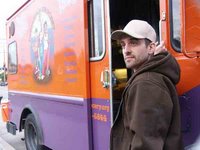
Our final program area is enterprise development. The flagship project there, and really for the entire organization, is called, "The Mobile Market," a grocery store on wheels that we built out of an old postal truck. We literally put shelving on it and turned it into a small grocery store. It has organic produce, it has packaged foods, bulk foods, frozen and refrigerated foods, all at discounted prices. It's a member-based program, so residents get about a twenty percent discount versus non-members, who pay roughly market rate, (which is actually not even bad for that). And it's all primarily youth run, as well, so it's another kind of laboratory for our young people to learn business skills. It really came from understanding that food security or food justice was not just an issue of not having enough places in the community to get healthy foods, but transportation as well, because a lot of residents don't have the privilege of a vehicle. Unfortunately, bus lines in our community tend to be very difficult, in terms of the number of transfers that have to be made, the costs for that. Oakland has changed its laws in the last few years where you have to pay per transfer. So that's not very feasible for a lot of low-income people to go usually a great distance to get to a quality store where they can afford good food, and then haul all that grocery back home. Especially for working-class people, you could be looking at a two, even three-hour round trip out of a day where you may have worked all day already.
So people wonder why a lot of residents are relying on liquor stores or even on fast-food restaurants. The realities is they are really challenged to squeeze it into their schedule, that is cost effective and a wise use of their time and energy. So we made it mobile, for that purpose, and the idea is to bring it to them, and so the Mobile Market travels around the community on a regular schedule and a route. It sets up at central locations and sells food to the community. And also educates. It was also meant to be a tool for education, for dialogue and attracting interest and curiosity in the community about, number one, "What is this crazy purple and orange truck?" you know, with the sound system and lettering all over it, and then number two, "Why are you doing this?" We have a lot of successful conversations with residents, and our experience is that the overwhelming majority want healthy food. You know, if you give them the choice, they'll make the choice, and that goes against a lot of stereotypes against low-income people that says they don't want healthy food, they won't pay for it, they can't afford it, they're not motivated for it. Those things tend to not be true. You have to build the right supports and motivations, and if you do that, they will be consistent in their lives to change.
We also run a number of bulk buying programs and discount selling programs. We are building a whole base of partnerships with food companies, both farmers, and manufactures and producers, particularly in the organic industry. We have been putting out a message of conscience to the organic industry that, "Look, you guys are producing healthy food, and sustainably doing it, however, it's only getting to a certain class of people." And we come from a perspective of equity, we come from a perspective that all people deserve the best quality of foods, we believe that organic is the best quality food, but we also see an elitism in the structure, in terms of the price premiums, and the access points that have been created for it.
We're making some progress. I think the real opportunity for success with these companies is when you can make an economic case behind it. So not just an appeal to conscience, necessarily, but really show the numbers are actually there. Low-income people in the United States spend over 85 billion dollars per year on groceries; they represent 45 percent of food retail in this country. And that is a virtually untapped market for these companies, who have niched themselves as premium-oriented. And you know, they will, sooner or later, saturate their current markets, and will have to look elsewhere to continue their growth. Some of them are starting to see that now.
So when we mix the message of social conscience and that this food needs to be available to all from a perspective of human rights, but secondly, it's a good business strategy for you, as a business, to do this. We're finding success. We're building a small portfolio of companies who are doing partnerships with us, giving us deals, working with us on promotions, and what not. We're doing a lot of, kind of, discount selling right now to really expose the community to the products; to get them familiar with the tastes, and flavors, and kinds of brands that these companies are developing.
And then of course, our grand enterprise component is our grocery store, and this really harkens back to the sort of foundation of the organization, and the origination of the name, People's Grocery, came from the desire to start a grocery store. Now, myself and the other two residents who started the organization, at that time, we had activist backgrounds, we didn't really know anything about business, we had no idea what it would take. But we wanted to do it. We saw that there was a need, and we saw that if you build this powerful business model that was this source, or hub, of economic organizing, and food systems organizing and education, it would be powerful. But, as we did more in-depth research, we found that it was really way beyond what we could do, and a lot more money than we would be able to access. So we said, "Let's back up and let's build towards that goal," and we've never given up the goal, and therefore didn't change our name, because we really want to emulate where we're heading.
But the idea is to start a cooperative grocery store and community wellness village. The idea there is to really take the idea of "grocery store" and turn it on its head, in terms of going beyond the fairly conventional and transactional relationship that a grocery store has become in our society. You know there was a time before when the grocer was a really important role in the community, and was very connected to health. A lot of them had almost a sort of prescriptive role, where you would come to the grocer, and you had an ailment of some kind, or whatever it was, and they had so much knowledge about all the products they had, and the seasonalities of those things, they could provide all this information. And that obviously has been lost. You go a typical grocery store in any community, regardless of class, and there's virtually no real quality interaction between you and that business. You are a shopper, and you're going to check out, pay money, and leave. The most customer service you'll get is being pointed to the aisle where you're looking for something, and even then, often times, the clerks don't even know anything about the product; they can't tell you anything more than what you would read off the label itself.
So we believe that the role of grocery has really been diminished, in a way that is taking away the contribution it could really make toward a more vital society. In this time of environmental challenges related to agricultural production on a global scale, we really think that the grocery needs to be reintroduced as a role for health and well being and for sustainable and local food systems. The grocery is really about a local character, being rooted in a place, being very familiar with localities, the climates, the specificities of seasons and whatnot. So that's our dream of a grocery store, and it also connects to this idea of what we're calling the Community Wellness Village, which is, again, to take the grocery store and put it at the center of personal and community health, that it's not just a transactional and peripheral aspect of a food buying need, but is central and supportive to health.
So the Community Wellness Village is really about partnering with other community partners who are doing things related to health and wellness in the community, and co-locating in a space, where, by being able to pick up traffic of the shoppers who are coming to the store, we and the partners can then create a whole extension of services to those shoppers as residents who are coming. Because that's one need we see a lot of, people working on health and wellness in the community, meeting is a way to really capture the synergy of a partnership that can create that traffic for them, as well as for any other business. And of course we want the grocery store to provide a lot of these wellness components as well. We want to have a cooking school, on site; we want to have a nutrition consultancy, on site. We are going to not call our staff, clerks and cashiers and stockers; they are going to be called wellness promoters, or "WelPros," and that again is going back to that job in the grocery, in the old days, and taking it beyond, which is to really to have an informed base of staff and worker owners, who are very proficient in knowing the products and being able to help the residents with basic things they're looking for. If someone comes in and has diabetes; for example, and the doctor has said, "You need to eat certain things," or maybe they haven't even visited a doctor yet, they just have diabetes, and are struggling with that, we would have staff who can help, and say, "These are appropriate products, these are some things we might suggest in terms of changing your lifestyle or eating habits."
With our peer education work, we've seen the success of that, empowering staff to really take on a role at being proficient and having a basic knowledge. So the long-term dream is that the grocery store is a real core component of health in the community, and at the same time, being a place for local food systems, supporting the dialogue around sustainability in food systems, localization of food systems, and economic development of food systems, as well.
Britt Bravo: What brought you, personally, to this work? What attracted you to it, and what is the path that brought you here?
Brahm Ahmadi: Well, I started People's Grocery primarily out of being in a transitional place in my own life, where I had been doing many years of activism, mostly on environmental justice issues, and also a lot of youth development work. And while the work was important, there were two aspects that were really missing for me. One was the ability to see success in the short term, and that can be very disheartening and very challenging for activists who are working on really big issues, that change may not happen in a short-term sense. So, one, I was craving to see more immediate results of the work, in a positive way that was able to keep my hope and inspiration going, and the motivation going. The second was that I was craving a lifestyle that was a little more grounded, that was a little bit more focused on basic needs, and that had a relationship to earth, to soil, to a lifestyle that was more in tune with the seasons and the cycles of nature, and growing food is probably the best way that any human being can do that.
So those were a couple of the personal goals for me, was I wanted to see short-term success, and when you grow food, that's a short-term success. You can see the harvest of your work, literally. And when you see a resident buy that item, or participate in a program, and be changed in some way from that, or to see a young person engaged in the organization, and not only gain meaningful employment to be able to become a leader and actually have skills, to contribute. Those are all really powerful successes that we can see regularly in this organization and really, I think, keep us going, in terms of our vision.
My life is definitely still hectic, as an Executive Director of this organization; there's a lot of administrative work. But, it is the best ED job that I can think of, in terms of the mix of what I do on a daily basis; I don't have a day that's the same. There's one day I'll be in the office, writing grants, and doing whatever HR-related stuff, or budgeting, or some kind of management role. The next day I could be out in the garden and be digging in the dirt, and planting stuff. Then the next day, I'm doing something with the business, and I love doing business, and so I'm developing a business model, or I'm on the Mobile Market, so there's this whole aspect of being in the warehouse, in doing shipping and receiving and stocking and all that. Then another day we have a group of kids out here, or a group of teenagers is visiting, and we'll do a workshop and a presentation and get them to do education work, and so there's a diversity and a variety that really overcomes any kind of monotony in the experience, and that is very fulfilling for me. It's challenging, because it can spread us out, and we are, like most non-profits, understaffed, but it's very fulfilling in that way.
Britt Bravo: I know you have some resources on your website, but I'm sure you get lots of phone calls and emails from people saying, "I love this model, I want to do this where I live." What are some resources for people who say they want to do something like this?
Brahm Ahmadi: Well, I think, if an individual's interest is particularly to do something that's related to food or health, one of the basic things to do first is to understand your local food system, and your local watershed; in general, to have a very strong sense of place, and to know everything that's involved in that, because when you can understand your food system, or your watershed, then you can begin to identify where the gaps are, where the problems are, and where the opportunities are, for partnership, or for placing yourself in a useful role. I think that that is often one thing that lacks in a lot of organization's approaches to all kinds of different social problems is not really looking at the big picture in terms of sort of systemic perspective. Really, being able to look at it in terms of relationships, in terms of broader geographic understandings, all the intricacies of those things, I think that for anybody who wants to do a project, to sort of do that basic homework and have a really strong foundation of understanding of the place, and the dynamics, and the needs, that will bring out a lot in terms of where to go, what direction to take.
We spent well over a year, as a small group, really doing that research, before we even founded the organization. We wanted to know everything, we wanted to know who was doing what, what were the effective strategies in terms of best practices that were out there, and what kind of niche could People's Grocery develop for itself? I think that it was really important to have done that, instead of just rushing out with a program right away, which we could have done, and we were partly compelled to, because we're reaction-oriented. But we also knew that this is a different kind of approach, this is a systems approach, and so we need to have that understanding.
And I think partnership is really foundational for community change to be comprehensive and long lasting, and to have buy-in from the community in a way that empowers residence, and ultimately can place them in positions of leadership. It has to start out with partnership from the beginning. That also contributes to a small startup organization being able to leverage the capacity of its partners to be more effective at the program. If you're a bootstrap startup, you're going to have a hard time doing it on your own, whatever it is, especially if it's very ambitions, something like creating a food system. It's no small task, and would be very presumptive to think that anyone could do that by themselves. So partnership is the foundation. And that really is what a food system is: it's a series of relationships, at one time being much more grounded and honorable relationships, and not just commodity and monetary relationships, but certainly, if we want to emulate that kind of society again, it does start with the relationships between organizations and between communities, and bridging from there. And then I think from there, opportunities really arise.
Britt Bravo: Thanks for listening to the Big Vision Podcast. For more information about People's Grocery, go to the People's Grocery website at peoplesgrocery.org, or to Brahm's blog at peoplesgrocery.org/brahm, Brahm is spelled "B-R-A-H-M". If you liked the opening music, it was an excerpt from Kenya Masala's, "Mango Delight." You can learn more about Kenya's music, and his work by going to sourceconsultinggroup.com. And finally, if you want more information about Big Vision Career and Project Consulting, you can check out my website at brittbravo.com. Thanks for listening!


Creative Commons License
This work is licensed under a Creative Commons Attribution-NonCommercial 2.5 License.

Tuesday, June 20, 2006

Abby Rosenheck, Urban Sprouts, Interview Transcript

As I mentioned in yesterday's post, I splurged and got the interviews I've been doing for my podcast transcribed by CastingWords, so I'll be posting an interview each day this week. Yesterday I posted the transcript from my interview with Ilyse Hogue of the Rainforest Action Network.

I like CastingWords overall. The service was super quick, but there have been a lot of spelling errors and some missed words, so I end up listening to the recording and reading along with the transcription once or twice before posting. Just an FYI for folks thinking about using it.

Now, here's my interview with Abby Rosenheck, founder and Executive Director of Urban Sprouts. You can hear the orginal podcast on Gcast, Odeo or iTunes.
Britt Bravo: Hi! Welcome to the Big Vision podcast where we talk with individuals and organizations who are creating positive change. My name is Britt Bravo and in today's show I will be talking with Abby Rosenheck, the founder and Executive Director of Urban Sprouts. Urban Sprouts is a school gardening program that serves low-income youth from San Fransico's underserved neighborhoods. Urban Sprouts teaches youth to grow, harvest, prepare, and eat vegetables from the school garden in order to help them to become more engaged in school, eat better, exercise more, and connect with the environment and each other.
Abby Rosenheck: Urban sprouts is a school garden program where we support middle and high schools in San Francisco to build school gardens at their school, so the students grow, prepare, eat--the whole thing. They grow food themselves that they can eat and share, and it's part of the Science and the PE classes so they are learning about environmental science. They're learning about health and nutrition; it's actually helping them to develop better eating habits and nutritional choices, and then, it's helping them to actually kind of use their new knowledge to change their behaviors so that they are actually becoming more environmentally responsible in their daily lives, taking it home--choosing to eat more vegetables more often in their lives. And then it also helps them succeed in school in other ways. It helps them engage more in learning and science and in health classes and also has a lot of other outcomes which we see: youth cooperating, learning, feeling more confident and strong, and able to make decisions and kind of run the garden themselves, things like that.
Britt Bravo: What does a typical class day look like?
Abby Rosenheck: When it's in science class, I go into the class and usually there's kind of a classroom piece where we do a lesson, usually something interactive where they are planting seeds or measuring the sugar in a beverage or something related to health or science, and then each day we go outside and do something in the garden: either garden work, or cooking and eating, harvesting from the garden. And then rainy days we'll do other things inside, but there will always be a part where they're actually doing gardening or eating the food each day.
Britt Bravo: What inspired you to start Urban Sprouts?
Abby Rosenheck: Well, its kind of a long journey, but I had worked on farms when I was a young person, both working as, helping on farms where I grew up (I grew up in a city) but there were nearby farms that would bring food into our neighborhood. And so, I was interested, and I started working and learning about organic farming and how different it was than other kinds of large scale agriculture that impacted the environment and also that wasn't a good livelihood for the people working there. And so I became interested; and really through other youth programs that I did that were nature-related and also through working on farms myself, it really impacted me as a young person, it made me feel connected to the world around me, to nature, and also to the people that I was working with, in a different way, that I didn't really feel in any other place in my life. So when I started looking for work and being a grown up, I really felt that this was something that could help other young people. I wanted to help a lot of people who, like me, had been in an urban setting where there isn't a lot of nature around (or doesn't seem like there is), but you can find nature in your own backyard, or at your school, where you can grow food.
Britt Bravo: What has been the biggest challenge of starting your own nonprofit?
Abby Rosenheck: Well its the, the hardest thing I think is just that there is not a lot of support for this kind of work, and that I had a lot of resources, a lot of people around me that could help me learn the different skills I needed (whether it was the gardening, the educational part, or the starting the nonprofit part, I had a lot of support in that way). But still, at the end of the day I would be working, working, making this happen, and still there would be this overwhelming feeling that so many people didn't get it. They didn't understand why school gardens were important, why public education was not working for a lot of young people and why you would dedicate your life to something that it just sounds small, and it sounds unimportant to a lot of people, especially in the sort of consumerist, fast-paced, urban-American lifestyle (even though, of course, a lot of people around me, particularly, would understand my work), I still felt that lack of understanding and respect and it would get me down at times. But being in the schools you can see the impact that it would have for the young people and the teachers too. So [that] kind of kept me energized.
Britt Bravo: What are other things that keep you motivated and energized to do this work?
Abby Rosenheck: I think a lot of it comes from my personal community: my friends and actually people like my fiancé who have . . .my work has actually has had the same impact on them, some of my friends, they eat more vegetables now. They understand why organic farming is important or why school gardens, why they should be a part of education. So I can feel things changing. I can feel them changing in my own circles, in my own family, so I have more support, and the biggest thing in the work itself has been my relationships with the teachers, and they've really come out. They've gotten all their networks involved, their friends and family caring about it, coming out to the garden, donating to Urban Sprouts, and really supporting us; and to see that that can really impact a school. So that keeps me excited as well as, of course, the kids, when you see them go from, "Ew! Dirt is gross, I don't want to touch that!" to wanting worms, wanting to see the dirt, wanting to smell and touch everything. They get so excited it's impossible not to be rejuvenated when you see them having fun out there.
Britt Bravo: Do you have any stories about how this work has impacted individual students' lives?
Abby Rosenheck: Well the thing that is really powerful is to see, we work with the special ed, the special day class, and those are the students who, I mean, since I started working at Luther Burbank Middle school, they had a new teacher and it was her first year teaching at all, and she took on the special day class, and it was like the hardest classroom you ever seen. The kids were everywhere, they're running around, they're cursing, they're throwing things, they're angry, they're upset, just everything coming out, and we would go out into the garden, and you would just see them relax, like just being outdoors, instead of in the classroom. And some of them had gardened before. Their parents were gardeners, their grandparents, and they were able to teach each other how to plant, how to be gentle, how to work together. You'd see them cooperating in a way they never did in the classroom, and I've worked with that same teacher and her group for the past three years. And the group changes somewhat, but there is a core of students who have been there; and to see the progress that they have made is incredible. I mean, their teacher is amazing. But the combination of what she's done, and what they've done in the garden has really--their class is just turned around. They can do so much now and they're so proud of their work in a way that they weren't before.
Britt Bravo: If someone wanted to start an urban garden program, what are some of the resources they can turn to and what are some of the small steps that they can take?
Abby Rosenheck: Well in San Francisco, people are pretty lucky because there is a good amount of training and resources out here: there's a compost educator gardening training that you can do. So you could actually learn, it's one of the few non-profits that trains people in how to teach others about gardening and composting. So there are a couple of trainings: there is one in Santa Cruz, there's one in Sonoma County that really prepare you with the basic gardening skills, and some even teach you about school gardens, particularly. So there's a pretty good amount in the Bay Area.

But for other people I think that there are--there is kind of a disconnect sometimes between schools and gardeners and the schools need a lot of support (it's more than a teacher can do on their own). So I've heard of a lot of connections between local garden clubs, master gardeners, farmers, some schools will start with field trips to local farms. So if you're interested, I would say start as a school volunteer and connect with some teachers that might be interested in this and help connect them with gardening resources or gardening clubs, horticulturists in your town that can help you really start to build. It takes a lot of volunteers to do the building, to do the planning, to come to school and have a lot of adults in school, but I think most teachers get really excited about it pretty easily.
Britt Bravo: And are there any books or websites people can use as a resource?
Abby Rosenheck: Well actually on our blog we have a pretty good list of those resources. Lifelab is a group that has been doing this for a long time. They publish curriculum and books. There is a curriculum called "Nutrition to Grow On." that's published by the California Department of Education, that's really good, and the California School Garden Network just came out with a new web site that has all kinds of curriculum resources, all the trainings in the area. It has links to a lot of the research that's coming up because more people are starting to do more research in this area and different kind of graduate students are doing it, and policies that have come out affecting school food and nutrition, they've got all that on their website. That's a good one which you can find on our blog.
Britt Bravo: You were saying earlier that sometimes people don't understand why school gardens are important. If you could tell them why they are important, what would you say?
Abby Rosenheck: Well sort of in a technical way we talk about it influencing schools in four areas: one is health and nutrition, one is eco-literacy (which goes beyond environmental knowledge and awareness to really making change in your life in terms of environmental responsibility) and then youth development, helping young people build new skills and assets inside themselves in different ways, and then academic achievement. And we've kind of created, working with researchers, a model that really shows the different ways these things are happening in different parts of the program so all the things that you need to set up a school garden in order to set the stage for all of these benefits.
Britt Bravo: Thanks for listening to the Big Vision podcast. For more information about Urban Sprouts, go to the Urban Sprouts website at urbansprouts.org, and their blog urbansprouts.blogspot.com. and if you liked the opening music it was an excerpt from Kenya Masala's Mango Delight. You can learn more about Kenya's work and his music by going to sourcecounsultinggroup.com. Finally, if you want more information about Big Vision Career and Project Consulting you can check out my website at brittbravo.com. Thanks for listening.


Creative Commons License
This work is licensed under a Creative Commons Attribution-NonCommercial 2.5 License.

Monday, June 19, 2006

So What Can I Do?

So What Can I Do? That's the name of Karama Neal's blog:
"A public service weblog promoting ethics in action. - My friends and I are often frustrated with the way society works. Soon we're all riled up and one of us will ask, 'So what can I do?' This blog is a response to that question. Together, we'll explore ways to enact social change. We each can do, and should do, something to make our world a better place. Here are some ways to get started."
In the past couple months, she has posted about RockCorps, a really cool organization that produces concerts where admission is contributing four hours of community service; Blogging Against Disablism Day; Thistle Farms, "the cottage business of Magdalene – a two-year residential community for women with a criminal history of addiction and prostitution"; WOOFing, volunteering on an organic farm anywhere in the world in exchange for room and board; and resources for how to be an activist.

I love how she uses this blog to talk about how others are working for social change, and uses her complementary blog, Open Letters for Change, to posts her letters to officials and the media. Yay, Karama!

image via Girl Reporter


Big Vision Podcast: Interview with llyse Hogue Rainforest Action Network

The newest Big Vision podcast is up, and it is an interview with Ilyse Hogue, the Global Finance Campaign Director for the Rainforest Action Network and one of the founders of SmartMeme, a non-profit collective of long term organizers, strategists, trainers and communications professionals. I've been enjoying doing interviews for my podcast so much, and have been so inspired by the work that the people I am interviewing are doing, that I gave myself an early birthday present and had the interviews transcribed by Castingwords 'cause I know everyone isn't into podcasts and I want more people to learn about the work that these amazing people are doing.

I am going to be posting the interviews each day this week, so if you know someone who would be inspired by interviews with people working for positive change, please pass them on. Thanks!

You can hear the orginal podcast on Gcast, Odeo or iTunes.

Britt Bravo:
Hi, welcome to the Big Vision podcast, where we talk with individuals and organizations who are creating positive change. My name is Britt Bravo, and in today's show I talk with Ilyse Hogue, the Global Finance Campaign Director for the Rainforest Action Network.
Ilyse Hogue: Rainforest Action Network was formed 20 years ago around the mission of preserving the world's remaining old growth forests and securing the rights of their traditional inhabitants, the way that that's kind of unfolded over the years is that we act through what we call marketplace democracy, which means that we go out and we try and educate every day consumers about the corporate participants in the destruction of the rainforest, and during the last ten years we've really understood the interconnectedness between rainforest destruction and climate change, so now we say, hey, we're all participants in this market system, and you need to make your voice heard when you go to Ford motor company and say, "Why aren't you instituting fuel efficiency standards? Why are you still churning out some of the largest vehicles known on the face of the Earth," and similarly we've gained a lot of traction in what we call the global financial sector which is... our supporters really resonanted with the idea that large multi-national banks were making decisions every day that impacted the fate of our global eco-systems, and so we have been able to successfully funnel those voices towards the world's largest banks and pressure them into instituting some comprehensive environmental policies into how they're investing our money.
Britt Bravo: What do you do as the Global Finance Campaign Director?
Ilyse Hogue: I was brought on board seven years ago to start up what we call the global finance campaign, which is to look at the role the big banks play in environmental destruction and how we view the economy as either a tool for destruction or restoration, and as that program grew I became the director of it and now I do that as well as offer some overall strategic guidance for the organization on how we tackle new projects and what kinds of messages we're sending out to the broader world.
Britt Bravo: How did you come to this work?
Ilyse Hogue: Well I came to this work and I came to this job, very differently, maybe I could start from the beginning.

After college, after some wanderings and living out in nature doing a lot of backpacking I decided I didn't want to, actually, well, actually let me start, I was a science major in college because I knew that I wanted to study eco-systems and help to preserve them that way. Shortly after college I did some field work where I was gathering data in an effort to try and clean up some mine tailings in Montana, and after months and months of doing that I had kind of an epiphany that it wasn't for lack of evidence that we weren't changing our behaviour, that the evidence actually existed, that data I was gathering was going towards who was responsible for paying for the clean-up, but at the same time I knew that I could look at this river system and say, "I don't want to swim in this, I don't need to spend tens of thousands of dollars and reams of paper and all this time to prove that it's toxic." And so I thought well, it seems like if we're going to actually change the human patterns that are so severely impacting our environment and communities around the world, maybe there are some other ways to do it.
So I actually moved home to Texas and started to work on a local initiative to do some water resource protection and did everything right. Went through the democractic system, went door-to-door. Got the citizens of Austin to sign their names enough times to get it on the ballot. At the polling place it passed by 75%, that we're wanted to protect this watershed, which 75% in an issue-based election is a huge margin. So we went out and celebrated, and then in the subsequent weeks, it became very clear that the developer who wanted to build on the watershed had no intention of abiding by the citizens' rule. He basically went to the state legislature and poured money into state senator and congresspeople's pockets to undercut the local ordinance, and he tied the city up in court to put an injunction on the local initiative.

When I did a little digging into who this guy was, he was one of three leaders of one of the world's largest companies called Freeport-McMoRan, which is engaged in mining and chemical production all around the world. I sort of saw his participation and undercutting the democracy in my hometown as indicative of what Freeport-McMoRan was doing in Cancer Alley in Louisiana, which I later went and visited and saw their impact there, and in Papua New Guinea, where they have some of the worst mines and human rights abuses that we have documented on file, and I started to think about the power balance between our democratic systems and the multi-national corporations that were increasingly governing federal policy and state policy.
And so I started to focus on corporate actors, and through a series of events and working at different organizaitions I was approached by RAN. I had looked at logging companies and looked at ways to pressure them. I had looked at chemical companies and oil refineries and ways to pressure them, and when RAN came to me in 1999 and said "Hey, we're thinking about actually launching a campaign against the global financial sector, starting with CitiGroup who was the largest bank in the world, what do you think?", you know, I thought, "Wow! That's totally brilliant," because until that time I was really concerned about our movement's ability to do more than shift the harm. So, if we close this mine here, how are they not going to open it over here? And one thing that attracted me about the global financial campaign was that it was actually redirecting the economic flow so that we could create standards around which there would be no capital investment available for those bottom-of-the-barrel projects any more.

So, I thought it was brilliant and I thought, what a crazy organization to believe that 30 people in an office in San Francisco can take on the world's largest bank, and wow, I wanted to be a part of that, because for me activism is kind of about dreaming crazy dreams and believing the impossible, and so that's how I came to be where I am now.
Britt Bravo: What do you enjoy the most about your work?
Ilyse Hogue: I enjoy, wow, that's a great question. I mean there are so many things I enjoy on a day-to-day basis, from getting to work with all sorts of creative people all over the world who have just a vast array of experience that I learn from all the time. But I think the thing that I enjoy the most is actually living in a world where people are not only encouraged, but congratulated for stepping into their power and speaking what is true to them, because I don't think the world at large encourages that. So the more that we can create institutions and structures and organizations that do just that. . . . I think successful activism is activism where the individual is coming from a place of true inspiration, and that's really different for everyone, but that when we create the systems that reward the behavior of getting inspired, acting on that inspiration in a way that's collaborative and co-operative with other people, then we're actually not only living in a world that's probably healthier in the long-term, for future generations, but happier in the short-term, day-to-day.
Britt Bravo: What is one of your favorite success stories?
Ilyse Hogue: One of my favorite success stories--wow, that's a great question, there are so many. One of my favorite success stories was just the opportunity that through our activism and our pressure on CitiGroup--most of what we as US citizens have to offer to the world is access, to points of power that actually affect what happens on a global basis, and yet a lot of the time the people on the front lines of the consequences of those decisions don't have that access to tell that story to the decision-maker--so, we were able to bring some incredible Peruvian activists, who were really trying to save their community from a lot of the suffering that was occurring because a pipeline was going through their land up to the US, which was even more of a struggle 'cause it was post 9/11 and getting the visas was made much more difficult, and so that was a mini-struggle in itself, and we thought it was all going to fall through and then we were able to get over that hurdle and bring them up and get them into the CitiGroup Annual General Meeting, which is the gathering of all the shareholders.

They are to varying degrees of important events at different corporations, but CitiGroups is actually quite a celebrated event. It's at Carnegie Hall, and the place fills up, and it's very dramatic, and there's actually quite a lot of press attention as well as shareholder attention, and to hear this woman, this mother, from the forests of Peru, be able to tell her story in such an impassioned way, and to hear the hush fall over the room, and watch people's minds open for just one minute, to grapple with their participation in a global system that does actually result in injustice, whether they mean for it to or not, and it was just such a wonderful moment, because to me that's the success.

I think the struggle is ongoing, I don't think there's ever an ending, I don't think we get to win and all "kick it" for the rest of our lives, I think there's a dynamic balance that we will always work to maintain around issues of justice and environmental integrity, but I think that what we can take a lot of joy in, or at least what I take a lot of joy in, is being able to cut through all the chaotic busy-ness and single-minded focus that, particularly people in the US have, and particularly people in positions of power, I should say, have in the US, and force them to view their role in a system from a different perspective. You can see the lightbulbs go off and you can see people have little epiphanies, and then the door will start to shut, but I think that's our job is to keep that door open while we can discuss real solutions, and that was one real opportunity where it seemed to work.
Britt Bravo: How do you keep motivated and inspired and not get burned out?
Ilyse Hogue: You know it's funny because, I get tired and I definitely get grumpy, and there are times where I feel like "oh, we're losing" and "oh, we're going to lose" and then I think, I actually make myself go there, and I'm like, OK, if we're going to lose, what would I do differently?", and the answer is nothing, and I think that that's what keeps me inspired.

I certainly get inspired by getting to touch and be a part of some of the vast wilderness left on the planet, so the job has allowed me the privilege, which not everyone has, of going to Indonesia, and going to the Amazon in Brazil, and certainly that is fuel that will fill my engine for a very long time. At the same time, I get inspired by the fact that there are people with far more that they stand to lose on a daily basis, who don't walk away, and not only do they not walk away, because many of them can't walk away, but they struggle and they resist with a joy, and that's what inspires me. When we stand in the face of what feel like overwhelming odds sometimes, and are still able to celebrate our own power, then that inspires me and I think what inspires me is I can't imagine what level of economic reward could replace the value of going home knowing that I am getting to participate in building a different way, and it's a joyous way, and it feels like a right way. I know that sounds kind of cheesy but it's true.
Britt Bravo: If someone wanted to give up their corporate job and do the kind of work that you do, what should they do?
Ilyse Hogue: I think it's really amazing when people want to make that transition and I think, I actually talk to people who want to do that all the time, and the first bit of advice that I give them is unless you have another income stream, don't give up your job until you have another plan. That's because progressive movements are always strapped for resources and so those of us who have been able to actually get paid to do this work are very, very privileged, and what I hate to think is that we're creating sort of professionalism around social change. Social change is about what you choose to do every day, how you interact with your neighbors, where you buy your groceries, who you're voting for, where you keep your money in the bank, what kind of car you're driving, are you taking mass transportation, and I know that there are people who want to do more than that, and I believe anyone who wants to can do more than that, but I think that's where it starts, and I think that if you want to do more than that, really the most successful advocates for social change who are able to make a living at it are the people who are inspired by either an issue that really speaks to them, or bring a skill set that they really want to plug in, so the best way I've found to figure out where you fit in the existing network of social change organizations is to get out there and experiment and volunteer, and do that when you're not desperate for cashflow, because sometimes it can take a little while to figure out where you fit, but by living your life as close to your own values as you can, getting out there and experiencing what models of social change exist and how you can participate in them, and staying focused on what inspires you, through those things, many and most people that I've found who are really committed to it, find their role.
Britt Bravo: Are there any books or movies that inspire you?
Ilyse Hogue: There are so many it's really hard to say. I love V for Vendetta, most recently, and that's just top of my head because it's so recent, relevant, and the thing about V for Vendetta is it's actually chock full of quotations and theory that's not referenced. A friend of mine, David Solnit, put together a book called Globalize Liberation, which is a really good primer for people understanding different mechanisms of social change. There are organizations that I think really, really inspire me. I think a very, very big part of social change is storytelling, and I know that's why you do what you do. Third World Majority, who really works to empower different communities to tell their stories, not just to shape the stories, but actually to get the stories out to the world, that inspires me. And so there's not a single book or a single movie, but it's really the stories of people's experience wherever you find them, is what I seek out.
Britt Bravo: For people who are listening, if there was one action you would want them to take to make the world a better place, what would it be?
Ilyse Hogue: To pick what action they feel that they can stay true to and then educate ten people about it, because I don't think there's one action that we should all take, I think it's about figuring out what resonates with you as an individual and then going out, because that resonates with you, and inspiring those close to you to take action. I think it's not what action you take, but it's taking action that makes the difference.
Britt Bravo: Thanks for listening to the Big Vision podcast. For more information about the Rainforest Action Network, go to www.ran.org. If you like the music, it is from Kenya Masala's "Mango Delight". You can learn more about Kenya's work and his music by going to sourceconsultinggroup.com. And finally, if you want more information about Big Vision Career and Project Consulting, you can check out my website at brittbravo.com. Thanks for listening.


Creative Commons License
This work is licensed under a Creative Commons Attribution-NonCommercial 2.5 License.

odeo feed
My Odeo Channel (odeo/c0183b725bcb8b19)

Friday, June 16, 2006

Do Good and Eat Yum!

Last weekend I went to my second Dining for Women dinner--a group of women get together for dinner, learn about an organization's work with women and children in impoverished countries, and pool their collected funds to make a donation. At this dinner we raised $850 for Growth Through Learning, an educational scholarship program for women and children in East Africa.

I enjoy these dinners because I get see friends, be a part of a group of women who are making a difference, and eat cake. I love cake.

One of the women made this amazing Whipped Cream Pound cake. It was so good I found the recipe online that night on Anna's Cookie Madness blog and made it the next day. It is from Richard Sax's Classic Home Desserts and the recipe is on this page. Just scroll down to the January 16th post.

In other Have Fun Eat Yum news, I found an article via Cupcakes Take the Cake (a blog by and for three cupcake-loving women) about Alysia Angel and Krista Theiss' Cupcakes Against Domestic Violence fundraiser for an Olympia, WA nonprofit, SafePlace. The couple raised over $600.

I guess you can have your cake and eat it too.

image via Flickr


Wednesday, June 14, 2006

Solutionary Women: Nancy Gruver

I was thrilled when Catherine Conover, the Assistant Managing Editor & Communications Coordinator for New Moon magazine, contacted me and suggested that Nancy Gruver, the founder of New Moon, would be a great Solutionary Woman to interview. Nancy is also the Executive Director of the nonprofit Dads and Daughters and the author of How To Say It To Girls.

Describe the work that Dads and Daughters does.

DADs makes the world safe and fair for our daughters. We do this in 3 primary ways: 1. resources, toolkits, tips and inspiration for fathers and stepfathers of girls on our website (our new site will launch in July); 2. Daughters: For Parents of Girls – the only bi-monthly publication for parents of pre-adolescent and adolescent girls; 3. See Jane, our program which is improving gender portrayals in children’s entertainment.

How did you get involved with Dads and Daughters?

It was founded by two fathers – Michael Kieschnick and Joe Kelly. Joe is my husband and so I got to make lots of suggestions at the beginning. In 2002, DADs asked me to become the Executive Director.

What do you enjoy the most about your work with Dads and Daughters?

I love working with men who use their influence and resources to make the world safe and fair for girls. And I love seeing how doing that enriches their relationships with their own daughters.

What is the biggest challenge in your work with Dads and Daughters?

Raising the funds to reach as many people as possible. Our staff is very small and efficient so our budget isn’t huge, but raising the money is constantly on my mind and my to do list.

How do you know you are making a difference?

We get stories from dads, moms and daughters telling us how our website and our Daughters publication have helped them. With See Jane, we are getting endorsements and action from the entertainment industry in response to our research and advocacy.


What keeps you motivated and inspired to do the work?

Hearing from fathers and stepfathers how they are changed by having a daughter and how much they appreciate and value those changes in themselves. Hearing from girls and women how much it means to be respected, valued and listened to by their fathers and stepfathers. Witnessing the “Aha moment” that fathers and stepfathers have when they look at the world through girls’ eyes and see sexism, inequity and unfair limits placed on girls and women.

What inspired you to start New Moon?

I was looking for ways to help my twin daughters have a better experience than I did in adolescence when I got the idea to create a magazine by and for girls. The first thing I did was talk to my daughters, who were 11 at the time, to see if they were interested, because I wanted us to work on the magazine together. Although I knew adults would be involved, I wanted New Moon to express girls’ voices and dreams and ambitions, rather than adult goals for them. That’s why we created a Girls Editorial Board to make the editorial choices.

What is the biggest change you've seen in girls as readers, as the magazine's audience, and in general over the past 13 years?

Girls still face a lot of the same challenges they faced 13 years ago. Much of the media aimed at girls gives them mixed messages about “empowerment” by implying it can be attained by buying certain products. And girls still get strong, harmful media messages that how they look is more important that who they are or what they do. But in general, today’s girls have more opportunities than they did 13 years ago in areas like sports and education. They benefit from our society’s increased awareness and acceptance of girls’ abilities in areas like academics, sports, and politics.

Your for-profit work with New Moon, and non-profit work with Dads and Daughters both work to make girls' lives better. For people who are trying to decide whether to start a nonprofit, or a company to create positive change, what advice would you give them?

First, hone your passion and mission to get really clear what you want to do. Then, look at the pros and cons of using both a non-profit and a for-profit to achieve your long-term goals. In the case of New Moon, I wanted to make it accountable to the girl editors and subscribers, not to grantors or to advertisers. In the case of DADs a non-profit structure seemed to fit the mission best.

If you know a Solutionary Woman who works at a nonprofit or NGO who you think I should profile, please email me at britt at brittbravo dot com with their name, organization and contact info.


Sunday, June 11, 2006

Big Vision Podcast: Interview with Mei-ying Ho

The sixth Big Vision podcast is up and it's an interview with the Co-Director of the School of Unity and Liberation, Mei-ying Ho. I transcribed and posted Mei-ying's interview early last month, but didn't have time to edit and post the audio until just recently. If you listen to the podcast, don't be too weirded out by how strange my questions sound. I'm a one micrphone operation right now so I give my interviewees the mike and re-record my questions afterwards, so you can hear them.

Hopefully there won't be such a big lag time until I post my next podcast. Last week I had a great interview with Ilyse Hogue, Rainforest Action Network's Director of the Global Finance Campaign. Coincidently, while at RAN I got to meet Japhet Els, who works for RAN, and writes the Save the Garden blog that I posted about last week. I also met RAN's Executive Director, Mike Brune, who is Solutionary Woman, Mary Brune's, husband.

This week I'll be interviewing the Co-Founder and Executive Director of POWER (People Organized to Win Employment Rights, Steve Williams, who also happens to be Mei-ying's fiancé,

It's a small world!


Friday, June 09, 2006

Dani Saves the World

Dani Burlison-Craft is going to the 7th World Social Forum in Kenya, January 20-25, 2007. And she is recording her fundraising efforts and preparation for the trip on her blog, Dani Saves the World.

"From today forward, I am going to document my process of fundraising, dealing with fear of flying, dealing with trying to plan and organize this trip while finishing school and raising these revolutionary daughters of mine."

Dani is part of the Santa Rosa Mama's Collective, a group for single and partnered mothers who are involved in the arts and activism. In fall of 2004, they took their children to protest the Republican National Convention. Now she's raising money so that she and her daughters can go to the World Social Forum, starting with a fundraiser on June 24th (flier pictured above). By partnering with the nonprofit, The Peace and Justice Center of Sonoma County, she will be able to accept donations.

In my interviews for Solutionary Women and the Big Vision podcast, I have heard the questions asked again and again, how do you change the world AND be a good parent? If you know of good examples of people who are balancing parenthood and activism, please email their name and contact info. to me at britt AT brittbravo.com

Image via Dani Saves the World


Thursday, June 08, 2006

Net Neutrality & Darfur: Two Reasons to Call Your Rep. Today

Called my Representative, Barbara Lee, this morning for two reasons:

1. According to MoveOn.org, "Within 24 hours, the full House of Representatives is expected to vote on whether to protect Internet freedom." For more information about Net Neutrality, check out the post I wrote about it in April.

They are asking for you to call the national and local office of your Representative and ask them to support Net Neutrality, and to vote "no" on the COPE telecommunications law if it doesn't include Rep. Ed Markey's Net Neutrality Amendment.

They have some good tips for when you call:
1) If the staffer is making a tally of constituent calls, make sure they have a category specifically for "Vote no on the COPE telecom law if it doesn't protect Net Neutrality." Otherwise, your representative may get a diluted message and miss the point.

2) If they ask for more details, you can urge your representative to support Rep. Ed Markey's Net Neutrality amendment. And if that amendment fails, they should vote against the entire bill.

3) If you get a voicemail option, leave a message. They will get it.
2. According to SaveDarfur.org, "Later today the House of Representatives will vote on whether or not to provide critical funding for humanitarian aid in Darfur."

They are asking that you call your Representative today and ask that he or she vote for the Obey/Hyde/Lantos amendment which would add $50 million in humanitarin aid in Darfur.

They provide a sample script for your call:

Hi, this is [NAME] calling from [CITY/TOWN]. I'm calling to ask Congressman/woman _____ to support the Obey/Lantos/Hyde Amendment to add $50 million dollars for humanitarian aid in Darfur. Do you know if [HE/SHE] will vote to help provide this crucial aid to the million of men, women, and children displaced by the genocide in Darfur?

If yes:

That's great news. Please thank [HIM/HER] for me and let [HIM/HER] know that I'll tell my friends and family that [HE'S/SHE'S] supporting this important cause.

If no, or don't know:

[ONLY IF NO] Do you know why not?

[EITHER WAY] Please let [HIM/HER] know that these programs are keeping millions of families alive and safe. Please ask [HIM/HER] to do everything [HE/SHE] can to ensure that humanitarian aid life support system remains intact. If possible, I'd like a written response explaining [HIS/HER] vote. Thank you for your time.

If you would like to contact your representive about either of these issues, you can find their contact information at http://www.house.gov/

Photo via Flickr


Wednesday, June 07, 2006

Solutionary Women: Brande Jackson

Last month I wrote a short post for Blogher, Roadies for a Cause, about a nonprofit called Lokahi Outreach, that partners with organizations like the ONE campaign and Oxfam to help them do grassroots campaigning on the road.

The organization's founder, Brande Jackson, took the time to answer my Solutionary Women e-interview questions. Enjoy!

Describe the work you do with Lokahi Outreach and what inspired you to start it.

In terms of nuts and bolts, Lokahi is an organization that does outreach and campaigning. We run our own voter registration programs, and partner with a lot of organizations and campaigns, helping them do outreach. Our biggest partnership is with the ONE Campaign – we took ONE to nearly 200 concert dates and events last year, and are on target to do even more this year. We also work with groups like Oxfam and their Make Trade Fair Campaign, Doctors without Borders, the ACLU, Global Exchange and this summer will be collaborating with Witness, Greenpeace, the NRDC and others.

Lokahi is focused on being a leader in grassroots outreach and campaigning – promoting social justice and civic involvement by reaching out to people in unique ways, giving them access to politics and social causes and campaigns. And in turn, I like to think we are forging new territory when it comes to building support for progressive campaigns. We try to move from the tried and true and look at new ways to access people that normally might think that a cause or campaign is too far removed for them. We’re at concerts, at events, talking to people in ways they can related to about what is going on in their world. And hopefully, at the end of the day, we’re helping them realize their ability to positively impact the world around them – that it doesn’t take much, that you don’t have to call yourself an activist or whatever, but that you do have a stake in this world, your voice is powerful and can be easily used. We also run after school programs, where we have curriculum that is based on teaching youth –mostly elementary and middle school aged kids – about community service and civics and cultural awareness. We also just started our first internship program – we are taking college aged students on the road with us this summer, giving them a first hand opportunity to go on the road and get a crash course in grassroots campaigning the way that Lokahi does it. We’re hoping that they find it to be a rewarding way to learn about field organizing and about the amazing campaigns we partner with.

In terms of starting Lokahi, in part I was inspired to start it out of a need I perceived on a couple of different levels: the organization was initially formed in the spring of 2002, I wasn’t quite yet 23, but had been running a canvas/fundraising office and was burned, just saw a lot of people and time and energy being wasted. And I felt like there was a disconnect in how outreach was being done – we spent a lot of time trying to talk to the same people in the same way and they weren’t listening. So essentially, I saw a real need for people to get access to what was going on in the world around them. In 2001 I had done some stuff with Greenpeace on U2’s tour of that year, and I think that was the first time I really came to see the possibility that lay in concert and event outreach when it was done innovatively. I took a few groups out on Warped Tour in the summer of 2002 as an experiment, and things have just sort of grown since.

My work with Lokahi is pretty varied and intense – I act as the ED and founder, but I am very hands on, I’m onsite at about 75% of the shows and events we do. So I do everything from working directly with our partner organizations, coordinating with tour production, leading and managing my staff to performing outreach and designing materials and writing after school curriculum. And I am always looking and thinking about where we need to go next. I have a few other small businesses as well, so I don’t sleep much! We’re a small org, so even though it sounds insane, it actually works out nicely, and I think my being involved with every process, at least for the stage we are at right now, gives me a good sense of how to structure things as we grow.

What do you enjoy the most about your work?

Getting to DO something! I mean, I think my biggest frustration when I was younger was feeling like there was so MUCH going on in the world, so many things you can be a part of, so many things that needed to be fixed, so many things that SOMEONE needed to do SOMETHING about – I love being able to act on my ideals for a living. I’m one of the lucky ones that gets to do something about the things they care about. I love interacting every single night with people, talking to them about the issues I’m passionate about – what better job could you have? I can talk to people, explain to them about what is going on around them, hopefully give them the tools they need to make a difference. Every night you talk to people that will thank you for being there doing what you do – that for me at least kinda drives it all home.

I love getting to work with a crew of people who I consider to be friends as well sometimes – Lokahi is a small but amazing team of individuals that bring a variety of backgrounds and talents to the table, and we all share the same passion and outlook toward this work. Getting to hang out and work with a team of people I love to be around is also a big perk!

I also love teaching in our after school program – I started teaching in the after school setting when I was about 20 or 21, working for another organization. It’s been the most rewarding thing I have ever done, and it really I think – at least in my own head – helps me with keeping Lokahi itself grounded in this idea of education and empowering and being about reaching out to people.

I also love the travel part of my work when we are on tour; I’m a natural travel rat, I kinda need to be in constant motion, so that’s fun. I’m really drawn to intense, involved work – I actually am at my happiest when I’ve got a million different things and responsibilities pulling at me at once, and this work definitely provides me with that!


What is the biggest challenge of your work?

Well, as I am answering these questions, I’m getting bounced around by some nasty turbulence somewhere over Tennessee! I love the travel part of this work, but it’s a double-edged sword as the logistics make it difficult at times. Plus, we are a lean machine – a very effective but bare bones staff is what allows us to keep doing out outreach in such an effective way for the groups we partner with, so it means that a lot of juggling is done on the part of myself and my key staff.

On the broader scale though, I think it’s a matter of being conscious of your role as a leader – I am responsible for my staff, interns, volunteers, the fans we talk to every night. I’m responsible for the building and maintenance of relationship with artists, artist management and tour production crews. I help lead and direct the partner organizations we work with through this process of campaigning on concerts and at other events. I lead my students when I teach. Occasionally, I have the momentary panic stricken realization that there is no one leading me – I’m sorta where the buck stops, and as this organization grows and our reach spreads farther and farther, that becomes more and more apparent. It’s a challenge I like, but it’s definitely a challenge in that I think you have to be aware of your role and in what capacity you need to learn and grow. And that process of learning and growing needs to be constant.

What keeps you motivated and energized to do your work?

I think it’s the fact that we really get to see the impact we make. I mean, we work on campaigns that are helping to fight poverty, save the environment and promote voting. The arc of change on those types of campaigns is pretty long and goes on for a while – you can’t always see the immediate impact that your work as an organizer or campaigner on the ground makes. But you can see it in those around you – having people show up time and time again to volunteer, meeting people that are volunteer leaders for a campaign they knew nothing about until they first met you, watching your staff develop and grow, making that connection with a fan at a concert on any given night – it’s these small moments, for me at least, that add up to the larger cumulative effect of what we do.

And it’s the work and campaigns themselves – working on ONE for the last year and a half now has really made an impact on me, just watching this grow and take off and realizing that we are a part of this massive movement that is creating real, sustainable positive change. It’s amazing!

Being at the concerts is another thing that I think keeps me going – it’s draining and exhausting but it's very full circle for me. I was first introduced to politics as a kid in part by bands like the Clash, U2, Pearl Jam and Rage Against the Machine; a big part of my social consciousness was molded by music, so to be able to give back, to take part in the Warped Tour and be a part of the punk community or work with a band like U2 that had a huge impact on me when I was younger is a pretty cool gig to have!

Our after school programs are also a big part of my motivation – once you start to work with kids and you realize the vital role that you can play in their lives, you have a certain sense of commitment and obligation to both them, and in a weird way, the world at large that doesn’t seem to go away. Plus, they will challenge you more than anyone or anything but also offer you the most rewards! I love working with our after school programs in part because its also some of the most creative work I get to do with this.

How do you know you are making a difference? Can you give an example, or tell a story of a time when you felt like your work had a positive impact?

One of the coolest things I had happen last year was when I’d have volunteers join us for shows in the fall – particularly on that leg of U2’s tour – and they would tell me that they first learned about the campaign by talking with me and my staff at one of our concerts earlier in the year. It was pretty rewarding to realize that in fact we are inspiring people, that they are taking the info we give them and running with it, becoming leaders of the campaign in their own communities. And you know, with ONE, there was a lot of success last year we were indirectly related to – the G8 Summit and the UN Summit both saw sizable victories in the fight against poverty and were the direct result of ONE supporters putting pressure on their leaders. It’s rewarding to know we had a part in that.

And of course teaching – I’ve been lucky to stay involved with one particular school, Madison Elementary in Pasadena, for about the last six years. They are very cool about using our curriculum, letting me teach when I can, and I’ve been able to see kids I’ve taught as 2nd and 3rd graders move on to high school. You see what you are doing in that regard too – again, it’s very subtle, but you’ll have a student come up and talk to you about something you studied with them a year or two before, or they’ll rush me and treat me like a rock star when I come back after being gone for a while!


What tips, resources or advice would you give to someone who wanted to become a grassroots campaign organizer?

It’s incredibly rewarding, but also thankless a lot of the time, so you have to be a pretty optimistic person that is self motivating and can see the larger picture in the midst of day-to-day chaos! You have to be able to put in 110% knowing that you can lose every battle, but still win the war, that you might in fact lose the specific campaign or element of the campaign you are working on, but what matters more in your work is the process itself: getting people involved, putting up a fight, making an impact. That is what this work is to me at least: maybe every initiative we try to build support for doesn’t get passed, but at the end of the day, doing what we do shows that things aren’t okay, that things need to be fixed and changed and CAN be, and we are doing our best to get that message out to as many people as we can.

I do this out of a mix of love, passion, idealism, and slight insanity – I think you have to just find what it is that works for you. Polish your communication skills – that is what this is all about, at every level. We focus everything we do on communication: from the way we design and set up our tables and booths, the materials we hand out, to how we train our staff and volunteers. It’s all about communicating these important causes and issues in a way that will connect and inspire a wide spectrum of people.

Teach. Teaching – especially working with young, elementary aged kids – forces you to learn to be a strong communicator, to connect with people in new ways. It’ll test your patience to the max, something else that is critical to this work. And above all I have found that being a teacher makes you realize your capacity for leadership. Doesn’t matter if you are the Field Director of a major campaign or a volunteer on your first night of the campaign: you are leading and inspiring someone else that you will interact with, and you need to be aware of the importance of that. Once you’ve taught, had little kids actually look up to you, it makes you very conscious of your role in the larger world.

Forge new ground – the only way campaigns and causes are won is through a combination of passion, dedication and innovation, at least from how I see it! Ask questions, think of new ways to do the tried and true, and continuously challenge yourself.

In terms of starting out, volunteer as much as you can for campaigns you are interested in, it’s a great way to get new skills for free and to meet people. Look into the campaigns you are passionate about – some people can work on anything, but I find that I can only put all of myself behind something that really matters to me. Check out non-profit websites for entry level positions – get in with an organization or campaign, and even if you aren’t working in an organizer capacity you can still learn a lot and move your way into organizing. There are all sorts of fellowships and training programs in the summer as well – start with Idealist.org and keep looking from there.

How can people get involved with Lokahi Outreach?

We are always interested in meeting people that would like to join us as a volunteer for ONE, or the many other campaigns we work on – our volunteer teams are a very important part of our outreach program! The best way to get in contact with us would be to check out our blog at www.rockingsocialjustice.org (our ‘formal’ website, www.lokahioutreach.org, is under perpetual construction it seems!) - we have links that can connect you with our volunteer opportunities and summer internship programs. You can also get our contact info to inquire about our after school curriculum as well as follow our tour adventures!

If you know a Solutionary Woman who works at a nonprofit or NGO who you think I should profile, please email me at britt at brittbravo dot com with their name, organization and contact info.