Sunday, June 11, 2006

Big Vision Podcast: Interview with Mei-ying Ho

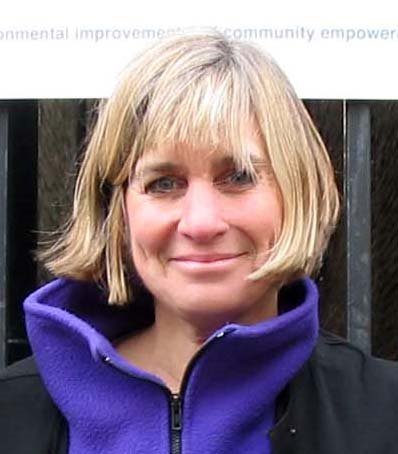
The sixth Big Vision podcast is up and it's an interview with the Co-Director of the School of Unity and Liberation, Mei-ying Ho. I transcribed and posted Mei-ying's interview early last month, but didn't have time to edit and post the audio until just recently. If you listen to the podcast, don't be too weirded out by how strange my questions sound. I'm a one micrphone operation right now so I give my interviewees the mike and re-record my questions afterwards, so you can hear them.

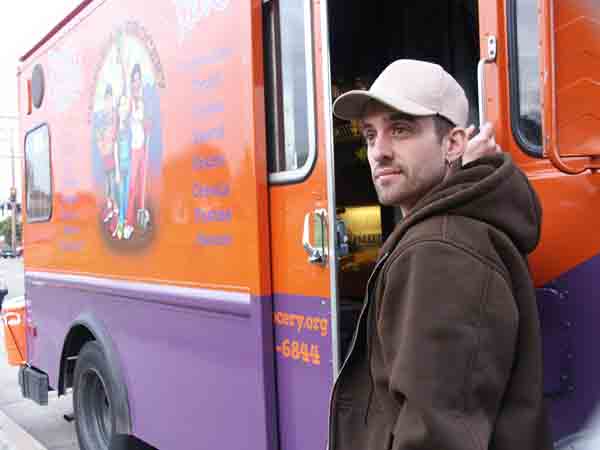
Hopefully there won't be such a big lag time until I post my next podcast. Last week I had a great interview with Ilyse Hogue, Rainforest Action Network's Director of the Global Finance Campaign. Coincidently, while at RAN I got to meet Japhet Els, who works for RAN, and writes the Save the Garden blog that I posted about last week. I also met RAN's Executive Director, Mike Brune, who is Solutionary Woman, Mary Brune's, husband.

This week I'll be interviewing the Co-Founder and Executive Director of POWER (People Organized to Win Employment Rights, Steve Williams, who also happens to be Mei-ying's fiancé,

It's a small world!


Friday, June 09, 2006

Dani Saves the World

Dani Burlison-Craft is going to the 7th World Social Forum in Kenya, January 20-25, 2007. And she is recording her fundraising efforts and preparation for the trip on her blog, Dani Saves the World.

"From today forward, I am going to document my process of fundraising, dealing with fear of flying, dealing with trying to plan and organize this trip while finishing school and raising these revolutionary daughters of mine."

Dani is part of the Santa Rosa Mama's Collective, a group for single and partnered mothers who are involved in the arts and activism. In fall of 2004, they took their children to protest the Republican National Convention. Now she's raising money so that she and her daughters can go to the World Social Forum, starting with a fundraiser on June 24th (flier pictured above). By partnering with the nonprofit, The Peace and Justice Center of Sonoma County, she will be able to accept donations.

In my interviews for Solutionary Women and the Big Vision podcast, I have heard the questions asked again and again, how do you change the world AND be a good parent? If you know of good examples of people who are balancing parenthood and activism, please email their name and contact info. to me at britt AT brittbravo.com

Image via Dani Saves the World


Thursday, June 08, 2006

Net Neutrality & Darfur: Two Reasons to Call Your Rep. Today

Called my Representative, Barbara Lee, this morning for two reasons:

1. According to MoveOn.org, "Within 24 hours, the full House of Representatives is expected to vote on whether to protect Internet freedom." For more information about Net Neutrality, check out the post I wrote about it in April.

They are asking for you to call the national and local office of your Representative and ask them to support Net Neutrality, and to vote "no" on the COPE telecommunications law if it doesn't include Rep. Ed Markey's Net Neutrality Amendment.

They have some good tips for when you call:
1) If the staffer is making a tally of constituent calls, make sure they have a category specifically for "Vote no on the COPE telecom law if it doesn't protect Net Neutrality." Otherwise, your representative may get a diluted message and miss the point.

2) If they ask for more details, you can urge your representative to support Rep. Ed Markey's Net Neutrality amendment. And if that amendment fails, they should vote against the entire bill.

3) If you get a voicemail option, leave a message. They will get it.
2. According to SaveDarfur.org, "Later today the House of Representatives will vote on whether or not to provide critical funding for humanitarian aid in Darfur."

They are asking that you call your Representative today and ask that he or she vote for the Obey/Hyde/Lantos amendment which would add $50 million in humanitarin aid in Darfur.

They provide a sample script for your call:

Hi, this is [NAME] calling from [CITY/TOWN]. I'm calling to ask Congressman/woman _____ to support the Obey/Lantos/Hyde Amendment to add $50 million dollars for humanitarian aid in Darfur. Do you know if [HE/SHE] will vote to help provide this crucial aid to the million of men, women, and children displaced by the genocide in Darfur?

If yes:

That's great news. Please thank [HIM/HER] for me and let [HIM/HER] know that I'll tell my friends and family that [HE'S/SHE'S] supporting this important cause.

If no, or don't know:

[ONLY IF NO] Do you know why not?

[EITHER WAY] Please let [HIM/HER] know that these programs are keeping millions of families alive and safe. Please ask [HIM/HER] to do everything [HE/SHE] can to ensure that humanitarian aid life support system remains intact. If possible, I'd like a written response explaining [HIS/HER] vote. Thank you for your time.

If you would like to contact your representive about either of these issues, you can find their contact information at http://www.house.gov/

Photo via Flickr


Wednesday, June 07, 2006

Solutionary Women: Brande Jackson

Last month I wrote a short post for Blogher, Roadies for a Cause, about a nonprofit called Lokahi Outreach, that partners with organizations like the ONE campaign and Oxfam to help them do grassroots campaigning on the road.

The organization's founder, Brande Jackson, took the time to answer my Solutionary Women e-interview questions. Enjoy!

Describe the work you do with Lokahi Outreach and what inspired you to start it.

In terms of nuts and bolts, Lokahi is an organization that does outreach and campaigning. We run our own voter registration programs, and partner with a lot of organizations and campaigns, helping them do outreach. Our biggest partnership is with the ONE Campaign – we took ONE to nearly 200 concert dates and events last year, and are on target to do even more this year. We also work with groups like Oxfam and their Make Trade Fair Campaign, Doctors without Borders, the ACLU, Global Exchange and this summer will be collaborating with Witness, Greenpeace, the NRDC and others.

Lokahi is focused on being a leader in grassroots outreach and campaigning – promoting social justice and civic involvement by reaching out to people in unique ways, giving them access to politics and social causes and campaigns. And in turn, I like to think we are forging new territory when it comes to building support for progressive campaigns. We try to move from the tried and true and look at new ways to access people that normally might think that a cause or campaign is too far removed for them. We’re at concerts, at events, talking to people in ways they can related to about what is going on in their world. And hopefully, at the end of the day, we’re helping them realize their ability to positively impact the world around them – that it doesn’t take much, that you don’t have to call yourself an activist or whatever, but that you do have a stake in this world, your voice is powerful and can be easily used. We also run after school programs, where we have curriculum that is based on teaching youth –mostly elementary and middle school aged kids – about community service and civics and cultural awareness. We also just started our first internship program – we are taking college aged students on the road with us this summer, giving them a first hand opportunity to go on the road and get a crash course in grassroots campaigning the way that Lokahi does it. We’re hoping that they find it to be a rewarding way to learn about field organizing and about the amazing campaigns we partner with.

In terms of starting Lokahi, in part I was inspired to start it out of a need I perceived on a couple of different levels: the organization was initially formed in the spring of 2002, I wasn’t quite yet 23, but had been running a canvas/fundraising office and was burned, just saw a lot of people and time and energy being wasted. And I felt like there was a disconnect in how outreach was being done – we spent a lot of time trying to talk to the same people in the same way and they weren’t listening. So essentially, I saw a real need for people to get access to what was going on in the world around them. In 2001 I had done some stuff with Greenpeace on U2’s tour of that year, and I think that was the first time I really came to see the possibility that lay in concert and event outreach when it was done innovatively. I took a few groups out on Warped Tour in the summer of 2002 as an experiment, and things have just sort of grown since.

My work with Lokahi is pretty varied and intense – I act as the ED and founder, but I am very hands on, I’m onsite at about 75% of the shows and events we do. So I do everything from working directly with our partner organizations, coordinating with tour production, leading and managing my staff to performing outreach and designing materials and writing after school curriculum. And I am always looking and thinking about where we need to go next. I have a few other small businesses as well, so I don’t sleep much! We’re a small org, so even though it sounds insane, it actually works out nicely, and I think my being involved with every process, at least for the stage we are at right now, gives me a good sense of how to structure things as we grow.

What do you enjoy the most about your work?

Getting to DO something! I mean, I think my biggest frustration when I was younger was feeling like there was so MUCH going on in the world, so many things you can be a part of, so many things that needed to be fixed, so many things that SOMEONE needed to do SOMETHING about – I love being able to act on my ideals for a living. I’m one of the lucky ones that gets to do something about the things they care about. I love interacting every single night with people, talking to them about the issues I’m passionate about – what better job could you have? I can talk to people, explain to them about what is going on around them, hopefully give them the tools they need to make a difference. Every night you talk to people that will thank you for being there doing what you do – that for me at least kinda drives it all home.

I love getting to work with a crew of people who I consider to be friends as well sometimes – Lokahi is a small but amazing team of individuals that bring a variety of backgrounds and talents to the table, and we all share the same passion and outlook toward this work. Getting to hang out and work with a team of people I love to be around is also a big perk!

I also love teaching in our after school program – I started teaching in the after school setting when I was about 20 or 21, working for another organization. It’s been the most rewarding thing I have ever done, and it really I think – at least in my own head – helps me with keeping Lokahi itself grounded in this idea of education and empowering and being about reaching out to people.

I also love the travel part of my work when we are on tour; I’m a natural travel rat, I kinda need to be in constant motion, so that’s fun. I’m really drawn to intense, involved work – I actually am at my happiest when I’ve got a million different things and responsibilities pulling at me at once, and this work definitely provides me with that!


What is the biggest challenge of your work?

Well, as I am answering these questions, I’m getting bounced around by some nasty turbulence somewhere over Tennessee! I love the travel part of this work, but it’s a double-edged sword as the logistics make it difficult at times. Plus, we are a lean machine – a very effective but bare bones staff is what allows us to keep doing out outreach in such an effective way for the groups we partner with, so it means that a lot of juggling is done on the part of myself and my key staff.

On the broader scale though, I think it’s a matter of being conscious of your role as a leader – I am responsible for my staff, interns, volunteers, the fans we talk to every night. I’m responsible for the building and maintenance of relationship with artists, artist management and tour production crews. I help lead and direct the partner organizations we work with through this process of campaigning on concerts and at other events. I lead my students when I teach. Occasionally, I have the momentary panic stricken realization that there is no one leading me – I’m sorta where the buck stops, and as this organization grows and our reach spreads farther and farther, that becomes more and more apparent. It’s a challenge I like, but it’s definitely a challenge in that I think you have to be aware of your role and in what capacity you need to learn and grow. And that process of learning and growing needs to be constant.

What keeps you motivated and energized to do your work?

I think it’s the fact that we really get to see the impact we make. I mean, we work on campaigns that are helping to fight poverty, save the environment and promote voting. The arc of change on those types of campaigns is pretty long and goes on for a while – you can’t always see the immediate impact that your work as an organizer or campaigner on the ground makes. But you can see it in those around you – having people show up time and time again to volunteer, meeting people that are volunteer leaders for a campaign they knew nothing about until they first met you, watching your staff develop and grow, making that connection with a fan at a concert on any given night – it’s these small moments, for me at least, that add up to the larger cumulative effect of what we do.

And it’s the work and campaigns themselves – working on ONE for the last year and a half now has really made an impact on me, just watching this grow and take off and realizing that we are a part of this massive movement that is creating real, sustainable positive change. It’s amazing!

Being at the concerts is another thing that I think keeps me going – it’s draining and exhausting but it's very full circle for me. I was first introduced to politics as a kid in part by bands like the Clash, U2, Pearl Jam and Rage Against the Machine; a big part of my social consciousness was molded by music, so to be able to give back, to take part in the Warped Tour and be a part of the punk community or work with a band like U2 that had a huge impact on me when I was younger is a pretty cool gig to have!

Our after school programs are also a big part of my motivation – once you start to work with kids and you realize the vital role that you can play in their lives, you have a certain sense of commitment and obligation to both them, and in a weird way, the world at large that doesn’t seem to go away. Plus, they will challenge you more than anyone or anything but also offer you the most rewards! I love working with our after school programs in part because its also some of the most creative work I get to do with this.

How do you know you are making a difference? Can you give an example, or tell a story of a time when you felt like your work had a positive impact?

One of the coolest things I had happen last year was when I’d have volunteers join us for shows in the fall – particularly on that leg of U2’s tour – and they would tell me that they first learned about the campaign by talking with me and my staff at one of our concerts earlier in the year. It was pretty rewarding to realize that in fact we are inspiring people, that they are taking the info we give them and running with it, becoming leaders of the campaign in their own communities. And you know, with ONE, there was a lot of success last year we were indirectly related to – the G8 Summit and the UN Summit both saw sizable victories in the fight against poverty and were the direct result of ONE supporters putting pressure on their leaders. It’s rewarding to know we had a part in that.

And of course teaching – I’ve been lucky to stay involved with one particular school, Madison Elementary in Pasadena, for about the last six years. They are very cool about using our curriculum, letting me teach when I can, and I’ve been able to see kids I’ve taught as 2nd and 3rd graders move on to high school. You see what you are doing in that regard too – again, it’s very subtle, but you’ll have a student come up and talk to you about something you studied with them a year or two before, or they’ll rush me and treat me like a rock star when I come back after being gone for a while!


What tips, resources or advice would you give to someone who wanted to become a grassroots campaign organizer?

It’s incredibly rewarding, but also thankless a lot of the time, so you have to be a pretty optimistic person that is self motivating and can see the larger picture in the midst of day-to-day chaos! You have to be able to put in 110% knowing that you can lose every battle, but still win the war, that you might in fact lose the specific campaign or element of the campaign you are working on, but what matters more in your work is the process itself: getting people involved, putting up a fight, making an impact. That is what this work is to me at least: maybe every initiative we try to build support for doesn’t get passed, but at the end of the day, doing what we do shows that things aren’t okay, that things need to be fixed and changed and CAN be, and we are doing our best to get that message out to as many people as we can.

I do this out of a mix of love, passion, idealism, and slight insanity – I think you have to just find what it is that works for you. Polish your communication skills – that is what this is all about, at every level. We focus everything we do on communication: from the way we design and set up our tables and booths, the materials we hand out, to how we train our staff and volunteers. It’s all about communicating these important causes and issues in a way that will connect and inspire a wide spectrum of people.

Teach. Teaching – especially working with young, elementary aged kids – forces you to learn to be a strong communicator, to connect with people in new ways. It’ll test your patience to the max, something else that is critical to this work. And above all I have found that being a teacher makes you realize your capacity for leadership. Doesn’t matter if you are the Field Director of a major campaign or a volunteer on your first night of the campaign: you are leading and inspiring someone else that you will interact with, and you need to be aware of the importance of that. Once you’ve taught, had little kids actually look up to you, it makes you very conscious of your role in the larger world.

Forge new ground – the only way campaigns and causes are won is through a combination of passion, dedication and innovation, at least from how I see it! Ask questions, think of new ways to do the tried and true, and continuously challenge yourself.

In terms of starting out, volunteer as much as you can for campaigns you are interested in, it’s a great way to get new skills for free and to meet people. Look into the campaigns you are passionate about – some people can work on anything, but I find that I can only put all of myself behind something that really matters to me. Check out non-profit websites for entry level positions – get in with an organization or campaign, and even if you aren’t working in an organizer capacity you can still learn a lot and move your way into organizing. There are all sorts of fellowships and training programs in the summer as well – start with Idealist.org and keep looking from there.

How can people get involved with Lokahi Outreach?

We are always interested in meeting people that would like to join us as a volunteer for ONE, or the many other campaigns we work on – our volunteer teams are a very important part of our outreach program! The best way to get in contact with us would be to check out our blog at www.rockingsocialjustice.org (our ‘formal’ website, www.lokahioutreach.org, is under perpetual construction it seems!) - we have links that can connect you with our volunteer opportunities and summer internship programs. You can also get our contact info to inquire about our after school curriculum as well as follow our tour adventures!

If you know a Solutionary Woman who works at a nonprofit or NGO who you think I should profile, please email me at britt at brittbravo dot com with their name, organization and contact info.


Saturday, June 03, 2006

Largest Urban Community Garden May Be Lost

I'm not a regular consumer of vlogs, but I have to say that although I had seen a couple blog posts about the fight for the South Central Farm in Los Angeles, it was Daryl Hannah's luminous vlog post from the farm that made me take notice, particularly the little girl towards the end who says,
You have to save the garden because it is my life.

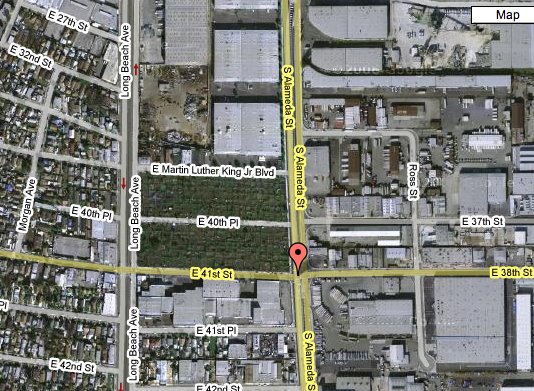
If you haven't seen it on the news already, a slew of celebs like Daryl Hannah, Julia Butterfly Hill, Danny Glover, Laura Dern, Ben Harper and Joan Baez are drawing the media to the South Central Farm by camping out in the trees and on the farm. South Central is the largest urban community garden in the United States. It has 350 plots that provide food for 300 low income, mainly latino families. Japhet Els of the Save the Garden blog posted a link to the map above which shows what an oasis the garden is in the urban neighborhood.

Jessica Hoffmann at the New Standard wrote a great article explaining what is going on, which I recommend you read because the history is long and complex, but here is my summary based on the article. In July 1994 the Harbor Department granted a revocable permit for the garden's land to the LA Regional Food Bank. The Harbor Dept. originally got the land from the city of Los Angeles who had taken the land from a private owner in the eighties, using "eminent domain", to build an incinerator. When the community, led by the nonprofit, Concerned Citizens of South Central L.A, protested against the incinerator, the city dropped the project. One of the original private owners in the eighties, Ralph Horowitz, fought the city for the return of the land until they sold it back to him in 2003. In January of 2004, the Harbor Dept. told the Food Bank that its permit would end in February of 2004. The farmers sued the city saying that the sale to Horowitz was a secret deal that violated their rights. They were allowed to stay on the land until the case was settled, but when it made it to the California Supreme Court, the justices refused to hear it. An eviction notice was put up on March 1st of this year.

One of the proposed solutions is for the nonprofit, Trust for Public Land, to buy the land from Horowitz. While these negotiations are going on, the farmers and their supporters are camped out at the farm.

Please take a moment to watch Daryl's vlog post or check out other video from the farm on YouTube.

Here are a few action items from Julia Butterfly's Circle of Life site that Van Jones included in a recent Huffington Post.

1. Go to the FARM NOW, to help keep vigil.

2. Call Mayor Villaraigosa and tell him that you want the City of Los Angeles to buy the farm back from the developer and give it in perpetuity to the South Central Farmers. (213) 978-0600

3. Make a donation to the South Central Farmers to help buy back the farm.

Although the farm's history is complex, and probably Horowitz has some legitimate claims on the land, urban community farms provide so many postives, and clearly this one benefits so many people, I really hope that humanity and nature will win this time.


Friday, June 02, 2006

Solutionary Women: Rebecca Kalin

This week's Solutionary Woman, Rebecca Kalin, was recommended by Michael Stein.

Rebecca is the founder of the nonprofit, Asthma Free School Zone and she was kind enough to answer my e-interview questions:

Briefly describe Asthma Free School Zone.

The Asthma Free School Zone aims to reduce asthma-related illness and absenteeism in school children by creating a protective school zone that is free of unhealthy and unnecessary environmental hazards. We train school and community members about environmental health, and post durable, no-idling street signs that not only help reduce idling–the #1 source of urban pollution–but also help build neighborhood cohesiveness by signaling that asthma is a community concern. We started in our first school in the spring of 2002.

How did you get involved in this kind of work?

After a few years of designing and producing educational radio programs in Africa, I decided to go for a Masters in public health-my favorite content area. A visiting lecturer inspired me when he challenged the class to, "think creatively … design an asthma intervention that has not been designed before." As an artist born of artist parents, I thought that seemed a heck of a lot easier than biostatistics. So, the AFSZ was born and was quite quickly dubbed, "the only known asthma intervention that targeted ambient air quality in the microenvironment of schools." It is now before the New York City Council, which, if passed, would be implemented in all 1400 schools citywide.


What do you enjoy the most about your work with Asthma Free School Zone?

Any project built from the ground up is, by nature, creative. Here, at the AFSZ, we aim to be different, ahead of the curve. Every day offers an opportunity for fresh thinking. Also by nature, people in the public health field tend to be good and generous people.

What are the biggest challenges in your work with Asthma Free School Zone?

Although the work seems never-ending, that is not the biggest challenge. It is, rather, working with the system, specifically, government bureaucracies that have never known the word nimble.

What keeps you motivated and energized to do this work?

The satisfaction of accomplishment; the challenge of doing work that makes a difference; my wonderful staff; a community of smart, good-hearted public health colleagues.

What tips, resource and advice would you give to someone who wanted to do the kind of work you are doing, or just wanted to make a difference in children's health issues?

You won't get rich. You will work with the best of people. There is a lot of room in public health for creativity. Because the field doesn't require creativity, a creative person can very easily make a special contribution. And, if you really want to do this kind of work … call me!

If you know a Solutionary Woman who works at a nonprofit or NGO who you think I should profile, please email me at britt at brittbravo dot com with their name, organization and contact info.


Thursday, June 01, 2006

Back From the Net2 Conference

The last week has been all about getting ready for, and going to, the NetSquared Conference (thus no new blog posts since last Thursday), but I'm back home now and getting back into a normal schedule. Because I was supervising volunteers and doing other work during the conference, I didn't get to go to many sessions, but I was able to sit in for part of the, "Distributed Grassroots Marketing Team: Letting Your Community, Advocates, Evangelists, and Fans Do the Heavy Lifting" panel with Elisa Camahort, Tara Hunt, Chris Messina and Marnie Webb (as the moderator), and part of the, "Gender and the Social Web: New Tools, Same . . . Stuff?" panel with Catherine Geanuracos, Christine Herron, Fran Maier, Lisa Stone and Susan Mernit (as the moderator).

In the first panel, Elisa talked about using a blog as a marketing tool, and Tara talked about her 5 Principles of Pinko Marketing:

1. Have more Inbound messages from your audience than Outbound messages to your audience.
2. Be a Community Advocate, not a Company Evangelist
3. Be 100% Authentic
4. Serve a niche market
5. Follow Open Source principles. Let your audience grow and create your product.

I'd seen Tara wow the audience when we were on a Blogging for Business panel together, but I'd never seen Elisa (or Lisa) from Blogher speak before, and I was super impressed. Now I'm really excited to go to the Blogher Conference!

A couple things stood out from the Gender talk. 1. Design plays a big factor in what makes a web site attractive to women. This doesn't mean it needs to be pink, but it does need feel like a safe place for women to communicate without fear of harassment. 2. There needs to be more tech training for women, and I would add, for girls.

One place in San Francisco that I know is providing tech training for girls is GirlSource's Technology and Leadership Program. The program gives girls training and paid employment working nine hours a week for 15 weeks on the GirlHealth.org web site.

If you are interested in hearing the talks from these panels, or any of the NetSquared Conference sessions, we'll be posting recordings of the sessions on the Net2 podcast over the next couple weeks. Plus Link TV was there documenting a lot of the conference as well.

In a strange coincidence, my husband was hired to record sound for Link TV during the conference, so we got to spend the two days together.

It can be dangerous to believe in fate, but I did feel like I was in the place I was supposed to be when he was there to share it with me 7 years to the day we first met.


Tara Hunt photo by
Roland
Photo of moi by Billy
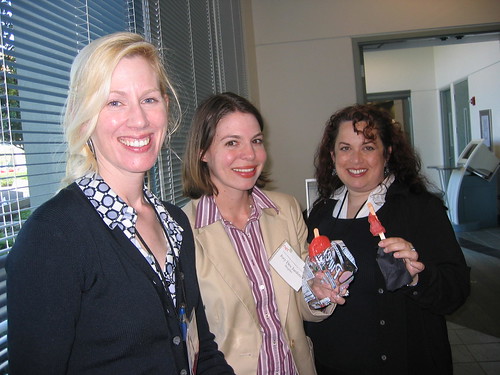
Photo of Blogher founders (Lisa Stone, Jory Des Jardins & Elisa Camahort) and my hubs by me.

Thursday, May 25, 2006

Media that Mobilizes: An Inconvenient Truth, ClimateCrisis and More Tales from Participate.net

On Tuesday, May 30th at 4pm PDT, Micki Krimmel, the Director of Internet Outreach for Participant Productions, will be speaking about, "Media that Mobilizes: An Inconvenient Truth, ClimateCrisis and More Tales from Participate.net" as part of NetSquared's remote conference. I've written about the work that Participant Productions does a couple times here before.

Even though I'll be working at the face to face Net2 Conference, I'm going to try to sneak off to the Net2 Remote Conference Chat Room to participate in this chat.

Participant Productions is the company behind socially conscious films like Al Gore's Inconvenient Truth, Good Night and Good Luck, Syriana, Fast Food Nation, Murderball and North Country. Not only do they produce movies with meaning, they also host a complementary web site, Participate.net that give users tons of ways to get involved and create positive change around the issues they care about. You can learn more about Participate.net and see an interview with Micki Krimmel on the Net2 vlog

The chat will take place using Gabbly, which is SO easy to use, especially for an accidental techie like myself. All you have to do is go to the Net2 Remote Conference Chat Room and type in your name. Gabbly works with Firefox 1.5, Internet Explorer 6.0 , Safari 2.0 or Flock.

See ya there!

Image via Participant Productions


Tuesday, May 23, 2006

Solutionary Women: Heddy Nam

This week's Solutionary Woman is 24-year-old Heddy Nam, the Associate to the Chief Operating Officer of Amnesty International USA and co-founder of Never Again, an international network of young people working for peace. Heddy also writes for the Global Youth Fund blog. I came across her work while researching examples of nonprofits using the social web for social change for NetSquared and am looking forward to meeting her in person when she speaks at the NetSquared Conference next week.

When I meet young solutionary women of the next generation like Heddy, Mei-ying and DeeAnn, I feel hopeful about our world's future.

After reading the interview, Heddy has asked that I modify some of her answers. Below is the modified version as of May 24, 2006.

Describe the work you do for Amnesty International.

As the Associate to the Chief Operating Officer, I assist the COO in overseeing the work at Amnesty International USA. It is a jack-of-all trades position: I do everything from helping to maintain our Intranet, manage our internal news bulletin, work with our Board of Directors, conduct research that helps shape the strategic direction of our organization, and more. Coming from a background in developing and implementing programs, it was a challenge to shift to the operations side of the non-profit world. However, I am learning a lot about non-profit management and discovering more about the human rights movement both within the US and internationally. The next big project on the horizon is working on AIUSA’s next strategic plan. This project will tackle big questions such as: What are the most pressing human rights problems in our world? What should AIUSA’s role be in improving or resolving those situations? The outcome will hopefully improve Amnesty’s effectiveness, helping more people in the long run.


Describe the work you do with Never Again and maybe a bit about the project.

Never Again is an international network that connects young people around the world to generate ideas and action for peace. It was founded in 2001 by a group of college students from all over the world who wanted to ensure that “Never Again” became a reality rather than a rhetorical sound bite. They remembered learning in school about the Holocaust in World War II and the international commitment that genocide would never happen again. Later, they learned that it happened again and again – in the cases of Cambodia, Bosnia and Rwanda - and it was still happening but nobody was doing anything about it. They quickly learned that the politics of genocide intervention dictate that it’s not a problem worth prioritizing because it doesn’t serve anyone’s political or economic interests. That’s when they decided that youth, who are idealistic, energetic and open-minded, would be the engine to peacebuilding to ensure that genocide does not go unchallenged. Since then, the network has grown to include hundreds of members residing in the UK, Rwanda, the Democratic Republic of Congo, Burundi, China, and Canada.

I traveled to Rwanda in December 2005-January 2006 and did field work with Never Again-Rwanda. When I returned to the US, I founded the USA chapter in New York City with long-time Never Again member, Marian Hodgkin from the UK. We live together in Harlem and co-direct the chapter, which is growing fast, in our time off from our full-time endeavors. In the US context, we are focused on building an awareness of issues involved in genocide and post-conflict peacebuilding as well as connecting American youth to our partners in other parts of the globe to plug them into cross-national, cross-cultural collaboration. We also seek to problematize genocide and factors leading up to genocide to show that:
* conflict that erupts in violence is not the problem of the uncivilized, but rather it is a problem that is common to humanity
* each individual has the capacity to make a difference by acting as an ambassador of peace
* there is more to genocide prevention and intervention than sending in a peacekeeping mission. For example, resolving interpersonal conflict peacefully, examining discriminatory attitudes, and addressing genocide’s effects on society can all contribute to a world where “Never Again” is a reality.

To that end, we recently held a conference at Columbia University called “Teaching About Conflict, Building Towards Peace: A Comparative Forum.” The event brought together academics and practitioners in the field of education and peacebuilding from local, national and international perspectives to see what similarities and differences there were in our approaches and what we could learn from each other.

In the coming months, we will be developing a toolkit for young people to develop projects for peace within the US, planning a Genocide Awareness Month of Action in April 2007 within NYC high schools, and organizing a delegation of American university students to travel to Rwanda to conduct fieldwork in the summer of 2007.

What do you enjoy the most about your work with Amnesty International and Never Again?

It is terrific working with people who are like-minded and passionate about improving the world. On a deeper level, it is satisfying to work with organizations whose work resonates with my personal beliefs: Amnesty and Never Again place equal emphasis on the power of the ordinary individual as well as experts or powerful people. Politicians do have a responsibility to improve society as public servants, but ordinary people also have an individual responsibility to be informed and engaged citizens. Many people avoid the news because most of it is really depressing. They would rather opt for MTV. If I didn’t have the power to do anything about the world’s problems, I would probably do the same. But both organizations show us that anyone has the ability to affect change by doing something as small as signing a petition or engaging in constructive dialogue. Along the same lines, it is not only our responsibility to speak out about injustice, you lose a sense of your own humanity when you ignore the plight of others who are suffering.

What are the biggest challenges in your work with Amnesty International and Never Again?

One common challenge both organizations face is the apathy that exists about critical issues of our time. It is vital that everyone pays attention because politicians really do listen to citizens, who hold the power of the vote. On the other hand, some politicians may care a great deal about improving human rights abuses or ending the violence in Darfur, but don’t act because they don’t have constituent backing.

Specifically with Never Again, our challenges stem from the fact that we are the new kid on the block within the US non-profit market. This makes it difficult to sustain ourselves organizationally in terms of fundraising and getting American young people’s attention. American youth luckily have many options in terms of organizations within which to be active in. Another big challenge with Never Again is that we’re spread out across the world, so it’s difficult to keep up day-to-day communications with each other in terms of major issues in our work.

What keeps you motivated and energized to do this work?

When it comes to the suffering of others, I don’t have to think twice about what motivates me. When I read the papers, listen to the news, hear stories through my network of friends who are activists all over the world about injustices, I get really fired up and want to do whatever I can to help!

In addition, being a woman, an immigrant in the US, and being of a working class background, I feel close to issues of discrimination and inequality. I also grew up with domestic violence in my family. Experiencing violence firsthand makes you realize how senseless it is.

Lastly, it is rewarding to be involved in work that is making an impact on the world no matter how small my part in that work is.

What tips, resource and advice would you give to someone who wanted to do the kind of work you are doing, or just wanted to make a difference in human rights issues?

The first step is to get educated. You can’t do anything unless you are first aware of the issue and know enough about it to come up with solutions to the problem. If you don’t know enough, you might end up hurting the situation rather than being helpful. Some ways to learn more are reading the newspaper, watching documentaries, reading reports from non-governmental organizations like Amnesty International or Human Rights Watch, and talking to people in your community who are working on these issues. Or better yet, talk to people who are being affected by the situation if you can. Talking to survivors of genocide was what got me really fired up about the issue more than just reading books about it.

After you have done your research, don’t keep it to yourself. Use your voice! Speak with those in your community to spread awareness about injustices that you know about or write to those who are in a position to influence the situation.

Finally, find those who are like-minded and work together to contribute to a solution. It’s not only difficult to do things alone but demoralizing too, because some situations seem so bleak that you don’t believe you can make a difference. But if you combine your energy and talents with others’ and you’re all pulling in the same direction- it’s amazing what you can accomplish!

Just remember that everything you do - whether it’s writing a letter to your representative, fundraising for a non-profit organization that works on the issue, or blogging about the problem - it all adds up! Lastly, trust your gut instinct and do what you love. Chances are that you’re probably good at the things you like to do, and that will likely be the most helpful contribution!

If you know a Solutionary Woman who works at a nonprofit or NGO who you think I should profile, please email me at britt at brittbravo dot com with their name, organization and contact info.


Sunday, May 21, 2006

People are Ready for a Vision-led Movement

Last Thursday I went to hear Majora Carter from Sustainable South Bronx, Paul Hawken, author of Natural Capitalism and The Ecology of Commerce, Van Jones from the Ella Baker Center for Human Rights, Geralina Fortier from People's Grocery, and Bruce Cox of the Alliance for West Oakland Development speak at the first Solutions Salon. They were brought together by the Ella Baker Center for Human Rights' Reclaim the Future program to talk about how to make Oakland a model city that uses the growing green economy to lift its low-income residents out of poverty.

EBC's Director, Van Jones, opened the evening by saying, "The communities who have been locked out of the polution-based economy, must be locked into the clean, green economy. . . .We are going to make Oakland the new Silicon Valley for green capital."

MacArthur "Genius Fellow" Majora Carter talked about her work in the South Bronx, where there are 15 waste transfer stations within a one mile radius that handle about 25% percent of New York City's waste. Fifty percent of the residents live at or below poverty level, 1 in 3 children are diagnosed with asthma and the ratio of parks to people is one of the lowest. Some of the solutions that Sustainable South Bronx is working on are:

The South Bronx Greenway, a bicycle & pedestrian greenway along the South Bronx waterfront.

The Bronx Environmental Stewardship Training
, a green-collar job training program.

The Solid Waste and Energy Program, a program working to distribute NYC's waste more equitably. They are also working to convert a former dump into a Recycling Industrial Park that could create 300-500 jobs. Ironically, the city wants to put a 2,000 bed prison there instead.

Carter closed by asking the audience to use their skills and talents towards action against environmental injustice. She urged, "You are all a precious natural resource, don't waste it."

Hawken, who is writing a new book, Blessed Unrest, about the growing movement toward sustainability and social justice, estimates that 99% of the energy we use is wasted and that, "an economy that wastes its resources always wastes its people."

20-year-old Geralina Fortier exemplified how green job training can make a difference in young people's lives. Geralina started out doing the 20 hours of community service her high school required at People's Grocery, a West-Oakland based food justice nonprofit. (I recently inteviewed their Executive Director for my podcast). She described herself as coming from a "Top Ramen generation" where, "it wasn't about eating healthy, it was about eating at all." She is now the Community Education Coordinator for People's Grocery and studying to be a registered dietician.

Bruce Cox, who is the Board President of the Alliance for West Oakland Development and the founder and owner of MBC Construction, trains ex-offenders ages 17-30 in construction skills. He talked about how important it is to teach youth, "not just how to get a job, but how to hold on to a job," and not just how to build buildings, but how to build their money. Youth need training, "so that they are part of society, and not on the outside looking in."

Jones closed the evening by saying, "We are trying to bring a vision of hope back not just to our communities, but to our nation. . . .People are ready for a vision-led movement in the United States."

If you want more information about Reclaim the Future and future Solutions Salons, you can contact Alli Chagi-Starr (who I also interviewed for my podcast) at allistarr AT ellabakercenter.org.


Wednesday, May 17, 2006

Solutionary Women: Katya Andresen

A few weeks ago Katya Andresen sent me a review copy of her new book, Robin Hood Marketing: Stealing Corporate Savvy to Sell Just Causes. I enjoyed the book so much I asked her if I could interview her about her work at Network for Good, her book and being a social marketer.

Describe the work you do for Network for Good.

My job is motivating people to give to their favorite charities through www.networkforgood.org – a nonprofit that was started by Yahoo!, AOL and Cisco in the wake of 9/11 with the vision of generating more money to charities online. Just as Amazon wants you to buy all the books you like at their site, we want you to donate to all the charities you like at our site. You can give to any US-based charity at Network for Good (there are more than one million), all in one credit card transaction. Because we process so many donations for charities - $32 million worth last year – we can do it incredibly efficiently, which keeps costs down for the charities you support. We then store all your giving records for you so you can access your donation history any time. No hunting for canceled checks when you’re desperately finishing your taxes on April 14th! It’s our belief that if we can make it as easy to give money online as it is to shop online, more people will do it more often, and, as a result, more charities will get more resources.

What do you enjoy the most about your work with Network for Good?

Network for Good is the perfect hybrid working culture – we’re an organization that runs like a business but retains the heart of nonprofit. We have a business plan that has us on track to operate without philanthropic support within a couple of years, and everyone in our office is paid on a bonus structure. If you do your job well – defined as measurably contributing to the advancement of our mission -- you are rewarded. I’ve never worked at a nonprofit that is so results-oriented, and it’s very refreshing. At most nonprofits, if you care, that’s considered enough. I don’t think that should be enough – if we can’t show we’ve made a difference, as staff, we should not be rewarded and as organizations, maybe we should not be allowed to preserve the status quo.

What are the biggest challenges in your work with Network for Good?

People typically give to charity when there is a crisis (like the horrendous tsunamis or Hurricane Katrina), and they give money at the end of the year. And that’s about it. My biggest challenge is figuring out how to encourage steadier support. We’re approaching this in two ways. First, we ask people to consider monthly giving, with automatic credit card payments every month. This has been incredibly successful – this month, around 40% of donations are coming from this recurring giving. This ensures a steadier stream of resources for charities. Second, we’re forging some partnerships that encourage charity at other times of year. For example, we partnered with Organic Bouquet, an online florist with environmentally responsible practices, to establish www.flowersforgood.org. We ask people to send flowers at Valentine’s Day and Mother’s Day through Flowers for Good, and we contribute a significant amount of money for each purchase to the charities people choose (there are nearly a dozen to choose from).

What keeps you motivated and energized to do this work?

I am profoundly impatient. I spent seven years living in developing countries, and the poverty and tragedy I saw on a daily basis left me with an acute sense of how important it is not just to help people, but to do it really well and really quickly. The child sex slave in Cambodia or the cyclone victim in Madagascar doesn’t have time for us to wordsmith our mission statements or waste time with lackluster fundraising efforts. We have a moral obligation to be extremely efficient and effective at what we do, right this minute. What gets me motivated and energized is to help well-intentioned people to do that every day, through innovative marketing. I do this at Network for Good, and I tried to do this in writing my book.

Why should nonprofit workers read your book? What will they learn?

If you’re impatient, too, read the book! The book is for anyone who’s frustrated that donors, partners or beneficiaries just aren’t listening or are failing to take action. It lays out ten sound principles (I call them “Robin Hood Rules”) behind some of the most successful marketing campaigns in history, and shows how anyone can use them to advance their cause by leaps and bounds. I wrote the book to demystify marketing so everyone from a PTA mom to a nonprofit executive could use marketing to accomplish more good in the world.

What tips, resource and advice would you give to someone who wanted to do marketing for nonprofits as a career?

First, I’d say “thank you – the world needs you!” We need more marketing people in the nonprofit world. Second, I’d highly recommend getting some solid marketing experience, even outside the nonprofit sector. In the nonprofit world, we too often hire people because of their passion for a cause. It’s okay to have passion, but you need skills, too. If you want to do public relations, you should get some journalism experience first. If you want to do marketing, go sell something first. It doesn’t matter if it’s soap or sandwiches, it will help you see that we market best when we’re somewhat dispassionate. The key to motivating people is not to preach at them, it’s to see the world from their perspective and then position our cause accordingly. That requires a dose of dispassion, because we’re putting our audience – not ourselves – at the center of our marketing efforts.

Katya will presenting a 90-minute webinar about Robin Hood Marketing on Thursday, May 18 at 10:00 am Pacific. It's $60 for N-TEN members and $85 for non-members.

You can register at: http://www.nten.org/webinars

If you know a Solutionary Woman who works at a nonprofit or NGO who you think I should profile, please email me at britt at brittbravo dot com with their name, organization and contact info.


Tuesday, May 16, 2006

The Agape Foundation Wants You to Nominate a Peacemaker


The Agape Foundation is hosting a Peace Prize event to honor Northern California Peacemakers.

There are two prizes.

The Long Haul Prize for a Northern California peacemaker that has made a sustained effort to create peace in their community nationally, or internationally. Last year's winner was Capacitar International.

The Rising Peacemaker Prize for an up and coming Northern California peacemaker that has been working for peace for five years or less. Last year's winner was the Mosaic Project.

Nominations are due by Friday, June 2 at 5 p.m

Image via the Agape Foundation


Wednesday, May 10, 2006

Solutionary Women: Mei-ying Ho

Last week I sat down with a former co-worker, Mei-ying Ho, who is now the Co-Director of SOUL, for an interview for my Big Vision podcast. The podcast isn't up yet, but here is a partially modified transcription of our conversation which you can also read along with profiles of other Solutionary Women on Blogher:

What is SOUL?

SOUL is a training center based here in Oakland. We just recently moved to downtown Oakland, and we talk about ourselves as a school to build a movement. We place ourselves in the social justice work here in the Bay Area as a training center. We focus on political education and organizer skills trainings, and we definitely think it is critical to see the fusion of those two things.

Our political education starts on a very basic level by identifying the systems of oppression that we live under here in the United States. We see four primary systems of oppression that we need to address on a very basic level to get through to the subsequent systems. We start talking about classism, as it relates to capitalism, and then move to heterosexism, also talked about more broadly as homophobia. We talk about male supremacy, known more loosely as sexism, and then white supremacy as it relates to racism.

In focusing on those four systems, we recognize institutionally how critical it is to merge the discussion about these various systems and political education to organizing, and how organizing is one method to initiate change for a more just world. We work with a lot of young organizers as well as elder organizers, and we have about seven different programs to speak to that fusion. We definitely promote an organizing orientation to education work.

How did you get involved with this kind of work?

I feel like I was really born into it. Both my parents and my older brother, just on a very early, early, early level started introducing me to concepts. I really feel like I was bred that way. I think my first political action was, just to age myself, I was in the 5th grade, against the first Gulf War. So I’m only 26. And in terms of how I got involved with SOUL, I was actually teaching for a very brief period in the Oakland middle schools. I was teaching 8th grade, and once I realized that I needed to live a little longer before I just jumped right in, I enrolled in SOUL’s organizing 101 Program, and then immediately, the next season, enrolled in SOUL’s Movement 101. It was during that time that I was recruited to participate in the volunteer-based program, The Teaching Collective, which actually helps to facilitate introductory level political education workshops in various high schools and youth organizing groups. I was a volunteer for maybe 8 or 9 months and was then recruited to take a position at the organization, or at least to apply for a position here.

I was at that time working at a wonderful organization called Streetside Stories, which is a literacy arts organization with programming in various Title 1 middle schools in San Francisco. Given that I grew up in San Francisco, born and raised, it was a really unique opportunity to get to work, and get more hands on experience in the schools. After the school year ended, I ended up taking the job with SOUL and I’ve been here almost three years now. For the first year and a half I was working as the coordinator of the educational alternative program that goes out into the high schools, and then was recruited to apply for the position of co-directorship here. For the past year and a half I’ve been the Co-Director of Organizational Development and Communications here at SOUL.

What do you enjoy the most about your work at SOUL?

I think what I enjoy the most about working here at SOUL is having the opportunity to work with a really amazing group of folks here on staff, but then just more broadly having an eye to the different organizations doing the work on the ground here in the Bay Area, and all over the country: service institutions, advocacy organizations and on the ground base-building groups that do the outreach to build the membership to sustain the fight. It’s been a really incredible ride. There are challenging moments, for sure, but it’s definitely been exciting for me and really humbling for me as a young woman of color to come into this work and recognize that I also have something to give and so much to learn. It’s really exciting to be in community with people in this way.

And what’s the most challenging thing about your work?

I actually feel like probably the most challenging thing for me here is kinda recognizing what I have to offer, you know. I think that’s probably one of the main things I come into contact with on a regular basis is my own self-doubt, and recognizing that the ways in which the systems of oppression affect us all on an individual level, also affect us on a community level. It definitely has had an impact on the way that I have learned about myself and learned about my ability to fight and to fight back. Lucky for me, I have an amazing community to fall back on and to also push me to recognize my strength. There is day-to-day stuff that’s hard and crises that come up with people, and with myself, that are hard, but I think probably the main stuff is getting over the personal impact that the political has on us every day.

And if someone you were working with said to you that the hardest thing about the organizing work I’m doing is the personal impact that the political has on me every day, what advice would you give them?

That’s a hard one. I think everybody has different things that we all utilize to take care of ourselves, but I think beyond that, I’ve definitely learned that it’s important to always push ourselves too, to not just get caught up in all the self-care this, and self-care that, ’cause it’s so easy here in the Bay Area to fall into that trap. I think it is also important to recognize that we have a community to stay accountable to, and they’ll help us to be accountable to ourselves. So I often encourage myself and my comrades and my friends and family to lean on each other and to build community, whether that’s like creating a woman’s circle or a study group, I think there are different ways in which we can push each other and then, therefore, ourselves. Even it’s like, lets’ go for a hike and talk about the main issues that we’re having right now in the work. I think it’s important ‘cause we all have lessons to learn, but we all have lessons to teach, and I think sometimes we forget that it’s not easy for any one of us.


What are some resources you can recommend to people who are interested in this kind of work, or your favorite book?

I don’t know if I have a favorite book. I think the different writers who have been really helpful for me in trying to find out my own light amid the darkness, is definitely writing myself, you know, definitely taking the time to journal myself, but I also find a lot of inspiration from different feminist writers, Bell Hooks, June Jordan and Suheir Hammad. I like novels, Julia Alvarez, different people. I read a lot of theory stuff, too.

If there is a person who is interested in organizing, but they can’t come to your trainings, what are some action steps they can take?

Well, actually this organization, POWER, People Organized to Win Employment Rights, just came out with a great book called Towards Land Work and Power that’s super, super accessible. It’s actually in three different languages, Chinese, Spanish and English. It’s written for conscious organizers, by conscious organizers. I think it is a really good breakdown of what is currently happening in San Francisco in terms of the gentrification. Even if you’re not in San Francisco, even if you’re somebody who lives on the other side of the country, or the other side of the world, I think it’s a really good eye into the current state of imperialism in the Bay Area.

We also here at SOUL sell manuals. We have a political education workshop manual that we utilize for our introductory level workshop. We also have a global justice training manual that was written after 9/11, and then we have our training for trainers manual which is exactly the curriculum for our training for trainers program. Also, this year, we’re going to be coming out with our national youth organizing manual, as well as a revised version of our political education training manual, and our supervision manual,that speaks more to organizational development stuff.

We really encourage here at SOUL that people get involved with organizations, even if it is on a volunteer level to just get involved either with an organization doing outreach stuff, or even if it’s data entry, just to get an eye into the feel of an organization, ‘cause all organizations are different. Their culture. Their method. Their practice. If it’s a base-building organization, or if it’s a service organization, get involved to get a feel about what fits your personality. It definitely takes some getting used to to get involved on a volunteer level and to step back, because a lot of us that want to get involved are already leaders in different capacities, so to just humble ourselves and to enter in from a space of learning sometimes can be challenging, but it can be really helpful towards finding our path: what’s most interesting, what are we good at, how can we best utilize our skills and how can we best be helpful. And there’s such a wealth of organizations here in the Bay Area to plug into.

How do you prevent burn out?

I have definitely learned in the past year and a half to take my weekends as weekends, even if it’s just one day. I like to hang out with my friends and the babies in our community, to spend time with the little ones. I like to volunteer with other organizations, which sometimes feels like work if I’m not in a good headspace, but oftentimes can feel very rejuvenating for me, even if it's just tutoring or something like that. Spending time with my family. You know, just being a regular person, too.

What do you feel hopeful about?

I definitely take hope from fights that are happening on an international level and I try to remind myself always on a human level how we can build power. I mean it starts with us, but it’s also about like what’s happening on the immigrant rights front right now. It’s totally amazing, definitely inspiring. Being able to march in the streets on May Day! I definitely feel like recognizing the beauty in the communities that we work in and that I’m immersed in all the time is really, really fresh. I think also just recognizing that the community that I’ve had the opportunity to build for myself on a personal level is also the community that I’ve built trying to help out on a political level, it is super overlapped for me, is helpful to feel inspired.

I don’t think there’s any one answer. I feel really blessed to be able to live here in the Bay Area still and still actually pay rent in San Francisco. It’s hard, but being able to take walks in the Mission, in the part of the Mission that still exists, being able to walk around Chinatown, like all that stuff is really, really cool. That sounds cheesy, but it’s true.

I think this work is a work in progress. It’s progressive work in progress. I definitely, at the ripe age of 26, don’t have all the answers, but we’re learning it together, you know, and it’s really cool to be able to do this work for my life, you know. It’s pretty cool. I just feel really lucky.

For more information about SOUL go to www.schoolofunityandliberation.org

If you know a Solutionary Woman who works at a nonprofit or NGO who you think I should profile, please email me at britt at brittbravo dot com with their name, organization and contact info.


Monday, May 08, 2006

Murderball & Buzz Marketing

I got an email from an interesting company last week called Buzztone letting me know that Participant Productions is launching a social action campaign called Get Into the Game that uses the documentary, Murderball, to raise funds for the U.S. Paralympics ( Olympics for people with disabilities). If you haven't seen it, the film is about some seriously hard-core quadriplegic rugby players who go to the Paralympics. I highly recommend it.

Campaign participants are encouraged to host a screening of the film, and they can order a Murderball Screening Kit from the web site which includes a free DVD of the movie along with screening tips and discussion points. It's a similar campaign model to the New Heroes House Party that I wrote about last August.

You can see a trailer for the movie here:


You can also donate money directly to the campaign by clicking here. $215 will buy one aspiring quadrapalegic rugby player the wheelchair they need to compete.

What I find particularly interesting about Buzztone is how they get people to "buzz". For example, on their web site you can sign up for:

Murmurz "Thoughts, ideas and rants about marketing, branding, popular culture and everything in between."

The Buzz if you are, "always trying to be the first to find out about the latest and greatest movies, music and entertainment."

Buzzstreet if you have, "the chops and want to be a member of our web or street teams."

And The Hookup if you want your web site to be a part of the Buzz network. You can be,"the first to get at new promotions, contests and content from Buzztone."

I'll admit, I signed up for Murmurz and The Buzz 'cause I like to know about campaigns like this one, which I suppose is why they sent me a press release. They knew I would like it because, "the essence of marketing well . . . is less about pursuing a sale than about creating a customer." By offering content that interests me and that relates to Have Fun * Do Good, Buzztone has made me a customer of their press releases which in turn will help them to do their work. Is there anyone else out there who finds that equation interesting, or am I just a marketing geek?

The quote above is from a review copy of a book I was sent recently, Robin Hood Marketing: Stealing Corporate Savvy to Sell Just Causes. I just started it this morning and will let you know more about it when I finish, but I gotta tell you, I am just happy to see someone writing an accessible book about marketing for nonprofits. In a time where people are being bombarded with organizations to contribute to, nonprofits need more than grantwriting skills to raise money and a good cause to attract volunteers.

Images via Participant Productions and ADVANCE for Occupational Therapy Practitioners.


Sunday, May 07, 2006

Big Vision Podcast 5: Interview with Abby Rosenheck

The fifth Big Vision podcast is an interview with my friend Abby Rosenheck, the co-founder and Executive Director of Urban Sprouts, an urban school gardening program. You can listen to the podcast by clicking on the "Big Vision podcast" link above, or by listening on the Gcast player in the right-hand column of this blog, or on iTunes. Just search for "big vision" in the podcast section of the iTunes Music Store.

You can also see a video interview with Abby on the NetSquared vlog.

Enjoy!


Friday, May 05, 2006

Nobelity: A Look at the Future Through the Eyes of Nobel Laureates

I was reading Treehugger this morning, and their post about the film, Nobelity, caught my eye.

Similar to the movies Outfoxed and Walmart: The High Cost of Low Price, Nobelity is also encouraging communities to host screenings.

The film interviews nine Nobel Laureates about their ideas for how to face some of the world's greatest problems. Here are the people they interview:

Steven Weinberg, Theoretical Physicist. Nobel Prize in Physics, 1979.

Jody Williams
, International Campaign to Ban Landmines. Nobel Peace Prize, 1997.

Ahmed Zewail, Femtochemistry Pioneer. Nobel Prize in Chemistry, 1999.

Rick Smalley, Nanotechnology Pioneer. Nobel Prize in Chemistry, 1996.

Wangari Maathai, The Green Belt Movement. Nobel Peace Prize, 2004.

Sir Joseph Rotblat
, Nuclear Physicist/Disarmament Activist. Nobel Peace Prize, 1995.

Dr. Harold Varmus, Director, Sloan Kettering Cancer Center. Nobel Prize in Physiology or Medicine, 1989.

Archbishop Desmond Tutu, Head of South African Reconciliation. Nobel Peace Prize, 1984.

Amartya Sen, Professor, Harvard University/Author, Development as Freedom. Nobel Prize in Economics, 1998.

The trailer gave me shivers. A physical reaction to hearing people speak the truth.

image via Treehugger


Wednesday, May 03, 2006

Solutionary Women: DeeAnn Resk

Shortly after I posted my first Solutionary Women profile, I got an email from a young woman named Tiara who was a student with Up with People last year. She sent me the names of four women from Up with People with descriptions of their work and why she thought they were Solutionary Women.

One of the women, DeeAnn Resk, is originally from California and used to work at an international development office in Washington D.C. before coming to Up with People. While in D.C., she worked on a program called the “African Peace and Development Initiative” at the NGO, World Learning for International Development, doing project backstopping for peacebuilding initiatives in East Africa. She is an alumna of Up With People and traveled as an Applied Education facilitator with Up with People last fall.

DeeAnn was kind enough to do an e-interview with me:

Describe what Up with People does and a little about the work you do with them.

Up with People is a global education program whose mission is to train young people in global leadership and to spark them to action in meeting the needs of their communities, countries, and the world while building bridges of understanding as a foundation for world peace. For over forty years, international young people ages 18-29 have traveled with the UWP program, living with host families in each community visited, volunteering for various community service projects, connecting with each community through performing arts, and engaging in various internships while developing skills in cross-cultural communication, leadership, and global perspective. We currently travel throughout North America, Asia, and Europe, and some college credit is available. Up with People is apolitical and nonsectarian with no ties to any government, religious or political organization.

I’ve currently been working on developing the Stand for Peace project and collaborating with the Programs Manager on the program’s education curriculum. The Stand for Peace project teaches elementary school kids about diversity, respect, and peace. Beginning in July, I will be traveling as part of the Up with People road-staff again as the Applied Education Department Manager.

What do you enjoy the most about your work with Up with People?

The biggest thing I enjoy about working for UWP is the people I work with and the people I meet through the organization. I work with a talented and diverse team of good-hearted, hard-working, dedicated people who are passionate about making a difference in their communities and the world. I also get to meet many amazing individuals from the communities we work with around the world and the participants who travel in our program.

What are the biggest challenges in your work with UWP?

I’d say the biggest challenge, like many non-profits, is limited time and resources.


What keeps you motivated and energized to do this work?

• To paraphrase Margaret Mead, it’s the belief that we really can make differences, no matter how big or small.

• My colleagues’ teamwork; there is sort of a “can-do” attitude here where people work hard to come up with creative solutions to inevitable challenges.

• Continual learning.

What tips, resource and advice would you give to someone who wanted to do the kind of work you are doing?

• Find what makes you passionate.

• Educate yourself on the world around you.

• Learn about what work is being done out there, explore your options and network.

• Don’t be afraid to try new things or to fail.

***

If you know a young person who might be interested in working with Up with People, they are accepting applications for their programs in July 2006, January 2007 and July 2007. You can get more info at www.upwithpeople.org.

And if you know a Solutionary Woman who works at a nonprofit or NGO who you think I should profile, please email me at britt at brittbravo dot com with their name, organization and contact info.


Tuesday, May 02, 2006

Who Will be the Next Secretary-General?


I am part of an online group called the Nonprofit Blog Exchange , a group of over 100 blogs written by nonprofits, or that are about nonprofit related projects.

Once in a while the Exchange asks its members to write about another blog in the Exchange to help expose it to new readers so . . . I was assigned the Who Will Be the Next Secretary General blog.

Here's a little background for folks like me who didn't realize that UN Secretary-General Kofi Annan's term expires on December 31, 2006. The Secretary-General is appointed to a five year term. Usually he or she serves two terms, but sometimes only one. Typically, the position rotates by geographic region and the next Secretary-General is supposed to come from Asia. Wikipedia (where I got the above info.) has a cool chart with info. about who the former UN Secretary-Generals have been.

In addition to its blog, the UNSG.com web site has lists and bios of official, and possible, candidates for the position, and explains the selection process.

Considering that the UN Secretary General is supposed to be:
Equal parts diplomat and advocate, civil servant and CEO, the Secretary-General is a symbol of United Nations ideals and a spokesman for the interests of the world's peoples, in particular the poor and vulnerable among them.

It seems important to keep an eye on the selection process and to learn more about the calls for reform of that process.


image via un.org


Monday, May 01, 2006

Big Vision Podcast 4: An Interview with Brahm Ahmadi

I've posted my fourth Big Vision podcast. It's an interview with Brahm Ahmadi, the Executive Director of People's Grocery, a West Oakland, community-based food justice organization.

I've posted about them before because I think they are a great organization that is tackling an issue in an intergrated way that can be a model for other nonprofits.

You can also check out Brahm's blog at http://www.peoplesgrocery.org/brahm.

Enjoy!