Wednesday, August 20, 2008

Tools to End Poverty: An Interview with Martin Fisher of KickStart

About three years ago, I watched a fabulous documentary series sponsored by the Skoll Foundation called The New Heroes. The series featured stories of 12 social entrepreneurs including Martin Fisher and Nick Moon, the co-Founders of KickStart (which was called ApproTEC at the time of the series).

KickStart is a nonprofit that develops and markets new technologies in Africa that help local entrepreneurs to establish small businesses. The organization has received numerous awards for its work, and Fisher recently received the $100,000 Lemelson-MIT Award for Sustainability.

Their story was one of the ones that stood out the most for me from the series, so I was thrilled when a woman named Houria Iderkou, who set up a Causes campaign for KickStart on Facebook, contacted me to see if I'd like to interview Fisher. What follows is an edited transcript of our conversation on July 2, 2008. You can also listen to it on the Big Vision Podcast.

Martin Fisher: The problem we're trying to solve is global poverty. As we've heard, something like 18% of the people in the world live on less than $1 a day, and a much bigger percentage live on less than $2 a day. The reality is, actually, that these people who are living on less than $1 a day, for the vast majority of them, it's more like $1 per family, than it is $1 per person. Many, many of these people are actually living on more like 15, 20 cents a day.

As long as we have massive global poverty, we really can't solve any of our other biggest problems because if you have people who are starving, they're going to do anything to stay alive. They will absolutely destroy the environment, and it will be the breeding ground for wars, for civil strife, for terrorism, and for refugees. Unless we solve this problem of global poverty, the other problems won't be able to be solved.

Britt Bravo:What is KickStart doing? What are the tools that they are using to work on this?

MF: Our mission is to take millions of people out of poverty, and we do this by first of all recognizing a couple of things. The first thing we recognize is that poor people everywhere are really not that different than us, in that they live in a cash economy, and just like us, if they have a way to make money they can access education, clean water, health care, and all of those other things that we think about as being so important.

If they don't have a way to make money, they can't access those things. So, a poor person's number one need anywhere in the world is actually a way to make more money. If we're going to solve poverty, we have to find a way to enable literally millions and millions of people to make a lot more money.

The other thing you realize about the poor is that they're extremely hard working, and extremely entrepreneurial. They literally have to be just to stay alive because they can't live without a way to make money. They can't live without money, and they find a way to do it. They're not looking for handouts; they're looking for opportunities to get ahead, just like we are.

We want an opportunity for a better life, to have our kids have a better life, and if we can simply provide them with that opportunity, they'll do the rest. They're going to work hard; they're going to lift themselves out of poverty.

Now, of course, in this country if you want to make money, the easiest thing to do is go and get a job. But, in Africa, where we work, there are very, very few jobs in the formal private sector.

For example, in Kenya, only 7% of the population, of the labor force, has a job in the formal private sector. In Tanzania, only something like 3.5%; in Sudan, it's only about 1.5%, and even in India, which we think of as being more developed, it's only about 10% of the people who actually have a job in the formal private sector. All of the other people are involved in what we call the informal sector. They have to make money to stay alive, and so they literally do whatever they can to scrape a few pennies together.

Now, the vast majority of them are doing petty trade, where they sit on the side of the road and buy and sell things. Whether it's second-hand clothes, or it's food things, they're all competing with each other. Their profit margins are pretty small.

And then, you have other people who are maybe doing tailoring, or carpentry, or metal work, or food preparation. But, really there is very, very little diversity in the informal sector - everybody is competing with each other; everybody's trying to do the same thing. They're all making a little bit of money. If they weren't, they literally would be dead, because you can't live in these countries without a way to make money. But, they're not making enough money to actually get out of poverty. And the reason for this is precisely because they're in the wrong businesses, precisely because they're all competing with each other and doing the same thing.

And so, coming up with a brand new business idea is actually very, very difficult for a person who has very little education, who has very little exposure to media. They don't watch TV, they don't move far from their village. And in Africa, very often people don't even leave their farm except for a few times a year to go to a town. It's very hard for them to come up with a better business idea.

The second problem they have is that even if they do come up with a great new business idea, they can't access the tools and equipment they need in order to make that business viable - tools and equipment that they can afford to buy and afford to operate and that are going to be profitable to use - these things, it turns out, just aren't available.

They're certainly not available in that local marketplace in Africa, but it turns out, they're also not available anywhere in the world because people simply don't design tools and equipment for very poor people. The reason we don't is because it's a market failure. It's hard to sell it to them, and they can't afford a lot of money. So, you can't make a lot of money doing this.

What KickStart does is tries to solve these two problems. First, we needed to identify what businesses could literally thousands and thousands of people start, which were going to be very, very profitable, and that they could start with a very small investment - an investment of somewhere between maybe $20 or $30, and a couple of hundred dollars, and that would be so profitable that they would make their money back in three to six months.

The reason it has to be three to six months is because these people are farmers, most of them. And they're used to putting their seeds in the ground, and their labor in the ground for three to six months and then they get their harvest. If you start talking to them about one year or two years, they're not very interested. So, we talk about farm-time; if they can make their money back in farm-time.

We design the tools and equipment, and then we mass-market them to these very, very poor, but very entrepreneurial entrepreneurs, who buy the equipment and start highly-profitable businesses.

We started off with equipment, for example, in Kenya, for manufacturing low-cost building materials. We have a machine for making very strong building blocks out of soil and cement, where you can press them at a high pressure, and you get a strong building block, and it's a very low-cost building block.

This machines costs about $350 - $400. It's a fairly big investment. Nonetheless, the people who have bought this machine are actually doing very well with it, and have created about a thousand businesses for people who have bought these machines, and are employing a lot of people manufacturing building blocks.

Then, we got into a machine for manufacturing cooking oil from sunflower seed. You manually operate the machine because nobody has electricity, petrol is far too expensive, and engines are far too expensive. You simply drop the sunflower seed into the hopper. You pull the handle up and down. On one side, you get high-quality cooking oil, and on the other side you get a high-quality animal feed, which is sort of a waste product. And this is, again, a very, very profitable business. This machine is about $350 - $400, and we have about a thousand people who have bought that machine and started highly-profitable businesses too.

But then, we asked ourselves, well, we're working in Africa, what business can your average African start? Now, your average African is a poor, rural farmer. In fact, 80% of the poor in Africa are poor, rural farmers. In fact, one-third of people in the whole world are poor, rural farmers; one third of all the people.

A poor, rural farmer, basically, has two assets. They have a small plot of land, and in Africa, very often that might only be a half an acre, sometimes even only a quarter acre. If you're lucky, you have maybe two or three or four acres where you can farm. And you have your number one skill, being a farmer.

If you have a number one skill, and one asset, a plot of land, the best business you can get into is to use those two things to start a new business. The best thing you can do is to move from basically staple food and subsistence farming, where essentially you wait for the rain to come - which comes once or twice a year - and you grow a staple crop such as maize or rice or potatoes. You move away from that, to growing high-value crops with irrigation.

Because all of a sudden, if you can irrigate your farm, instead of waiting for the rain once or twice a year, you can now grow and harvest crops throughout the year. You can grow high-value crops like fruits and vegetables. You can get very high yields because you have the right amount of water. And most importantly, you can bring these crops out in the long, dry season when nobody else has any crops at all, and the price is very high at this time. You could make a huge amount of money if only you could irrigate.

But, there were no technologies for irrigation. Petrol pumps are far too expensive. and there is no gas in the rural areas, and there is no electricity. Only 10% of all the people in Africa have access to electricity, and that's only the few in the cities.

What we did is we designed a line of human-powered irrigation pumps that we call the MoneyMaker irrigation pump, because a poor person's number one need is a way to make money. Our best-selling pump is called the Super-MoneyMaker. It's operated like a small StairMaster machine. It looks very similar to a small take-home StairMaster machine, where you walk back and forth between two treadles, and each time the treadle goes up and down, it drives a piston into a cylinder, and that pulls water from a well. You have a hosepipe that goes down into a well, or into a pond or into a river, and it pulls water into the pump. It can go down as deep as 30 feet. Then, with another hosepipe, you can push the water out through that hosepipe, under pressure, and this hosepipe can be hundreds of feet long, or it can go straight up another 30 feet or so. So, it's a pressurized irrigation pump.

The great advantage of doing pressurized hosepipe irrigation is it is actually very efficient because you can now either spray directly onto the plants with the end of the hosepipe, or you can actually take the hosepipe and direct it at the roots of the plants. It's a very efficient form of irrigation.

With this small pump, you can irrigate over two acres of land. When I say that, what I'm saying is that if a farmer works for a couple of hours in the morning and a couple of hours in the evening, they can irrigate up to two acres of land, or even more. In fact, some farmers are irrigating as much as 3-1/2 or four acres of land with these little pumps.

Now, when you do this, you actually make a huge amount of money. On the average, a farmer will increase their net farm income by $1,000 a year when they buy one of these pumps and start irrigating. This Super-MoneyMaker Pump retails for $100 in Africa.

We have another pump we call the MoneyMaker Hip Pump. The MoneyMaker Hip Pump looks a lot like a bicycle pump except the trouble with a bicycle pump is that you pull your arms up and down, and you use your arm muscles, and your arm muscles get very tired, very quickly. You can only pump, maybe for three or four minutes without getting very tired.

Instead, what we've done is we've taken something that looks like a bicycle pump, and we've pivoted it from the end of a small base. So, you now stand on that base, and the pump is coming up at a slope. You can grab the pump with your hands. You can now, by simply rocking back and forth - we call it a hip pump because it's really a rocking hip-type motion - you can pump on this little pump and pump a lot of water. And this is a motion you can do all day. It's very ergonomically efficient. With this little pump, you can pump and irrigate over one-and-a-quarter acres, with this little tiny pump. This pump retails in Africa for $35. People are irrigating and making $1,000 profit even from this small pump.

One thousand dollars a year profit is a huge amount of money because these families are typically living on something like $400 to $500 per year, before they buy a pump. All of a sudden now, they're living on $1400 - $1500 a year. This literally takes them from below the poverty line into the middle class. For the first time, not only do they have enough to eat, and they can feed their kids, and they don't have to worry about where the next meal comes from, they can also send all their kids to primary school, including their sons and daughters. They can afford basic health care. They have enough clothes, and they have a decent house to live in. Most importantly, they have a little bit of money left over to invest in the future.

Really, when you think about what being out of poverty is, it's about having money to invest in your future. You're no longer worried about survival. You can now actually think about the future, and figure out how you're going to get ahead. So, what do they do with this money? They do all sorts of things. Very, very many of them, actually, will use this money to start another business. They'll buy a couple of cows and start a small dairy with the money. Or maybe they'll buy a maize mill and start grinding maize. Or they'll go out and buy a slightly bigger, maybe a petrol pump, and start irrigating a much larger area.

Very many of them send their kids on to secondary school or college as a result of having this extra money. So far today, in Africa we have over 65,000 families who've actually bought these small irrigation pumps and used them to get their families out of poverty.

BB: Can you tell a story of how one of these tools made a difference in a family's life, or an individual's life?

MF: Let me tell you a story about a young man and his wife. His name is Felix, and his wife is Lucy. They're a very, very typical African couple; a young couple with three young kids. They live about 40 miles outside of the big city in Kenya, Nairobi. They live on his father's farm.

His father's farm is about 1-1/2 acres. But they don't have any land of their own because his father only has 1-1/2 acres and they couldn't afford to buy any land. In fact, they couldn't even afford to send their kids to school, and they could barely afford to feed their kids.

The young man had to go to Nairobi to look for a job. This is a very, very typical story; if you don't have a way to make money, you go to the big city. Nairobi is a city with three million people where over 2/3 of the people live in very, very poor slums.

He went and he finally found a job in the slum, working in informal sector restaurants serving food. He was making about $1 a day at this job. On that dollar, he not only had to find a place for himself to stay in the slum, but also try to send home whatever was remaining at the end of the day.

So, as you can imagine, there's not a lot that actually got home. Nonetheless, this is how very, very many people live. Then, he saw one of our little $35 pumps. He said, "OK, that thing is expensive, but if I had that thing I could really have a much, much better life at home. Even though I don't own any land, I could figure out a way."

He saved up his money and eventually managed to buy one of the pumps. He went back to his home area and rented six little plots of land that between them made up one acre of land.

He started growing kale, he started growing corn; he started growing some French beans. Three months later, in his first harvest, he sold his produce and made $1100 profit. On top of that, he rented out the pump for $1 a day to one of his neighbors.

That was a couple of years ago. We just went back and visited this particular guy about a month ago. At this moment, he has 2,000 tomato plants in the field. He's going to get about 80,000 tomatoes off of those plants, and he's going to sell them for $6,500.

This is a crop which has taken him just over three months to grow. On top of that, he's also growing some beans, some French beans, which he's going to export. So, you can see, this tiny little pump, $35 pump, where he now is irrigating over 2-1/2 acres with this, has completely transformed his life.

This is why we call it KickStart. It's not that this pump is the end of the journey; this is the beginning of the journey. It's the first step out of poverty for these families. They buy a pump and now they're on the road. Their kids are going to have a much, much better life than they ever had.

BB: What are the challenges to making this work?

MF: The very, very biggest challenge is that what we're trying to do is to overcome a major market failure. As I said a bit earlier, large companies, or any companies, are not going to design tools and equipment for the very poorest, most risk-adverse, hardest to reach customers in the world. It just doesn't sound like a good business, and frankly, it is not a good business. In fact, trying to introduce a new technology to these people is extremely difficult, extremely hard work. So, what we do is we use donor funds to overcome this market failure.

As with any new technology anywhere in the world, when you very first introduce it - whether we're talking about cell phones in America, or we're talking about color TV in America, or we're talking about making purchases on the Internet - when you first introduce this, nobody wants it. Nobody knows about it.

It took us about 15 years in America before cell phones actually took off, and people started buying a cell phone. Color TV, it was about 20 years before it took off. The Internet, it took 10 - 15 years, also, before anybody started doing this on a large scale. And that's selling to the wealthiest people in the world in a place where marketing infrastructure is huge and everybody watches TV. And we're selling very low-cost items.

What we're talking about is selling a very expensive, big-ticket item. These pumps are something like a quarter to a third of somebody's annual salary. They don't have any savings, and they don't have any credit. They're now going to buy this thing and if it fails, they're going to go hungry for months. It's a technology they've never seen before. It's something that they have never even dreamed could exist. What we're doing is saying, "Go out and buy these things."

When you first start introducing a new technology, you have to do a huge amount of advertising and promotion. That's true in America, but it's even more so where we're working. So, what we use our funds for is precisely to do market development. We go out and we have live demonstrators in front of every retail shop. We do live demonstrations on the farms. We use huge billboards. We use radio and radio advertisement.

Not everybody has a radio. Not every family owns a radio, and even when they do, they don't have the batteries to have the radio operate, except maybe half the time or a quarter of the time. But, when somebody does have a radio, people gather around and they listen to radio advertisements.

We use newspaper advertisements. Again, not everybody reads the newspaper in Africa. I think every single newspaper is actually read by 20 to 30 people on average. That's not every issue. It's actually every paper, so it gets passed around.

We have pumping competitions. We do all sorts of promotions and say, "You want to get out of poverty? Go down to your shop, buy an irrigation pump and get out of poverty."

This is what we use our donor funds for, and this is by far the hardest job. Designing a new irrigation pump for poor people? OK, it's a challenge. It's got a lot of interesting design challenges, but you can have the very best technology in the world, and if you don't get it out there and market it, if you don't have a distribution network, then it doesn't have any impact.

So, we have to set up a distribution network, a private sector distribution network where we have private manufacturers producing these things, wholesalers selling them, and hundreds of retail shops that final retail them, and then, all of this market development.

That's our challenge. Eventually what will happen, of course, is that these pumps will hit a tipping point where everybody knows about them, and they become as well known in Africa as, say, a sewing machine or a bicycle. You will no longer will have to tell people, "This is an irrigation pump. This is what it is used for."

At that point, the amount of money you have to spend on market promotion will be much, much less. Sure, you might have different retail shops competing with each other for a customer, or you might have a different competitor come in with their own design of a pump who is now going to be competing, but you no longer will have a market failure, and you will be able to actually leave in place completely sustainable, completely profitable businesses that will sell very, very useful irrigation pumps to very, very poor farmers.

This is our strategy and our plan, and we use donor funds to do that. We are hoping to get to this tipping point in any particular country in about 10 to 15 years.

BB: What's the path that brought you to this work?

MF: I have a PhD in mechanical engineering from Stanford and I realized that the more education I had the less I could do. I was uniquely qualified to teach at the university, if I had anything to tell anybody, or to work for big oil, or to work in military research. None of those things interested me. I was an idealistic young man and thought that I wanted to try to do something more interesting than that.

I went off to Peru and went trekking in the mountains, and came face-to-face with developing country poverty for the first time, and thought well, maybe something could be done with engineering, and design, and poverty. I applied for a Fulbright Fellowship to go back to Peru. They told me, "No, no, you don't speak Spanish. You're not going to Peru." I looked into their catalog and realized that they speak English in Kenya, and ended up going down to Kenya on a Fulbright. I went down for 10 months and stayed there for 17 years.

The first five years I was in Kenya I really learned a lot of lessons about what does not work. I ended up working for a large nonprofit called Action Aid, very similar to Save the Children. They did many of the typical things that we do in development.

I established a large rural water program, where we went into communities, and we would work with the community to decide that yes, one of their needs was clean water. We would dig a well. We would provide a pump. We would have community inputs and labor, and at the end of the day, there would be a nice pump sitting on this well with clean water coming out of it, and the community had clean water, and everybody would celebrate.

I did other things. I started a workshop to mass produce farm equipment; in that case, plows, harrows and ox carts that we gave away to local farmers.

I also worked with youth groups and women's groups setting them up in small businesses with some of the technologies that I designed for making low-cost building materials. We would donate the machinery to a group, and set them up in a small business, and they would produce roofing tiles or building blocks.

All of these things sound great and look great. The trouble is, none of them are sustainable. You walk away from them, and they all fall apart. This, unfortunately, is the story of international development.

You put that water source in the village. As long as the pump works, everybody is happy. Three years down the road, the pump breaks down, and nobody fixes it. It's a matter of the tragedy of the commons. Why should I fix it if you are going to get water from it? Why should you fix it if I'm going to get water from it?

We all go back to our old ways, and Africa is absolutely littered with tens of thousands, if not hundreds of thousands, of broken down community water pumps. The workshop we started to mass produce farm equipment; again, it sounds great, but we were subsidizing it with our donor funds. We were giving away this equipment to farmers who didn't really appreciate it because it actually wasn't what they wanted. They weren't vested in it, and much worse than that was that when our donor funds ran out and we closed down the workshop, the farmers were much more worse off than they had been before because the private sector workshop down the road couldn't compete with the workshop that was giving things away for free, so it's now out of business, and the farmers now have no access to farm equipment at all.

The youth groups and the women's groups that we set up, well, these were not entrepreneurs. We had artificially set up these groups. We walk away from them, and the group falls apart, and you no longer have a business. Again, the entrepreneur down the road who wanted to get into that business while we were holding the hands of the group and supporting them, couldn't compete because it was a subsidized business and probably went out of business.

So, very often, not only does development aid not do a whole lot of good, but it can actually do more damage. As we were learning these lessons by doing them, we also learned the lesson that I've already mentioned, that a poor person's number one need is a way to make more money, and that the poor are very hard working, very determined, and very entrepreneurial. If you give them an opportunity, they will grab that opportunity and get out of poverty themselves.

BB: What advice do you have for aspiring social entrepreneurs?

MF: I think, the number one bit of advice is if you are going to run a social enterprise to try to help people in developing countries you have to go to those developing countries. You have to spend time there. You have to understand the people. You have to understand the problem. You have to understand the marketplace. If you don't do that, if you don't take the time to do that, you will simply be coming with some outside solution, which really has no chance of being sustainable, no chance of really helping people.

Like I say, it is easy to put values on what we think a poor person's number one need is, "Oh, clean water is by far their biggest need, or education, if they only had education everything would be great, or actually, health care is their number one need." When you get there, and you talk to a poor person, you find out very quickly that a way to make more money is their number one need. If they have a way to make more money, all of these other things fall in line.

If you are going to try to solve poverty, you've got to help people to make more money. Once they make more money, to be honest, they'll be healthier. They'll look after their environment better. If they don't have money, they're not going to look after their environment. They are going to cut down every tree to try to feed their family. If they have money, they are going to be planting trees.

Really, it's a matter of understanding the people you are trying to help, and understanding what their real problem is and what the real opportunities are to help them.

BB: How can people get involved with KickStart? How can they help?

MF: Well, of course, we're always raising funds. Every $300 will take another family out of poverty, and that's certainly the way that most people can help us.

We do occasionally have internships, but not very many, and only for people with highly developed skills in mechanical design, or with highly developed business skills and degrees. We don't have a program where we take volunteers over and try to put them to work because there are plenty of people in Africa who can do that work, and who need that work.

Certainly, the easiest way and the best way to help us would be to help us with some funds.


Tuesday, August 19, 2008

Birthday Blog: 3 for the Blog and 39 for Me!

Today is Have Fun * Do Good's three year anniversary and my 39th b-day. My husband made me this awesome t-shirt (pictured left) with a beautiful Have Fun * Do Good flower that he created. I just love it.

I've spent the morning working at home alternating between listening to Pandora Internet Radio (my new favorite thing), and listening to Michael Franti's newest song, "Say Hey" on YouTube over and over. You gotta check it out. I posted the video at the bottom of the post for you.

I just want to say thanks to everyone who reads Have Fun * Do Good, posts comments, and forwards posts to friends. I really appreciate your readership and participation. Don't forget, you can find other Have Fun * Do Gooders on the Have Fun * Do Good Facebook group.

Thanks for another fun year!


Friday, August 15, 2008

What Changemaker Authors Have Blogs?

I'm speaking tomorrow at the Writing for Change Conference in San Francisco about "Changeblogging: How to Create Positive Change With Your Blog." The conference is for nonfiction writers who want to write books that will create positive change, "from the personal to the planetary."

I've been creating a list of changemaker authors who have blogs. The blogs could have been created as a platform for a particular book, evolved into a book, or simply be a part of the author's overall web presence.

I'd love to hear your suggestions for changemaker authors who have blogs. I know I'm missing a lot of people. My list is rather heavy on "green" topics. I'd like to see examples from other fields like politics, culture, business, technology, spirituality, health, nutrition and personal development.

Here is the sampler I've got so far:

Blog: 100 Mile Diet Series on The Tyee
Book: Plenty: One Man, One Woman, and a Raucous Year of Eating Locally by Alisa Smith and J.B. Mackinnon

Blog: WorldChanging
Book: WorldChanging: A User's Guide to the 21st Century by Alex Steffen

Blog: Gristmill
Book: Wake Up and Smell the Planet: The Non-Pompous, Non-Preachy Grist Guide to Greening Your Day by Grist Magazine

Blog: Katya's Nonprofit Marketing Blog
Book: Robin Hood Marketing: Stealing Corporate Savvy to Sell Just Causes by Katya Andresen

Blog: Big Green Purse Blog
Book: Big Green Purse: Use Your Spending Power to Create a Cleaner, Greener World by Diane MacEachern

Blog: getcha grub on
Book: Grub: Ideas for an Urban Organic Kitchen by Anna Lappe and Bryant Terry

Blog: Take a Bit Out of Climate Change
Book: Eat the Sky (Fall 2009) by Anna Lappe

Blog: ecosoul
Book: Organic Soul by Bryant Terry (2009)

Blog: Barbara's Blog
Books: Barbara Ehrenreich has written so many important books, there isn't space to list them all. Her most popular is probably Nickel and Dimed: On (Not) Getting By in America


Thursday, August 14, 2008

Ask Britt: Work for Idealistic, Introverted Writer?

Last week I answered the first question in my Ask Britt series, How do you make a second hand bookstore a force for good?

This week's question sent in by a reader is:

I'm extremely introverted. I want a job that involves working with information about people. My strongest skills are writing and counseling.

Full-time work as a counselor doesn't give me enough quiet time during the day. Freelance writing? I'm not good at creating a structured work day for myself. Any ideas? Copywriting? Creating website content for universities, non-profits, or artists?


First of all, it's great that you know so much about what kinds of work will make you happy:

• working with information about people
• writing
• counseling
• a varied schedule that involves working with others, and working alone
• not working for yourself

And you have a couple of ideas for new work:

• copy writing
• website content creation

To generate a longer list, I would recommend trying an exercise that I learned from Carol Lloyd when I taught her Creating a Life Worth Living workshops. You'll find a version of it in her book Creating a Life Worth Living: A practical course in career design for artists, innovators, and others aspiring to a creative life.
  1. Make a list of all of the skills you like to use professionally and personally (i.e. writing, research, counseling, baking.).
  2. Make a list of all of the fields that interest you (i.e. literary arts, politics, architecture).
  3. Make a list of the qualities of your ideal work environment (i.e. working with others and myself, not stressful, quiet, can walk to work)
Once you've completed your list, ask a friend, or a group of friends, to read your lists and brainstorm job ideas that combine elements from 2 or 3 of your lists. The only rule is that you can't say "no" to any of their ideas. Just let them brainstorm away. When they're done, add some more of your own.

Now read through your entire idea list, circle 2-3 ideas that sound exciting to you. Think of one small step you could take to research what doing that kind of work would be like (i.e. read something about it, talk to a friend of a friend who does that kind of job, volunteer at the place you'd like to work).

By taking small actions toward researching ideas that interest you, you'll end up eliminating some, and following others.

**********************************************
You can email me your question (please keep it to 50 words) about the do-good, or artistic work you are doing, or want to do, to britt@brittbravo.com. Title your email, "Ask Britt: your question topic." I won't post your name, but I will post your question with my answer, so keep that in mind as you write if you don't want details in your question to identify you.


Photo Credit: Photo of me answering your questions (: taken by my hubs.

Wednesday, August 13, 2008

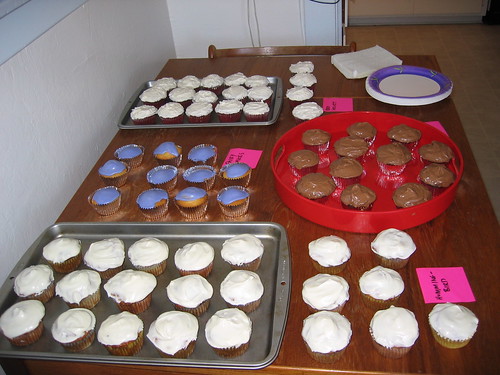
Cupcakes for Good!

Cupcakes + a good cause = Fun + yum.

Cupcakes Take the Cake posted yesterday about Cupcake Day for the RSPCA. On August 18th, Australian supporters of the RSPCA (Royal Society for the Prevention of Cruelty to Animals) will bake and sell cupcakes to benefit the organization. The event's website, www.rspcacupcakeday.com.au has all the information you need to participate, as well as a recipe for "pupcakes" for your dog.

Selling cupcakes to benefit animals seems to be a popular theme. Check out Ace of Cupcakes' photos of dog-related cupcakes they made for a fundraiser, and these Flickr photos of 100+ cupcakes a woman baked to benefit the Western Pennsylvania Humane Society.

The 5th Annual Cupcakes for a Cause will be happening October 20-26th this year. They are asking bakeries to donate a portion of their sales from select cupcakes to CancerCare for Kids. You can also participate by hosting a bakesale for CancerCare for Kids between now and November 1st. For more information, go to the Duncan Hines National Bake Sale Contest site. A co-worker of ToRoxy, baked cupcakes that look like sushi to sell at their office as part of Cupcakes for a Cause.

I think it would be awesome to have a fundraising/friendraising event that revolved around an Iron Cupcake competition, like the folks at Iron Cupcake Earth are doing. (Iron Cupcake is a play on the name of the Japanese cooking game show, Iron Chef, where two chefs compete to create the best meal using one ingredient). This month's Iron Cupcake challenge is to develop a cupcake (that tastes good) using chili peppers.

What other examples have you heard of for how to use cupcakes for good?

Photo from my cupcake tasting party a few years ago.

[cross posted on BlogHer]


Friday, August 08, 2008

Olympic Protest Campaigns: Which is More Effective?

The Olympics open today in China to a multitude of emotions, including anger from Tibetan, Darfurian, and Burmese human rights activists about China's role in the conflicts in these countries.

To protest China's financial support of the genocide in Darfur, actress Mia Farrow is hosting a daily webcast report from a Darfurian refugee camp during the first week of the Olympics (August 8-15). They are asking people to Switch Over to Darfur, and watch the webcasts when sponsors' commercials air.

Here's their first video:

Alternative Opening Ceremony


On the other hand, Avaaz is promoting the Olympic Handshake. On May 22nd, Avaaz organized a 3-mile long "human chain handshake" of 2000 activists in London that began with the Dalai Lama, and ended at the Chinese Embassy. Participants wore T-shirts that said, "Give Real Talks a Hand" in English, and "One China--Talks on Tibet" in Chinese.

The handshake is being continued during the Olympics as an online initiative. After you join the Olympic Handshake, you can view a video of the handshake's path around the globe, and learn who you virtually shook hands with. I shook hands with, "Kittner of Roseburg, Germany, part of a chain of 85,626 people in 192 countries who have joined the global handshake."

This video by Avaaz explains how the campaign began:


I think both kinds of campaigns are important, but I do find the Olympic Handshake to be more appealing. It inspires, not tires. What do you think?

Wednesday, August 06, 2008

Ask Britt: How to make a second hand bookstore a positive force for good

Last week I announced a new weekly feature that I'm trying out on Have Fun * Do Good, Ask Britt, where you send in questions related to career design for artists and activists, and I'll do my best to answer them. I encourage you to add on to my answers in the comments.

This week's question is:

My husband has recently linked up with a friend to buy a second hand bookstore. Do you have any ideas on how to make this small business venture a positive force for good?

How fun! Just owning an independent bookstore is creating a positive force for good, in my book (no pun intended). Here are a few ideas for your husband's new business venture:

• Be green. Natural Resource Defense Council has an article, Greening Your Business, which lists tips for making your business green like recycling, using copier and printer paper that is post-consumer and recycled, using Energy Star office equipment, and getting an energy audit. He may even be able to get his business certified as "green" like the Bay Area Green Business Program does, which could be a selling point for potential customers.

• Be a community gathering space. If the space allows, be a low-cost gathering space for your community to have meetings, readings, exhibit art, post events, etc. For example, we have a small store in Oakland called Issues that sells international newspapers and magazines. They are having an art opening this week for Creativity Explored, an organization that helps adults with developmental disabilities create, exhibit and sell art.

• Organize other local businesses. Create a "Buy Local" holiday shopping weekend with fellow vendors like the San Francisco Small Business Commission's Shop Local First campaign.

• Donate to your community. Hold an annual fundraising event with readings and signings by local writers to benefit a literacy program at a school, nonprofit or library, or to give a grant to an aspiring local writer.

• Help your community donate. Make it easy for people to give away the used books you don't want to purchase from them. Provide them with a list of places to donate to, or a collection bin that an organization picks up once a week.

• Take care of yourself and your employees. Do whatever it is you need to do to enjoy running your new businesses so that you're happy at your work. Pay your employees the best wages and benefits you can. Happy sales people create happy return customers .

You can email me your question (please keep it to 50 words) about the do-good, or artistic work you are doing, or want to do, to britt@brittbravo.com. Title your email, "Ask Britt: your question topic." I won't post your name, but I will post your question with my answer, so keep that in mind as you write if you don't want details in your question to identify you.

Flickr photo credit: Strand Bookstore uploaded by Kathleen Conklin


Friday, August 01, 2008

Giving to Others, Giving to Myself

I'm going to be honest with you. I'm a little burned out on do-goodness.

August 19th is not only my 39th birthday, but also the 3rd birthday of when I started blogging about social change and nonprofit-y things, and I've hit a wall. All I want to do is read cookbooks, do yoga, and spend time with my husband.

To celebrate my birthday, I was going to start the 29-Day Giving Challenge again, but it didn't feel right. I thought about making it a 29-Day Give to Myself Challenge, but that didn't feel right either. Instead I might try a middle way: a 29-Day Giving to Others, Giving to Myself Challenge.

The first thing I'd like to give to myself is to learn about something new. It's time to set those books about green living, social entrepreneurship, and nonprofit technology aside for a little while. Michelle Murrain of the Zen and the Art of Nonprofit Technology pointed to an inspiring post this week in her Nonprofit Technology Link Love: Michele Martin's 10 Tips for Creating a Personal Learning Plan on the Bamboo Project Blog.

Michele recommends assessing the strengths you want to develop, the weaknesses you want to mitigate, and the skills you want to develop. Based on those lists, you brainstorm some goals you'd like to achieve, and then (this is my favorite part) 1. cross off any goals that don't make you feel excited or energized, and 2. reduce your list to just two goals.

So, my two goals for the next six months are:

1. Learn to cook one new thing each week. I just got Nigella Lawson's Feast cookbook out from the library. For all you fellow Nigella fans, Casey Ellis of Margin Notes posted a fun little 4 Questions 4 Nigella Lawson interview last month.

2. Do yoga 2-4 times a week. I used to be a yoga teacher, so I'm comfortable doing yoga on my own at home, but I would also like to try a class at the Berkeley location of Yoga to the People, and go on some kind of not too fancy, or expensive yoga retreat.

If you know of any activists, nonprofit workers, social entrepreneurs, or other changemakers who have learned to achieve a balance of giving to others, and to themselves let me know, I'd love to interview them.

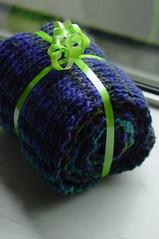
Flickr Photo Credit: Father's Day Gift uploaded by Breibeest.


Wednesday, July 30, 2008

Office Fundraiser Ideas

When you're in charge of your office's fundraiser, you've got two goals to meet:

1. Raise the amount of money you've been assigned.
2. Not make your co-workers dread the sight of you.

Your campaign needs to be fun and engaging, but also effective. Here are a handful of ideas to get you started:

In her article, 10 Fun and Great Fund-Raising Ideas for Your Workplace, Josienita Borlongan says that having a Pink Ballerina Hippo Costume Fund-Raising Contest has been very successful for her. Co-workers vote with their dollars for the person in the office that they would most like to wear a pink ballerina hippo costume.

This idea sounds a bit mean to me, but it does remind me of when Beth Kanter wrote about Sarah Bunting of Tomato Nation raising over $100,000 for DonorsChoose. Sarah promised her blog's readers that she would go to work (at Rockefeller Center in New York City) wearing a tomato costume if they would collectively donate $40,000 dollars. You can watch the video of her in the costume on YouTube.

The United Way of Will County has a long list of office fundraising ideas including:
• Auction off an executive doing the winner's job for one hour.
• Have staff members prepare delicious lunches to be auctioned off to co-workers.
BNET also has a long list in its article, Ideas for Office Fun(d)raising. My favorites were:
• Raffle a day off of work.
• Charge an entry fee for a Nerf hoops competition.
The article also suggests that a moustache-wearing staff member volunteer to shave his moustache off if the office reaches its fundraising goal.

In the opposite approach, the Online Fundraising Blog's post, Fundraisers Ready Razors for End of Moustache May, describes how men raise money by growing (or not shaving) their moustaches.

What are some of the creative ideas you've used to get your co-workers excited to donate?

Flickr photo credit: Bake Sale uploaded by theotherway / Michelle


Tuesday, July 29, 2008

Ask Britt: Q & A on Career Design for Artists and Activists

Hello Have Fun * Do Gooders!

I'm back from vacay in NYC feeling refreshed and renewed. I don't know about you, but I always get lots of ideas while I'm on vacation.

One idea that I'd like to try out here is a new weekly feature on Have Fun * Do Good called, Ask Britt: Q & A on Career Design for Artists and Activists. You can email me your career questions, I'll do my best to answer them, and I hope other Have Fun * Do Good readers will chime in with their tips and advice in the post's comments as well.

As some of you know, I've been doing career consulting workshops and one-on-one sessions since 1998 when I trained with Carol Lloyd to teach her Life Worth Living workshops. Now I work with people on-one-one, and facilitate workshops, like the one I did for Stanford's Social Entrepreneurship in the Bay Area Spring Break.

You can email me your question (please keep it to 50 words) about the do-good, or artistic work you are doing, or want to do, to britt@brittbravo.com. Title your email, "Ask Britt: your question topic." I won't post your name, but I will post your question with my answer, so keep that in mind as you write if you don't want details in your question to identify you.


Friday, July 18, 2008

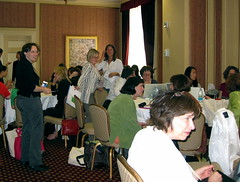
BlogHer '08 Green and Social Change Birds of a Feather Meetup

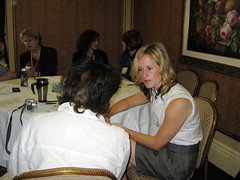
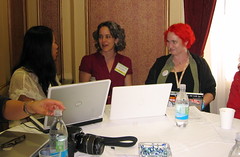
This morning at the BlogHer Conference, about 40 "green" and "social change" bloggers, organizations and companies got together for a Birds of a Feather Meetup. I asked folks to give me their cards so I could share who attended with you. Give 'em a click and find out about the work they do (Is anyone except me surprised by how many companies attended?).

Abbey McDonald, Debroff Debrief
Abby Jaramillo, Urban Sprouts
Amy Lenzo BeautyDialogues
Anna Barrett, Way Out Wax
Ayelet B, Pursuing Adventures
Barbara Rozgonyi, Wired PR Works
Beth Kanter, Beth's Blog
Beth Terry, Fake Plastic Fish
Britt Bravo, Have Fun * Do Good
Christine Chase, Green Seal, Inc.
Elana Centor, Funny Business
Evan Miller, Aveda
Gina Stepp, Family Matters
Jennifer Taggart The Smart Mama
Jenny Sturiale TinyChoices.com
Joanna Eng, Idealist.org
Julia Smith, Idealist.org
Karen Solomon, Opportunity Green
Kate Marshall, Greenopolis
Kimberly Magre, Weber Shandwick Worldwide
Lorelei Kelly, The White House Project
Monica Danna, CosmoPolitician and New Living: Healthy Home Essentials
MamaBird, Surely You Nest
Marnie Webb, ext337
Maryanne Milker, Green Options
Mary Hunt, In Women We Trust
Michelle MacKenzie, Green Bean Dreams
Mitzi Emrich, Check Out Blog
Mehdi Yahyanejad, Adoptic
Monique Hartt, RecycleBank
Rachel Frederick, Six Apart
Rhona Mahony, Wild Bee
Sally Falkow, PRoactive
Siel, Green LA Girl
Skye Kilaen, Crafting a Green World
Susan MacPhee, Greenopolis
Squid Rosenberg, Can I Sit with You? and the adventures of leelo and his potty-mouthed mom
Tammy Lynn Gilmore, SXSW Interactive


Photos by me.


Wednesday, July 16, 2008

Wanna Create Social Change? Be Creative

David Bornstein's book, How to Change the World: Social Entrepreneurs and the Power of New Ideas, describes the qualities Ashoka looks for in the social entrepreneurs they support through their Fellowship program. The quality that stood out the most for me was Creativity.

In the book, Bill Drayton, Ashoka's founder, says that social entrepreneurs need to have two kinds of creativity:
• Goal-setting creativity, "the visionary seeing over the horizon to a different pattern in the field."

• Problem-solving creativity, "to get to this new place, there are a thousand hurdles, a thousand adjustments that these people have to make and they have to be creative about it."
I'd never thought about the connection between creativity and social change before, although it seems rather obvious after reading it. It made me want to hunt down some creativity exercises you could use to inspire creative problem-solving and big visioning.

Here's a selection of what I found:

skelliewag.org's 110+ Resources for Creative Minds
eVentureBiz's 8 + Ways to Train Yourself to Be Creative
Creating Natural Influence's: A Simple and Inexpensive Creativity Support System
Web Worker Daily's 4 Ways to Get Unstuck
The Marketing Fresh Peel's Interview with Author Gregg Fraley: Creative Problem Solving (CPS).

What other resources and tools can you recommend to increase creativity and creative problem-solving ?

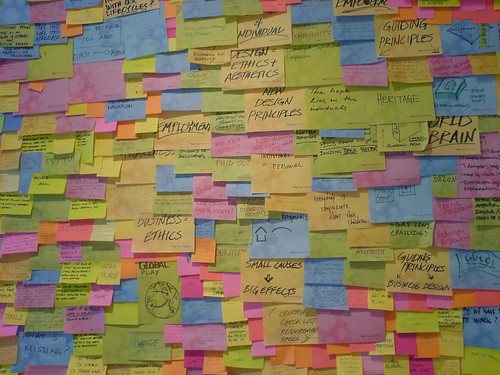
Flickr Photo Credit: Brainstorms at INDEX: Views by Jacob Bøtter


Sunday, July 13, 2008

Save Your Trash: An Interview with Ari Derfel

"That's the big take home. It's not just like, "Hey, make less trash, the trash guy did it," but find where meaning is for you, and believe that you can make a difference if you learn about yourself."
-Ari Derfel

Late last month I interviewed Ari Derfel, CEO and co-owner of Back to Earth, Inc., about saving all of his trash for one year. Below is an edited transcript of our interview for the Big Vision Podcast. You can also listen to it on this little player:


Those of you who are long time Big Vision Podcast listeners and/or Have Fun * Do Good readers, may remember Ari from an interview I did with him and his business partner, Eric Fenster, in 2006 about their work with Back to Earth.

Ari Derfel: What inspired me to save a year of trash? A simple story: I was sitting having dinner with some friends, some very lovely friends, and we had been to the farmers market that day. We began to lament the concept of trash. What came up in conversation was, "Where is 'away?'" that magical place that things go.

As the conversation evolved, by the end of dinner I said, "You know what? I am curious. I want to know, and I'm going to save my trash for an entire year to see what it's like if 'away' is in my house," and it was that simple.

The idea was born in October 2006. I started in December of 2006. Before I started, I was thinking of all these ways to prepare, like where I'd put this pile, and where I'd put that pile, and how I was going to deal with all of it.

That kept eluding me, so on December 4th I had a dinner party with the guy that was there the first night I decided to do it, and said, "You know what? Tonight's the night," and I started keeping it in a pile in the closet in my kitchen. It was literally that simple.

Britt Bravo: What did you learn from this experiment?

AD: I learned a lot of different things. I think that was what was awesome about it. I entered into it really understanding that it was just a personal meditation. That I was about to engage in something to learn about myself, to learn about my behaviors, and to see what comes of it, as opposed to, I'm getting into this thing with a specific agenda, or because I want to tell people and the public something. It was really just like, I'm dismayed at things that I see on the planet, so therefore I want to engage it.

Some of the things that I learned are interesting. I learned what I spent most of my money on because by watching a pile of trash grow over a year, I really began to see, "Wow! I spent it on that food, on this electronic, on that item," and my consumption habits and spending habits became really clear.

The second thing that I learned really powerfully, in addition to what I spend my money on, is what I put in my body. I started to see things pile up. The most commonly talked about are little stacks of pints of non-dairy ice cream that I would eat: pint one, pint two, pint three, pint 12, pint 15. I started to see what lives in my body, and what kind of fuel I'm choosing to put in my body.

Then, I learned where most trash seems to be made, food packaging. Of all the different things that could be making trash, that was really profound to me because I realized that it's not that big of a problem. I mean, we've only been packaging food for 50, 60 or 75 years. So, if that's the small amount of time in which the problem was created. We should be able to undo the problem. Those are three of the primary things that I learned.

Then I learned that if I composted everything organic, which I did, trash doesn't smell. That's an awesome thing to learn because most folks think of the dump or, trash and they think it smells really disgusting. I realized, "Wow! That's not the case." If we properly treat all of our organic matter, that's not going to be a problem.

Those are sort of the top four. Then I'd say number five is how interesting and funny the media and general public are because so many people found the story so compelling and interesting that six months after I stopped it, I'm still talking about it regularly, and people are asking questions.

BB: You have gotten a lot of media exposure. What is the most common question, and what's the question you wish you were asked?

AD: The most common questions are, "Doesn't it stink?," "Where do you keep it?," "Do you have a girlfriend?" [laughs] I love that that is one of the most popular questions. And, "Why did you do it?" Those are basically the top four.

What question do I wish people asked me? It's interesting, a man from Oakland is doing a documentary on street recyclers, the people who go around and pick up recycling from all of our bins, and that's how they make their living. He's looking at that group of people that are sort of a marginalized population. We don't even notice them, but they play this important scavenging role in our world.

He's a really deep, amazing, theological kind of human being. He asked me a dozen questions that were the questions I wished everyone asked me. It's hard to explain, but questions like, "What is the essence of it?" What is the powerful experience that I have internally about the experience, and why would I choose to do something. Not just why did I do it in a fun, interesting way, but what mechanism is going on inside of my heart, and my body, and my mind such that I would choose to engage in something so disciplined, and stick to it so impeccably for an entire year? Does that make sense?

BB: Yes. So, why did you do it?

AD: Honestly, for whatever reason, I am a human being who feels a lot in my life. I feel the wars that are happening. I feel environmental pollution. I feel the suffering that so many people on the planet experience. I can't choose to feel that, or to not feel that, I just feel it everyday. It's that feeling that compels me to do all the work that I do, whether it's taking young people into the mountains, or promoting organic food and supporting local farmers.

All of that is motivated because I feel certain things, and because I want to help contribute to alleviating some of the pain, injustice and suffering, I do these things. I get a lot of my inspiration or guidance to do these things from the practice of yoga. Yoga, in its basic form, is about right thought, right speech, right action, and just being a mindful human being.

That's really the core that pushed me to this thing that seemed like an impossible task at first. If consumption and all these things are supposedly distractions in the planet, and in our existence as beings, then if I can really challenge myself to face my consumption, face my habits, face myself by looking at what it is I produce, and what I waste, then it's going to have a profound impact on me, and I will see a way to change myself that I could never otherwise see.

It's about changing me because I've got to live with me, and I've got to feel this planet, and there ain't no one else going to do it, but me.

BB: So, now that you've done it, what have you changed?

AD: I've absolutely changed the way I consume. I mean, every time my hand touches something now, I feel the whole story of where it was manufactured, and where it was shipped, and how it moved, and where it's going to end up. I buy a lot fewer things, and I waste a lot less, and I reuse a lot more.

From the whole media experience and everything, I also preach a lot less because I realized how hard it is to change me. Why would I ever spend a ton of energy telling a bunch of other people what they need to do and why? What I do more and more is in a humble way look at myself and realize, I have a lifetime of work to do on making me right with me.

BB: You started a blog with this project. When you started getting a lot of media attention, you got a lot of comments. I was reading through them and was kind of stunned by how many were negative comments. Can you talk a little bit about why that was, or how you dealt with it? It was kind of bizarre, I thought.

AD: It was bizarre and I think it was indicative of that same thing I was just talking about, about feeling a lot of the angst, feeling a lot of the anger, feeling a lot of the suffering that's out there in the world and people are constantly looking for an object to focus that on. When this came out, it just seemed I guess obvious to some people to rail against me, and to call me "liberal" and "dirty" and "hippy" and "smelly", or anything to get some press and attention, which was fascinating. I wasn't telling anybody what to do.

But there were some really cool things that came out of that. There are a couple of stories that I really enjoy sharing. The first is that somebody wrote a comment that said, "You must be one of those weird, obsessive compulsive, smelly people, an old guy with a million newspapers and cats," kind of thing. He wrote some mean comment.

The next day, some TV station, ABC or CBS, was interviewing me and they said, "Read some of your blog comments live for the camera." So, I read this one particular person's comments. The next day, he sends me an email because he sees me reading his blog comment on television and he gets a more intimate personal sense of who I am and he writes, apologizing and saying, "Hey, I'm really sorry. I didn't realize who you were and what you were doing, and I just wanted to have some fun, so I wrote these comments."

It was beautiful how someone expressed anger, and then got a sense of my humanity a little bit more, and then a sense of their humanity. It was a really nice connection.

Another thing that happened was somebody wrote a comment, "You typical Berkeley liberal..." whatever. Then as I'm reading, I see a woman from Texas who writes and says, "I'm a Christian conservative right-wing person from Texas. I don't think this has anything to do with liberal or conservative. God gave us one earth, let's treat it with respect."

It's been an awesome experience to see all this random negativity and wonder, "Who's got time, and who cares?" But then to see that they're having their own dialogue and people are waking up through the conversation, is a gift that came out of this project that I never could have imagined that makes it feel very wonderful and beautiful to me.

BB: What tips do you have for people who are listening who want to reduce the amount of waste they have? From the basic to the more advanced.

AD: I have a couple of pieces of advice. The first is to just start paying attention. Just start noticing how often do you eat out? How often you buy things? How often you get a bag? Level one, just start noticing and paying attention without any judgment or comment.

Level two, start reducing in really obvious, really easy places. Use a to-go mug, just don't buy a disposable coffee or teacup. Don't get grocery bags. You don't need them. Get a cloth or canvas bag, it's simple. Every time you go and get to-go food, at a salad bar, or at a restaurant, bring your own container. It can be a Tupperware, or it can be something fancy like To-Go Ware, which you can buy online.

You start doing those three things, and add the fourth, carry a water bottle, and stop using plastic water bottles. More and more people know that in addition to making trash, they off-gas all sorts of chemicals, and they cause cancer, and all sorts of stuff. So, a water bottle, a coffee mug, a reusable grocery bag, and a reusable to-go container are really good things for the level two practitioner.

Level three practitioner, start grocery shopping at the farmers market. Just stop going to the grocery store. Buy all of your stuff fresh directly from the farmers. You'll have more of a community experience, your money will more directly support local people, and much less trash will be created because you're not buying anything that's packaged.

Level four, stop driving, or at least start to transition to a hybrid or a biodiesel, stop creating that sort of waste and eventually move towards bicycle riding, public transport, and that sort of thing.

Then highest level practitioner... Oh, actually, I have to throw in, begin composting. That's like a level two or three. Just start composting all of your food scraps. Then the highest level, which really comes full circle also to the lowest level of just paying attention, is broaden the experience of a project like this. Don't make it just about trash, pick anything.

If the thing that you're concerned about is communication, then just focus on the way you communicate with your loved ones, and your family, and your friends, and try to minimize bad communication, and make more good communication. Just take the example of this experience, and make it personal for you, and in a disciplined way engage in trying to change an element of yourself that's important to yourself.

That's the big take home. It's not just like, "Hey, make less trash, the trash guy did it," but find where meaning is for you, and believe that you can make a difference if you learn about yourself.

BB: What's the next step for this project? Is it done? Are you like, "OK, enough already. I'm going to go throw this stuff out."

AD: [laughs]

BB: Is there another level? Is there a new project? What's next?

AD: I originally found a couple of artists that were interested in turning it into a piece of art. That's really what I'd like to do so that you can look at a biography, a diary of my consumption and be like, "This is what this guy bought," which is pretty revealing and intimate.

It's been hard to coordinate with the artists because I'm really looking for people who will take it, and take ownership of it. I did a lot of the hard part. I saved my trash for a year; it's in my house. I'm looking for a self-motivated artist to take it and really turn it into something beautiful and amazing because I think a piece of art like this really will have legs and can go places. The artists that I was going to work with are great, amazing people, and they're very busy. So, that's the next step.

If I can't find artists in the next few months, and I'm still holding on to the trash six months later, then I will probably have to creatively reuse as much of it as I can, and then begin to throw a bunch of it away. Ow! I don't like the thought. Once it's gone, I will consider doing it again.

I started the blog because I knew someone was going to write a newspaper story about it. I didn't do the blog before. I stopped doing the blog because I've just been too busy. If I find some time in between opening a restaurant and doing all these other things, then I might start the project again.

In a perfect world, I have a whole film written in my head about it. So, if there's a filmmaker out there who wants to do it, then awesome! I've got the whole thing written, let's talk. But I don't have the bandwidth to make the movie.

BB: For people who heard your interview with your business partner, Eric Fenster, maybe you can give us a quick Back to Earth update?

AD: Eric Fenster and I are still working together at Back to Earth Organic Catering, and we still run an outdoor adventure program for inner city kids, and we run yoga backpacking trips. Both of our companies are still intact. The exciting news is that we're now opening an organic restaurant. It will not be called "Back to Earth," we are changing the name of it.

That restaurant is going to be at the David Brower Center in downtown Berkeley, and it's going to be an all organic, three meals a day, seven days a week restaurant priced affordably, not high end and fancy, the kind of place where you can go everyday. There will be a sit down restaurant, an outdoor patio for 40 people that gets sun, and a completely to-go cafe. It's going to be a really awesome place in Berkeley where people who want to eat awesome, healthy, organic, delicious food can eat all the time.

BB: Is there anything else that you want share about your experience of doing this project?

AD: One other motivation in my life generally that I think was part of this is the concept of gratitude. I live with such abundance around me, in a community and in a world with access to everything. I don't have to think about getting clean water and getting food and getting these sorts of things. So, that motivated me all the more to say, "Well, then, how can I challenge myself to make a difference in a positive way?"

I'm grateful that I've had the experience, I'm grateful that people found it interesting and I'm grateful for people like you, and a lot of people in the media, who actually captured the essence of the story instead of bastardizing it, and turning it into, "freaky, weird guy saves trash." Everyone, CNN, MSNBC, Fox Business News, every major outlet, even the National Enquirer, did a really good job of capturing the essence, which is, one man trying to make an impact on himself.

That's really the part that I hope people get and understand. If there's one element that's motivating, it's about that, engaging the self.

You can learn more about Ari's project on his blog, Save Your Trash.


Friday, July 11, 2008

The Girl Effect: Watch This Video


Did you know:
" • An extra year of primary school boosts girls’ eventual wages by 10 to 20 percent. An extra year of secondary school: 15 to 25 percent.
(George Psacharopoulos and Harry Anthony Patrinos, “Returns to Investment in Education: A Further Update,” Policy Research Working Paper 2881 [Washington, D.C.: World Bank, 2002].)

• Research in developing countries has shown a consistent relationship between better infant and child health and higher levels of schooling among mothers.
(George T. Bicego and J. Ties Boerma, “Maternal Education and Child Survival: A Comparative Study of Survey Data from 17 Countries,” Social Science and Medicine 36 (9) [May 1993]: 1207–27.)

• When women and girls earn income, they reinvest 90 percent of it into their families, as compared to only 30 to 40 percent for a man.
(Phil Borges, with foreword by Madeleine Albright, Women Empowered: Inspiring Change in the Emerging World [New York: Rizzoli, 2007], 13.) "


These statistics come from The Girl Effect, a web site created by the Nike Foundation and NoVo Foundation to educate people about the positive impact educating and empowering girls can have on a community. In addition to the video above, which I recommend you take a couple minutes to watch, they have created four short videos about girls who are either benefiting from, or could benefit from The Girl Effect.

The one question I had, as did Blogging for a Better Tomorrow, and some of the commenters on the ONE.org blog, is how authentic is this campaign given Nike's track record with sweatshops? Does anyone know what the most up to date information is on how they are doing in that regard?

Whatever the motivation is behind the campaign, the ideas behind it are important to support. You can get involved with The Girl Effect by sharing the web site and videos, learning more about the issue, and donating to a project that support girls on The Girl Effect's Global Giving page.

New York Times columnist Nicholas Kristof had a column, The Luckiest Girl, around a similar idea last week. In his accompanying blog post, Buying Goats and Other Aid he recommends foreign aids groups you can support. The 350+ people who commented on his post (wow!) made recommendations as well.

Hat tip to my pal Noel Brewer, who forwarded me the video.

Thursday, July 10, 2008

Would Love Your Feedback on My New Web Site

My re-designed web site is up at brittbravo.com. Hooray!

Big thanks to my designer, Ross Chapman.

I'd love to hear any suggestions and feedback you have about it. As many of you know, web sites are always a work in progress.

Wednesday, July 09, 2008

Spirituality, Religion and Activism: What's the Connection?

"No matter how many projects and campaigns and initiatives and alliances we set in motion, we won't find fundamental solutions to societal ills until we learn how to approach this work with greater awareness, compassion, and humility."
- Seasons Fund for Social Transformation

Lately I've noticed a small, but steady stream of mentions about the connection between spirituality, religion, and activism.

In May 2008, the Chronicle of Philanthropy reported that six groups (Fetzer Institute, Ford Foundation, Hidden Leaf Foundation, Jewish Funds for Justice, W.K. Kellogg Foundation, and Seeds of Justice Foundation) had formed the Seasons Fund for Social Transformation. In December 2007, the Fund awarded grants to 15 organizations that, "represent pioneering efforts to integrate personal and social transformation throughout their organizations and movements."

One of the grant recipients, The Movement Strategy Center, is studying the impact of spiritual practice on social justice leaders, organizations and the progressive movement as part of its Spirit in Motion program. Another recipient, the Center for Contemplative Mind in Society, published a resource manual for social justice activists, The Activist's Ally: Contemplative Tools for Social Change.

In spring 2008 the Stanford Innovation Review article, "Praise the Lord, but Dim the Lights," featured the Regeneration Project's Interfaith Power and Light Campaign. The Interfaith Power and Light campaign is, "mobilizing a national religious response to global warming while promoting renewable energy, energy efficiency and conservation." You can download a copy of the article on the Regeneration Project site.

Most recently, this month the International Museum of Women's exhibition, "Women, Power and Politics" is examining the question, "What does religion have to do with it?" :
"Throughout history, religion has had a lot to do with women's personal and political lives. Religious women make change happen, whether seeking peace or inciting war. Belief can inspire social justice, or block a woman's access to freedom or equality. Join us this month as we explore how faith makes or breaks political women around the world."
I'm hoping that these examples are signs that people's beliefs about spirituality and religion will slowly make their way back from extremes to an integrated and middle way that recognizes, like the Global Oneness Project, we are all connected.

Flickr Photo Credit: Shining Treetops uploaded by Zest-pk


Tuesday, July 08, 2008

Join the Changeblogger Wiki!

In May, I wrote a post asking for suggestions for Changebloggers, people who are using their blog, podcast or vlog to raise awareness, build community, and/or facilitate readers/listeners/viewers' taking action to make the world a better place.

Your responses resulted in a long list of Changebloggers and lots of suggestions for how we can connect (i.e. wiki, Twitter, face-to-face meetups, online meetups, etc.).

SocialButterfly has run with some your suggestions, and set up a Changebloggers wiki. Hooray!

She is setting up pages for Changebloggers to list:
Blogs, podcasts, vlogs, Twitters and locations
Meetups
Logo contest
And more!

I hope you'll join the wiki, and if you have questions about how it works, email SocialButterfly at socialbutterfly4change@gmail.com, or "tweet" her at @socialbttrfly