Saturday, September 30, 2006

GOOD Magazine

While on the plane to and from Peru I had A LOT of time to read. I read my new issue of Ode, With All Our Strength by Anne Brodsky, and a new magazine, GOOD. I'd been looking forward to GOOD for a while after Green LA Girl wrote about it, and after talking to Christine Soto at the GOOD Magazine booth at the Craigslist Foundation Boot Camp. Christine was nice enough to send me a review copy before I left on my trip.

It is a big, beautiful magazine printed on thick paper with lots of photos and illustrations. It feels like a print version of Current TV (Al Gore is an Associate Publisher) with short, visual articles like Peter Allsop's review of the movie Our Daily Bread, Zach Frechette's description of the NYChildren photo series, and portraits of Dan Barber (creative director of the Stone Barnes Center for Food and Agriculture), Peter Diamandis (founder of the X Prize Foundation), Marjora Carter (founder and executive director of Sustainable South Bronx), Chris Simcox (executive director of Minuteman Civil Defense Corps), Matt and Jessica Flannery (founders of Kiva), Jimmy Wales (founder of Wikipedia) and Amanda Congdon (former vlogger for Rocketboom).

One of my favorite articles was "The American Family Grows Up" by Neil Pollack which describes how, "middle-class American families are being forced to live, almost entirely, without a net", which he exemplifies with a story about his son putting a rock up his nose. The family's Blue Cross insurance has a "surgery deductible" and, "according to Blue Cross, sticking a tube up a child's nose to extract a rock is 'surgery.'" They had to pay $600 to have it removed.

The photos from the Border Film Project taken by migrants and minutemen were pretty cool, I appreciated the 8-page visual guide to the midterm elections, and the No Senator Left Behind chart comparing US Senators' educational background and salary with the average person's educational background was fascinating.

Overall, I enjoyed the magazine and turned down lots of page corners of things I wanted to remember, or go back to later. My only concerns with the mag are that 1. only about 25% of the articles were written by women, and 2. It has a very young feel to it. I am 37 and I felt like an "old" reader. I hope that folks older than me will want to read it, too.

I sent in my subscription. It's $20 and 100% goes to the charity of your choice: Ashoka, City Year, Creative Commons, Donors Choose, GenerationEngage, Millennium Promise, Oceana, Room to Read, Teach for America, WITNESS, World Wildlife Fund or UNICEF. I chose UNICEF.

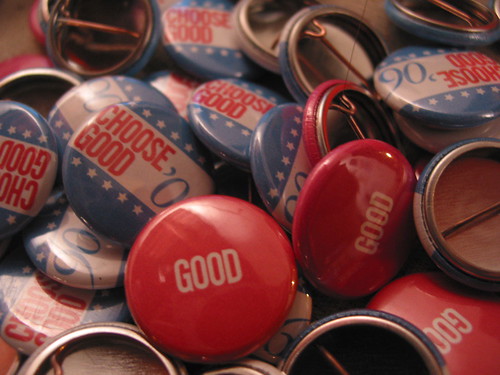
Photo from GOOD Magazine Flickr Stream.


Friday, September 29, 2006

Back from Peru


Hello Have Fun * Do Good Readers!

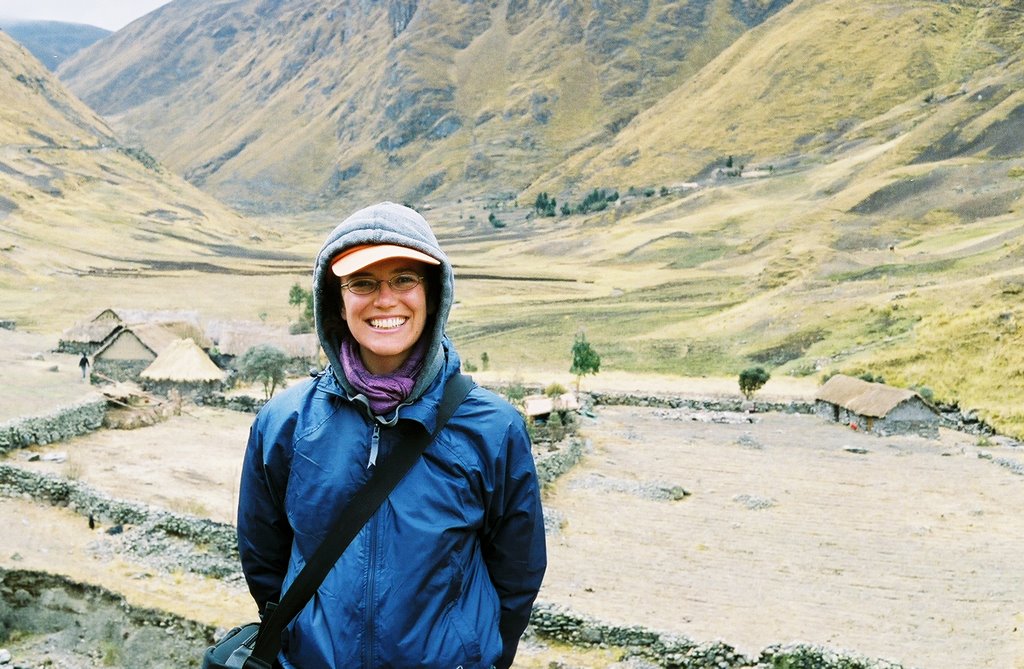
I just got back from an amazing two-week trip to Peru. I'll start posting Have Fun * Do Good news soon, but in the meantime, here are a few photos from my trip:

Thursday, September 14, 2006

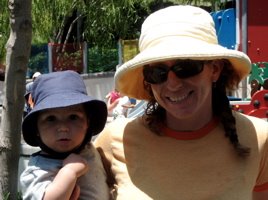
Mom in the Movement: Lisa Russ of the Movement Strategy Center

How do you balance working for social change, with the work of being a mom? Lisa Russ, the Associate Director of the Movement Strategy Center, shares the joys and challenges of being a new mom working for social change.

The Movement Strategy Center is a nonprofit organization in Oakland, CA that is committed to advancing the next generation of leaders for a sustainable progressive movement. The Center helps to build local, regional, and national networks of young activists, across interests, constituencies and geographies.

You can listen to the interview on the Big Vision Podcast.

How do you balance your work at the Movement Strategy Center with the work of being a mom?

Someone said to me, before I had Zach, that every organization should be full of working mothers because they are the most efficient people around. I wasn't a working mother then, I wasn't exactly sure what she meant, but I knew from seeing her that it seemed true. It definitely has changed my sense of time. Being a working mother means doing everything as quickly, and well and efficiently as I can.

I was worried before I had him that I would be one of those mothers who is always late for day care because I'm not someone who has ever been able to leave work on time. But I'm not late to get him because you really cannot be late to get your kid at daycare, because they charge you, and also it means a lot to me to be there on time for him. He looks around for me, and gets excited for me to come. I have become a person who actually leaves work when she is supposed to. That's a big change. And I work at night, and I work on the weekends,and I feed Zach while I'm checking my email. There's a lot of multi-tasking, but I've always been a multi-tasker, so that comes pretty naturally.
How has being a mom changed your work?
Before I had Zach, I was definitely a busyaholic, you know a workaholic, busy-addict kind of person running around and running around and people were like, "What are you running away from?" and, "Why are you so busy?" and I was like, "Nothing, I'm happy, this is the way I am!" There was so much to do, and I felt driven by my work and really rewarded by it, and not just paid work, but also all these volunteer things and other community stuff -- feeling really involved and feeling engaged. Whenever I felt like I could do something that was going to have some kind of impact, that gave me a lot of energy.

Becoming a mother has meant that I don't have the time or energy to do that. It's a huge change for me to go from being out almost every night and from being busy almost all the time, and obviously as a mother I am still busy but it's a very, very different kind of busy. Being with Zach is tremendously rewarding for me in a different kind of way. So, I think that some of the things that, it turns out, I was running away from, have kind of caught up to me. Something I probably share with a lot of people who do this work is, feeling like I was doing something meaningful was my way of coping with fear about the world, and despair about the world. By working on whatever project, I could keep one step ahead of the fear and the despair.

Having Zach really brought into focus for me this tremendous stake in the future that I hadn't had in the same way before. Before I was like "OK, whatever, maybe we are going to burn this planet to hell and we probably deserve it, but who cares?" in a way. Not literally, but it's like what we are doing as a species to the place where we live is so unfathomable that in a way there was a throw up my hands aspect to it, even though I was engaged in what I could do to prevent that, or work against that tide. Within a few months of Zach being born, I was just getting all these really strong fears about him not making it to adulthood. He was born two months before Katrina, which sort of crystallized for a lot of people fears about global warming, and also fears about the inadequacies of our government and our systems to respond to needs.

I think that sort of started a wave of panic about the future, and of feeling like, really thinking about him not making it. And of course this year, after Katrina there also has been the bird flu scare, it has also been the 100th anniversary of the earthquake, the war in Iraq and then this war between Israel and Lebanon, and Israel's own war on Gaza, on Palestine -- so there has just been a lot of like Armageddon in the air and I definitely, for maybe six months of Zach's life, got preoccupied by this fear.

So, just having spent so much of my life managing that fear through work, it was really intense to all of a sudden sit with that fear in a new way. The other thing that happened as part of the transition to motherhood was understanding global life through the eyes of a mother and a parent. I think I'd always thought, whatever, you could certainly look into Palestine and think, "Oh my God, those mothers, how are they feeding those kids? And those fathers, and how do they feel?" But the level that it hits me in my stomach now when I imagine what it must feel like during the air raids in Gaza and Lebanon to not be able to keep your child safe, and to be laying there with your child and not be able to say, and mean, "Everything's going to be OK. I can protect you." That is so fathomable now.

I really empathize with what I can imagine people are going through and just get really horrified by it. So in terms of what this means about the work, my work at its core is about building movements for social change and social justice. I have to do that work, because I have always had to do that work, and now I am driven to do that work from an even deeper place because of feeling both a fear about the present and the near future. A hope about it, too -- my hope for what the world (although I have to dust it off and fan the fire) it's also there, and I want to feed that hope and I want to bring Zach into a hopeful world.

So keeping myself going and keeping myself engaged in the work is really important, and I can't do it in the same way I used to--going to lots of events and getting the same charge that I used to. A friend of mine is doing civil disobedience tomorrow, and when he first told me about it I was like "Yeah, of course I'll do that with you." It's about Israel and Lebanon and I was like, "I'll definitely do that, I'll definitely do that." And then I realized, "Oh the time it is, I will be in jail when I need to be picking my kid up from school, so I cannot actually do it." Which is just another example of -- engaging means something different now, and I think I'm still struggling to really know what that means, and I know on a heart level it's going to be a deep and rich kind of engagement, and it's a new engagement.

One aspect of this that people have been working on and thinking about, and it's pretty obvious, is just, "What do you do with your kids?" I just went through a funny experience of wanting to go to a training, a several day training, leadership training, that was on-site a couple hours away and didn't provide child care. So I was like, "How is a nursing mom supposed to go?" Being a nursing mother means that you have to see your kids -- if they are young, all the time, and if they are older like Zack, at least a couple times a day, or once a day.

Negotiating my autonomy and my closeness with Zach and how it relates to me going out into the world and doing other things -- I think it is really common for mothers in this work to struggle with that. I guess what I want to say is when Zach was first born it was like, "Oh, you have little baby, and of course you take time" and then it was just sort of, "OK, come back and be back and just do this stuff." That's what I would have expected of myself too, and not really realizing it's still really hard to go to events at night. It's still a huge thing for me to go away overnight to lead trainings, or be a part of workshops. It's all these underlying questions about creating the change that you want to see, and what that means in terms of what kind of house Zach grows up in.

I don't think that that means that Zach needs a mommy who's there all the time, but it also means to me that he feels a sense of safety and security that I am there when he needs me. I think for every person, finding that balance is one of the cruxes of this parenting puzzle. Everybody has to find it in their own way, and every kid is different. I think what's hard to realize -- what was hard to really know before I had a kid -- was that we all have ideas about what it's going to be like before we have a kid. "I'll always do this, and I'll never do that and only cloth diapers and no TV and no sugar" or whatever it is. I think everyone is transformed by parenting. I certainly was. So even who I thought I was, even while pregnant, is different than who I am now, and Zach is his own self. It turned out for example, I used to be the kind of person who definitely judged other parents as lame when they wouldn't go out at night. I thought that was really weird, or when they seemed like a slave to their kid's nap schedule or sleep schedule. And then Zach came along and it turned out that from a very young age, Zach needed to be home at night, and night for Zach meant by 5:00, 5:30 PM.

I'd be invited to an event that'd be from 5-7 PM and people would be like, "Oh this must be great for you. This seems like a really child friendly time schedule," and I'm like, "You would think so, and I would have thought so, but the truth is that Zach needs to be home and Adam's still working, and I'm still nursing and it's a real hard time for me to leave him, even with a babysitter, a friend or whatever, and so I actually can't go." And now that he's fourteen months that is much, much, much less true, but that's been a very long time in coming, and it's only really recently that I have a lot more flexibility in the evenings and at night to get around.

So in terms of this balance thing it's sort of this question thing about how much I'm there, how much I'm leading, how much I'm following Zach's lead, and I'm obviously still very much learning, but it's a lot more complicated and individual than I ever could have seen, or that I realized before I started
In addition to generous maternity leave and child care at events, how can nonprofits best support working moms?
That's a great question. Yeah, I can name a couple things. Generous maternity leave and child care at events is really important. Other things I would say are really important, or have been very important for me, have been a flexible work schedule. I came back part time and I work three quarter time. And I'm flexible about that too. That doesn't mean I'm never working, whatever, the off hours. But childcare is so expensive that it's really hard, basically on a nonprofit salary, even a generous nonprofit salary, it's almost impossible to pay for full-time childcare. Most people need to piece something together and have some kind of flexibility.

Being able to work part time at a schedule that I could make work around my day care was completely critical. We go to a wonderful daycare that is set up for working families that is actually not that flexible because they need to keep some things in place that works for working families. So I needed to be flexible on my side to be able to leave work early, to be able to get the kind of schedule that we could afford at the daycare.

The other thing that's really important for work, last week I got a call from the daycare that Zach had contracted a daycare virus and that I had to go pick him up right a way so he wouldn't keep spreading it. So I finished what I was doing, closed my computer, and left. And when I was telling someone, "Oh yeah, I had to run out and get Zach." They were like, "Was work OK with you leaving?" And I was like, "Well what would I have done if they weren't?" But it really made me think. Of course I had things I had to cancel and manage, but that was up to me to do.

It's both being able to set a schedule that's realistic for me to be able to parent and work in an ongoing way, and also to have flexibility when we need it to handle sick kids and other things that come up. I mean sick providers come up too. So I guess once, you're in the petri dish of group child care, things are really unpredictable, and just a workplace that to whatever degree rolls with those punches is really important.

Two more things I want to add to that list. One is about trave, and like I said, traveling with a kid for work is hard, and not traveling because you can't, because you have the kid, is also hard. But we at the Movement Strategy Center have tried to really take the heat off the parents to need to travel, and I mean one question that's huge that needs a lot of wrestling with is really what that means for the non-parents and how much more of the work their absorbing. I think that's a really important question, and we've been very mindful of that, or tried to be. I think we're still on a learning curve. We've tried to make travel schedules for parents as minimal and realistic as possible, and that's been very important.

The other thing that's been really wonderful here is just the work culture and welcoming the kids in, whether it's the kids stopping by the office, or just curiosity about the life of parenting and our children. I was the third, of the three of us, who had kids within a year. And I think when Taj had Kiyomi first, it was much more of a strange thing and a novelty, and now it's become more understood. I guess what I'm thinking is that our work culture has changed in a way, our whole organizational culture - the things that we talk about, the firsts that we share in staff meetings, or whatever, and just the way we think about like, oh we're going to go do something together as a staff. Is it a happy hour, or is it a lunch?

It's just sort of all these little things that have made it really wonderful to be here, and I've been able to really feel like a part of things, and I think so has Zach. But it's a subtle change. Like any sort of "diversity" issue, it is best addressed through numbers. There's three of us out of eleven or twelve now that are parents so there is kind of a critical mass. I've thought so many times about the things I've said and done before I was a parent, not understanding where the other parents were coming from.
Have there been other moms in the movement who you've been able to lean on for support?
Oh yeah. Right when I was coming back to work and I started having a panic, I sent an email out to about seven or eight people saying like, "Oh my god, oh my god. Daycare tomorrow," or I actually remember what it was. I was still at home with Zach, working part time, but I had to go to San Francisco and facilitate a full day meeting and be away from him for the first full day, which of course now sounds like nothing, but he was only four months old and it seemed really hard and I was in a real panic about it.

During each of these milestones I've been able to reach out to people, and working mothers, especially working mothers who have been working in the social change, social justice movement, have been hugely important to me. As each new things happens it's so overwhelming, and it's really hard to jump across the chasm of never having left Zach for a day, or never having left Zach for most of the week, and I still haven't done the leave Zach overnight, but I'm getting to the point where I need to do that for work.

Having these other moms with some perspective over time has been enormously helpful for me. I don't think I could be here right now without them having carved the way and shown that it's possible, and let me see them as really being vibrant, brilliant, amazing workers as mothers, even as they've been tremendously engaged parents who've had to make different kinds of decisions during their years as mothers. I'm thinking about two who have kindergarteners now, so that gives me a nice long view.
Do you have any advice for new moms working for social change?
The biggest thing on my mind right now is being gentle with yourself. I think part of what mothers have to offer other people in the movement is a slightly slower approach to life. I know for me that transition from really fast to pretty slow was a hard one, and I really needed to find ways to be gentle with myself, to adjust to the new pace, and to not try and push myself to hard either in work or things outside of work about what I should be doing, where I should be going, how I should be feeling. And I guess what I really needed for that was the support of my co-workers and my friends and other parents.

I guess the piece of advice that I can offer is, it's been the most intense transition of my life, and whatever you can do to make space for yourself to have that transition, and find the people and places that are supportive of you finding your way as a mother, rather than pushing the expectation that you should be the same, you should be delivering at the same level, the same kinds of things. Just chose wisely. Choose who is around you, and what you're listening to, because the pressures are really intense and you're going to need a lot of love and a lot of support for you to find your own new way.

I think part of the reason I even started with this story is about the intense fear and feeling about the world in a different way, is because for me, I really know that that is going to allow me to be even more valuable working for social change over time with this degree of feeling that I now have, and this connection that I have with mothers all over the world. As you change shape and pace and view, just recognize, you will be equally amazing and even more brilliant and gifted in ways that you never knew, and so just trust that process and enjoy it. It's amazing.


Tuesday, September 12, 2006

Celebrity Gossip Without the Guilt

I consume way too much celebrity gossip. I've got Pink is the New Blog and A Socialite's Life in my feed reader; buy US Weekly and People to "send to my grandma" (which I do, after I've read them); will flip back and forth between Entertainment Tonight and Access Hollywood if I'm home alone (my husband is a sensible man who thinks America's celebrity culture is gross), and don't even try to schedule anything the night of the Golden Globes.

So how happy was I when the blogger, Eco Chick, wrote a post about the celebrity-filled Rainforest Action Network benefit gala (oh, to have been there), and mentioned the blog, ecorazzi, which highlights green celebrities. Fun!

Check out the eco-celebrity sites from their sidebar:

Daryl Hannah
Woody Harrelson
Leonardo DiCaprio
Ed Begley, Jr.
Ed Norton

Like any good addict, am I deluding myself that this is the "good" celebrity gossip. Probably. Did I add it to my Bloglines account. Yep.

Collage from MyHeritage Face Recognition. Click here to find your celebrity look alike.


Sunday, September 10, 2006

Solutionary Women: Nola Brantley of the Scotlan Youth and Family Center

Nola is as old as the Center she works for, thirty, and over the past two years, she has become an expert on sexually exploited minors in Oakland and has watched as the population grows.

"It's increasing, and not only is it increasing, the young ladies are getting more savvy. Because some of them that went in at 14, now they're 16, or 17, and they're actually recruiting 12 or 13 year olds. So they're getting a little bit more savvy because a mass number of young people have been involved in it now for the past several years, and there's organizations like CAL-PEP [California Prostitutes Education Project], who have been doing work with prostitutes for thirty years, and they're even blown away by the number of young girls involved in prostitution."


Last month, I had an opportunity to interview Nola, who is the Director of the Parenting and Youth Enrichment Department, and the Coordinator of the Sexually Abused and Commercially Exploited Youth Program at the Scotlan Youth and Family Center. When I asked her why teenage prostitution is so prevalent in Oakland, she said,

"Because they can do it here. . . Pimps identify this as a good place to pimp underage girls. Underage girls identify this as a place to prostitute where they most likely won't get caught, or if they do get caught, consequences won't be a big deal, and men who like to buy sex, men or women, it's mostly been men, who like to buy sex from underage girls, know that Oakland's a good place to get a girl under 18 who's a prostitute.

We have girls that come from out of state to prostitute in Oakland who are under 18, and I've asked them, 'Well, how did you end up in Oakland?' and they'll say, 'Don't you know that everywhere else, coming to Oakland to do your thing is a big thing?'"


Some of the things that Nola has found helps the girls she works with are having an advocate that they can trust present from the time that they make contact with police, and having a safe place to stay for an extended period of time. Unfortunately, Alameda County doesn't have a safe house, although it is an essential component to the girls' being able to change their lives, as Nola explains,

"If there was a 14 year old girl, let's say she's a foster care youth. So she doesn't have a mother, father, any stable family. She's a foster care youth, which means she's part of the system. She's staying in a group home, let's say. And say she's out there prostituting and she has a vicious pimp. And she wants to get out of it, but she knows that she can't just stop because he won't let her. And she knows that he'll come right to her group home and kick the front door in and drag her out of it. There's no place to send her where she could be safe, like a refuge. You know, there's no place in this whole County, for girls in this County, where we can say, 'Okay, you want to get out? Okay, you're going to be able to go to this place, this is a place where you can stay, you can get your life together.' We don't have that yet, and so that's something we're working towards. We have some things in the works, but it just can't happen fast enough when there are 12 year old girls out there prostituting. It can't happen fast enough."


Despite the challenges, there are success stories:

"One of the things that I do is, I go out with the Oakland Police Department when they do prostitution sweeps, and when they bring in prostitutes under the age of 18, then I have to be their advocate on the scene. Probably about a year and a half ago now, I was on a sweep with the police, and they brought in a young girl, and she was from out of state, and she ended up going to Juvenile Hall, and she hadn't given her right name. So she was in Juvenile Hall for about a month, and we were getting ready to send her off to a program in LA called Children of the Night, it's a volunteer program for prostitutes who are under 18 who want to make a life change and have their school on-site, and stuff like that, it's a comprehensive program.

Well, the day before she was supposed to go, a report came through from the state showing that she was a missing person and showing what her real name was. I ended up being able to get in contact with her mother, and her mother came down to come to the court date in this County. It turned out she had all kinds of warrants in the state she was from because she was involved in a big prostitution ring out there where there was a female madam who was prostituting all these girls under 18. It got busted, and everyone was in danger. It was just crazy. She was in a lot of mess. So they decided to let the warrants go as long as she went through the program that was recommended by this County, and she ended up becoming a 600, which is a minor who would be on probation though Alameda County Probations Department, and we ended up finding a placement for her in a group home that was out of this immediate area, and that we had had success before with other girls. She was in Juvenile Hall for like two or three months and the whole time she was in the Hall, I was able to keep in touch with her, go visit her, and I was able to keep in touch with the family, who was out of state. Then she went to the group home, and she's been there for a year now, and she's doing well.

She's going to school, you know, she's been able to go home on five day passes to visit her family, and she had come from a history of abuse, too, within the home. So she ran to the streets in the beginning, because of the abuse in the home, to prostitute. She prostituted in her state, she ended up out here prostituting, and then through the intervention of the program, she was able to turn her life around, and she has completely cleaned her life up. Her mom's even saying that soon she thinks that she'll be ready to come back home, and her mom moved from where they lived at previously so that when she comes back home she'll be coming into a different environment. . . . She had a lot of risk factors that presented themselves, that said that she wouldn't get out of the life, that she'd be someone that might stay in the life for the rest of her life, and she completely turned it around."


Nola's passion for her work, comes from a very personal place,

"I was sexually exploited [as a minor], and I was preyed upon by a police officer in San Francisco who was supposed to be working a court program that interacted with high school students, and he actually ended up sexually exploiting me over the course of the next year, and he did eventually exploit another minor too, and ended up getting kicked off of the police force. I didn't realize that I had been sexually exploited until I first started to get into this work, and when I realized I had a personal experience with it, it really gave me a passion, and really made me want to get involved, because I understood how much the girls don't understand they're being exploited at the time that it's happening. For a lot of these girls, their stories, and their situations were so, so horrific.

Not a lot of people can do this work, because not a lot of people could even deal with what they have to do as they listen to these girls' stories. You think most of these girls, they're just troubled girls. No, most of these girls that are out there, they have some horrific stores, like, 'My mom died and I was passed around to three relatives,' 'I was molested by an uncle.' It's not anything small. They have really huge stories of past trauma and past abuse, and just all kinds of things. I got kind of attached to the population, too, and I wanted to see the work play itself through. I want to see the numbers in the city of Oakland decrease, so I'm committed to sticking to doing this until there's a drop. As long as it's increasing, I'm not going to walk away from it."


If you would like to get involved in your community around these issues, here are a few steps Nola suggests that you take:

"The police department is one avenue, although I wouldn't say it's the only avenue. Because through the police department, they have units that work with the community. So that's a really good place to start, like if you started to go to those community meetings that are held by the police department, and it's by a non-uniformed person, then that would be a really good place to start and organize and say, 'Where in our city are we seeing this happen? What's the best response to this?' Because it is going to be different city to city. . . Now, if it's folks here in Oakland, and they want to help with this, they can call me, here at the Scotlan Center, because basically, for the city of Oakland, even for the County of Alameda, right now we're like the clearinghouse for people who are interested in working with sexually exploited minors.

Also, you can go to local community service agencies, if you're in a different city, and try to find out if they're already working with this population, and if they are, how you might be able to help. I mean, one way you can just help, which is really general, it doesn't matter where you live, is just by raising awareness. Talk to a young girl about what's the difference between a pimp and boyfriend. You know, talk to a young girl just about a healthy relationship. Or just take time to mentor a young girl, because you can prevent this too, just by reaching out to a young person, and I keep saying girl, but there are lots of boys being sexually exploited, too.

If there's nothing happening in your city, and you want to start something, then have a meeting with some of the different systems, like maybe your juvenile probation department, your police department and your social services agency, because these are going to be the three main systems that most of the minors that are involved in exploitation are going to end up running through. They're either already foster youth, or they'll get arrested, or they'll end up at Juvenile Hall."

You can contact Nola Brantely at the Scotlan Youth and Family Center at (510) 832-1490 or by email at nolabrantley AT yahoo DOT com. You can hear this interview in its entirety on The Big Vision Podcast, and if you know a Solutionary Woman who you think should be profiled, please contact me at britt AT brittbravo.com.


Wednesday, September 06, 2006

The International Museum of Women Wants Your Story (Men Too!)

After including Imagining Ourselves: Global Voices from a New Generation of Women in my post about Giving Circle Book Groups, someone from the International Museum of Women asked me if I would post the submission guidelines for Imagining Ourselves, "an online global exhibit featuring art, photographs, essays and film by young women in their 20s and 30s answering the questions, "What defines your generation?"

They are accepting film, audio, images and text on these issues:

War & Dialogue: Women's Perspectives
Deadline for submissions: October 1, 2006
Let us take you beyond the headlines and show you how war is affecting the lives of young women around the world-both in conflict zones and outside them. As a result of recent fighting, millions of people are living in diaspora, migration is the trademark of this generation; what is it like to start a new life in a new place? We are interested to hear your personal experiences, your thoughts on media stereotypes of certain religious and ethnic groups, and your views on how violent conflict has affected your life. What are the positive contributions young women are making towards resolving wars- both in their own countries and globally? The media doesn't tell us all the stories, especially once the world has moved on to the next hotspot. Tell us yours.

Young Men: How Do We See Each Other?
Deadline for submissions: December 1, 2006
We have spent all this time finding out what women around the world think about the world and the issues affecting them. But now we’re taking the time to ask young men the same question. We want to know how young men regard young women when it comes to the topics we have explored so far in Imagining Ourselves. Browse our exhibit and give us your views.
Themes to consider:
Love – dating and marriage,
Money – balancing work and family and equal pay for equal work
Culture & Conflict – migration, devotion and conflict
The Future – charting a path
Motherhood: A Life-Changing Experience
Deadline for submissions: February 1, 2007
One of the most life-changing experiences in a woman’s life is that of having and caring for a child. These days women are having children later and some are not having children at all. Family structures around the world are changing, yet mothers are most often the parent who will stay at home with young children. Child birth itself is a risk for many mothers around the world. Did you know that the 530,000 annual deaths that arise from pregnancy and childbirth complications are preventable? Share your stories on motherhood with us, and discuss your ideas on better maternal healthcare worldwide.
Image & Identity: Culture behind clothes
Deadline for submissions: May 1, 2007
Appearances aren’t everything, or are they? Join us in exploring the world of self-expression. Some people express themselves through the style of clothes they wear. Clothes can express a part of who we are or the culture we represent. A lot of young women today are also becoming increasingly aware of the importance of sustainability. Are green, recycled, or eco-chic clothes a part of your wardrobe? In a time when going to the plastic surgeon is as easy as booking an appointment at the dentist, what kind of body image do young women have today? Send us your answers to these questions and your work. We are looking for original clothing designs, photographs, film, essays and more. These months are all about exploring the different ways we shape our identity (express ourselves), whether it be through our culture, the music we listen to, or the clothes we wear. How do you express yourself?

Film Festival: A cinematic experience online
Deadline for submissions: July 1, 2007
Take part in this unique experience – a two month film festival – online! This is an amazing chance for up and coming women filmmakers to have their work viewed by a worldwide audience. We are looking for all types of films – documentaries, short films, animation, music videos, basically any kind of film you can think of, they just have to be made by a female director.
For more information about how to submit your story, click here.


Tuesday, September 05, 2006

Square Foot Garden

I spent the weekend getting my garden ready for Fall. It is a small space that up until now I have only planted flowers in, but I think I am going to try putting in some winter vegetables. In Northern California you can still grow veggies like lettuce, spinach, leeks and chard.

If you have only a small space for a garden, I saw this link on Hugg.com to a post that describes how to build a square foot garden (photo above).

I thought this was a really cool way to have a garden in a small space, and could be a great tool for school gardens.

Photo from Frostcall.com


Friday, September 01, 2006

Giving Circle Book Group: Books by Women Visionaries and Their Organizations

I've posted a couple of times about giving circles, groups of people who get together to learn about an organization's work, and pool their donations to have a greater impact. Because I love to read, I've been thinking it would be cool to have a Giving Circle Book Group where the group reads an inspiring book by a nonprofit, or an individual affiliated with a nonprofit, and then gives to that cause.

If you're interested, here is a starter list of books by visionary women and their organizations:

Between Two Worlds: Escape from Tyranny: Growing Up in the Shadow of Saddam by Zainab Salbi and Laurie Becklund. Salbi is the President of Women for Women International, an organization that helps women affected by war to rebuild their lives.

With All Our Strength by Anne Brodsky. Brodsky documents the inside story of the Revolutionary Association of the Women of Afghanistan (RAWA). According to their site, "RAWA is the oldest political/social organization of Afghan women struggling for peace, freedom, democracy and women's rights in fundamentalism-blighted Afghanistan since 1977."

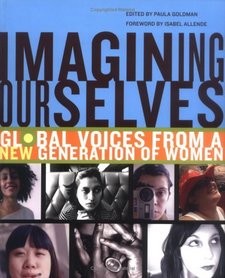
Imagining Ourselves: Global Voices from a New Generation of Women, an anthology edited by Paula Goldman for the International Museum of Women.

Harvest for Hope: A Guide to Mindful Eating by Jane Goodall. Jane Goodall has founded so many things including the Jane Goodall Institute, and Roots and Shoots, a community service program for young people. (This was my favorite book of 2005).

Paradigm Found: Leading and Managing for Positive Change by Anne Firth Murray. Murray founded the Global Fund for Women.

Hope's Edge: The Next Diet for a Small Planet by Frances Moore Lappe and Anna Lappe. Mother and daughter founded the Small Planet Fund to support the citizen-led solutions that they document in their book. (2006 isn't over yet, but so far this is my favorite book of the year).

Book cover image via Rainbow Bookstore Cooperative.


Thursday, August 31, 2006

Basic Blogging for Women Workshop

In early July, I posted about a Basic Blogging for Women Workshop I'd be teaching this fall, but after talking to some prospective students, I decided that it was important to find a space where everyone could be on a computer, so I changed the date and the venue so that we can be in a computer lab.

If you:

* Have something you want to say and share with other people
* Want to join an online community of like-minded people
* Are looking for a new communication tool for your nonprofit or business
* Enjoy learning in a supportive, low-key environment

This workshop is for you!

Basic Blogging for Women Workshop
Taught by Britt Bravo

Sunday, October 22, 2006
1-4 PM
Center for Digital Storytelling

1803 MLK Jr. Way in Berkeley

$95 early registration fee if received by October 9th.
$125 if received after October 9th.
Enrollment is limited to 9.

You will learn about the different types and uses of blogs, why it is as important to read blogs as it is to write for one, how to add photos to your blog posts, and how to increase your blog traffic.
Each student will create a Blogger blog during class.

Britt Bravo writes for three blogs: her personal blog, Have Fun • Do Good, NetSquared, and for BlogHer, where she is a Nonprofit and NGO Contributing Editor. She also produces her own Big Vision Podcast. In order to create the positive change she wants to see, Britt helps individuals and organizations realize their "big vision" for a better world with her business, Big Vision Career and Project Consulting. Britt has worked with nonprofits and socially responsible businesses for over 15 years and has helped hundreds of people to realize their big visions.

Email Britt at britt AT brittbravo DOT com to register.

***********************************************************************

REFUND POLICY

I totally understand that things happen that cause you to not be able to come to the workshop, but because I am a one-woman business, when you register for a class you are agreeing to this policy:

To request a refund, send a MAILED notification of your withdrawal from the class. I cannot accept or acknowledge notifications sent by email or phone.

1. If your withdrawal notification is postmarked 10 or more days prior to the workshop date, you will receive a refund minus a service fee of $25.00.

2. If your withdrawal notification is postmarked less than 10 days to the workshop date, no refund will be given unless the class is full and I have someone on a waiting list to take your place. This policy applies regardless of the reason for your withdrawal, even if the reasons are beyond your control.

3. If the workshop is cancelled because I did not get a minimum enrollment number, you will receive a full refund.


Tuesday, August 29, 2006

Volunteering Can Be Good for Your Job

A study for the nonprofit Womens Way found that women who volunteered improved their leadership, communication, and problem-solving skills. According to the Womens Way press release,

"The correlation of women’s professional growth and development with their philanthropic involvement makes a strong business case to employees and employers about the importance of investing in community involvement as a professional development tool."

I've been doing volunteer work for a long time, and although I'm not entirely sure that it has improved my leadership, communication and problem-solving skills, it always improves my mood, very often teaches me something and occasionally has led to a new job.

Here are some BlogHers who are giving back through volunteering, or using their blog to advertise do * good opportunities:

Rocks in My Dryer puts the word out for Operation Special Edition, a program that provides volunteer doulas for pregnant women whose husbands or partners are deployed when they give birth.

bekka
writes about volunteering at the Algiers Regional Branch Library in New Orleans where she sorted through books that thousands of people sent to the New Orleans Public Library System after Hurricane Katrina.

Sarah Lynn Seaton participated in a Women Build with Habitat for Humanity last May in Knoxville. I thought it was a cool idea to have a team of women building a house together. You can find a Women Build project near you here.

Shop Girl tells her readers about a Women of Wardrobe fashion show fundraiser happening in Houston today. Women of Wardrobe is a volunteer branch of Dress for Success, an international nonprofit that provides suits and other work clothes to low-income women.

KungFoodie is volunteering with Girls Inc and helping out with their fall fundraiser Women of Taste. She is asking Bay Area food bloggers to link to the Girls Inc. web site with one of the Women of Taste banner images, and to let their readers know that volunteers are still needed.

And One Good Bumblebee is designing products to to sell for Nest, a nonprofit that supports women artists and artisans in the developing world by providing micro-credit loans to be used for the purchase of the supplies necessary to start or run their art or craft-based businesses.

Image via VolunteerMatch

Hat tip to Joanne Fritz for info. about the study.


Monday, August 28, 2006

It's Not Possible to Know What's Possible

This is a 14 second video made with my digital camera of trees in the Redwood Regional Park in Oakland. I made it to test vlogging for the first time, and I chose this quote from Hope's Edge by Frances Moore Lappe and Anna Lappe to go with it:

[H]ope does not come from convincing ourselves the good news is winning out over the bad. Nor does it come from assessing what's possible and going for that. Since it's not possible to know what's possible . . .we find new energy in this very truth. In the awareness of possibility itself--always unknowable--we are free to focus on the world we want.

This video was originally shared on blip.tv by Bigvision with a Creative Commons Attribution license.


Wednesday, August 23, 2006

Six Steps to Everyday Activism

Global Warming. Election Fraud. Genetically-Modified Food. Cancer. AIDS. Poverty. War.

Sometimes it’s hard to get up in the morning and be fearless, to have courage, to care. That’s why I started interviewing women (and men) for the Big Vision Podcast, and my Solutionary Women series on BlogHer who get up in the morning and have a big vision for a better world as their alarm clock.

After talking with women like Mary Brune, who co-founded MOMS (Making Our Milk Safe), Alli Chagi-Starr, who co-founded Art in Action, Ilyse Hogue, the Campaign Director for MoveOn.org, and Anna Lappé co-author of Grub: Ideas for an Urban Organic Kitchen and Hope’s Edge: The Next Diet for a Small Planet I have taken away six steps we can all take to make a difference.

1. Be passionate. What do you really care about? What would you really like to see change? It can be something big, like equal access to education, or small, like healthier lunches at the school down the street. What topics do you naturally want to learn more about? Mary Brune’s daughter, Olivia, keeps her motivated to do her work, “As a nursing mother, I find it unbelievable that there are toxic chemicals in my breast milk. Even so, I know that breast milk is superior to any other choice. But will that always be true if chemicals are allowed to remain unchecked and unregulated in our marketplace? I’m motivated to make sure that Olivia and all children of the next generation continue to enjoy the benefits provided by mother’s milk.”

2. Educate yourself.
Spend time learning about the issues you care about, volunteer at organizations related to your interest, and be sure to ask the people you want to help what their ideas are for solutions. In her book, Paradigm Found: Leading and Managing for Positive Change, Anne Firth Murray, the co-founder of the Global Fund for Women, said that when the Fund started, it was ahead of its time because, “We would listen to the women building these programs, and we would respond to them rather than set agendas for them to follow.”

3. Take small steps.
We can’t all be Rosa Parks, Gloria Steinem or Dr. Vandana Shiva. As Ilyse Hogue says, “Social change is about what you choose to do everyday, how you interact with your neighbors, where you buy your groceries, who you’re voting for, where you keep your money in the bank, what kind of car you’re driving. . . . I think that is where it starts. . . . It’s not what action you take, but it’s taking action that makes the difference.”

4. Have a big vision.
Many of today’s problems are long-term problems with long-term solutions. As Alli Chagi-Starr, Events Director for the Ella Baker Center for Human Rights' Reclaim the Future Program wisely notes, we need to realize, “that we are seed planters. We are going to probably die before we see all those seeds become trees, and it doesn’t matter. You just have to keep planting and know that other people will come along and water those seeds and that those trees are for our children’s children.”

5. Find like-minded people to share your vision.
Online services like VolunteerMatch, Idealist, Craigslist and the Young Nonprofit Professionals Network make it easy to find volunteer opportunities and events near you. Giving circles like Dining for Women can help you combine having fun with doing good, and will allow you to raise more money for the causes you care about. Social networks like the Omidyar Network can connect you with folks who want to collaborate with you on your vision.

6. Believe that you can make a difference.
Anna Lappé often is asked whether one person can really make a difference when the challenges we face are so huge. “People often say they feel like just a ‘drop in the bucket,’” Lappé says, “with the sense of futileness that the idea conveys. But it’s probably more accurate to say people feel they’re a drop in the desert—their drop dissipates before even touching ground. If you think about the idea of a bucket as a container that holds all of our drops, you’d sense how fast a bucket can fill and that--you never know--you could even be the one drop that pushes the water over the edge.”

It is easy these days to get discouraged and say that we are powerless to create change, but really, that kind of attitude is a luxury from a different time. Now is the time for all of us, in whatever small way, to get up in the morning with a big vision for a better world. Time’s a wastin’.

Photo by Adriano Bravo.


Tuesday, August 22, 2006

Birthday Blog

On August 19th, this blog turned 1 and I turned 37. Wahoo! I celebrated by spending the day at the Craigslist Nonprofit Boot Camp where I heard what I think will be my quote for the year in a speech by Van Jones of the Ella Baker Center for Human Rights,

"You have a dream inside yourself, and it is an impossible dream. That is why the Creator gave it to your crazy ass. If it was easy, She would have given it to someone else."

The next day I continued celebrating with a trip to the farmer's market, lunch at Cafe Gratitude with friends, and a cupcake at the Teacake Bakeshop.

I have a lot to be grateful for this year and a few "impossible" dreams for the year to come.

My dream for the writing I do for this blog, BlogHer and NetSquared, and for the interviews I do for the Big Vision Podcast is to somehow make a difference, to live up to how one friend described Have Fun * Do Good as, "inspiring people by seeing the efforts of others in hopes that they will be moved to act themselves."

Thanks to all of you who read this blog and pass posts on to friends. You have my gratitude.


Thursday, August 17, 2006

Greenwashing Organic Milk

I have to admit that I'm a half and half organic shopper. When a pound of asparagus is $12 or a red pepper is $3, not so much for me, but I always try to buy organic milk 'cause the whole having hormones and antibiotics in my milk thing really grosses me out. I usually buy from Horizon, largely because I can find it in most stores, until now.

The Organic Consumers Association, nonprofit public interest organization, has called for a boycott of Horizon and Aurora organic dairy products and the Cornucopia Institute, a farm policy research group based in Wisconsin, filed a legal complaint last Thursday with the USDA against Horizon Milk.

According to the Cornucopia Institute's press release:

The crux of the controversy, which has smoldered within the organic industry for over six years, stems from a small handful of industrial-scale dairies, managing 2000-10,000 cows, that are allegedly producing milk in feedlot conditions without adequately grazing their cattle as required by law.

As consumers, we need to be selective about what we boycott 'cause given where most of our food comes from these days, there wouldn't be much left to eat if we boycotted everything that should be boycotted(!), but I'm going with this one because as the green wave grows, I do think it is important for corporations that are jumping on the green bandwagon to be held accountable and not be allowed to slap the word organic or green on just anything.

The OCA is also boycotting Aurora Organic Dairy because of its, "intensive confinement of dairy cows." Aurora Organic Dairy supplies milk to Costco's "Kirkland Signature," Publix's "High Meadows," Safeway's "O" Organics, Wild Oats' organic milk and Giant's "Nature's Promise". Didn't you just know when Safeway came out with the "O" brand that something was awry? Sigh.

I'm going to try to buy Straus Family Creamery based in Marshall, CA. The Cornucopia Institute gave them 4 out of 5 "cows" on their Organic Dairy Report.

Update: The afternoon after I wrote this post I went to my local grocery store and low and behold, they weren't carrying any Horizon products and had replaced them with Organic Valley products from La Farge, WI. The Cornucopia Institute gave them 4 out of 5 "cows" too.

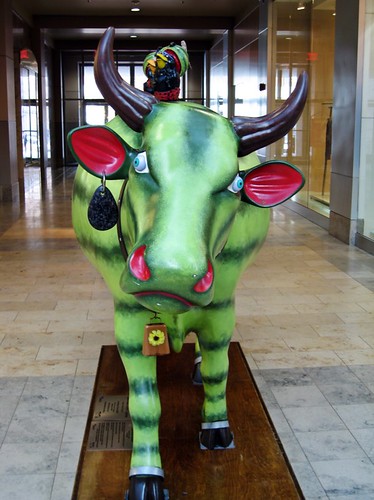
Photo Credit: Meet Watermelon Helen by Lady-bug/Lisa


Wednesday, August 16, 2006

A Small Group Can Make a Big Difference

I've been thinking a lot lately about everyday activism, things that we can all do to make the world a better place. Last month I wrote a post, Cocktails and School Supplies, about a fundraising event in Los Angeles that our friend Meg produced to collect money and school supplies for a school Covenant House (a shelter that houses homeless and runaway youth) is opening in Tijuana. Her event raised over $2,000!

Last weekend Meg, a group of young people from Covenant House, and other volunteers and Covenant House staff members went down to deliver the supplies. I thought I would share Meg's story of their trip as an example of the difference a small group of people can make, and the difference your check can make, even if it is small, when you donate to a charitable organzation. As Anna Lappé said in my interview with her, even if you feel like what you are doing is a drop in the bucket, your drop, combined with others, could be the one that makes the bucket spill over.
After being stopped going into Mexico by border guards who turned us around (apparently carrying cargo into Mexico without a permit is a no-no no matter how noble one's intentions) we rallied and headed to a border crossing to the East that let us through. We were late getting to the school and the kids had been anxiously waiting for us for hours so we rushed to set up and get the supplies organized in a way that would ensure that everyone left with something and all the supplies were used.

After about an hour we started the party and kids and their moms arrived to pick up clothes, do arts & crafts projects supervised by the Covenant House youth (we brought 19 CH youths with us on the trip) and of course pick up school supplies and backpacks! We were able to hand out 210 backpacks and had about 20 left over to leave with the school for children who missed the event. Each backpack was STUFFED with school supplies that many of you generously donated and the money that we raised allowed us to rent an extra van and bring over a thousand bottles of water along on the trip. We also filled the school's storage unit with supplies that will be used throughout the year.

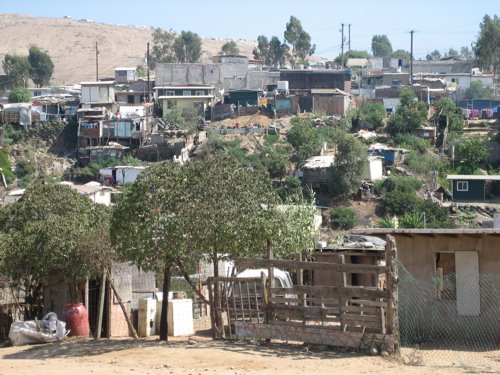
It is difficult to convey the true scope of these peoples' living situation. All the land around the school was originally landfill and part of the city dump. Some 20,000 people have colonized the area, erecting crude shelters out of scrap metal, wood and cardboard where they now live with their families and children.

The women who run the school are extraordinary and next up I'm hoping to raise enough money for them to build a permanent house on the site for volunteers who want to commit a year to living and working with the community.
If you would like to continue to support the school, contact Margaret Farrell (MFarrell@covca.org). She can accept donations and tell people how to get involved. If you want tips from Meg about how she made her fundraising event such a success, ask your questions in the comments of this post.

Photo Credit: "Outside the School" by Meg Martin.


Tuesday, August 15, 2006

Solutionary Women: Majora Carter (You Have to Hear Her Speak!)

Unfortunately, I didn't get to interview this week's Solutionary Woman, Majora Carter, but I did get to hear her speak last May at a Solutions Salon put on by the Ella Baker Center for Human Rights in Oakland. And she was incredible.

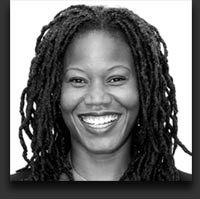
Majora is the the founder and Executive Director of Sustainable South Bronx, a nonprofit working to implement, "sustainable development projects for the South Bronx that are informed by the needs of the community and the values of Environmental Justice." She is a 2005 MacArthur "Genius" Fellow, and it shows.

You can watch the video of her speech (she gave the same talk at the Solutions Salon as at the TED Conference) on the TED site here.

You have to watch the video of her talk.

You just have to.

Photo: majora from John Berrie's Flickr photo stream.


Friday, August 11, 2006

Pink M&Ms & Fair Trade

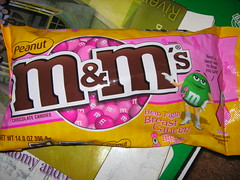
A friend recently forwarded an email to me about a promotion M&M will be continuing this year with the Susan G. Komen Breast Cancer Foundation. During September, October and November (October is Breast Cancer Awareness Month) you will be able to buy pink M&Ms and a percentage of your purchase will go to the Susan G. Komen Breast Cancer Foundation. The M&M web site still has 2005 dates on its promotions page, so I'm not absolutely sure that they will be repeating the campaign.

Either way, as someone who likes to bake cupcakes, I was pretty excited about using pink M&Ms, but then I decided to do a little research on Global Exchange and CorpWatch about M&M/Mars Incorporated.

I was disturbed to find out that according to Global Exchange,
In 2001, the U.S. State Department, the International Labor Organization and others reported child slavery on many cocoa farms in the Ivory Coast, source of 43% of the worlds cocoa. Subsequent research by the International Institute of Tropical Agriculture revealed some 284,000 children between the ages of 9 and 12 working in hazardous conditions on West African cocoa farms. Of these children, it was reported that some 12,000 child cocoa workers that had participated in the study were likely to have arrived in their situation as a result of child trafficking.
In response to the child slavery allegations, a CorpWatch article, via AlterNet, "Africa, the Dark Side of Chocolate" states that,
In 2001, following an avalanche of negative publicity, the major chocolate companies agreed to a voluntary protocol to eliminate child labor on West African farms rather than face binding legislation from Congress that would have required them to label their products "slave free" -- a label none of the major chocolate companies would have qualified for.
And according to Global Exchange, "while this is a positive step, the Protocol and Joint Statement leaves poverty untouched and make continued slavery a possibility because they don't insure fair wages for adult workers."

I'm not saying to boycott pink M&Ms (don't take money away from the Susan G. Komen Breast Cancer Foundation!), but consider participating in Global Exchange's M&M/Mars campaign and write, call, fax or email M&M/Mars Incorporated and ask them to start selling Fair Trade Certified chocolate.

TransFair USA also has a big list of companies that sell Fair Trade certified chocolate, if you would like a chocolate alternative.

Update 9/28/10:  Here's a more recent post about Fair Trade chocolate, Nine Fair Trade Chocolate Bars.

Photo credit: M&M's for Breast Cancer by Sadaqah


Wednesday, August 09, 2006

Find a Farmers' Market in Your Town

Daryl Hannah has a nice piece about the importance of buying your veggies at farmers' markets on her vlog, dh love life.

She links at the end to farmersmarket.com to help you find a farmer's market near you. They have five listed for my city, Oakland. I've listed them at the end of this post.

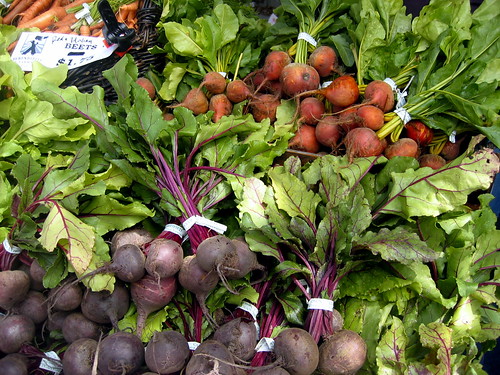
My husband and I went to a new farmers' market in Oakland, the Temescal Farmers' Market, a couple weeks ago, where I took the photos of the beets and tomatoes, and almost all of the produce there was organic, which was a real treat.

The Temescal Farmers' Market and is on Sundays, year-round, from 9 AM- 1 PM in the DMV Parking Lot at 5300 Claremont Ave.


Check out these heirloom tomatoes. Yum!

Farmers' Markets in Oakland via farmersmarket.com

East Oakland CFM
73rd Avenue & International Blvd
Oakland, CA 94621
Contact: Shene Bowie/Victor Johnson
(510) 638-1742
SEASONAL
Friday, 10:00 a.m.-2:00 p.m.


Kaiser Hospital-Oakland CFM
3801 Howe Street
Oakland, CA 94901
Contact: Allen Moy
(800) 949-FARM
YEAR-ROUND
Friday, 10:00 a.m.-2:00 p.m

Oakland Grand Lake CFM
Grand & Lakepark Way
Oakland, CA 94901
Contact: Barbara Ambler-Thomas
(800) 897-FARM
YEAR-ROUND
Saturday, 10:00 a.m.-2:00 p.m.

Oakland Mandela CFM
5th Street & Mandela Parkway
Oakland, CA 94610
Contact: David Roach
(510) 776-4178
YEAR-ROUND
Saturday, 10:00 a.m.-2:00 p.m.

Oakland Jack London Square CFM
Broadway & Embarcadero Streets
Oakland, CA 94520
Contact: Tom Dorn
(800) 949-FARM
YEAR-ROUND
Sunday, 10:00 a.m.-2:00 p.m.


Tuesday, August 08, 2006

Solutionary Women: Anna Lappé of Grub

I was thrilled when Ilyse Hogue, contacted me to say that her friend Anna Lappé was in town to promote her new book, Grub: Ideas for an Urban Organic Kitchen, and might be available for an interview. You can hear the interview on the Big Vision Podcast, or read the transcript below. In addition to co-authoring Grub with Bryant Terry, Anna also co-authored Hope's Edge with her mother Frances Moore Lappé and is a co-founder, with her mother, of the Small Planet Fund, and a founding principal of the Small Planet Institute, based in Cambridge Massachusetts.

Anna:
"Grub" is our word for food that's local, that's sustainable, and that's grown with fairness from all along the way, from the seed to the table. And when we, my co-author Bryant Terry and I, were talking about doing this book project together, and we were trying to think about, is there one word out there to describe the food that we talk about in the book, and that we encourage people to support and to buy and to eat, and we celebrate? We just didn't feel like any one word really summed it up. For instance, "organic". A lot of people have a lot of various associations with the word organic, and for some people organic implies food that's for a certain kind of person, that makes a certain amount of money and lives in a certain area, and we also know that organic only tells you a little piece about your food. It only tells you about how that food was produced, but it doesn't tell you how far away it was produced, it doesn't tell you how the farm workers were treated and if the farmer was paid a fair price. It doesn't tell you any of that. And so organic didn't cut it, and there was no other word out there that summed up the food that we talk about in our book, Grub. So "grub" became our kind of catchall term for those three things, for kind of the values of local, of sustainable, and of fairness. And also I really like the word "grub" to talk about this food because, to me, grub has been used forever in a slangy way to talk about food, and it has always, to me, connoted food that's kind of everybody's food, and kind of down-home country cooking, and home cooking. We really like the idea that this food we're talking about isn't precious, and it's food that should be accessible to everybody. You know, there's no reason why, especially in a country like the U.S., we all shouldn't have access to this food.

Britt:
What are some of the Grub success stories that you've seen?

Anna:
Well, in the past couple months, I've been to 28 cities, or something like that, all across the country. And really in every single city I have been meeting incredible people and learning about local efforts that I didn't even know existed when I was doing the research for Grub and so it's everything from, for instance, just across the Bay in Berkeley, the city of Berkeley hiring Anne Cooper to be the head of Berkeley Unified School Districts' food service, and to try to really revolutionize how kids eat. And actually instead of having them eat high calorie, high fat, high sugar, high salt, bad-for-you food, to actually bring in fresh food, and connect with local farmers and farms. And so Anne Cooper and Berkeley is a great example for me of the success story, but it's not just in Berkeley, where people might think, "Oh yeah, of course, Berkeley, you know, of course they're doing that in Berkeley." There are now more than 200 school districts all across the country that are doing this kind of thing, and in a lot of the cities that I went to, I met people in school districts that are bringing in healthy foods. So that's just one example. I threw a Grub party at a friend's farm in rural North Carolina that was started by four friends who were living in Brooklyn, living the city life, and decided to take over the family farm in North Carolina, and have totally taken over this farm, and made it organic, selling to their neighbors, selling to their community. That, to me, is another success story of young people who are realizing how important it is to keep the farms that are growing food, growing food in a healthy way, to keep them alive, and thriving. But I could go on and on, I mean everywhere I went, there were amazing stories, and I kind of feel like now I could open up an atlas, or a map of the United States, and point to anywhere, and go there and find people who are doing this work of really trying to insure that there's healthy food available for everybody.

Britt:
What brought you to this work? Why did you write Grub?

Anna:
The genesis of Grub in some ways goes way, way back, but it some ways it also was a direct result of having done this book project with my mother, Francis Moore Lappé, we wrote a book that came out in 2002 called Hope's Edge, and that book was our chronicling this incredible journey we took to Bangladesh, India, Brazil, Poland, Kenya, France, and to places in the U.S. And in that book we were really interested in hearing the voices, the stories of people around the world that were addressing the root causes of hunger and poverty. We met some of the most incredible social movement leaders, and met Wangari Mathai, this incredible environmental leader in Kenya who ended up winning the Nobel Peace Prize several years ago.

And so after that experience, of writing that book, and talking to those people around the world and coming home, I had moved back to Brooklyn, New York, and I was thinking about what I wanted to do for my next project. One of the things that kept coming up for me is I was thinking about, what did I learn? What are some of the things that I learned in writing the book? I kept hearing from people around the world how much of an impact the United States has on the rest of the world. Well, we all know that probably, but especially in terms of food, especially in terms of hunger, especially in terms of the fate of farmers around the world. The policies that get set here, the ways in which we either have regulations and standards that corporations have to follow, or don't. The way U.S. consumers shop for food, the choices that we make about the food we buy, all of these things are having a ripple effect, not just in our own bodies, in our own country, but all around the world. And so it became really important in my mind for me to think about another project that would actually get me looking at and get me talking about what's happening in this country, with the awareness that what we do here as individuals, as consumers, as citizens, has this global effect. That often, I think, the percentage of Americans who have passports is like, eight percent of Americans have passports. And so you think about, most of us also aren't leaving the country; most of the news we get from around the world is very narrowly focused on a few hot spots, that's it. And so I think it's easy to forget that we have this global impact as a nation of individuals, right? So just trying to get us to really see that.

Britt:
How did you connect with your Grub co-author?

Anna:
I met Bryant Terry, who became my co-author, actually, very fortuitously. I had just moved to Brooklyn, New York, and I knew some people who were part of this organization called The Active Element Foundation, and they had just published a book called The Future 500. It was a listing, really, of 500 youth-led activist organizations all around the country, at least one in every single state, and there were all kinds of really incredible projects. So one afternoon I was home in this new neighborhood of mine in Brooklyn and I thought I would flip through The Future 500 and see who was doing stuff that was interesting to me, and that was into the kind of issues that I was working on, and that also if anybody happened to live near me, or be working near me, that would be an added bonus.

And so I got to this description of this organization called b-healthy! which stands for Build Healthy Eating and Lifestyles to Help Youth. And I was reading it, and the organization works with low-income young people in New York City, and was an organization that was teaching young people about how to cook healthy food. But going beyond that, not just how to cook that food, but why should they, and why should they care? And then even going beyond that, and getting the young people to then ask the next question, which is, "Why is it that in my low-income neighborhood in the Bronx, or in Queens, or in East New York, it's easy for me to find a bottle of alcohol, but it's really hard for me to find an organic fresh local tomato?" Meanwhile in Union Square, and in all these places throughout the city, it's really easy to find these amazing local produce. So kind of getting them to ask those questions then getting them to become leaders in fighting for those foods and fighting for that in their community.

So I thought, "Wow, this sounds like an amazing organization," and then I read about the founder and it turned out that he lived five blocks away from me in this neighborhood. So, I mustered up the courage to send him an email, and said, "You don't know me, but I'd really love to meet you and talk about your work." It turns out that he had actually read Hope's Edge, knew about my work, and so we ended up meeting for coffee, and we just kind of struck up a friendship first, and then over many conversations we had this idea of working on this book together.

Britt: What do you want people listening to this podcast to do? What is one small action that they can take?

Anna:
Well, I think the good thing about this work, and about really the message of Grub the book, and of my work, is that I think a lot of people are constantly asking me the question of "What can I do?" And I think the good news is that there's a lot we can do. Of course, the bad news flip side to that is because so much is going wrong, there's a lot we can do. But I think just to get people to realize that we never know the impact of our actions. A lot of people feel like, "Well, whatever I do is so inconsequential it won't make a difference." But I've met so many people who their step, their action, their activism, their voice has been a tipping point in something really much larger than they ever dreamed possible happening.

And so I often talk about that metaphor we have where people downplay their potential impact by saying that they'd feel like they were just a drop in the bucket. And I was thinking about it. When you think about being a drop in the bucket and that sense of futileness that that conveys, well, it's really I think more that people feel like they're like a drop in the desert, because it's that feeling of it dissipating even before it touches ground. Because if you think about a bucket, and especially a very small bucket, but if you think about the idea of that bucket as a container of your drops, and your one drop, well, you could be the drop that pushes the water over the edge, and that actually a bucket can fill up really fast. And so I think part of my work with Hope's Edge and with Grub is getting people to see the bucket, to realize that they're not alone, and that all of these drops are not just dissipating, that we're actually adding to each other, and that in the same way that there can be this negative cycle and this momentum of negativity. There's also this momentum of positive action, that now that we have. For instance, as I mentioned before, we have these 200 school districts that are connecting with area farms to bring in fresh local food into the schools. Well, that number is only increasing, and you think about farmers' markets. In the early seventies in this country there were just a few hundred farmers' markets left, and there are now more than 4, 000 farmers' markets around the country. And so again, there's only going to be more farmers' markets if we keep this momentum going.

So, I think partly what I hope people do is just kind of reframe their own sense of power and realize that actually we have a lot more power than we think and that part of the strategy, part of the dynamic of the status quo is to try to get us to not see that power and accept the way things are. So whatever you can do to realize your own power, I say, is an important step because I don't think there's any one way of life, that your life has to look a certain way to really be part of making a difference. I think that I certainly have friends that cross the whole spectrum in terms of what they're choosing to do with their personal and professional lives, and I still think of them as very much change makers. So whether it's just thinking about it on a daily basis, food is one of those things that you do buy every day, probably, or you eat it every day, if you're not buying it every day, and to realize that every time we go to the supermarket, or go to a farmers' market, or go to a food coop, that the choices that we make about food are really a vote for the world that we want. So every time I buy organic produce, for instance, I feel like I'm part of saying, "I'm sick and tired of 1.2 billion pounds of pesticides being sprayed every year in this country; I don't want to buy into it," literally. I think it's been a very long time since I've bought, for instance, a Coca-Cola product, although it gets harder now that they make Dasani, and they own Odwalla, and they do all these things. But I try not to buy, for instance, Coca-Cola, and until I think that their company has better business practices, I plan not to. So that's just one thing, one very simple thing that we all can do, I mean, we all do it anyway, and whether we like it or not, our dollars are casting a vote, and it's either a vote that you're consciously making, or you're unconsciously making. And so that's one thing that we all do every day anyway

And then I think that, again, there's no one right answer about, beyond that, what people choose to do. I think any way in which we engage with the world, whether it's just having conversations with our friends, or reading a book that we think is interesting, or will be informative, or reading the newspaper, or any of those things are important, as well as if you do have the time and you want to be more engaged, there are these thousands of ways to get engaged. That's also what is so inspiring for me to see, all these people around the country that are really defining "activism" in a whole variety of ways so that it can mean volunteering at your kid's school, or it can mean trying to run for office, or it can mean a whole range of different things. It doesn't have to look one certain way.

Britt :
Are there any books that have particularly inspired you that you can recommend?

Anna:
Well, some of my favorite books, and I should for full disclosure say that this is an organization whose board I'm about to join in a month or two, which I'm really excited about, but some of my favorite books that have been really influential for me are from an organization called the Center for Media and Democracy. And they're called, Toxic Sludge is Good For You, is one of them, and Trust Us, We're Experts is another. Just something about those books and how they helped me understand how to see the world with fresh eyes, and how to see how the ways in which industry shapes public perception, and about a whole range of different issues through their public relations and through the way in which they spin themselves, and the media, has been really helpful for me in thinking through a lot of these issues. I mean, I sort of see it like, I just was talking to a friend of mine who's an ethnobotanist, and he was taking us through Central Park on an edible walking tour of Central Park. And he was showing us all the things you could eat in Central Park. And basically it seemed like you could pretty much eat anything, but don't hold me to that! But basically we were eating all these different leaves, off of all these different trees, and he was pointing all of them out. He knew the names of everything, and he knew exactly their medicinal purposes, and their healing purposes, and how they tasted, everything. And there was this way in which when he walked through Central Park that he just saw the trees for what they were, he had names for them, he just could see right through them in some ways.

And I think about how through those books, Toxic Sludge is Good For You, and other books that I've read, and Marion Nestle's work, who, she wrote Food Politics and Safe Food and her latest book, What to Eat, or Eric Schlosser's books, and through my own research, I mean, I feel like I can walk into the supermarket now and I don't see the veneers of the labels. I can kind of penetrate the products in a way that I didn't before, just like my ethnobotanist friend can do in Central Park. It's a liberating feeling as opposed to an oppressive one, and it's like, "Ok, I know that in a supermarket of these 40,000 items, about half of them come from ten corporations, and I know that of these 40,000 items I can pretty much guess which ones, about three quarters of them, will have genetically modified organisms in them and, ok, I can pretty much know which ones are going to have high fructose corn syrup, or the things I want to stay away from." So it's sort of about kind of exposing ourselves to that information to figure out a way to penetrate the world with new eyes.

Britt:
Is there anything else you want people to know about Grub?

Anna:
Well, one of the things that we really stress in our book is that eating this food and sharing it with your friends and family is a fun thing to do, and so the menus in Grub that Bryant created are oriented around dinner parties. We include suggested soundtracks of music to listen to while you're cooking and while you're having fun, and that ultimately it's also about feeling good. Since I got into this work through Hope's Edge and now through Grub, I don't always eat the perfect diet by any means, but I know how good it feels when I do. And that's something that I think is really a really critical point that we stress in the book and in our work.