Tuesday, August 08, 2006

Solutionary Women: Anna Lappé of Grub

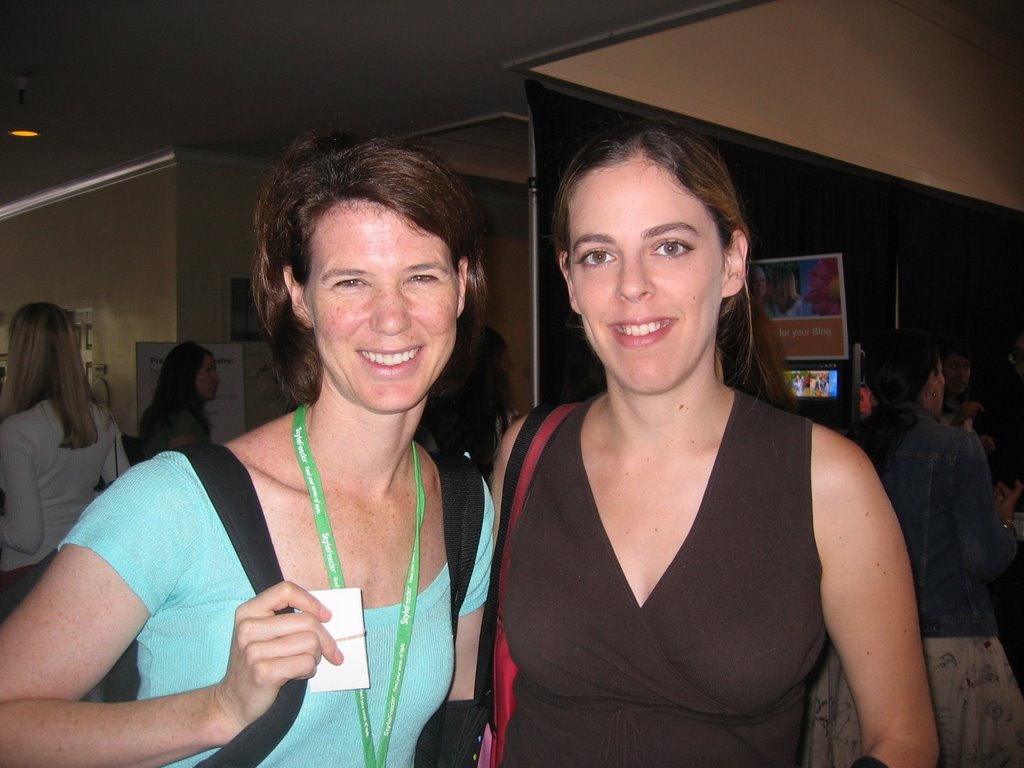
I was thrilled when Ilyse Hogue, contacted me to say that her friend Anna Lappé was in town to promote her new book, Grub: Ideas for an Urban Organic Kitchen, and might be available for an interview. You can hear the interview on the Big Vision Podcast, or read the transcript below. In addition to co-authoring Grub with Bryant Terry, Anna also co-authored Hope's Edge with her mother Frances Moore Lappé and is a co-founder, with her mother, of the Small Planet Fund, and a founding principal of the Small Planet Institute, based in Cambridge Massachusetts.

Anna:
"Grub" is our word for food that's local, that's sustainable, and that's grown with fairness from all along the way, from the seed to the table. And when we, my co-author Bryant Terry and I, were talking about doing this book project together, and we were trying to think about, is there one word out there to describe the food that we talk about in the book, and that we encourage people to support and to buy and to eat, and we celebrate? We just didn't feel like any one word really summed it up. For instance, "organic". A lot of people have a lot of various associations with the word organic, and for some people organic implies food that's for a certain kind of person, that makes a certain amount of money and lives in a certain area, and we also know that organic only tells you a little piece about your food. It only tells you about how that food was produced, but it doesn't tell you how far away it was produced, it doesn't tell you how the farm workers were treated and if the farmer was paid a fair price. It doesn't tell you any of that. And so organic didn't cut it, and there was no other word out there that summed up the food that we talk about in our book, Grub. So "grub" became our kind of catchall term for those three things, for kind of the values of local, of sustainable, and of fairness. And also I really like the word "grub" to talk about this food because, to me, grub has been used forever in a slangy way to talk about food, and it has always, to me, connoted food that's kind of everybody's food, and kind of down-home country cooking, and home cooking. We really like the idea that this food we're talking about isn't precious, and it's food that should be accessible to everybody. You know, there's no reason why, especially in a country like the U.S., we all shouldn't have access to this food.

Britt:
What are some of the Grub success stories that you've seen?

Anna:
Well, in the past couple months, I've been to 28 cities, or something like that, all across the country. And really in every single city I have been meeting incredible people and learning about local efforts that I didn't even know existed when I was doing the research for Grub and so it's everything from, for instance, just across the Bay in Berkeley, the city of Berkeley hiring Anne Cooper to be the head of Berkeley Unified School Districts' food service, and to try to really revolutionize how kids eat. And actually instead of having them eat high calorie, high fat, high sugar, high salt, bad-for-you food, to actually bring in fresh food, and connect with local farmers and farms. And so Anne Cooper and Berkeley is a great example for me of the success story, but it's not just in Berkeley, where people might think, "Oh yeah, of course, Berkeley, you know, of course they're doing that in Berkeley." There are now more than 200 school districts all across the country that are doing this kind of thing, and in a lot of the cities that I went to, I met people in school districts that are bringing in healthy foods. So that's just one example. I threw a Grub party at a friend's farm in rural North Carolina that was started by four friends who were living in Brooklyn, living the city life, and decided to take over the family farm in North Carolina, and have totally taken over this farm, and made it organic, selling to their neighbors, selling to their community. That, to me, is another success story of young people who are realizing how important it is to keep the farms that are growing food, growing food in a healthy way, to keep them alive, and thriving. But I could go on and on, I mean everywhere I went, there were amazing stories, and I kind of feel like now I could open up an atlas, or a map of the United States, and point to anywhere, and go there and find people who are doing this work of really trying to insure that there's healthy food available for everybody.

Britt:
What brought you to this work? Why did you write Grub?

Anna:
The genesis of Grub in some ways goes way, way back, but it some ways it also was a direct result of having done this book project with my mother, Francis Moore Lappé, we wrote a book that came out in 2002 called Hope's Edge, and that book was our chronicling this incredible journey we took to Bangladesh, India, Brazil, Poland, Kenya, France, and to places in the U.S. And in that book we were really interested in hearing the voices, the stories of people around the world that were addressing the root causes of hunger and poverty. We met some of the most incredible social movement leaders, and met Wangari Mathai, this incredible environmental leader in Kenya who ended up winning the Nobel Peace Prize several years ago.

And so after that experience, of writing that book, and talking to those people around the world and coming home, I had moved back to Brooklyn, New York, and I was thinking about what I wanted to do for my next project. One of the things that kept coming up for me is I was thinking about, what did I learn? What are some of the things that I learned in writing the book? I kept hearing from people around the world how much of an impact the United States has on the rest of the world. Well, we all know that probably, but especially in terms of food, especially in terms of hunger, especially in terms of the fate of farmers around the world. The policies that get set here, the ways in which we either have regulations and standards that corporations have to follow, or don't. The way U.S. consumers shop for food, the choices that we make about the food we buy, all of these things are having a ripple effect, not just in our own bodies, in our own country, but all around the world. And so it became really important in my mind for me to think about another project that would actually get me looking at and get me talking about what's happening in this country, with the awareness that what we do here as individuals, as consumers, as citizens, has this global effect. That often, I think, the percentage of Americans who have passports is like, eight percent of Americans have passports. And so you think about, most of us also aren't leaving the country; most of the news we get from around the world is very narrowly focused on a few hot spots, that's it. And so I think it's easy to forget that we have this global impact as a nation of individuals, right? So just trying to get us to really see that.

Britt:
How did you connect with your Grub co-author?

Anna:
I met Bryant Terry, who became my co-author, actually, very fortuitously. I had just moved to Brooklyn, New York, and I knew some people who were part of this organization called The Active Element Foundation, and they had just published a book called The Future 500. It was a listing, really, of 500 youth-led activist organizations all around the country, at least one in every single state, and there were all kinds of really incredible projects. So one afternoon I was home in this new neighborhood of mine in Brooklyn and I thought I would flip through The Future 500 and see who was doing stuff that was interesting to me, and that was into the kind of issues that I was working on, and that also if anybody happened to live near me, or be working near me, that would be an added bonus.

And so I got to this description of this organization called b-healthy! which stands for Build Healthy Eating and Lifestyles to Help Youth. And I was reading it, and the organization works with low-income young people in New York City, and was an organization that was teaching young people about how to cook healthy food. But going beyond that, not just how to cook that food, but why should they, and why should they care? And then even going beyond that, and getting the young people to then ask the next question, which is, "Why is it that in my low-income neighborhood in the Bronx, or in Queens, or in East New York, it's easy for me to find a bottle of alcohol, but it's really hard for me to find an organic fresh local tomato?" Meanwhile in Union Square, and in all these places throughout the city, it's really easy to find these amazing local produce. So kind of getting them to ask those questions then getting them to become leaders in fighting for those foods and fighting for that in their community.

So I thought, "Wow, this sounds like an amazing organization," and then I read about the founder and it turned out that he lived five blocks away from me in this neighborhood. So, I mustered up the courage to send him an email, and said, "You don't know me, but I'd really love to meet you and talk about your work." It turns out that he had actually read Hope's Edge, knew about my work, and so we ended up meeting for coffee, and we just kind of struck up a friendship first, and then over many conversations we had this idea of working on this book together.

Britt: What do you want people listening to this podcast to do? What is one small action that they can take?

Anna:
Well, I think the good thing about this work, and about really the message of Grub the book, and of my work, is that I think a lot of people are constantly asking me the question of "What can I do?" And I think the good news is that there's a lot we can do. Of course, the bad news flip side to that is because so much is going wrong, there's a lot we can do. But I think just to get people to realize that we never know the impact of our actions. A lot of people feel like, "Well, whatever I do is so inconsequential it won't make a difference." But I've met so many people who their step, their action, their activism, their voice has been a tipping point in something really much larger than they ever dreamed possible happening.

And so I often talk about that metaphor we have where people downplay their potential impact by saying that they'd feel like they were just a drop in the bucket. And I was thinking about it. When you think about being a drop in the bucket and that sense of futileness that that conveys, well, it's really I think more that people feel like they're like a drop in the desert, because it's that feeling of it dissipating even before it touches ground. Because if you think about a bucket, and especially a very small bucket, but if you think about the idea of that bucket as a container of your drops, and your one drop, well, you could be the drop that pushes the water over the edge, and that actually a bucket can fill up really fast. And so I think part of my work with Hope's Edge and with Grub is getting people to see the bucket, to realize that they're not alone, and that all of these drops are not just dissipating, that we're actually adding to each other, and that in the same way that there can be this negative cycle and this momentum of negativity. There's also this momentum of positive action, that now that we have. For instance, as I mentioned before, we have these 200 school districts that are connecting with area farms to bring in fresh local food into the schools. Well, that number is only increasing, and you think about farmers' markets. In the early seventies in this country there were just a few hundred farmers' markets left, and there are now more than 4, 000 farmers' markets around the country. And so again, there's only going to be more farmers' markets if we keep this momentum going.

So, I think partly what I hope people do is just kind of reframe their own sense of power and realize that actually we have a lot more power than we think and that part of the strategy, part of the dynamic of the status quo is to try to get us to not see that power and accept the way things are. So whatever you can do to realize your own power, I say, is an important step because I don't think there's any one way of life, that your life has to look a certain way to really be part of making a difference. I think that I certainly have friends that cross the whole spectrum in terms of what they're choosing to do with their personal and professional lives, and I still think of them as very much change makers. So whether it's just thinking about it on a daily basis, food is one of those things that you do buy every day, probably, or you eat it every day, if you're not buying it every day, and to realize that every time we go to the supermarket, or go to a farmers' market, or go to a food coop, that the choices that we make about food are really a vote for the world that we want. So every time I buy organic produce, for instance, I feel like I'm part of saying, "I'm sick and tired of 1.2 billion pounds of pesticides being sprayed every year in this country; I don't want to buy into it," literally. I think it's been a very long time since I've bought, for instance, a Coca-Cola product, although it gets harder now that they make Dasani, and they own Odwalla, and they do all these things. But I try not to buy, for instance, Coca-Cola, and until I think that their company has better business practices, I plan not to. So that's just one thing, one very simple thing that we all can do, I mean, we all do it anyway, and whether we like it or not, our dollars are casting a vote, and it's either a vote that you're consciously making, or you're unconsciously making. And so that's one thing that we all do every day anyway

And then I think that, again, there's no one right answer about, beyond that, what people choose to do. I think any way in which we engage with the world, whether it's just having conversations with our friends, or reading a book that we think is interesting, or will be informative, or reading the newspaper, or any of those things are important, as well as if you do have the time and you want to be more engaged, there are these thousands of ways to get engaged. That's also what is so inspiring for me to see, all these people around the country that are really defining "activism" in a whole variety of ways so that it can mean volunteering at your kid's school, or it can mean trying to run for office, or it can mean a whole range of different things. It doesn't have to look one certain way.

Britt :
Are there any books that have particularly inspired you that you can recommend?

Anna:
Well, some of my favorite books, and I should for full disclosure say that this is an organization whose board I'm about to join in a month or two, which I'm really excited about, but some of my favorite books that have been really influential for me are from an organization called the Center for Media and Democracy. And they're called, Toxic Sludge is Good For You, is one of them, and Trust Us, We're Experts is another. Just something about those books and how they helped me understand how to see the world with fresh eyes, and how to see how the ways in which industry shapes public perception, and about a whole range of different issues through their public relations and through the way in which they spin themselves, and the media, has been really helpful for me in thinking through a lot of these issues. I mean, I sort of see it like, I just was talking to a friend of mine who's an ethnobotanist, and he was taking us through Central Park on an edible walking tour of Central Park. And he was showing us all the things you could eat in Central Park. And basically it seemed like you could pretty much eat anything, but don't hold me to that! But basically we were eating all these different leaves, off of all these different trees, and he was pointing all of them out. He knew the names of everything, and he knew exactly their medicinal purposes, and their healing purposes, and how they tasted, everything. And there was this way in which when he walked through Central Park that he just saw the trees for what they were, he had names for them, he just could see right through them in some ways.

And I think about how through those books, Toxic Sludge is Good For You, and other books that I've read, and Marion Nestle's work, who, she wrote Food Politics and Safe Food and her latest book, What to Eat, or Eric Schlosser's books, and through my own research, I mean, I feel like I can walk into the supermarket now and I don't see the veneers of the labels. I can kind of penetrate the products in a way that I didn't before, just like my ethnobotanist friend can do in Central Park. It's a liberating feeling as opposed to an oppressive one, and it's like, "Ok, I know that in a supermarket of these 40,000 items, about half of them come from ten corporations, and I know that of these 40,000 items I can pretty much guess which ones, about three quarters of them, will have genetically modified organisms in them and, ok, I can pretty much know which ones are going to have high fructose corn syrup, or the things I want to stay away from." So it's sort of about kind of exposing ourselves to that information to figure out a way to penetrate the world with new eyes.

Britt:
Is there anything else you want people to know about Grub?

Anna:
Well, one of the things that we really stress in our book is that eating this food and sharing it with your friends and family is a fun thing to do, and so the menus in Grub that Bryant created are oriented around dinner parties. We include suggested soundtracks of music to listen to while you're cooking and while you're having fun, and that ultimately it's also about feeling good. Since I got into this work through Hope's Edge and now through Grub, I don't always eat the perfect diet by any means, but I know how good it feels when I do. And that's something that I think is really a really critical point that we stress in the book and in our work.


Wednesday, August 02, 2006

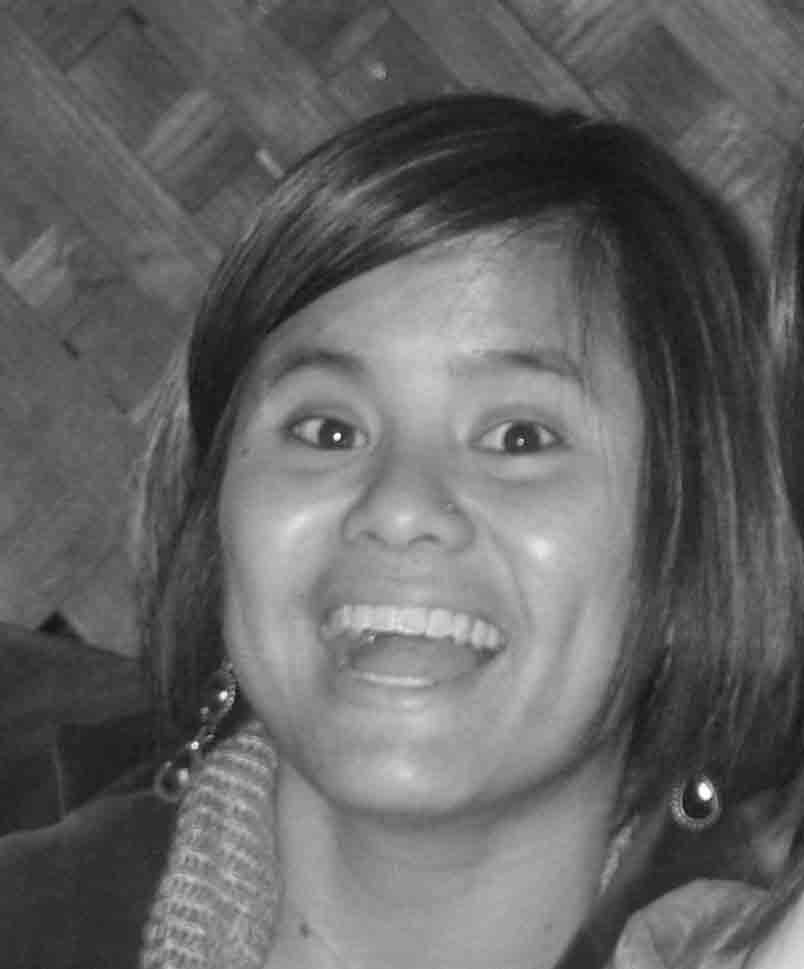
Solutionary Women: Viet-Ly Nguyen

After a little hiatus, I am resuming my Solutionary Women series, profiles of women who are creating social change.

This week's Solutionary woman is Viet-Ly Nguyen, a former co-worker from Streetside Stories, who I interviewed for my Big Vision Podcast last winter. Streetside Stories is a San Francisco based arts education nonprofit that actually just started a blog, so give them a little link love!

Here is a partial transcript from my interview with Viet-Ly:

Viet-Ly: Streetside Stories is a nonprofit literacy arts program based in San Francisco and we work with the middle schools -- the public middle schools -- of the San Francisco Unified School District. There are a couple different parts to Streetside Stories and the one I work with is the Storytelling Exchange. I work with a co-facilitator and we visit sixth grade language arts and social studies classes for two-week writing workshops. Our writing workshops focus on autobiographical writing and storytelling, and we actually do a lot of storytelling performance and theater with the students. It's really neat because the students work on one autobiographical story for two weeks, and at the end they have one complete story that they can call their very own. We publish a quarter of all of the students' stories in our annual anthology, which you can find in San Francisco bookstores [and on the Streetside web site]. It's really neat because they are published at the age of eleven or twelve and their picture is in it, and they show all of their family and friends.

Britt Bravo: Are there any young people that you've worked with who were super-challenging in the class, either academically or behaviorally, and you saw that arts education made a difference to them?

Viet-Ly: There was one student that I worked with, a sixth-grader, who had gone through a lot of troubling things. His cousin had just recently been shot and killed, accidentally, and he actually got to write about that. The story is one of the most powerful stories I've ever read and it just really shakes you up because he's very honest about the story. What happened was that he was walking along the street and they found a gun, and they went back to their grandma's house, and they decided to play with the gun, and the gun went off accidentally and shot and killed his cousin. He'd been traumatized throughout the whole year by that, and he finally got to write about it.

At one moment, I just remember he kind of just stopped. He's a big kid, people see him as a bully, everybody is scared of him, but also wants to be his friend because they want him on their side. He just took a moment and stopped and he was like, "Wow! Thank you, Viet-Ly!" Just very sincere. That you don't see a lot from sixth-graders: when they take the time to really say, "Thank you", or say something that's on their mind or, "It was nice to meet you". I actually had that again student this year because he repeated the sixth grade, and this year he got to write about repeating the sixth grade, what his decision was about that, and what he needed to decide to do from that point on to be successful.

Actually, we went to a different school later on in the school year and I actually saw him in the schoolyard of that new school. He had gotten expelled from the other school and came to this other school. He was like, "You know, Viet-Ly, I checked all my classes, and the teachers I have right now, they don't have Streetside Stories so I'm bummed."

Britt: What part of your work as a teacher for Streetside Stories brings you the most joy?

Viet-Ly: I'll hear students say, "I really want to thank Streetside Stories for coming here because if you didn't, then I would just keep this story in my heart, and it would be really heavy, and now I get to write about it." Hearing things like that, making it possible for students to write about stories, guiding them along the way, it's just a small impact, and it might not last forever, but at that point it's very crucial.

Britt: What are some of the biggest challenges of the work that you do?

Viet-Ly: The biggest challenge is that some of the students have very low writing skills. They really do want to tell a story, but sometimes it's very difficult for them to begin because they're really intimidated by the writing process. One of our biggest challenges is to get them to just write. Trying to get those stories out and on paper for them is probably the biggest challenge.

Britt: What do you see as the next step for you?

Viet-Ly: I actually realized this year that being in a two-week workshop is really amazing and great, but I also wanted to know how they were doing throughout the whole entire year. So, I decided that I want to be a classroom teacher, and I've applied to school. Actually, I find out pretty soon, but I want to be a middle school Language Arts/Social Studies teacher. [Update: Viet-Ly was accepted into a teach credential program for this fall].

I also think that it was very surprising to me to work in the San Francisco public schools and not really encounter any teachers of color in the public schools. That really baffled me. So I think it's really important for teachers of color to be in the classroom, especially in middle school. Maybe there are more in elementary or high school, but in the middle school, we just didn't run into any, especially with language arts or social studies. So, I think I want to play that role; I want to be that role, be a support for the students throughout the whole time and see them grow and learn for an entire year.

Britt: Can you talk a little more about why you think it's important for there to be teachers of color for young people in the San Francisco public middle schools?

Viet-Ly: I really think that a lot of classrooms I've been to that are taught by white teachers, there's a certain kind of environment, or a certain kind of atmosphere that's set, and there have been some situations where I've seen that a student's home life, or a student's home culture is not necessarily valued in the classroom. I really think it's important to combine, or kind of interweave, a student's home life and a student's school life together, and just make it a whole process, a whole life. It's important for students to be comfortable in the classroom, and to go home and be themselves, and also come to school and be themselves, and feel safe, and feel supported in the school.

A lot of that has to do with language development, too, that I've seen. Students will say that if they're speaking their home language in the classroom, a student or a teacher will say, "Speak English! Speak English!" The students get offended. They're like, "Why can't I speak my home language?" It gets shoved to the side. I want to value a student's process of learning English, because I think it's really important, but at the same time, I want to keep their home language alive.

I think students having more teachers of color in the public schools is also important so that students can see a part of themselves in front of the classroom and see people of color in positions as an administrator or as a teacher. So not only can they be a student, but they can also be a teacher and create that cycle of, "I get an education, and then go back to education," because that needs to continue happening.


Britt: Why do you think there aren't as many teachers of color in the public schools?

Viet-Ly: I have no idea. [Laughter] I don't know. Maybe it starts from students of color not having a great experience in the public education system so they kind of wonder, "Why would I go back there?" It's not the most revered profession in terms of salary and praise, so...I actually have no idea, but I want to change it.

If you know a Solutionary Woman who works for a nonprofit or NGO who you think I should profile, please email me at britt at brittbravo dot com with their name, organization and contact info.


Tuesday, August 01, 2006

Girls for a Change: Call for Mentors

Girls for a Change, a nonprofit that pairs women with middle and high school girls to help them create social change in their communities, is looking for mentors in the Bay Area and Phoenix.

Courtney Macavinta, coauthor of RESPECT: A Girl's Guide to Getting Respect & Dealing When Your Line is Crossed, talks about her experience as a GFC mentor on her blog:

One of the most amazing experiences I get to have week after week is coaching Girls For A Change Team 13 at Overfelt High School in San Jose. Through this awesome after-school program, these young women are becoming true social change agents.

Their project this year is to prevent teen pregnancy by educating girls about: how to make informed choices, how to protect against the risks that come with being sexually active, and how to get support and resources along the way.

Already they have invited experts to their meetings to educate them about pregnancy and STDs. They came up with a timeline for developing their program and planning a workshop presentation. They have narrowed down the three points they will cover. They even got a grant to fund their project! Every meeting, they are making decisions, leading, listening to one another, and forming strong bonds of sisterhood.

Mostly, they are discovering as one team member, Thalia, put it: "I'm learning that teen girls can get together and change their community."

Mentors can be a:

Girl Action Team Coach (10 -15 hours per month, September - May) who co-facilitates teams of 5-10 girls as they identify challenges in their communities and create projects to help solve those challenges,

or a Girl Action Team Consultant (10-20 hours per year starting anytime) to provide professional support to the girls as they plan and implement projects.

To volunteer in the Bay Area, contact contact Patty Torres at patricia AT girlsforachange.org.

To volunteer in Phoenix, contact Carrie Ellett, at carrie AT girlsforachange.org.

The GFC blog, InHer City, is also looking for girls to be guest authors.

Illustration credit: Logo via Girls for a Change.


Sunday, July 30, 2006

Tips for Disaster Relief Bloggers

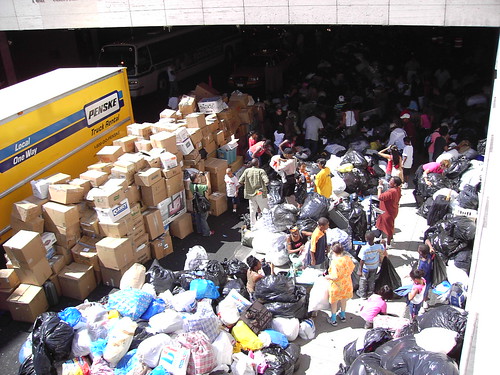
The last BlogHer Conference session I went to yesterday, before leaving early to go to a wedding, was about using blogging for Community Assistance. The panelists were Grace Davis, who created the Hurricane Disaster Direct Relief blog; Sara Ford, a native of Waveland Mississippi whose posts about Waveland after Hurricane Katrina turned her into a disaster relief center of one; and Dina Mehta who set up a community blog, Mumbai Help, after the tsunami, that grew in three days from a few bloggers to 250 contributors. They also set up a wiki.

Here are some of the tips they gave for other disaster relief bloggers:

Tips from Grace

1. Your blog needs to be a place to “help the helper.” Most times during a disaster, the survivors do not have power, so your blog isn’t for them, it is for the people on the outside who want to help them.

2. Because your readers are looking to your blog for authentic places to give their time and resources to, you need to be sure that your sources are authentic. Grace relied a lot on an on the ground contact in New Orleans, Victoria Powell, to call her and let her know what resources were needed. If Grace got a call from a source that she wasn’t sure was real, she would call the local fire department for more information.

3. She steered away from using a PayPal button and worked only with donations of supplies and equipment.

4. People want to hear real people’s stories and see photos of the town they are giving to, so she posted stories and had a Flickr photo stream.

5. Work with traditional media and blogs to get the word out about your work.

Tips from Sara

1. Provide daily update posts.

2. Sara also had a Flickr account. People wanted to see how her town looked before, as well as after the hurricane.

3. Be honest about what you can and cannot help with. When she began getting up to 100 requests a day for survivor information, Sara directed people to survivor sites and other resources.

4. Only ask for and accept specific clothing, or be prepared for people to give you tons of everything. It took her 10 hours, by herself, to sort through all of the clothing donations that she received.

5. Medical supplies are always needed, including everyday supplies like Band-Aids, antacid, sunscreen and bug repellant.

6. Sara’s readers requested a PayPal account so that they could donate money for her to distribute to local organizations when she delivered supplies. She said she wished that she had put it up sooner.

Tips from Dina

1. If you want to help, you can make a difference.

2. Using Blogger.com for their community blog made it very easy for people to post, even people who had never blogged before. She called blogs, wikis and Skype/VoIP, “technology with heart,” tools that allow people to help one another and to, “give real information, in real time, with real voices.”

3. You don’t have to create a nonprofit or NGO. Many people asked them if they were worried about being sued because they weren’t a formal organization, but they have a disclaimer on their blog and wiki that none of the information is confirmed, and that you are reading, “people’s voices."

4. Deena recommended not using a PayPal button. A lot of fake relief sites popped up after the tsunami asking people for money, and she felt that many people mistook those sites for her
site. They took their PayPal button down.

5. Have monitors for your wikis to clean out spam.

6. Find as many people as possible on the ground to give you specific information about what is going on at the disaster location.

As I was leaving, the group began discussing how to create a BlogHer Relief Network--I hope it happens. It would be a great way to mobilize the power of women bloggers.

Photo credit: Hurricane Katrina Donations (ii) by Barret Anspach


Saturday, July 29, 2006

Blogging for Social Change

This summary is not available. Please click here to view the post.

How Has Blogging Changed Your World?

The first whole group session of Day 2 of BlogHer was, “How Has Blogging Changed your World?”

The first woman to speak was Cooper Monroe, one of the bloggers who created The Being There Clearing House. When Hurricane Katrina hit, she and her blogging partner decided to write a post asking their readers to post items in the comments section that they could donate to Katrina survivors. Within two days, they went from being mommybloggers to running a relief agency, and from 200-300 readers a day to 20,000. The site continues today and has expanded to areas like Pittsburg, where Katrina survivors have been re-located. Monroe closed by saying, "I learned that women bloggers can change the world."

Mary Hodder, founder of Dabble and Napsterization blogger said, "Blogging gives you the confidence to believe that you can take an aspiration and make it real.”

Food blogger, Egg Beater, who is a professional chef, said, “Blogging has gotten me out of the kitchen. . . . I consider food to be really political. It has to do with race, class and culture. . . . .Food is something that binds us all. We all have to eat no matter how much we make, or the color of our skin.” Check out her May 1st A Day Without An Immigrant National Protest post.

Finally, 80-year-old blogger Millie Garfield, who writes My Mom's Blog by Thoroughly Modern Millie, said that blogging has changed her routine. She used to get up every day and read the Boston Globe and have a cup of coffee. Now she goes straight to the computer, reads her favorite bloggers and checks her comments. “I have friends all over the world,” she said smiling.

Photo credit: Nature Globes by Lady-bug/Lisa


Friday, July 28, 2006

Could Blogher Be Green Next Year?

I met lots of great folks tonight at the evening cocktail party, but as I saw tons of trash being thrown away, and lots of meat being served, I couldn't help asking myself, could BlogHer be green next year?

Julia Butterfly Hill's nonprofit, Circle of Life, has a Greening Event Guide available for free to event planners.

The Craigslist Foundation Nonprofit Boot Camp was a zero waste event last year. According to their site, they was able, "to divert more than 2,000 pounds of garbage."

Couldn't BlogHer be zero waste, too?

Um, and I'd love some more vegetables--organic would be fab--and fair trade coffee--and more vegetarian options (even though I'm not a vegetarian).

And a social change component. Like participating in a Blogathon, or BloggersChoose, or a fundraiser like Chez Pim's A Menu for Hope.

Margaret Mead said, ""A small group of thoughtful people can change the world. Indeed, it's the only thing that ever has." 700 women is a pretty BIG group if you ask me. Think what a difference we could make.


Celebration of Women and Computing

This is a photo of Erica Rios/Xicanista. Erica did some fabulous live-blogging during the NetSquared Conference. She's holding up a postcard for the Grace Hopper Celebration of Women and Computing presented by the Anita Borg Institute for Technology and Women, where she is the Internet Project Manager, and by the Association for Computing Machinery. The conference is October 4-7, 2006 in San Diego, CA.


Mayasmom.com & Where to Volunteer with Families

These two bloggers, Ann Crady and Yael Pasternak Valek, are from Mayasmom.com, a resource wiki for moms. Because I write about nonprofit/ do*good things, they asked me about places for people to volunteer with their families. I recommended checking out VolunteerMatch, Hands On Network, the volunteer section of Craig's List and the Points of Light Foundation Directory of Volunteer Centers.

Where else do you look for volunteer opportunities for your family?


Test Driving Saturns

I am a volunteer BlogHer social liveblogger along with Beth Kanter at the BlogHer Conference, thus, the other two posts I put up this morning.

GM is one of BlogHer's sponsors and I went for a fun, fast whirl with BlogHer co-founder Elisa Camahort around lunchtime. (That's Elisa driving, not me). You can see a couple more pix of BlogHers test driving on my Flickr stream.

Morning at BlogHer, Day 1

This is my first BlogHer Conference and when I walked into the registration area this morning--wow, wow, wow. I can only describe it as a room filled with the energy of potential. The potential to connect, the potential to learn, the potential to see the world in another way.

I'm a back of the conference room kinda gal, close access to the bathroom, less noisy and less crowded, so I'm at a table with just two other women: Ayse from arse poetica and Stacie from Schmoopy.

More at lunch!


Lemon Drops @ BlogHer

Last night was the thank you dinner for BlogHer Contributing Editors, panelists and sponsors. I took a bunch of pix that you can check out on my Flickr account.

I would say that the dominant theme was lemon drops and a burning desire for people to be wearing nametags so that you can figure out if you read them.

My favorite moment last night was when Grace Davis met Susie Bright and was speechless until Susie gave her a big kiss.


Thursday, July 27, 2006

Eat In, Act Out Week July 31 - August 6

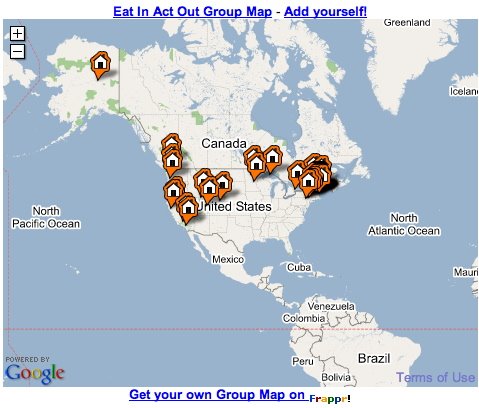
The Massachusetts-based nonprofit, the Food Project is putting on it's annual Eat In, Act Out Week, and you can participate! Next Week (July 31st-August 6th) make an effort to, eat in (use local food and cook food yourself instead of going out), and act out (speak up and take action to promote local food).
You can find places selling local food near you through the Local Harvest site, search for Eat In, Act Out events near you, or add your own, on the Eat In, Act Out Frappr Map (pictured above), and read more about the Food Project on their blog.

I've been reading a lot about food lately because earlier this week I had the opportunity to interview Anna Lappé, author of Grub, and co-author, with her mother, Frances Moore Lappé, of Hope's Edge (I'll be posting the interview after I come back from the BlogHer Conference).

Here are are some links from the Community Food Audit form in the back of Grub (you can download it on their web site too) to help you find your local:

* Farmer's market: Sustainable Table
* CSA Farm: Local Harvest and CSA & Robin Van En Center
* Food Coop: Cooperative Grocer
* Grocery Store with Local Foods: Foodroutes.org
* Organic Meat & Dairy/Egg Provider: Eat Well Guide
* Community Garden: American Community Garden Association
* Elected Officials: Congress.org
* School Food Resources: Farm to School and Farm to College
* & Other Community Food Resources: Community Food Security Commission

Happy Eating!


Tuesday, July 25, 2006

Cocktails and School Supplies

If you live in the Los Angeles Area, a friend of ours, Meg Martin, is hosting a night of drinking and pool Friday, August 4th at Hollywood Billiards (5750 Hollywood Blvd.) at 7:30 PM, to raise money and collect school supplies for a school Covenant House is opening in Tijuana. Covenant House is a shelter that houses 18-24 year old homeless and runaway youth. In mid-August Meg will be one of the people taking a group of youth from Covenant House to Tijuana to open a school which will serve one of the poorest communities in the city.

Here are some of the things that the school needs need:
  • Any school supplies - pencils, pens, paper, notebooks, sharpeners, etc.
  • Backpacks - especially for children 8-12
  • Shoes and socks - in any childrens size
  • Clothing - in any childrens size
You can bring the school supplies to the party, or contact Meg at (818) 298-4779, or megmartin AT mac.com and she will arrange to pick them up. Bring as many people as you like, the place is huge. Valet parking is $5 and street parking is possible, with a little patience.

If you can't come, but would like to make a donation, please send a check (before August 14th) to:

Sr. Margaret Farrell/Covenant House
Covenant House California
1325 N. Western Avenue
Hollywood, CA 90027

Be sure to write, "Tijuana School Supplies" in the memo field, and make the check out to "Sister Margaret Farrell" (this earmarks the check for the Tijuana trip).

Send me pix if you go. I have some friends visiting from out of town that weekend, but I'd love to be there.


Photo credit:
Caleb, Caleb, Caleb by Crystl


Friday, July 21, 2006

How to Support Women in Lebanon

The Global Fund for Women has lots of good information up right now about how to support women in the Middle East.

You can donate to the Global Fund for Women
and they will make sure your money goes to women in the Middle East. If you make an online donation, write "Middle East Crisis" in the section entitled, "Would you like to make this contribution in honor of someone special?", or if you mail in your check, be sure to write, "Middle East Crisis" on it or your donation form. The GFW recently donated $15,000 to the Collective for Research and Training on Development-Action to support displaced families in Lebanon:

CRTD.A, which promotes gender equality and the leadership of Arab women, is working with the Zicco Relief Centre to secure basic supplies for women and children affected by the conflict. Schools across the country, where thousands of Lebanese families are taking refuge, are in need of hygienic supplies such as sanitary napkins, which are often excluded from international aid, as well as drinking water, diapers and soap.

Another GFW grantee, Helem, a Lebanese group promoting the rights of sexual minorities and women, is also providing basic supplies to Lebanese refugees.

Photo credit: Beirutladies by Kevin Walsh.


Thursday, July 20, 2006

Paradigm Found: Leading & Managing for Postive Change

Believing that social change is possible is the beginning. Realizing that you yourself can effect such change will lead you to clarify your vision and identify the skills you need to prepare the ground and plant the seeds of change.--Anne Firth Murray


While on vacation I read several books, but the one that stood out the most was Paradigm Found: Leading and Managing for Positive Change by Anne Firth Murray, the founder of the Global Fund for Women.

Whether you are starting your own nonprofit, or simply interested in how a person can take a seed of an idea for positive change and make it into reality, you'll find some nuggets of wisdom in this book.

What I find so interesting and inspiring about the Global Fund's work is how their grants to women's groups seem to come with so few strings attached, which empowers the women receiving the funds to use them how they best feel that they need to be spent. Murray writes:

At the Global Fund I defined empowerment as 'having a vision, having a plan to work toward that vision, and having the capacity to take the first steps toward the plan.' The Global Fund's role in such empowerment usually involved responding to requests from women's groups to provide the financial means for women to take the first steps in a plan that they had already developed in the context of their vision.
Over and over again, Murray talks about the importance of making connections and of people working together to create positive change. Interestingly, in the late 90's the Fund received a grant for the Pacific Institute for Women's Health to visit 56 grantees in 8 countries and report back about their successes. One of the results was:

[T]he researchers learned that trust was a key element in women's perception of the success of their organizations. . . . the researchers also discovered that the act of gathering together in groups with other women appeared to increase feelings of power, status, and well-being in women.


We love the groups---book clubs, Weight Watchers, Dining for Women--BlogHer!

So for all you Solutionary Women out there, no matter what goal you are pointed towards, whether it's to create social change, find work that you love, be a better mom, or paint your kitchen, reach out to other women and see how much more you can achieve.

Image via www.paradigmfound.org


Wednesday, July 19, 2006

Organic Chocolate & Coffee in Maui, and Other Delicious Food


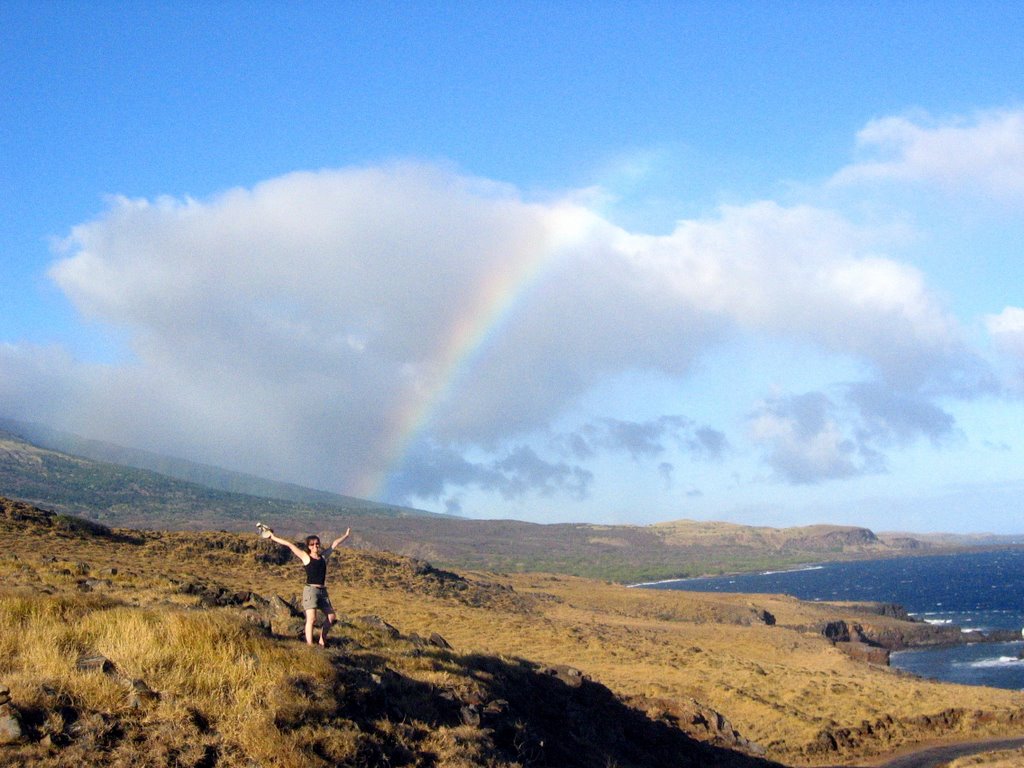
I'm back from an awesome belated honeymoon in Maui! One of our favorite places to go while we were there was the town of Paia, one of the last big towns at the beginning of the Road to Hana.

We got box lunches from the brightly painted restaurant below, Cafe Mambo (30 Baldwin Ave), before going on the Road to Hana.

We went back to Paia several times, and one of the yummiest meals we had was at the Paia
Fish Market ( 2 Baldwin Ave). The fish taco was delish.

Afterwards, we stopped at a new cafe, Cafe Chocolat (105 Baldwin Ave.), that serves all organic coffee and chocolate (including local, shade-grown coffee). It was a great little local hangout with people dropping in to chat with the owners. While we were there we found out that the Dalai Lama will be visiting Paia April 24 & 25, 2007. The Maui Dharma Center is hoping to finish construction on a temple and stupa in Paia before his arrival. If you are going to Maui and think you'll go to the Cafe Chocolat, let me know and I'll mail you a business card the owner gave me with, "Coffee or Tea on Me" written on the back by her daughter, and you can get a free drink!

If you want to hang out in a laid back town with yummy restaurants and a good vibe, check out Paia.

Two other foodie tips:
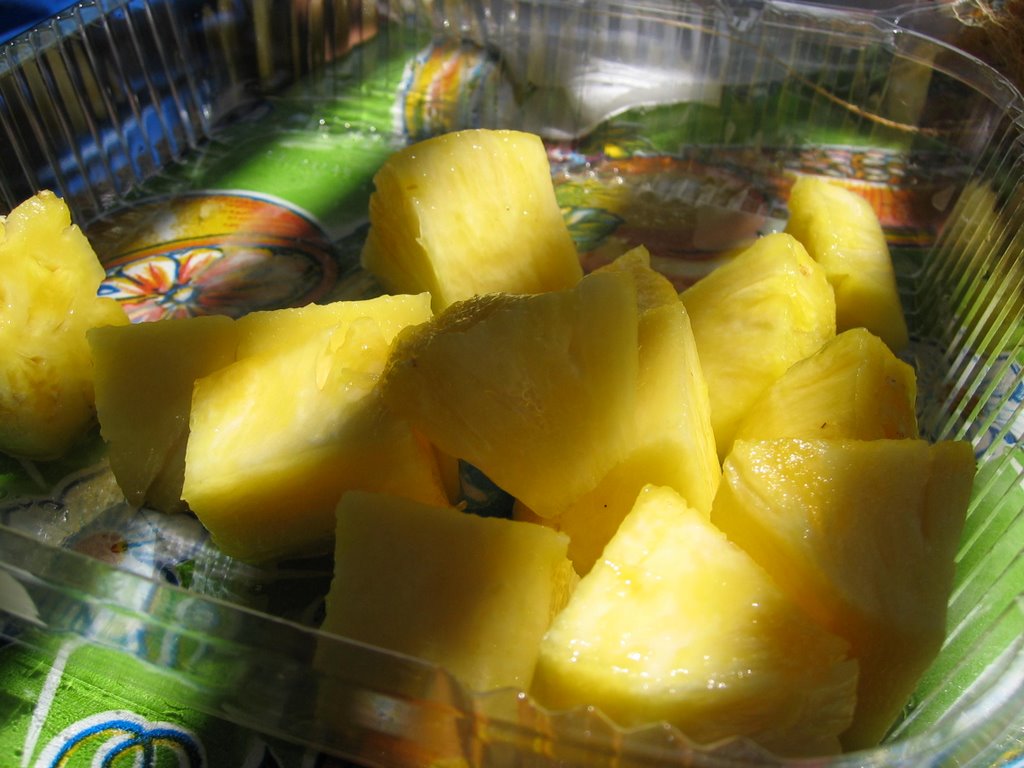
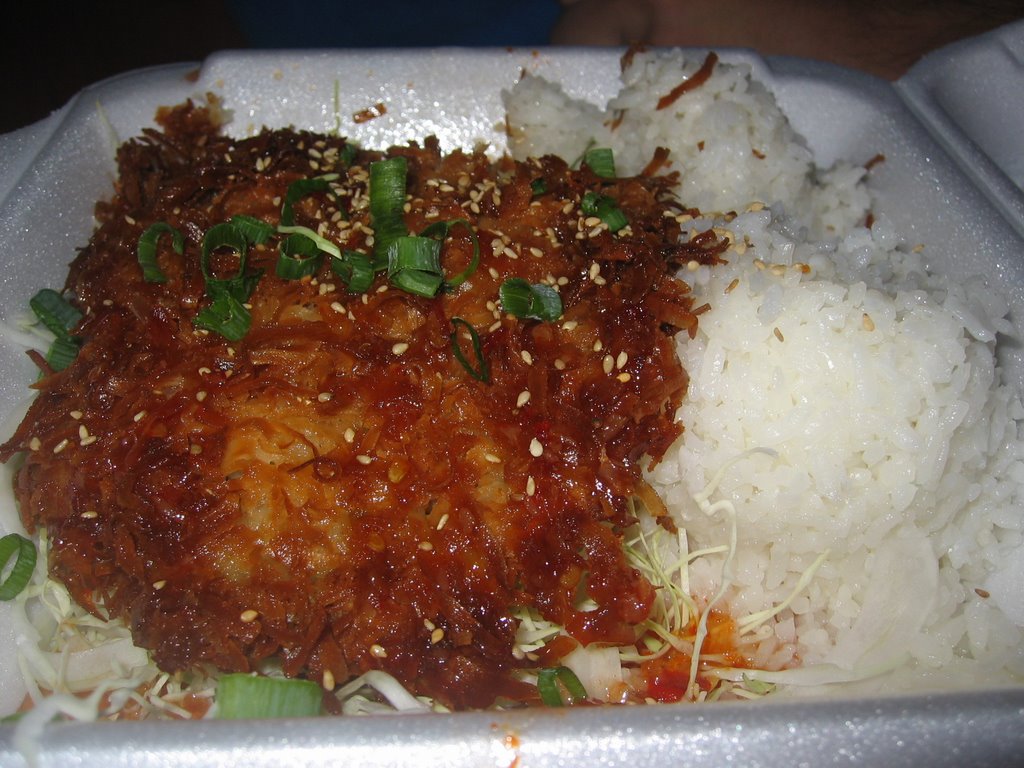
The pineapple from Take Home Maui in Lahaina (121 Dickenson St.) was out of this world, and the coconut encrusted Mahi Mahi at Da Kitchen in Kihei (2439 South Kihei Rd.) was to die for.


Sigh.

I miss it.


Thursday, July 06, 2006

Nata Village Blog

Last month Nancy White wrote a post about a very cool fundraising blog, the Nata Village blog, that I want to share with you. The blog documents not only the lives of the people in Nata, but is a tool to raise funds for a support group for residents living with AIDS, an AIDS prevention program where youth use the arts to educate others about AIDS, and the Nata clinic.

Readers can donate directly to the village through the blog's PayPal account.

Nata is a village of 5,000 people in Botswana. According to the blog, 50% of the pregnant women in the village are HIV positive and 400 children have been orphaned by AIDS. Botswana has the second highest HIV infection rate in Africa.

The Nata Village blog was designed and is administered by photographer/vidographer, John Rawlingson, and written by Peace Corps volunteer, Melody Jenkins, and Martha Ramaditse, who was born and raised in Nata.

They also have a Flickr stream and a video blog.

Photo credit: The Nata Village videoblog, Episode 1 by JRAWLS' Photos.


Wednesday, July 05, 2006

UNIFEM, Women-Owned Businesses & Rwanda Knits

I have to admit that I had never heard of UNIFEM (United Nations Developing Fund for Women) until I read an article about Nicole Kidman in Ladies Home Journal while on jury duty--she is one of their Goodwill Ambassadors. For those of you who haven't heard of UNIFEM either, it is the women's fund at the United Nations. Their four goals are:

1. to reduce feminized poverty
2. to end violence against women
3. to reverse the spread of HIV/AIDS among women and girls
4. to achieve gender equality in democratic governance in times of peace as well as war.

While looking for other UNIFEM-related blogs, I found the Business Council for Peace, one of UNIFEM's partners. They help women living in regions of conflict and post-conflict start businesses. Eight BPeace members traveled to Rwanda in May 2006 and used the Bpeace Rwanda blog to document their trip. One of the team's members, Cari Clement of the Fiber and Craft Entrepreneurial Development Center, also kept her own travel blog, Rwanda Knits, during the trip.

The Fiber and Craft Entrepreneurial Development Center (FACED) provides knitting machines and training to women living in Rwanda.

Here is an excerpt from one Clement's entries towards the end of the trip:

Yesterday was probably the biggest day of the trip: the “hand-over” ceremony where USAID officially handed over the 630 knitting machines to the 16 associations and the handing out of the certificates to the graduates of the business training held over the past four days at Gitarama. Before the ceremony, the training continued in [the] morning, with the IWACU instructor teaching the women how to create an income statement and balance sheet. . . .Then it was time for graduation for the students who had attended the business training seminar. Each attendee, including representatives from the Kiziba refugee camp where all this started, was given a certificate which their association can use to help them get micro-credit to purchase yarn for their group.

If you want to help, according to the FACED site, a donation of $165 provides, "an Ultimate Sweater Machine, Row Counter, all freight and clearing costs and skills training."

Photo credit: Ethiopia 3 by babasteve


Monday, July 03, 2006

Join the Blogger Challenge: Raise Funds for Public Schools

DonorsChoose has launched a new program called BloggersChoose which allows bloggers to search through mini-grant proposals that school teachers have submitted to DonorsChoose, and ask their readers to fund them.

I set up my own Blogger's Challenge last week to support a Butterfly Garden for third graders in the Bronx where 73% of the students come from low income homes, a sixth grade Life Lab garden in San Jose, CA where 77% of the students come from low income homes, and a school/community garden in Manhattan where 91% of the students come from low income homes.

According to DonorsChoose:

"low income" refers to the percentage of students at a given school who qualify for free lunch, which is considered a measure of economic need. To be deemed eligible for free lunch, a student must submit a form showing family income at or below 130% of the poverty line. In 2001, a student in a family of 4 received free lunch if the family income was $23,530 or less.

If you would like to support any of these projects, just click HERE, or click on the "donate to my challenge" button on the sidebar of this blog.


Photo of Children's Garden from spacecadet's Flickr stream. This photo has an Attribution 2.0 Creative Commons license

Big Vision Podcast: Steve Williams from POWER

I recently posted my interview with Steve Williams, the Executive Director and co-founder of POWER: People Organized to Win Employment Rights on the Big Vision Podcast. Steve also happens to be the fiancé of Mei-ying Ho, who I interviewed last month. They're kinda like the Angelina Jolie and Brad Pitt of the Bay Area (:

You can listen to the podcast on Gcast, Odeo or iTunes and I've included a transcript of it below in , as well.

If you know a person who is creating positive change that you think should be interviewed for the Big Vision Podcast, please send me their name and contact information at britt AT brittbravo.com

Britt Bravo:
Hi! Welcome to the Big Vision Podcast, where we talk with individuals and organizations who are creating positive change. My name is Britt Bravo, and in today's show I talk with Steve Williams, the co-founder and Executive Director of the nonprofit, POWER: People Organized to Win Employment Rights.

Steve Williams: POWER stands for "People Organized to Win Employment Rights" and we are a membership organization of low-wage workers and tenants. We started off in 1997, initially organizing welfare recipients.

At the time, the Federal government had just signed the welfare deform legislation, pushing millions of welfare recipients from welfare to work. But by and large, people were pushed into poverty wage jobs and forced to make profit for huge corporations, while not having any opportunity to improve the living standards for themselves or their families.

We began, essentially, organizing a union of low-wage workers, unemployed workers, to try to improve both the living conditions and the working conditions for low-wage workers here in San Francisco. In the last couple of years, we've begun two new organizing projects. One: organizing immigrant women, mostly Latinas, who are working as domestic workers cleaning the houses and raising the kids, mostly of rich folks. The other organizing project is organizing in Bay View Hunters Point, the last remaining African American neighborhood here in San Francisco, organizing for housing justice and equitable development.

Britt Bravo: Tell me a little more about the campaign for domestic workers.

Steve Williams: One of the interesting things that we have seen historically is that women's labor, and particularly women of color, have played a central role of supporting the economy. So, oftentimes when we hear about San Francisco's economy, the main aspects, the main industries that we hear about are the dot com sector or Wall Street and finance, but all of those industries are made possible because, oftentimes, it is immigrant women who are going into the homes of those high-tech professionals to clean their houses, cook their food, raise their children, but all too frequently those women don't receive a livable wage. Almost never do they receive healthcare benefits or vacation time and oftentimes, have to work in incredibly oppressive environments.

The industry -- the federal government, and the state government specifically exclude domestic workers as classes of workers to be protected by labor rights legislation. Oftentimes, women are forced to do this work individually in other people's homes and have no recourse to have their rights protected. POWER began this organizing project, both to get the work and the labor of these immigrant women to be respected and compensated fairly, but then also to establish mechanism to be able to ensure that their rights can actually be enforced, and if the state won't do that level of enforcement now, then the women will do that enforcement for themselves.

The campaign has been interesting. Initially, it developed with us going out to parks. There were a lot of women who would take the kids that they were caretaking for, they would take them out to parks in the middle of the day, so that the kids could play around, the women who were then working as domestics would sit around and watch the kids. We would go up to parks in Pacific Heights and the Marina and you'd see all these white kids playing around in the playground and all of these brown Latina women sitting around, talking Spanish. So, it was pretty clear that there were domestics in the parks.

Initially, after conversations with a lot of domestic workers, we realized that the women really wanted to have negotiation training. Because there aren't formal union contracts in the domestic work industry, women are put in the position where they are negotiating theterms of their employment by themselves. We developed negotiation training to develop the capacity of the women to be able to ask for better working conditions, better wages, which is something that the women said they that had no understanding of, no access to those levels of skills.

Through the negotiation training, women began identifying particular problems that they were having in their work. Whether it was that they were not receiving livable wages, or maybe it was that initially they were hired just to take care of the kids and then after a couple of months, they were also doing some of the cooking for the family, and then after a couple more months, they were also doing laundry, and as their job descriptions were expanding, there was no increase in pay, there was no opportunity for vacation leave and almost never was there any healthcare protections.

Through that, we've actually have began a campaign now at a statewide level to ensure that all domestic workers who are doing any work in the homes actually have access to overtime pay, just the same as every other employee. Right now, that piece of legislation has just passed the assembly and is right now in front of the state Senate.

Britt Bravo: Do you have any stories of individual women's successes that you can share?

Steve Williams: Yes. Coming out of the negotiation training, it was very interesting because, like I had said before, a lot of women felt like they didn't have the skills to really be able to negotiate with their employer. A lot of women reflected back to us that they felt oftentimes like the families would treat them as if they were a part of the family, so that then their work was in some ways made invisible. But, it also created a relationship where it was more difficult for the women to actually ask for what they needed in order to be able to meet the needs of themselves and their families.

Women would tell all of these incredible stories throughout the negotiation training. There was one woman, who in particular, after we concluded the negotiation training, decided to initiate a re-negotiation of both the terms of her employment. Initially, she was getting paid eight dollars an hour. At the end of the negotiation, the family raised her pay to 14 dollars an hour. She came back and she was really excited and she said it was really a result of the experiences that she had in the negotiation training and the increased level of confidence that she had that both she could ask for what it is that she needed and if she didn't get it, that she had other recourses.

Britt Bravo: What brought you to this work. Why do you do this work, and not some other kind of work?

Steve Williams: I think for me one of the things that motivates me is the idea that the world can be a better place. Just from my understanding of history and my understanding of politics, the best way of actually being able to improve the living conditions of low income, oppressed people is for those people to come together and take their destinies into their own hands.

If you look at the history in South Africa, and the movement to end the apartheid regime, or if you look at the revolution in Cuba, where literally the island was essentially a playground for rich people from the United States. The Cuban people took their own destiny in their hands and altered then the future for not only themselves, but also future generations.

I think here, in the United States, just understanding the history of the civil rights movement and understanding the exploitation and oppression that African-Americans have experienced, and that my ancestors came together to really reshape the history of this country and the world. I think as we look at all of the really oppressive statistics; half of the world lives on less than two dollars a day, that people, particularly throughout the third world and the global south, die of preventable diseases by the thousands every day, and that all of that happens at the same time that huge corporations like Bechtel or Microsoft are making hundreds of millions of dollars, that there are actually the resources to create a better world and a better future for all of us. I think that the way it is actually going to wind up taking place is for working class people of color to come together in unity and really begin shifting the structures that impact all of our lives.

I just feel really fortunate to be able to be here at POWER, as one organization that creates a space for working class people of color to come together, to find their voice, and then actually to begin exercising that voice in the public domain.

Britt Bravo: Have you always done this kind of work?

Steve Williams: When I was in college I did a lot of service work around homelessness issues. I was somewhat lazy in doing that work. I was like, "It's cool doing it," but I recognize that regardless of how hard I worked in the homeless shelter, that every day there were more and more people, who were forced to come to the shelter because they had nowhere else to go. I think that I wanted to figure out a way that by doing the work that I am doing, that some day, no one will ever be homeless, or no one will have to make a decision between buying medicine for their kids, or paying rent.

The summer before my last year in college, I participated in a summer program in Philadelphia that was designed to teach young people organizing skills around poverty and homelessness issues. It was the first experience that I had with social movement organizing. I was hooked from that moment on. Immediately after I graduated, I got a job with the Coalition on Homelessness here in San Francisco, where I feel that I learned a tremendous amount about creating spaces for low income people to be able to raise their voice, recognizing that all too often, people of color, women and low-ncome people are excluded from the decision-making processes that actually affect their day-to-day lives, and that the only way that those folks are going to be able to come together to have a say is by coming together in numbers and asserting that strength. So, from the Coalition on Homelessness, there was a push to initiate a welfare rights organization, and it was the leadership of that grouping of folks, who with me, then ultimately wound up founding POWER in 1997.

Britt Bravo: What keeps you motivated and inspired? What keeps you going, because you have been doing this for a while, and it's not easy work.

Steve Williams: Yes, it's not easy work. I think the thing that every day inspires me are the members of POWER. I think it's constantly a moment of inspiration to see people who initially come into the organization somewhat shy, not convinced that things will actually be able to change, and to see them over the course of several months become dedicated and very skilled organizers and leaders in a broader social movement.

There is a member of the organization, who we first met when we were organizing out at one of the MUNI bus yards. In exchange for welfare benefits, welfare recipients in San Francisco were forced to do public sector work, work which was once performed by unionized city employees. This woman was cleaning the buses, cleaning graffiti off the San Francisco MUNI buses. Unionized city employees used to make 27 to 35 dollars an hour doing that work and she, along with her co-workers, was now forced to do that work for 345 dollars a month with no benefits, no protections.

When we first came in contact with her, it was like pulling teeth to get her to say anything, even in small group meetings out at her work site, where she knew everybody. But, she continued to come to all the meetings. She would sit in the back, she would observe what was going on, and a couple of months later, she started talking up in the meetings. She eventually became a member of the steering committee, the leadership body of the organization. A couple of years ago she was actually speaking at a demonstration where there were about 1500 people, and she was one of the most articulate, fiery, inspirational speakers that I have ever heard. I think it is just a constant inspiration to me to see the transformation that people can go through when they really take their destinies into their own hands.

That coupled with getting an opportunity to go outside the United States and see movements that are really vibrant and broad based. Having an opportunity to go to Cuba, to South Africa, to Venezuela, and to see places where both ordinary people have really seen the results of what happens when they join up with their neighbors and begin to trying to change their own reality. But, then also recognizing it has real positive impacts on our ability to have community with each other. The idea that we can all have free education through university level, or that we will all have free health care, I think really begins to shift the way that we relate to each other and really establishes a basis for strong community, both between racial lines, but also across racial lines, across language lines. I think those have been the experiences, both inside and then outside the country, that have really inspired me to know that the work that I am doing here, in San Francisco, is connected to a global movement that is, I think some day, going to achieve justice.

Britt Bravo: If someone listening to this podcast wants to become an organizer, what should they do?

Steve Williams: The first thing that folks should do is to locate an organization in your community. POWER, like every other grassroots membership organization that I know, is constantly looking for volunteers, is dramatically under-resourced, and our ambitions never match up with the resources that we have in the bank. I think that folks could financially support membership organizations, but I also think that people coan figure out a way of volunteering and figuring out ways of being able to support the leadership of low income people.

Then, if through that experience, people are so inspired to then try to become, and try to take up the work of organizing, there are some really incredible training programs where people can learn how to do organizing as a full-time activity. A couple of the programs that we have come in contact with -- SOUL, the School of Unity and Liberation, runs an eight-week summer-long program for young people that, I think is really amazing in both developing the skills of young people as organizers, but then also putting organizing in a broader political and economic context. That's one. SOUL is located here in the Bay area, in Oakland. Another organization based here in the Bay Area is the Center for Third World Organizing, C-TWO, who also has an organizing internship program that I think has really produced some of this generation's best organizers. Then also, down in Los Angeles, there is an organization called the Labor Community Strategy Center that has, probably, the most extensive and thorough organizing training program. That's actually a nine-month long training and they, I think, are incredibly sophisticated, both at developing people's skills as organizers, but then also helping people to develop a sharp analysis of what's going on in our communities and how it is that we can make positive change.

Britt Bravo: Is there anything else that you want people to know about POWER and its work?

Steve Williams: I think for POWER -- we're really struggling with the fact that there are massive changes happening in all of our communities. In San Francisco, the African-American population has decreased by 23 percent over the past ten years. I think that is related to fundamental shifts that are happening in both the political and economic structures in this country and in the entire world. I think it is really important for all of us who are trying to make change to develop really sharp analyses of what is going on in the world around us. I think that this analysis of what the problem is, ultimately impacts our ideas of what the solutions are going to be to fixing those problems.

Because POWER was grappling with understanding what is going on in the world around us, we ultimately wound up going into a nine-month study process that ultimately culminated in the publishing of a book, which is entitled, Towards Land, Work, and Power. It's now available on AK Press; you can get it at akpress.org, or on Amazon.com. It is the result of four organizers here, at POWER, really trying to put our ideas about the problems that we see in society, but also really trying to couple that with solutions because I think, it's all too easy right now to get discouraged and disillusioned and to think that there is no way that we're ever going to win. But, I think that there are countless examples through history, in individual communities across the country and around the globe, where ordinary people have risen up to then completely alter the course of history. I think it is important for us to build off that hope and build off the experiences of folks who have gone before us. I would encourage people to pick up POWER's book and hopefully, if you like this podcast, you will like the book as well.

Britt Bravo: Thanks for listening to the Big Vision Podcast. For more information about POWER, go to fairwork.org. I will also be posting a transcript of this interview on my blog, Have Fun, Do Good, at havefundogood.blogspot.com. You can also find transcripts of past interviews on that blog as well.

If you like the music, it is from Kenya Masala's "Mango Delight" and you can learn more about Kenya's work and his music by going to sourceconsultinggroup.com.

Finally, if you want more information about Big Vision Career and Project Consulting, you can check out my website at brittbravo.com.

Thanks for listening.

Creative Commons License
This work is licensed under a Creative Commons Attribution-NonCommercial 2.5 License.


Basic Blogging for Women-REVISED

Rose Aguilar from Bay Area Business Woman interviewed me recently for an article entitled, "Women's Voices Boom in the Blogosphere." During my conversation with Rose, she told me about a panel she was on, that had a mainly women audience, and how surprised she was by how many women had questions about blogging basics. I started thinking, sounds like there are a lot of women out there who would like to start a blog, but don't know how. . . .

8.31.06 Get info. about the Basic Blogging for Women Workshop October 22, 2006 here.

Revised 8.3.06: I am currently searching for a new space to hold a Basic Blogging for Women Workshop where everyone can be on computers. New date and location to be announced soon!


Basic Blogging for Women is for you if:

* You have something you want to say, and share with other people.
* You want to start, or find a community of like-minded people.
* You are looking for a new communication tool for your organization or business.

By the end of the workshop, you will:

* Be ready to set up a basic blog.
* Know what type of blog is best for you.
* Be able to connect with people who share your
passions and interests.
* Use your blog as a marketing or advocacy tool.

Britt Bravo, MA, write for three blogs: her personal blog, Have Fun * Do Good, the NetSquared blog, where she is the Community Builder, and for BlogHer, where she is a Nonprofit and NGO Contributing Editor. She also produces her own Big Vision podcast and the NetSquared This Week in NetSquared News podcast. She was a mentor to young women bloggers as part of the Young Caucasus Women project and the blogs for African Women project.

In an effort to be part of the positive change she wants to see, Britt uses her counseling, organizing, blogging, podcasting, community outreach and program development skills to work with individuals and organizations to realize their "Big Vision" for a better world.

www.brittbravo.com